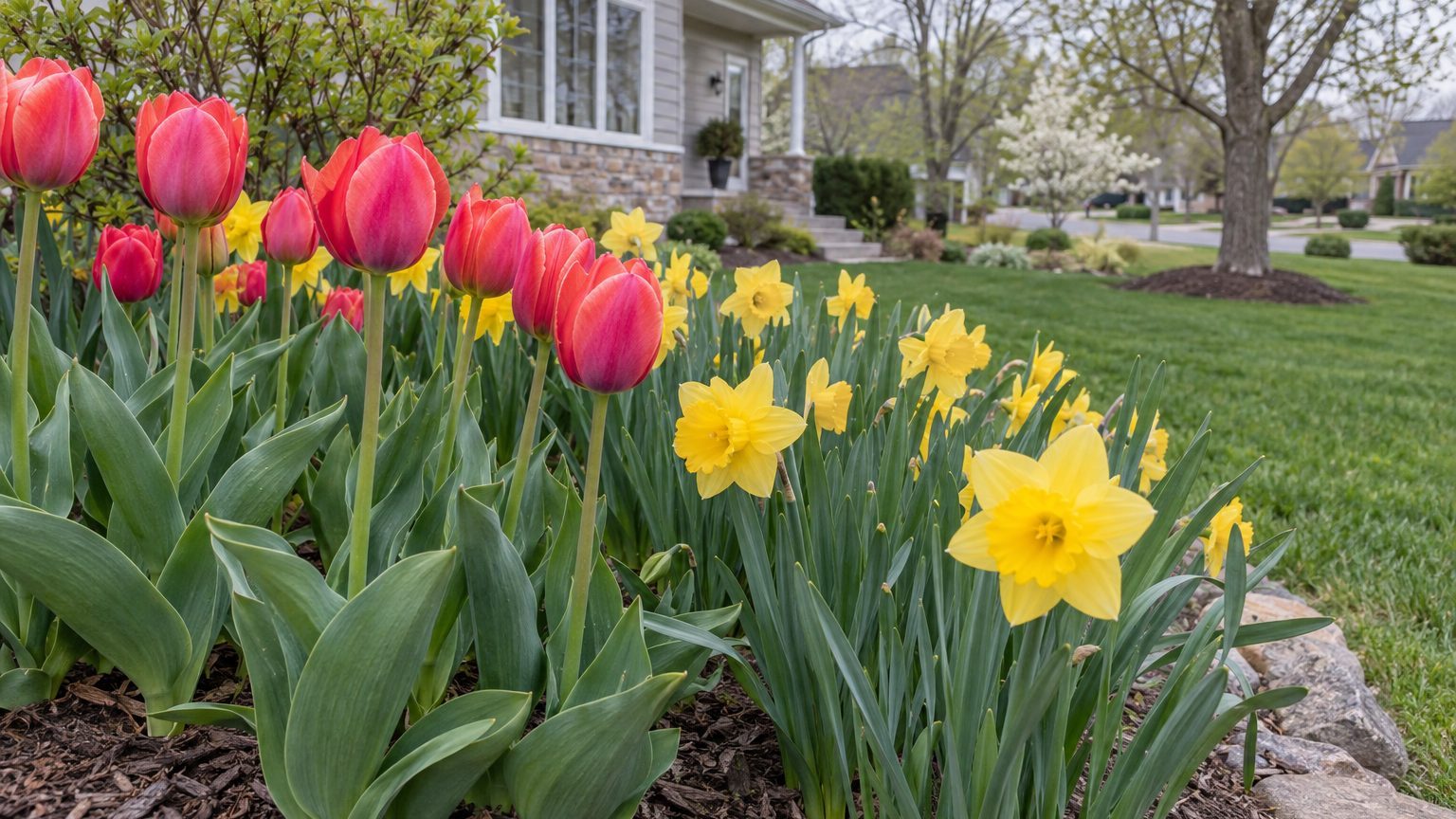
Every April, a few clumps of daffodils push through leftover snow along Minnesota foundations while the tulips next door have quietly vanished. Spring bulbs are not equal in a cold state with heavy soil. Daffodils, alliums and species tulips hold up here, and hybrid tulips are better treated as a short-term splash of color.
Best Spring Bulbs to Grow in Minnesota

Winters here are severe (the USDA system puts the Twin Cities in the mild south of the state, with colder zones running up to 3a farther north), so the cold itself is never the problem. Bulbs get all the winter chill they need. The trouble is wet, heavy clay, because most hardy spring bulbs evolved in desert or Mediterranean climates. Daffodils, alliums and species tulips cope best with that.
Daffodils
Daffodils tend to live longer in clay soils than tulips, which makes them the more reliable perennial bulb. Voles, squirrels, rabbits and deer leave them alone, so they hold their ground in yards with plenty of wildlife.
Plant them in September or October, and leave the leaves in place after bloom until they turn brown.
Alliums
Alliums are not as picky as some bulbs, so they can go in a few weeks before a hard frost. They also need no chill period to bloom, which matters little in Minnesota but shows how forgiving they are.
The slight skunky odor of these bulbs repels rodents and deer, so they protect themselves.
Species Tulips
Species tulips are the shorter types with smaller flowers, and they usually do better in heavy soil than the big hybrids. Through years of hybridizing, the bulbs’ ability to come back year after year has weakened.
Plant them in fall, and give them a spot where water drains away rather than pooling.
Hybrid Tulips
Hybrid tulips often return for only a few years in wet clay, especially when thirsty annuals are planted on top of or right beside them. Voles, squirrels, rabbits and deer also eat them.
Adjust your expectations and treat them as annuals, replanting fresh bulbs each fall for peak tulip bloom from late April to mid-May.
Minnesota — the year and the numbers
- State
- Minnesota
- USDA zones
- 3a-5a
- Last spring frost
- April 17 to April 30
- First fall frost
- October 11 to October 23
- Annual rain
- 32 in
- Lawn zone
- cool-season
- Source
- NOAA NCEI 1991-2020 Climate Normals, 32F freeze probabilities · Minneapolis
How to Choose Spring Bulbs for Your Minnesota Garden
Your choice depends less on how cold the winter is and more on your soil, your wildlife and how much replanting you want to do. Most spring-flowering bulbs need about 12 to 16 weeks of cold to flower, and Minnesota winters supply that without any help, so refrigerator chilling is never needed.
Planting itself is the same for every type: wait until the soil has cooled below about 60°F so roots form before the ground freezes but the bulbs do not sprout in the fall.
| Your situation | What suits it in Minnesota | Why |
|---|---|---|
| Very cold winter | Any hardy spring bulb | Winter supplies the 12 to 16 weeks of cold most bulbs need |
| Wet, heavy clay soil | Daffodils and species tulips | Hybrid tulips are not well adapted to clay and may return only a few years |
| Little time for replanting | Daffodils | They last longer and are the more reliable perennial bulb |
| Deer, rabbits and voles | Daffodils and alliums | Daffodils are left alone and alliums have a skunky odor that repels deer and rodents |
| Late planting | Alliums | They can go in a few weeks before a hard frost |
If you still want big hybrid tulips, plant them anyway and accept that they are a seasonal display. Keep annuals that need lots of water away from the bulbs.
Which Spring Bulbs Suit Different Parts of Minnesota
The bulb list stays the same across the state, but the calendar and the risks shift with where you live.
- Twin Cities: this is the mild south of the state, with a last spring frost between April 17 and April 30. Bulbs planted here follow the usual September to October window, and tulips can be tried with the understanding that they fade.
- Northern Minnesota: the season runs two to three weeks tighter at both ends, so lean toward the early part of the planting window and toward hardy daffodils and alliums.
Wherever you garden, get bulbs in the ground four to six weeks before the soil freezes.
Spring Bulb Buying Mistakes to Avoid in Minnesota
Buying Only Hybrid Tulips
Hybrid tulips are the showiest bulbs on the shelf, but in wet clay they may come back only for a few years. A yard planted entirely with them needs full replanting.
Mix in daffodils and species tulips so something always returns.
Planting Too Early
Bulbs set out while the soil is still warm can sprout in the fall. Wait until the ground cools below about 60°F, usually mid-September through mid-October.
Storing Leftover Bulbs
A bulb still in the bag is better planted late than stored over winter. Plant as long as the ground can be dug, even if the window has passed.
Where to Get Spring Bulb Advice in Minnesota
Local questions about soil, drainage and what survives in your neighborhood are best answered close to home. University of Minnesota Extension publishes bulb guidance, and your county office can speak to local conditions.
- University of Minnesota Extension has fact sheets on planting depth and bulb care, useful before you buy in late summer.
- Your county extension office can answer soil and drainage questions, so call before you order in late summer.
Common Questions
Do Daffodils Come Back Every Year in Minnesota?
Usually, yes. They are the more reliable perennial bulb, and animals leave them alone.
Should You Cut Back Bulb Leaves After Bloom?
Remove only the faded flowers and leave the leaves until they turn brown, since they feed the bulb for next year.
Can You Plant Spring Bulbs If the Ground Has Not Frozen Yet but It Is Late?
Yes. Plant as long as the ground can be dug, because a late bulb in the soil beats one stored over winter.