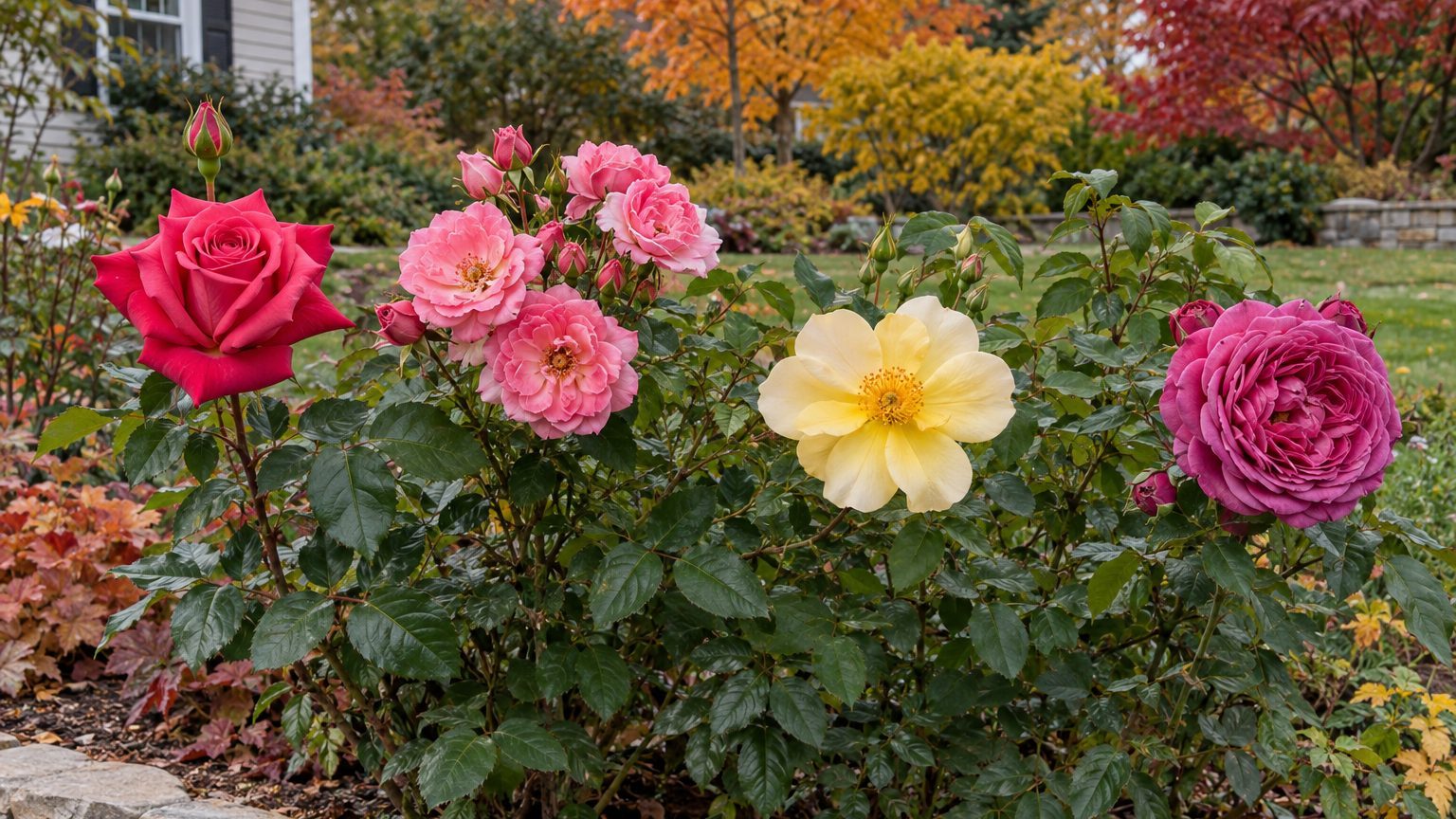
Rose canes that stay green and leafy through a Minnesota summer have usually earned their spot by surviving the winter before it. Roses here are chosen first for cold, then for how they handle humid summer foliage. Hardy shrub roses and the Canadian-bred series are practical starting points.
Best Roses to Grow in Minnesota

Minnesota winters decide the list. The USDA hardiness zone range runs from 3a to 5a across the state, so a rose has to take real cold, and humid summers then favor varieties that shrug off fungal leaf diseases. The list below starts with winter hardiness, then weighs disease resistance.
Hardy Shrub Roses
If hilling soil and wrapping canes every fall sounds like too much work, hardy shrub roses are the answer, because they do not require winter protection. They suit a front yard where you want color without a November project.
Knock Out
Knock Out is a shrub rose that performs well without extra winter protection. That makes it an easy choice for a beginner who does not want to manage a mound of soil or leaves each year.
Explorer Series
The Explorer roses are hardy shrub roses that also do well without added protection. They are a sensible pick for a colder corner of the yard, where a more tender rose would struggle through the winter.
Canadian Artist Series
The Canadian Artist Series was bred to be winter hardy and disease-resistant, a useful pairing when winters are hard and summers are humid. Campfire has yellow, red and pink flowers, while Emily Carr can serve as a focal point in a front yard.
Hybrid Teas, Floribundas and Grandifloras
These are the roses most people picture, and most were bred for warmer climates. They cannot survive northern winters without protection, so they only make sense if you are willing to cover them each fall. Repeat-blooming types like these are pruned in April or May, once the mound is off and a hard freeze has passed.
Minnesota — the year and the numbers
- State
- Minnesota
- USDA zones
- 3a-5a
- Last spring frost
- April 17 to April 30
- First fall frost
- October 11 to October 23
- Annual rain
- 32 in
- Lawn zone
- cool-season
- Source
- NOAA NCEI 1991-2020 Climate Normals, 32F freeze probabilities · Minneapolis
How to Choose a Rose for a Minnesota Garden
Start with how much winter work you want to do. A rose that needs a mound of protection asks for a task every November and another in April, while a hardy shrub rose asks for neither.
Then look at your summer. A humid season invites fungal problems such as black spot and rust, so disease resistance matters as much as cold hardiness.
| Your situation | What suits it in Minnesota | Why |
|---|---|---|
| Very cold winters | Canadian Artist Series or Explorer roses | They were bred to be winter hardy, so they cope with Minnesota cold |
| Humid summers | Canadian Artist Series | Bred to be disease-resistant, which helps against fungal leaf spots |
| Little time to spare | Knock Out or other hardy shrub roses | They do not require winter protection |
| Wanting classic hybrid teas | Hybrid teas, floribundas or grandifloras with winter protection | They were bred for warmer climates and need covering to survive |
For a small yard, look for a compact hardy shrub rose that will not need winter protection. A compact hardy shrub rose is a reasonable place to start in a tight spot, since it skips the winter protection step.
Which Roses Suit Different Parts of Minnesota
Minnesota is a big state, and the cold is not the same everywhere. The Twin Cities sit in the milder south of the state.
- Twin Cities: The milder south of the state gives a protected hybrid tea a better chance, and the last spring frost in the Twin Cities falls between April 17 and April 30. Hardy shrub roses still avoid the winter-covering work.
- Northern Minnesota: Seasons run tighter at both ends here, so hardy shrub roses and the Canadian-bred series are the safer choice. A tender rose asks a lot more of you in this part of the state.
Wherever you live, check the cold of your own yard before you buy, because a sheltered spot near the house can differ from nearby open ground.
Rose Buying Mistakes to Avoid in Minnesota
Buying a Tender Type Without a Plan
Hybrid teas, floribundas and grandifloras may catch your eye at the store, but they cannot survive northern winters unprotected. If you buy one, plan the covering: wait until the rose is fully dormant after several hard freezes, which usually means November, before putting protection on.
Ignoring Disease Resistance
A humid summer rewards roses that resist fungal problems. Rust is not a serious rose disease, but choosing varieties resistant to black spot and other fungal diseases helps lessen its effects. Look over new plants for rust symptoms before you bring them home, and pick disease-resistant varieties where you can.
Pruning Once-Bloomers in Spring
Old garden roses, ramblers and many climbers flower once a year on last year’s wood. Prune them right after they bloom, never in early spring, or you cut off the flower buds. Repeat-blooming roses are the ones for April and May pruning.
Where to Get Rose Advice in Minnesota
University of Minnesota Extension publishes research-based guidance on roses and other garden plants, and your county office can answer questions about your own yard.
- Its website is a useful place to read about roses before you shop, ideally in winter or early spring.
- Your county extension office can help with a specific problem, such as spotted leaves, once the plants are growing in summer.
Common Questions
When Should You Plant Roses in Minnesota?
Bare-root roses go in during April or May, and June is a fallback. Potted roses can go in later, once severe frost has passed in late May or early June.
When Should You Feed Roses in Minnesota?
Feed from April through July, with a first feeding in late April and another at peak bloom. Stop after July so the plants can slow down before winter.
When Should You Take Winter Protection Off Roses?
April is the month for it, and May also works. Take the mound off in stages from mid-April rather than all at once.