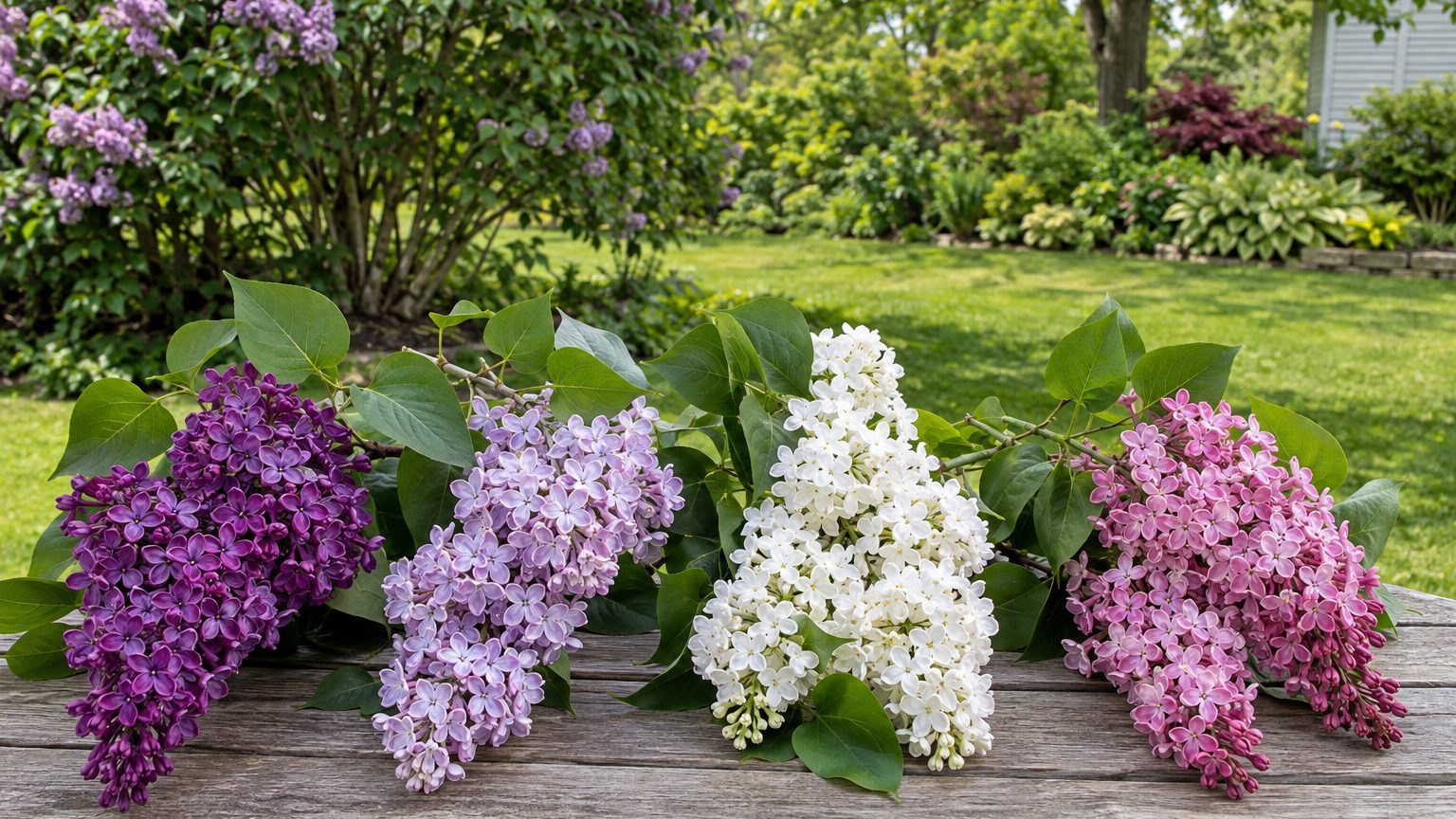
A lilac in full flower is a clear sign that a Minnesota spring has finally arrived. These shrubs need a cold winter rest to mature their flower buds, and Minnesota supplies that reliably. Cold-hardy lilacs are well suited to Minnesota. The real choices come down to bloom time, mature size and disease resistance.
Best Lilacs to Grow in Minnesota

Lilacs as a group suit Minnesota, where winters fall in USDA zones 3a to 5a. They thrive in sunny sites with good air circulation, and the types below each bring something different to a yard.
Common Lilac

The classic Syringa vulgaris is the lilac most people picture, and it usually opens in May. Its named selections vary a lot in disease resistance, so choose a blight-resistant one when you buy.
Early Hybrid Lilacs

Hybrids between S. oblata and S. vulgaris are well suited to cold climates. They flower ahead of the common lilac, which gives you color sooner but also exposes the buds to a late freeze. Plant them where cold air does not settle.
Hyacinthiflora Hybrids
These vigorous hybrids look like French hybrids but bloom earlier. The shrubs are very hardy, yet because they flower early, they belong only where May frosts are less frequent. In the Twin Cities, the last spring freeze falls between April 17 and April 30, and farther north it comes later.
Preston Lilacs
Syringa x prestoniae comes from crosses between the late lilac and the nodding lilac. Preston lilacs and other late bloomers open in June, after the common lilac has finished. That timing also keeps the flowers clear of most spring frosts.
Meyer Lilac
Syringa meyeri is slow growing, with dense foliage and a broadly rounded shape. It stays tidy longer than most lilacs, which makes it a sensible choice near a walkway or foundation. The cultivar Superba is heat tolerant and mildew resistant, with dark pink single flowers.
Littleleaf Lilac
Syringa microphylla is known as the Littleleaf lilac. It is among the species that have shown resistance to lilac blight, a disease that is hard to control once it arrives. Choosing a resistant plant is easier than treating a sick one.
Minnesota — the year and the numbers
- State
- Minnesota
- USDA zones
- 3a-5a
- Last spring frost
- April 17 to April 30
- First fall frost
- October 11 to October 23
- Annual rain
- 32 in
- Lawn zone
- cool-season
- Source
- NOAA NCEI 1991-2020 Climate Normals, 32F freeze probabilities · Minneapolis
How to Choose a Lilac for a Minnesota Garden
Start with the problem you actually have. Hardiness is rarely the issue here, so the better questions are about frost timing, summer weather and how much room the shrub gets at full size.
Most of the answers below follow from a few traits: how early a lilac blooms, how big it gets and how well it resists disease.
| Your situation | What suits it in Minnesota | Why |
|---|---|---|
| Very cold winter | Early hybrids of S. oblata and S. vulgaris | They are well suited to cold climates |
| Hot, humid summer | Meyer lilac cultivar Superba | It is heat tolerant and mildew resistant |
| Little time for upkeep | Littleleaf lilac or another blight-resistant type | Blight is hard to control, so resistance saves work |
| Small space | Meyer lilac | It grows slowly, with dense foliage and a rounded shape |
| Frosty Mays | Preston lilacs and other late bloomers | They flower in June, after the frost risk has eased |
Early lilac, Syringa oblata, suits a yard with room to spare. It grows 10 to 12 feet tall and flowers in shades of purple, so it works as a screen more than as a foundation shrub.
Which Lilacs Suit Different Parts of Minnesota
Winters and spring frosts change a good deal from the southeast corner to the Canadian border, and that shifts which bloom times are safe.
- Twin Cities and southern Minnesota: This is the mild part of the state, with the last spring freeze between April 17 and April 30. Early hybrids have the most room to succeed here, though a May frost can still catch them.
- Northern Minnesota: Frost can strike later in spring. Lean on common lilacs and late bloomers, and skip the early Hyacinthiflora hybrids.
Wherever you live, a spot with good air movement helps the plant dry out after rain and so keeps leaf disease down.
Lilac Buying Mistakes to Avoid in Minnesota
Early Bloomers in Frosty Spots
Hyacinthiflora hybrids flower earlier than other lilacs, and a May frost can burn the buds and cost you that year’s show. Plant them only where late frosts are less frequent, such as the milder south. In the north, pick a common or late lilac instead.
Blight-Prone Plants
Lilac blight is difficult to control once it settles in, so a susceptible shrub becomes a recurring chore. Buy blight-resistant varieties whenever you plant a new lilac. Give it moist but well-drained soil, and check that the ground has not become compacted when wet.
Ignoring Adult Size
A small pot hides a shrub that may reach 10 to 12 feet, as Syringa oblata does. Crowded against a house, it ends up overgrown. An overgrown lilac can be cut back hard in March or April, but it will not flower for a few years afterward. Check the mature size on the tag, or choose a slow-growing Meyer lilac for a tight spot.
Where to Get Lilac Advice in Minnesota
The state extension service can help confirm a variety before you buy, and your county office can look at a sick shrub in person. They know local conditions.
- The University of Minnesota Extension website carries plant guides you can read before a nursery visit in spring.
- Your county extension office can identify leaf problems if you bring a cutting while the lilacs are in leaf and flower.
Common Questions
When Should You Prune Lilacs in Minnesota?
Prune in June, right after the flowers fade. A lilac blooms on last year’s wood and sets next year’s buds in summer, so pruning in late summer, fall or winter cuts off the next spring’s flowers. Pruning can also be done in March or April while the shrub is dormant, at the price of that spring’s bloom.
Do Lilacs Need Full Sun?
Yes, they do best in a sunny site with good air circulation. Shade tends to mean fewer flowers, and stagnant air leaves leaves damp and open to disease.
Why Is a Lilac Wilting After a Tree Came Down Nearby?
Look for wilting on a plant whose light conditions have changed, such as after a neighboring tree was removed, and check whether the soil is dry or has become compacted. Lilacs dislike extreme heat, and new exposure can stress them. Water the soil deeply and keep it moist but well drained.