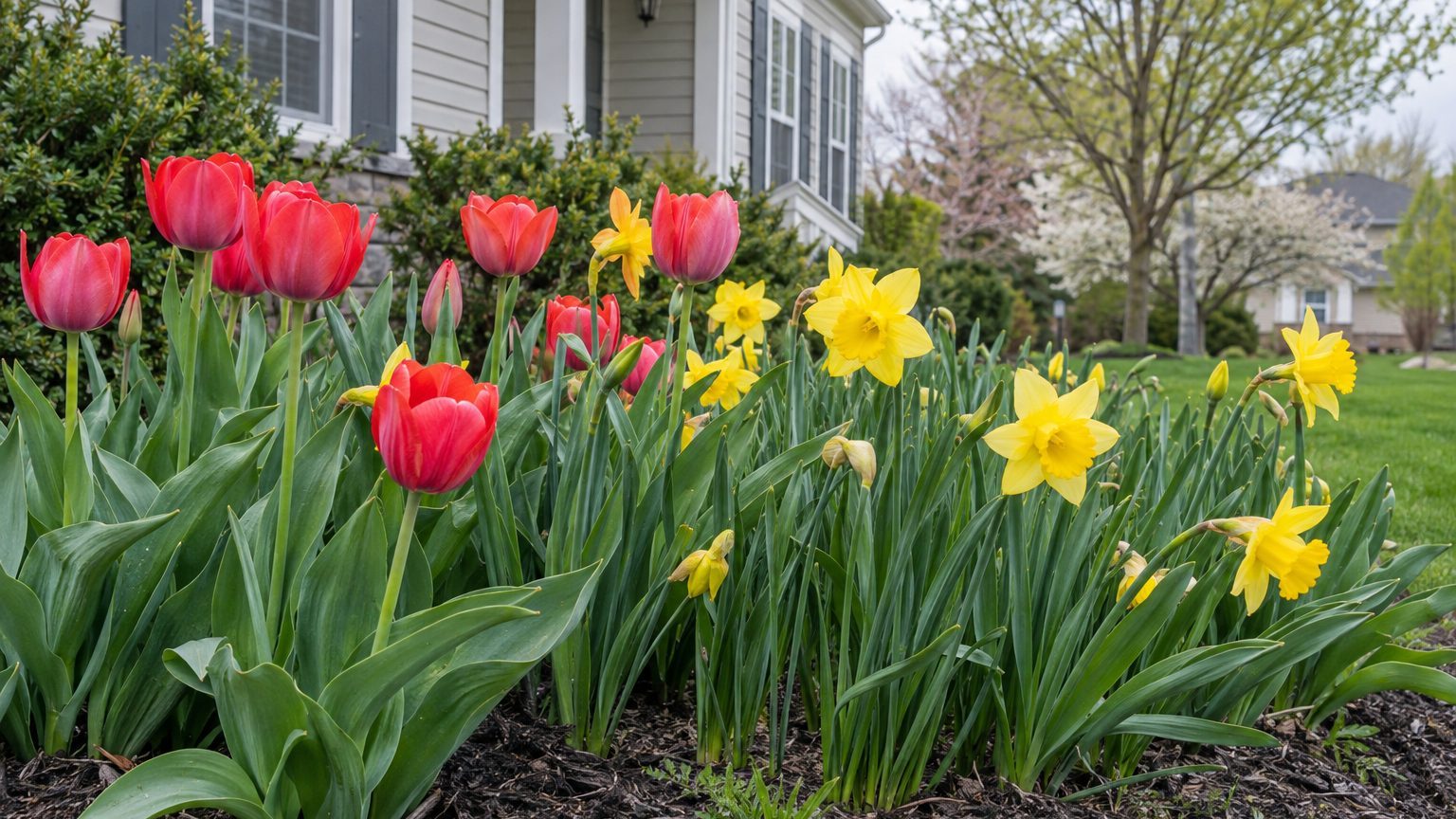
Tulip tips and daffodil leaves push through cold ground in Michigan every spring, and the work that makes them happen was done months earlier, in fall. That planting window is wider than most gardeners expect.
When to Plant Tulips and Daffodils in Michigan

Plant tulips and daffodils in September and October, and keep going in November or even December if the ground is still unfrozen. In USDA zone 6a, the first fall frost usually arrives October 6 to October 21. Michigan as a whole spans zones 4a to 6b, so a northern yard runs on an earlier clock than a Detroit one. A bulb’s year goes like this:
- In late summer and early fall, buy bulbs that feel firm and heavy for their size and keep them somewhere cool and dry until the planting window opens.
- Through winter, the chilling happens outdoors, because Michigan winters supply the 12 to 16 weeks of cold most spring bulbs need, so the refrigerator step used in mild-winter states is unnecessary here.
- In September and October, set the bulbs in the ground once the soil has cooled off, early enough for roots to form before the ground freezes and late enough that the bulbs do not sprout in the fall.
- In late fall, after planting, spread a layer of mulch over the bed to keep the soil temperature steady through the winter.
- When March or early April arrives, the first green tips break the surface, and the flowers follow in April and May.
Bulbs that miss the early window are not wasted. November and December planting works as long as a trowel still goes into the soil.
Michigan — the year and the numbers
- State
- Michigan
- USDA zones
- 4a-6b
- Last spring frost
- April 30 in the Detroit area; early to mid May across most of the Lower Peninsula
- First fall frost
- October 6 to October 21
- Annual rain
- 34 in
- Lawn zone
- cool-season
- Source
- MSU Extension — Frost-Free Dates · Detroit
Which Spring Bulbs Do Best in Michigan?
Tulips, daffodils, crocus, alliums and hyacinths can all be grown here, since the winters give them the cold they need. The real differences come from wildlife and staying power, and daffodils come out ahead on both.
Voles, squirrels, rabbits and deer eat tulips and crocus, while daffodils are left alone. A bed near woods or a field edge is a good place to lean on daffodils.
| Bulb type | How it does in Michigan | Why |
|---|---|---|
| Daffodils | Reliable year after year | More vigorous than tulips, and animals leave them alone |
| Tulips | Often fade after a few seasons | Short-lived in gardens, and a favorite of voles, squirrels, rabbits and deer |
| Crocus | Grows well but needs protection | Rodents and deer go after the bulbs |
| Alliums | Easy to plant in fall | They need the cold of winter to bloom, and they finish the spring succession |
Hyacinths fit the same fall planting schedule as tulips and daffodils, so they can share a bed with either. In Michigan, larger bulbs like tulips are sometimes treated as annuals and lifted in late spring to make room for other plants, which is a sensible plan for a border where tulips tend to fade.
When to Plant, Chill and Care for Spring Bulbs in Michigan
The bulb year has three jobs for the gardener, and each has its own timing. Planting follows the calendar, chilling is left to the weather, and the care after bloom follows what the leaves are doing.
| Task | Best timing in Michigan | Why then |
|---|---|---|
| Plant tulips, daffodils, crocus, alliums and hyacinths | September through October, or November and December while the ground can be dug | A bulb still in the bag does better planted late than stored over winter |
| Chill | Outdoors, through the winter in the ground | Refrigerator chilling is for places with winters too mild to do it |
| Let the foliage die back | After bloom, until the leaves turn brown | The leaves feed the bulb for next year’s flowers |
Only the faded flowers come off after bloom. Cutting or tying the green leaves cuts off the bulb’s food supply, and the following spring’s show suffers for it.
How Bulb Planting Time Changes Across Michigan
Michigan stretches far enough that planting dates drift from one end to the other. The direction of the shift is easy to remember: colder soil means starting earlier in the window, and milder soil lets you finish later.
- Upper Peninsula: Winter arrives early, so aim for the start of the September to October window. Getting bulbs in while the soil is workable gives the roots time to settle before the freeze.
- Northern Lower Peninsula: Cold comes sooner than in the south, and a late-September start keeps you ahead of a hard freeze.
- Detroit area: The soil cools later here, so planting can run through October and, if the weather allows, into November.
- West Michigan lakeshore: Lake Michigan holds warmth into fall, so the ground often stays diggable longer than inland, which suits a late planting.
Wherever you garden, the soil’s temperature is a better guide than the date on the calendar.
Where to Get Bulb Advice in Michigan
Michigan State University Extension and your county extension office can answer bulb questions specific to your soil, your yard and your wildlife pressure.
- The county office can run a soil test if your bulbs have failed to return, and it can help diagnose what went wrong.
- Staff and master gardeners can tell you what is working in your part of the state, so ask them before you order a large batch of bulbs.
- If a bag of bulbs is still sitting in the garage, check whether the soil can be dug and get them in the ground.
Common Questions
Can You Plant Forced Daffodils Outdoors in Michigan?
Yes. In Michigan, forced daffodils are saved and planted outdoors with good results. Plant them out once the ground can be dug.
Should You Dig Up Tulips Every Year?
You do not have to. In Michigan, larger bulbs like tulips are sometimes lifted in late spring to make room for other plants. In Michigan, leaving them in works too, though they may fade after a few seasons.
How Do You Choose Daffodil Varieties That Last?
Look for cultivars that have won the Wister Award from the American Daffodil Society. The award goes to daffodils with long-lasting flowers, disease resistance and good garden vigor.