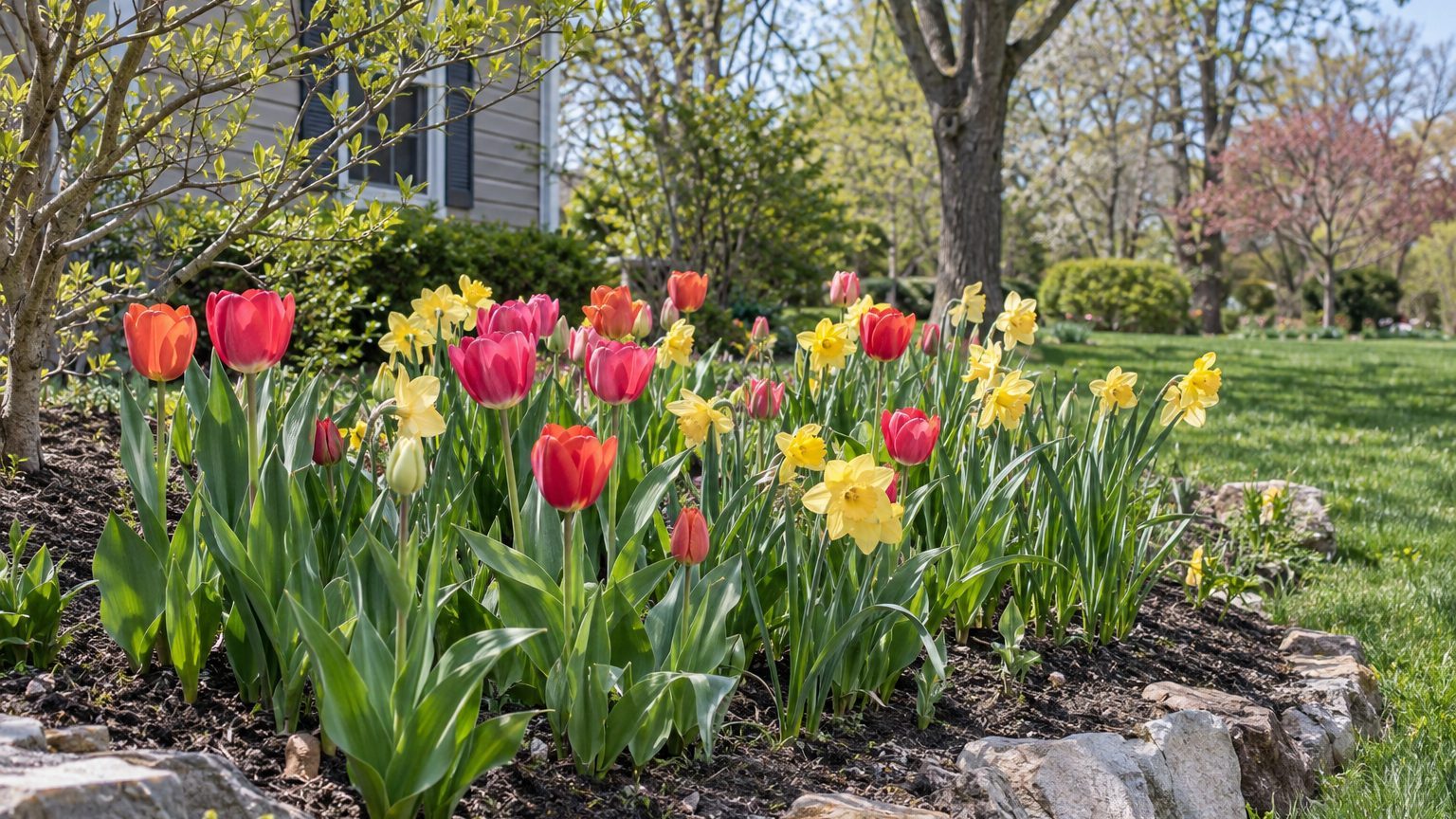
Green tips push through the mulch while patches of snow are still hanging on, and a yard that looked bare through winter suddenly has daffodils nodding by the walkway. Tulips and daffodils in Michigan follow the warming of spring, and the display unfolds gradually across the yard.
When Do Tulips and Daffodils Bloom in Michigan?

Most tulips and daffodils flower in April and May. The first daffodils can open as early as late February in a mild stretch, and March flowers are possible too. Michigan runs from USDA hardiness zone 4a to 6b, so the timing shifts with where you garden.
| Bulb | When it blooms in Michigan | What sets the timing |
|---|---|---|
| Daffodils | Late February in the mildest spells, mostly April and May | Shoots come up in March or early April and open as the ground warms |
| Tulips, including Giant Darwin hybrids | April through May | Warming spring weather after a full winter of cold |
| Alliums | Near the end of the spring bulb season | Needs winter chill, then responds to spring warmth |
Crocus open at the start of the season, alongside snowdrops and winter aconites, well before the tulips. Hyacinths ride the same spring warmth and, like most spring bulbs, need a long winter chill to flower. Michigan winters supply it, so the refrigerator trick used in mild climates is unnecessary here.
Michigan — the year and the numbers
- State
- Michigan
- USDA zones
- 4a-6b
- Last spring frost
- April 30 in the Detroit area; early to mid May across most of the Lower Peninsula
- First fall frost
- October 6 to October 21
- Annual rain
- 34 in
- Lawn zone
- cool-season
- Source
- MSU Extension — Frost-Free Dates · Detroit
How to Tell Your Bulbs Are About to Bloom
The bulbs announce themselves well ahead of the flowers, and a few small changes tell you how close the show is.
- Pointed green tips breaking the soil in March or early April mean the bulb has woken up, so keep winter mulch loose enough for them to push through.
- Daffodil buds form at the top of the stem and swell while still green, which tells you the flowers are only a short wait away.
- A tulip bud that begins to show color at its tip is close to opening, so any cleanup near the bed should be done by then.
- Thick, flat leaves rising before any bud means the bulb is working through its growth, and the flower stalk will follow from the center.
- A cold night after the tips emerge rarely harms the leaves, but open flowers are more vulnerable, and frost risk lingers until about April 30 in the Detroit area.
- Across most of the Lower Peninsula, the last spring frost comes in early to mid May, so open blooms there may still meet a cold night.
Watching the buds beats watching the calendar, because a warm spell can bring flowers out earlier than a cold one.
What to Do After Tulips and Daffodils Bloom in Michigan
Snip off the faded flowers and leave everything else. The green leaves are feeding the bulb for next year’s bloom, so they stay on the plant until they turn brown. Do not cut them back early, since that cuts down the surface that collects sunlight.
Tulips are often short-lived in the garden, and a bed may thin out over time. Larger bulbs such as tulips are sometimes treated as annuals to make room for other plants. Daffodils last longer and are the more reliable perennial bulb, which makes them the better choice where you want flowers to return without fuss.
Browning foliage looks untidy for a while. Planting perennials or annuals nearby lets their growth cover the fading leaves without disturbing the bulbs below.
How Bloom Time Shifts Across Michigan
Michigan stretches far enough north and is wrapped in enough lake water that bloom does not arrive everywhere together.
- Detroit area: Spring warms sooner in the southeast corner, so daffodils and tulips here tend to open earlier than in the northern half of the Lower Peninsula.
- Lake Michigan shore: Cold lake water holds back spring warmth along the coast, so bulbs often open a little later than they do farther inland at the same latitude.
- Northern Lower Peninsula: Winters last longer, and tulips and daffodils usually reach full bloom well after the southern part of the state.
- Upper Peninsula: Snow cover lingers into spring, so the bulb season starts later here than in the south, and hardy daffodils are dependable performers.
A sheltered south-facing wall can bring flowers out earlier in any of these places, while a shady north side holds them back.
Where to Get Bulb Advice in Michigan
Local questions about varieties, soil and timing are best put to people who know Michigan ground. MSU Extension runs the state’s gardening help, with a county office in every corner of the state.
- The service has horticulture resources on spring bulbs, and the fall planting season is the right time to read them.
- Your county extension office can answer questions about local soil, deer pressure and what grows well in your part of the state.
Common Questions
Can You Plant Tulips and Daffodils in December in Michigan?
Yes, as long as the ground can still be dug. September and October are the main planting months, but November and even December work if the soil has not frozen. A bulb still sitting in the bag is better planted late than held over the winter.
Do Deer and Rodents Eat Tulips and Daffodils?
Tulips and crocus attract voles, squirrels, rabbits and deer, and chipmunks, mice and gophers may help themselves too. Daffodils are left alone, which helps them hold up as a dependable bulb in yards with a lot of wildlife.
Can You Plant Forced Daffodils Outdoors in Michigan?
Daffodils are an exception among forced bulbs. They are more vigorous than tulips and most other spring bulbs, so forced daffodils can be saved and planted outdoors, where many perform well in later years.