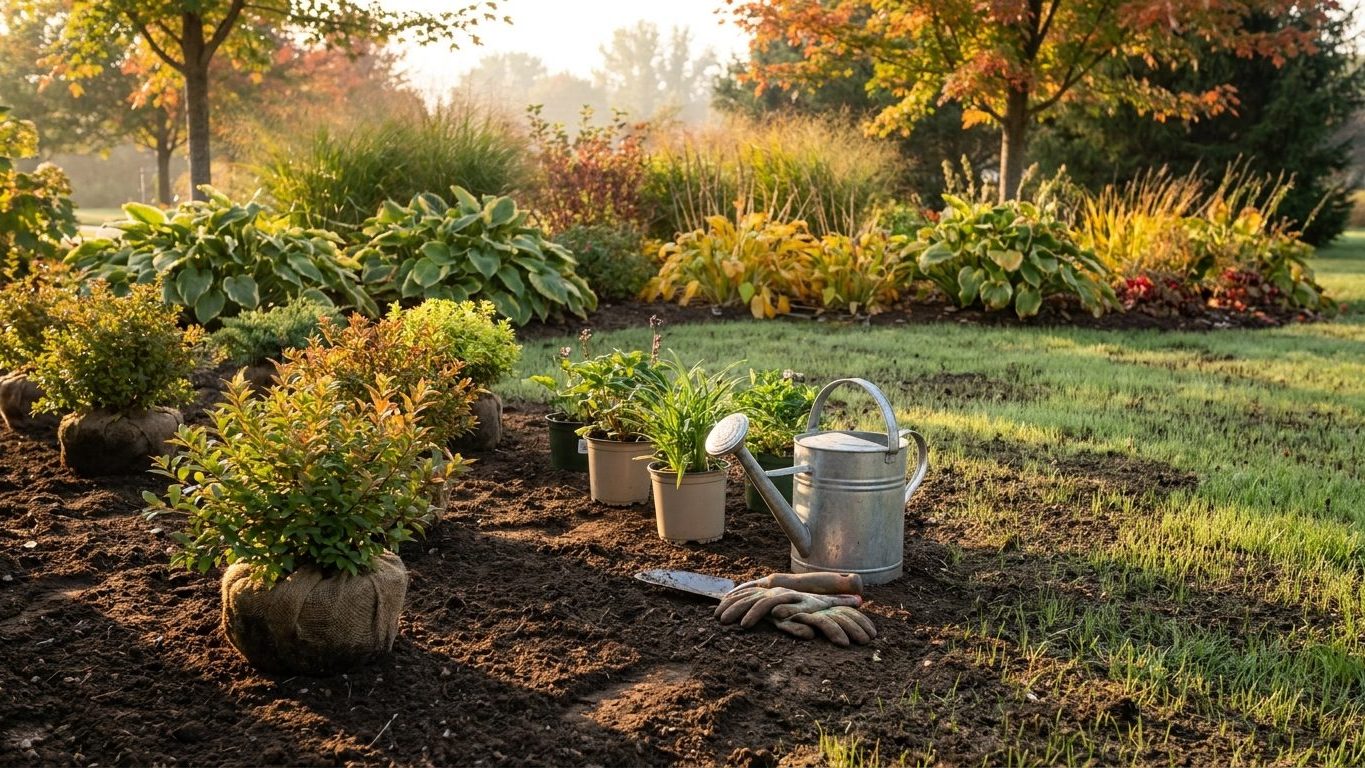
Michigan homeowners can still plant trees, shrubs, perennials, cool-season lawn grass, and garlic through September, while spring bulbs wait until the soil cools closer to month’s end. The window stays open because soil holds summer warmth even as air cools, giving new roots weeks to settle before frost. Warm-season vegetables and tender annuals are the exception, since no county has enough frost-free time left to finish them.
in Michigan, in one paragraph
September sits after summer’s peak and before the first freeze. Detroit’s last spring frost lands around April 30, and MSU Extension’s Frost-Free Dates data puts the first fall frost for zone 6a between October 6 and October 21.
Soil still runs warm from summer even as nights cool fast. That gap is what makes September a planting window across most of the state, not a closing one.
Hardiness ranges from 4a in the north to 6b near the Detroit River, per the USDA Plant Hardiness Zone Map. A shrub rooting easily downstate may need extra care three counties north.
Lawns thicken as cooler nights slow weed pressure. Most of what worked in August still applies, just on a tighter clock before frost.
Michigan — the year and the numbers
- State
- Michigan
- USDA zones
- 4a-6b
- Last spring frost
- April 30 in the Detroit area; early to mid May across most of the Lower Peninsula
- First fall frost
- October 6 to October 21
- Annual rain
- 34 in
- Lawn zone
- cool-season
- Source
- MSU Extension — Frost-Free Dates · Detroit
What to plant now
September is the last wide-open planting window before frost, and it favors anything that needs weeks of warm soil to root rather than months of warm air to fruit.
- Trees and shrubs settle fastest when planted in the first half of the month, giving roots six to seven weeks of warm soil before the ground locks up.
- Perennials and divisions transplant well now, since cooler air stresses top growth less than August’s heat did.
- Cool-season lawn grass such as fescue and bluegrass germinates reliably in September’s mix of warm days and cool nights.
- Spring-flowering bulbs go into the ground once soil temperatures drop, which for most of the state means toward month’s end.
- Garlic cloves planted now spend the fall building roots and reappear as shoots once soil warms again in spring.
- Cool-season vegetables like spinach and lettuce still have time to mature before the first hard freeze near Detroit.
Warm-season vegetables and tender annuals are the one exception, they need a full frost-free stretch this month can no longer promise anywhere in the state.
What to do now
Order matters this month, since some tasks only work while soil is warm and others need the cooling air.
- Test soil temperature before planting bulbs: wait until nights consistently sit cooler, which usually happens late in the month across the Lower Peninsula.
- Plant trees, shrubs, and perennials early: aim for the first half of September so roots get six or more weeks before frost, per MSU Extension’s Garden Calendar.
- Seed or overseed the lawn: cool nights and warm soil this month push faster germination than spring seeding does.
- Water new plantings deeply: a weekly soak matters more now than fertilizer, since new roots dry out fast in warm September afternoons.
- Cut back perennials only after bloom fades: pruning too early removes energy the roots still need before dormancy.
- Mulch beds once nights cool: a 2 to 3 inch layer holds soil warmth into October and buffers the first frost between October 6 and October 21.
None of these gestures need a calendar app, just a thermometer and a sense of how many weeks remain before the ground locks up. Local extension offices track frost timing than any statewide range can.
What you will see this month
Powdery mildew on late perennials

Warm days and cool, damp nights coat leaves in a gray-white film, especially on phlox and bee balm. Thin crowded stems for airflow and skip watering from overhead, since wet foliage overnight is what lets the fungus spread.
Brown patches in cool-season lawns

Patches that stayed green through August but brown now usually point to compacted soil rather than drought, since September rain rarely causes it. Aerate before reseeding those spots, or the new seed will struggle in the same hard ground.
Early leaf drop on stressed trees

Trees that dropped leaves early after a hot summer are shedding stress, not disease, ahead of the season’s first freeze. MSU Extension’s Garden Calendar puts that freeze at October 6 to October 21 for zone 6a, so this is the wrong time to fertilize and push new growth.
Rules in force this month
Michigan sets no statewide watering or burning mandate for September, so what applies depends on where you live.
- Municipal watering schedules, common in southeast Michigan, usually still apply through September until utilities lift them for the season.
- Local burn permits, required in many townships for yard debris, stay in effect and depend on daily fire risk.
- Tree removal permits, where cities require them for shade trees on private property, don’t pause for the season.
- Oak pruning is generally lower-risk now than in spring, since the insects that spread oak wilt slow down once nights cool.
Check with your township or city office before burning brush or pruning oaks near a property line, since rules differ by municipality.
Next month
October brings the season’s real frost, arriving between October 6 and October 21 across the zone 6a stretch that includes Detroit. Planting shifts from roots-first perennials toward bulbs and garlic that want cold ahead.
Lawn care moves toward the year’s last mow and last feed. See what October in Michigan covers task by task.
Common questions
Is it too late to plant a tree in Michigan in September?
No, early September is one of the better times, since roots get six or more weeks of warm soil before the ground cools toward the first fall frost.
Can I still seed my lawn in September?
Yes, cool nights and warm soil this month give cool-season grass seed some of its fastest germination of the year, better than most spring seeding attempts.
Should I plant bulbs now or wait?
Wait until soil temperatures drop later in the month. Planting spring bulbs too early, while soil is still warm, can encourage premature growth that frost will damage.