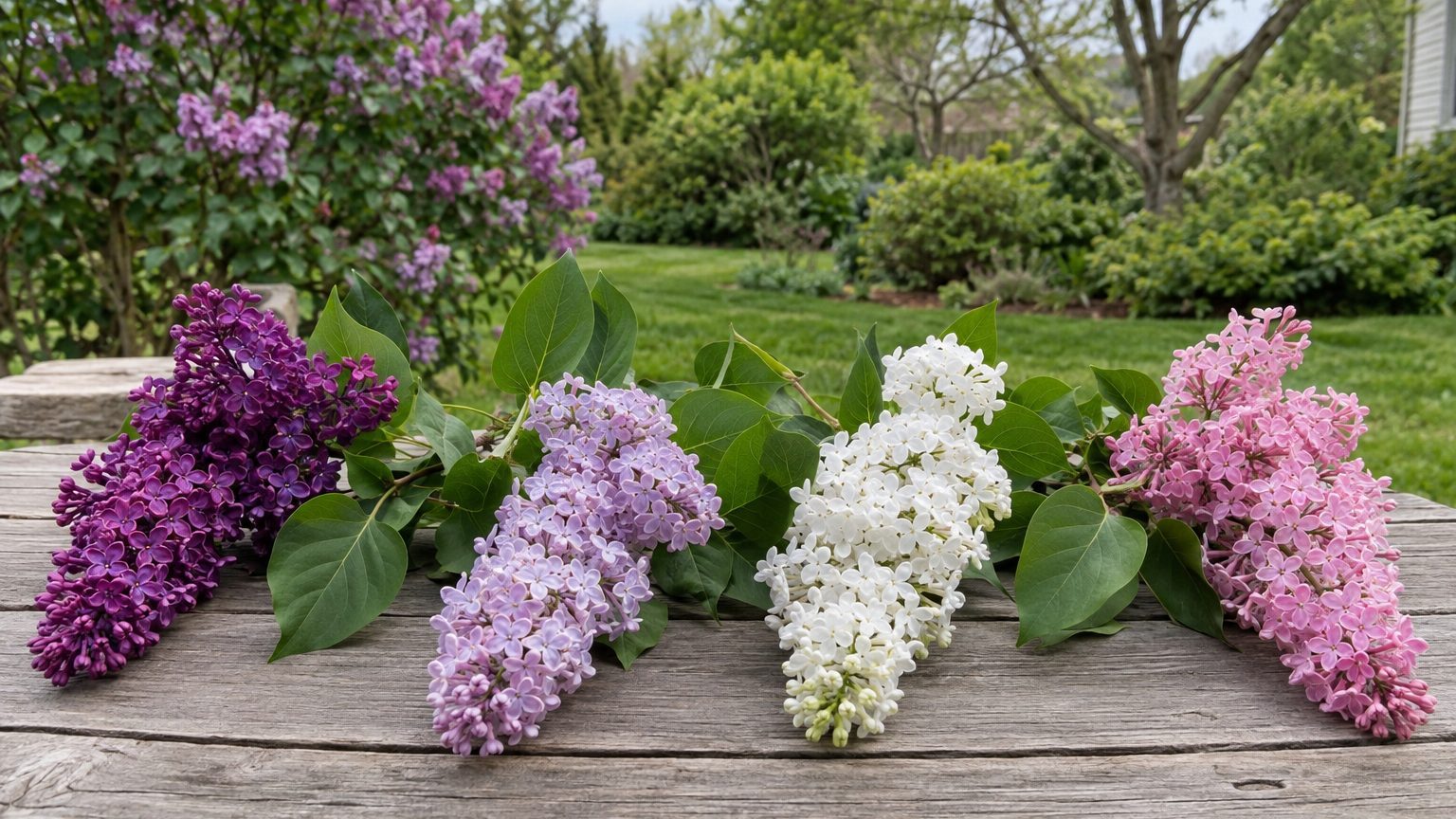
A lilac in full bloom in May is one of the great pleasures of a Michigan yard, and the shrubs that give you that show are mostly the common lilac and its cold-hardy hybrids. They suit a state with real winters, and the right cultivar keeps the leaves clean through humid summers.
Best Lilacs to Grow in Michigan

Common lilacs and their hybrids do well across Michigan, because lilacs need a cold winter rest to mature their flower buds and most of the state gives them one. The hardiness zones here run from 4a to 6b on the USDA system. The trouble comes from hot, humid summers, which is why cultivar choice matters.
Common Lilac

Syringa vulgaris is the lilac most people picture, the one sold in stores everywhere. It came from Europe and is now considered naturalized in North America. It is hardy to -60°F, so it is well suited to Michigan winters.
Give it a sunny spot with good air circulation. It is not picky about soil and rarely needs fertilizer.
Cold-Climate Hybrids

Hybrids between Syringa oblata and Syringa vulgaris are well suited to cold climates and open early, in April on the lilac calendar. They make sense for northern Michigan gardeners, where a hard winter is a given and you want a shrub bred for it.
Mildew-Resistant Cultivars
Powdery mildew is a very common problem on common lilac, and humid Michigan summers invite it. Cultivars that resist the disease are the better choice if you want lower maintenance. Check the plant tag or ask the nursery before you buy.
Few pests bother lilacs, so mildew is the problem to plan around.
Reblooming Cultivars
Many nice cultivars rebloom, which gives you a second round of flowers after the main May show. They are worth a look if you want color to stretch further through the season. The number of cultivars available is incredible, so you have plenty of choice in flower color and form.
Late-Blooming Lilacs
Some lilacs bloom late, after the common lilacs and before the tree lilacs. Planting one alongside a common lilac extends the fragrance into June, which is the tail end of the Michigan bloom season.
Michigan — the year and the numbers
- State
- Michigan
- USDA zones
- 4a-6b
- Last spring frost
- April 30 in the Detroit area; early to mid May across most of the Lower Peninsula
- First fall frost
- October 6 to October 21
- Annual rain
- 34 in
- Lawn zone
- cool-season
- Source
- MSU Extension — Frost-Free Dates · Detroit
How to Choose a Lilac for a Michigan Garden
Start with the problem your yard is most likely to hand you, whether that is deep cold, muggy summers or limited time for upkeep. Each of those points to a different kind of lilac.
In Michigan, the decision involves maintenance, bloom season and winter hardiness.
| Your situation | What suits it in Michigan | Why |
|---|---|---|
| Very cold winter | Common lilac or a cold-climate hybrid | Common lilac is hardy to -60°F, and the hybrids are bred for cold climates |
| Hot, humid summer | Mildew-resistant cultivar | Lilacs struggle in humid heat, and powdery mildew is a very common problem on common lilac |
| Little time to spend | Mildew-resistant common lilac | It is not picky about soil, rarely needs fertilizer and has few pest problems |
| Need for winter cold | Any common lilac or hybrid | Flower buds mature during a cold winter rest, which Michigan provides |
If you want a longer season of flowers, pair a reblooming cultivar with a late bloomer so the shrubs follow one another instead of peaking together.
Which Lilacs Suit Different Parts of Michigan
Michigan stretches from the Upper Peninsula to the Detroit suburbs, and the climate shifts enough to change which lilac you pick.
- Upper Peninsula: common lilac and cold-climate hybrids are well suited to cold climates.
- Northern Lower Peninsula: cold is still a real concern here, so the same hardy types fit, with a sunny, breezy site to keep the leaves dry.
- Detroit area: a mildew-resistant cultivar can ease summer upkeep. Last frost comes around April 30, which can catch early-opening hybrids in bloom.
Across most of the Lower Peninsula, the last spring frost comes in early to mid May, so bloom timing varies from yard to yard.
Lilac Buying Mistakes to Avoid in Michigan
Skipping Mildew Resistance
Many people buy the first lilac in bloom at the nursery without asking about disease. In humid summer weather, a susceptible cultivar can develop powdery mildew and leave the foliage looking grimy.
Look for cultivars labeled as resistant, and plant them where air moves freely.
Choosing Looks Over Hardiness
A lilac that is not suited to cold climates is a gamble in the Upper Peninsula and northern Lower Peninsula. A frozen shrub costs you the plant and lost growing time.
Stick with common lilac or the cold-climate hybrids when winters are severe.
Ignoring Adult Size
A pot at the garden center tells you little about how large the shrub will become. Lilacs can work as border shrubs and privacy screens, so check the plant tag for mature size before choosing a spot. Crammed against a walkway or window, they outgrow the spot.
The fix is a hard cut-back in March or April, but an overgrown lilac cut hard will not flower for a few years afterward. Routine pruning is gentler. Do it in May or June, right after the flowers fade, because lilacs set next year’s flower buds in summer. Pruning in late summer, fall or winter removes the coming spring’s flowers.
Where to Get Lilac Advice in Michigan
Local help can settle cultivar questions for your soil and microclimate. Michigan State University Extension publishes gardening guidance for the state, and your county office can answer questions about your own yard.
- Its plant and disease information is useful before you shop for a cultivar.
- Your county extension office can help identify mildew or other trouble, so bring a leaf sample in summer when symptoms show.
Common Questions
When Do Lilacs Bloom in Michigan?
Bloom runs through April and May, and later cultivars can carry the show into June. Cold-climate hybrids open early, while late-blooming types follow the common lilacs.
How Much Sun Do Lilacs Need?
Lilacs thrive in sunny sites with good air circulation. Airflow helps leaves dry quickly, which cuts down the powdery mildew that humid summers bring.
Do Lilacs Need Fertilizer in Michigan?
Rarely. Lilacs are not picky about soil conditions and seldom require fertilization. Put your effort into picking a mildew-resistant cultivar and a sunny, breezy spot instead.