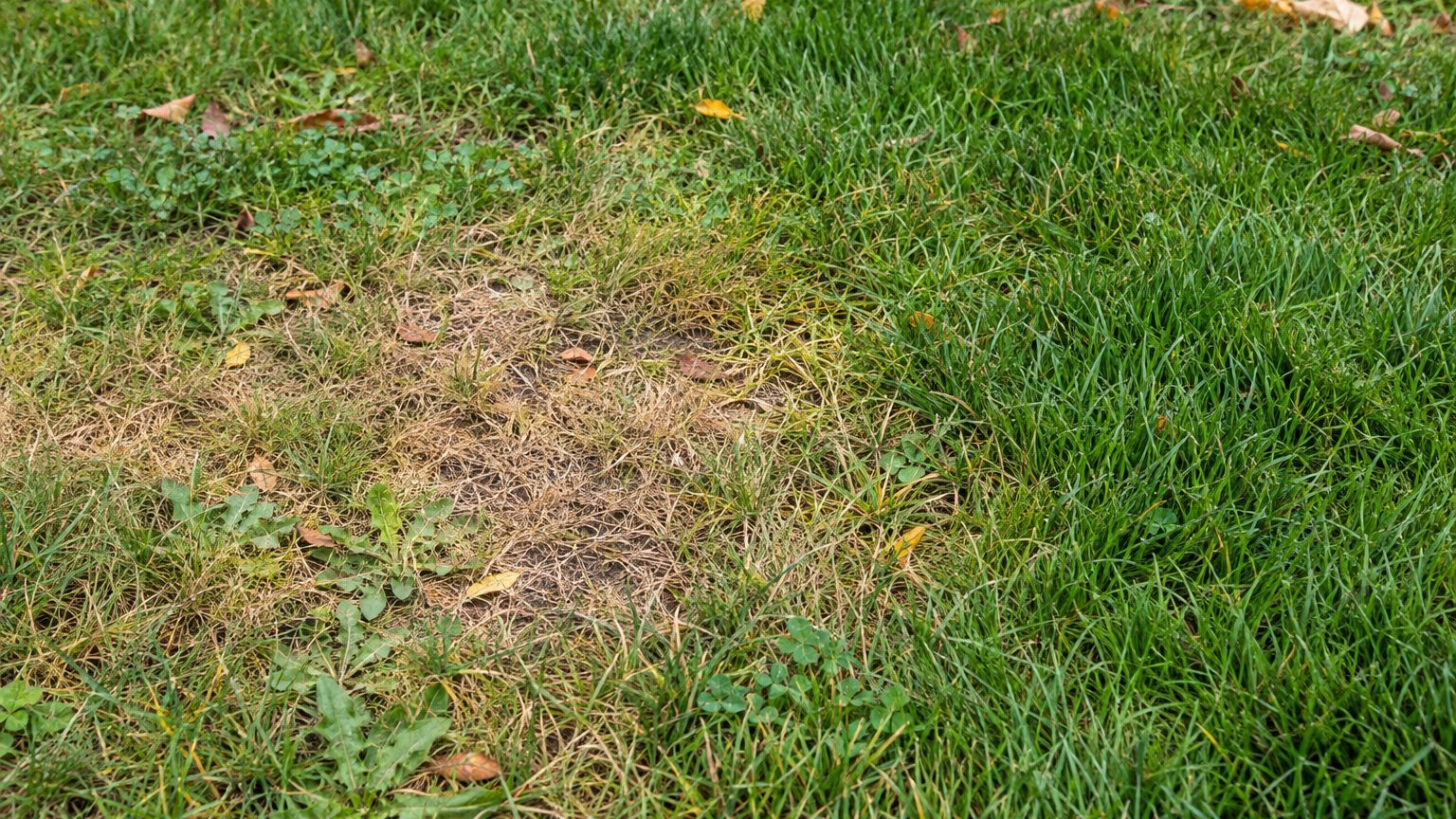
Brown patches that spread in July, grass that thins under a cottonwood, and weeds that fill the gaps by June are familiar problems in a New Mexico yard. These problems can trace back to dry air, alkaline soil, intense sun and watering habits rather than to bad luck. Knowing what each problem looks like makes the fix much simpler.
Lawn Pests and Diseases in New Mexico
Crabgrass in Thin Spots

Crabgrass shows up as coarse, light green clumps that spread flat along the ground, usually where turf is thin or bare. It sprouts as the soil warms, so a pre-emergence preventer goes down in March, with February, April and May still workable if you miss it.
Pulling young plants by hand works in small yards. Thick turf is the lasting answer.
Thatch Buildup
Thatch is the spongy mat of dead stems and roots between the green blades and the soil. Up to 1/2 inch is healthy, but a thicker layer blocks water and invites trouble. Dethatch or core aerate once it passes that mark.
Bermuda and zoysia lawns are dethatched in May or June, while tall fescue is handled in August or September.
Brown Patches in Midsummer
Dry, crunchy brown patches in July can point to drought stress, but rule out disease or root damage before treating them. Hot, bright summers pull moisture out of the soil faster than shallow watering can replace it. Water deeply and regularly through June, July and August, when the lawn needs it most.
Tall fescue can struggle in the heat, while bermuda and zoysia tolerate it better.
Grubs and Chewed Roots
Grubs are pale, C-shaped larvae that chew roots just under the surface. The telltale sign is turf that peels back like a loose carpet, with no roots holding it down.
Healthy, deeply rooted grass tolerates a few grubs. Peel back a patch of sod before treating anything, because widespread damage calls for a different response than isolated grubs.
Weeds in Bare Ground
Weeds move into openings, and bare soil from scalped mowing or drought leaves them room to spread. Pulling them while the soil is moist gets the roots out.
The better long-term answer is overseeding tall fescue in August, with September as the fallback. Warm-season lawns fill in with seed or sod in May, and June also works.
New Mexico — the year and the numbers
- State
- New Mexico
- USDA zones
- 4b-9a
- Last spring frost
- March 31 to April 12
- First fall frost
- October 29 to November 9
- Annual rain
- 9 in
- Lawn type
- cool- and warm-season
- Source
- NOAA NCEI U.S. Climate Normals 1991-2020, 32F freeze probabilities · Albuquerque
How to Tell Which Lawn Problem You Have
Symptoms can point to several causes, so consider what the damage looks like and where or when it appears. A quick tug on the grass, paired with a look at the shade pattern, can narrow the possibilities.
Start with the shape of the patch, then check whether the turf lifts and when the trouble began.
| What you see | Where or when | Likely cause |
|---|---|---|
| Crunchy brown, no roots damaged | Sunny areas, June to August | Drought stress |
| Turf peels up like a rug | Patchy areas, roots missing | Grubs |
| Coarse, spreading clumps | Thin or bare spots, after soil warms | Crabgrass |
| Spongy feel underfoot | Whole lawn, water runs off | Thatch buildup |
| Thin grass | Under trees, in shade | Too little light |
Shade thinning is its own case, since grass simply needs sun to thrive. If water pools or runs off a firm surface, test the thatch with a screwdriver or a small plug. If the clues disagree, keep investigating rather than relying on the pull test alone.
Where Lawn Problems Are Worst in New Mexico
Elevation and latitude split the state into very different lawn climates, and the problems shift with them.
- Albuquerque and the Rio Grande Valley: Hot summers and dry air stress cool-season grass, which can leave drought patches and weeds in thin turf. The reference frost window here runs March 31 to April 12 in spring, and gardens outside the city often see frost later.
- Santa Fe and the northern mountains: Higher elevation means a shorter season and later frost, so spring growth and seeding start later than in the valley. Check your own county before setting dates.
- Las Cruces and the southern desert: Heat favors bermuda, and summer watering deserves close attention.
Cold-hardiness varies widely across the state, which spans USDA zones 4b to 9a.
Lawn Care Mistakes That Invite Problems in New Mexico
Mowing Too Short
Scalped grass exposes soil, dries roots and opens space for weeds. Mowing runs from March through November for cool-season lawns, and April through October for bermuda and zoysia.
Raise the blade and cut often enough that you never remove a large portion of the leaf at once.
Shallow, Frequent Watering
Light daily sprinkling keeps roots near the surface, where they bake in summer. Water deeply and less often, concentrating on June through August.
A screwdriver pushed into the soil tells you how deep the water went.
Feeding at the Wrong Time
Fertilizing tall fescue in summer pushes soft growth during heat it cannot handle. Feed it in March, September and October, and April works as a fallback.
Bermuda and zoysia want food in May, June and July, when they are actively growing.
Where to Get Lawn Advice in New Mexico
Local soil, elevation and water quality vary, so advice from nearby sources beats general rules. Nearby help is worth knowing.
- New Mexico State University Cooperative Extension publishes guides on turf, weeds and watering that you can read before a problem escalates.
- Your county extension office can look at a sample or photo, so call it when the cause stays unclear after the pull test.
Common Questions
Why Does My Lawn Look Worse Near the Sidewalk?
Edges near pavement heat up and dry out faster. Watering those strips a little longer, and checking sprinkler coverage, usually helps.
Can You Fix a Thin Lawn Without Replacing It?
Often yes. Aerate and overseed tall fescue in late summer, or reseed bermuda and zoysia in May, and the lawn typically thickens without starting over.
Is a Spongy Lawn Always a Thatch Problem?
Not always. Pair the spongy feel with a thick layer visible when you cut a small plug, and then you can be fairly sure.