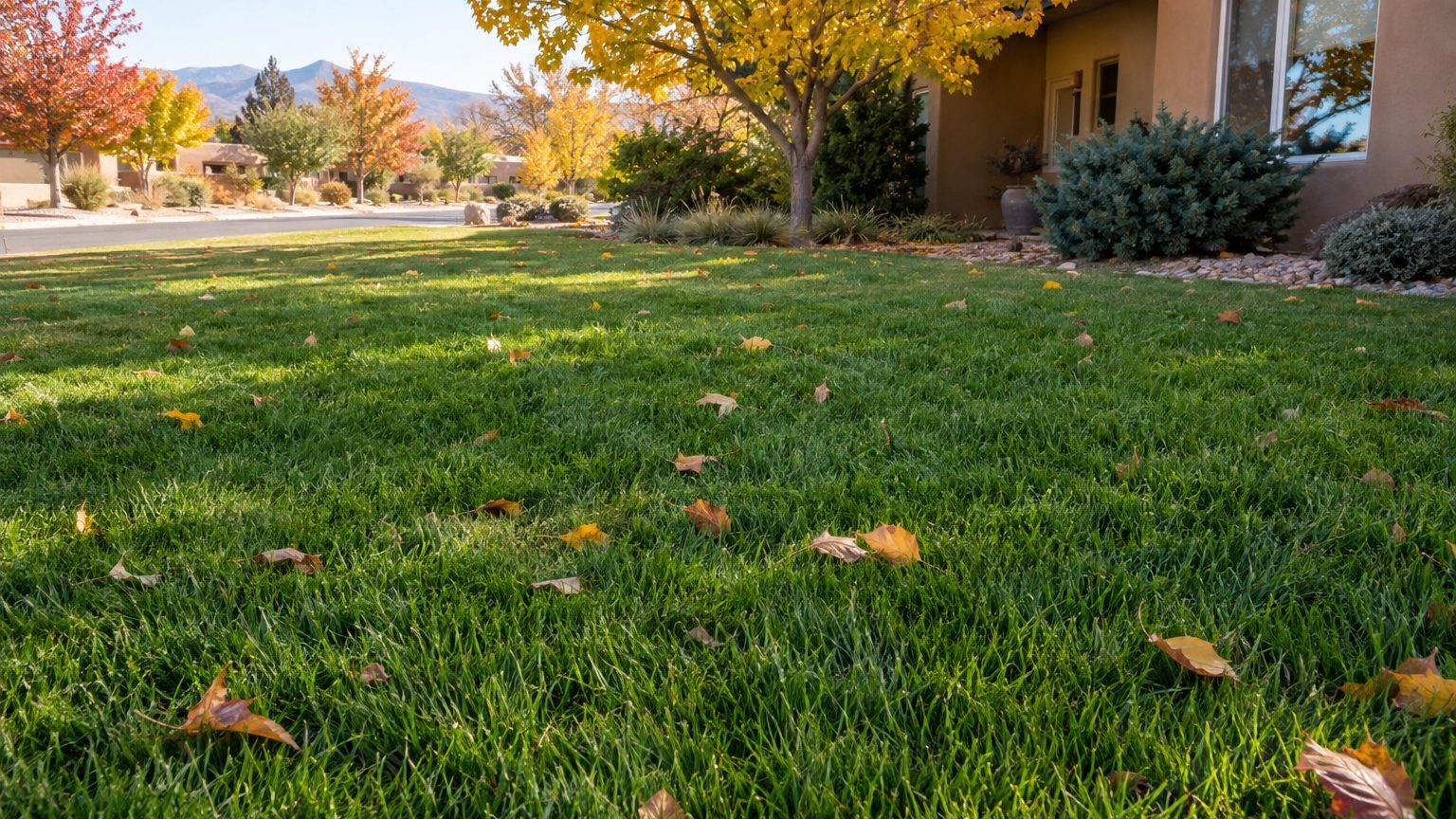
Brown, crunchy grass in January is normal across much of New Mexico, and a green stripe by the curb in July is just as ordinary. Lawn work here follows soil warmth and the type of grass you grow, so a tall fescue yard and a bermuda yard keep different calendars.
What to Do Each Month in a New Mexico Lawn

Tall fescue and other cool-season grasses work on the fall and early spring side of the year. Bermuda and zoysia wake up later and do their heavy work in late spring and summer. Unless a line says otherwise, the advice fits both.
| Month | In the lawn |
|---|---|
| January | Rest. The grass is dormant, so keep foot traffic light and clear fallen debris. |
| February | Still quiet. If spring runs warm, crabgrass preventer can go down now, though March suits most yards better. |
| March | Apply crabgrass preventer before the weeds sprout, and feed cool-season lawns such as tall fescue. Mowing starts as growth picks up. |
| April | Keep mowing. Preventer and fertilizer still work this month if March slipped by, and warm-season lawns can be dethatched now. |
| May | Warm-season lawns take off. Seed bermuda or zoysia, lay sod, dethatch and begin feeding. Preventer still works this month too. |
| June | Water deeply as heat builds. Warm-season lawns keep getting fed, and seeding or sodding still works if May passed. |
| July | Peak heat. Keep watering and feeding bermuda and zoysia, and skip fertilizer on tall fescue, which stalls in summer. Sod can still go down on warm-season lawns. |
| August | Aerate and seed tall fescue, and dethatch cool-season lawns, so seedlings root as heat eases. Keep watering. |
| September | Feed cool-season grass again. If you missed August, aerating, seeding and dethatching still work now. |
| October | Give cool-season lawns a last feeding and keep mowing until growth stops. |
| November | One of the last mowings, then put the mower away as the grass slows toward dormancy. |
| December | Rest. The lawn sleeps, and there is nothing to do but keep off frozen turf. |
Fertilizing tall fescue in early spring and fall, never in summer, is the one firm rule for cool-season yards here.
New Mexico — the year and the numbers
- State
- New Mexico
- USDA zones
- 4b-9a
- Last spring frost
- March 31 to April 12
- First fall frost
- October 29 to November 9
- Annual rain
- 9 in
- Lawn type
- cool- and warm-season
- Source
- NOAA NCEI U.S. Climate Normals 1991-2020, 32F freeze probabilities · Albuquerque
When Does the Lawn Season Start and End in New Mexico?
Grass wakes when the soil warms, not when the calendar flips. Cool-season seed germinates in soil at 50 to 65 °F, while bermuda and zoysia want 65 to 70 °F. That gap is why tall fescue greens up in early spring and warm-season grasses hold off until May.
Frost dates only tell you when a young seedling could get nipped. In Albuquerque, the last spring freeze usually falls between March 31 and April 12, and the first fall freeze between October 29 and November 9. Suburban and rural yards tend to freeze later in spring and earlier in fall, and higher ground more so, so check with your county office.
For mowing, the season runs from spring into November for cool-season grass and a bit shorter for warm-season lawns, which stop once the soil cools.
How the Lawn Calendar Shifts Across New Mexico
New Mexico spans hardiness zones 4b to 9a on the USDA system, so elevation has a strong effect on lawn timing.
- Albuquerque and the Rio Grande Valley: Spring arrives early, but use the Albuquerque timing above only as a local reference and check your county before setting dates elsewhere in the valley. Warm-season grasses do well in the valley’s long summers.
- Santa Fe and the northern mountains: Cold lingers, so expect spring work to shift later and finish fall seeding earlier. Cool-season grass is the usual choice at this elevation.
- Las Cruces and the southern desert: Warmth comes sooner and lasts longer, which favors bermuda. Spring work can begin a little ahead of the Albuquerque dates.
The higher you live, the more you should lean on soil warmth and less on any printed date.
Lawn Care Timing Mistakes to Avoid in New Mexico
Seeding Warm-Season Grass Too Early
Bermuda seed sown in cool April soil sits idle or rots. Wait for May, once the ground has warmed, and June still works if you miss it.
Fertilizing Tall Fescue in Summer
Feeding fescue in July pushes soft growth that summer heat can scorch, and it wastes water. Feed in March and again from September into October, and save summer feeding for bermuda and zoysia.
Waiting Too Long to Seed Fescue
Seed that goes down after August has less warm soil to root in before freezing weather arrives. Aerate and overseed in August, and if that slips, September is still open.
Where to Get Lawn Advice in New Mexico
Local conditions change fast with elevation, so ask someone who knows your county. Local sources can cover most questions.
- New Mexico State University’s extension service offers lawn and turf guidance for the state’s climates, worth checking before each season starts.
- Your county extension office can tell you the frost risk for your yard and which grass suits your elevation, so call before you buy seed.
Common Questions
What Grass Grows Best in New Mexico?
It depends on elevation and heat. Tall fescue handles cooler, higher yards, while bermuda and zoysia suit hot lowlands. Match the grass to your climate before you seed.
Is August Too Late to Aerate a New Mexico Lawn?
No. August is the preferred time for aerating tall fescue, and September still works if you miss it.
When Should You Dethatch a Bermuda Lawn in New Mexico?
Do it in May or June, when the grass is growing strongly and recovers fast. April also works in a warm spring.