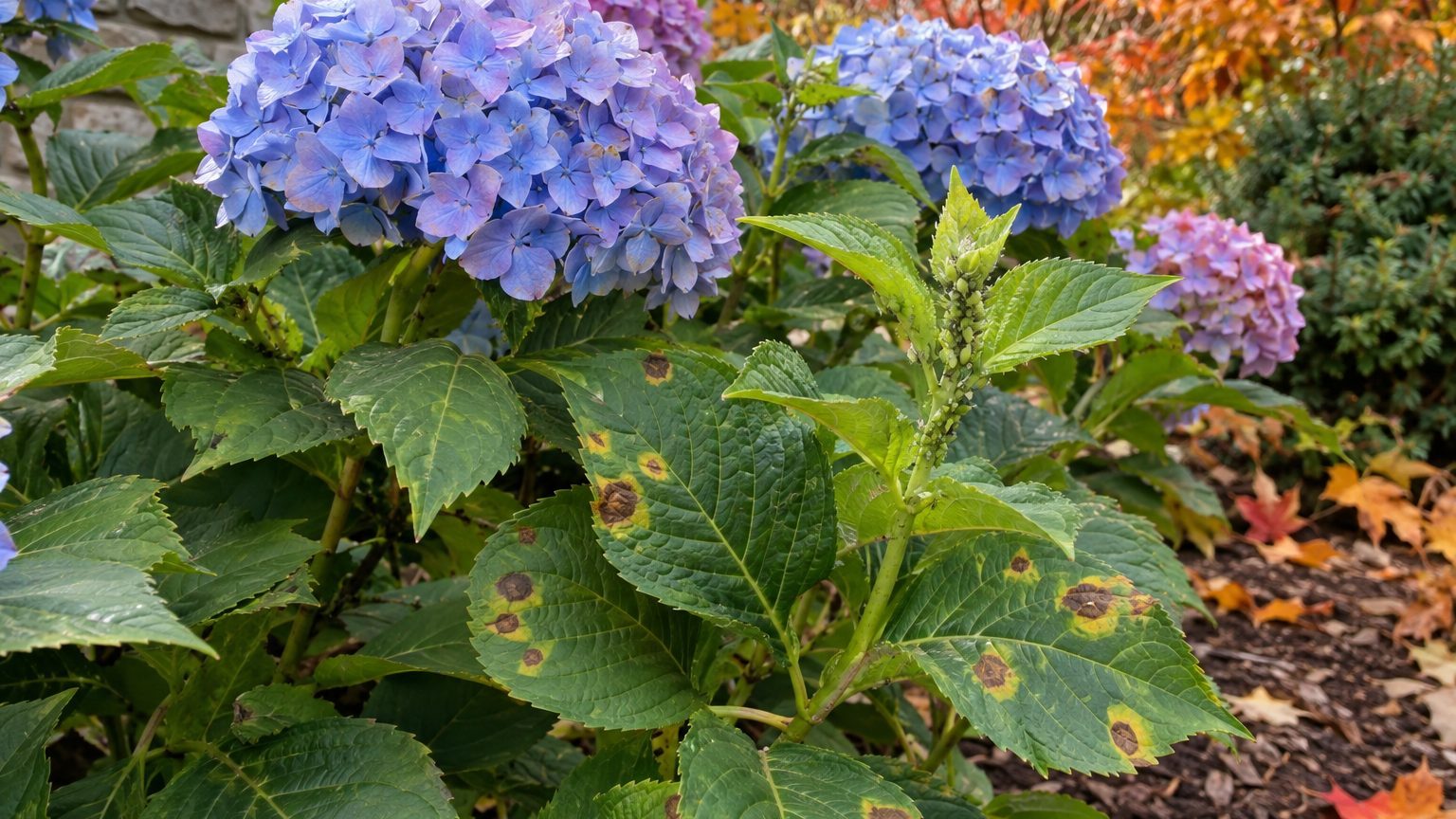
In Albuquerque, hydrangea trouble follows the dry air and alkaline soil more than any single insect. Aphids and spider mites show up on new growth, but chlorotic leaves and sun scorch cause more losses across the state’s USDA zones 4b to 9a. Powdery mildew stays rare here. Watch these six problems in the order they appear each season, from spring aphids to fall root rot in wet clay.
Hydrangea pests and diseases New Mexico: The Short Answer
Aphids
Aphids cluster on tender new shoots once night temperatures climb into the fifties, curling leaves and leaving a sticky residue that draws ants. USDA Plant Hardiness Zone Map puts the state at 4b to 9a, so this start date drifts by elevation. A strong morning hose spray knocks the colony back fast.
Chlorotic leaves
Yellow leaves with dark green veins point to iron chlorosis, not a bug or fungus, because most of the state sits on alkaline soil that locks iron out of reach. It appears as new growth hardens in late spring. A chelated iron drench timed to the March or May fertilize window brings the green back.
Spider mites

Spider mites thrive in the dry heat that defines most New Mexico summers, stippling leaves with tiny pale dots and spinning fine webbing along the stems. They build up fastest during long dry spells between waterings. A hard water spray on the undersides every few days breaks the cycle better than most sprays.
Leaf scorch

Leaf scorch shows up as brown, crisp edges on the sunniest side of the shrub, usually by midsummer, and it comes from wind and low humidity, not disease. It gets worse on plants facing west without afternoon shade. Moving mulch out to the drip line and watering deeply twice a week cuts the damage fast.
Powdery mildew
Powdery mildew stays rare in New Mexico’s dry air, but a white, dusty film can appear on leaves right after the short summer monsoon pushes humidity up for a week or two. It fades once the air dries back out. Extra spacing between shrubs keeps this one from ever taking hold.
Root rot

Root rot follows overwatering in the clay and caliche soils common across the state, turning stems soft at the base and leaves limp even after rain. It tends to show up in fall as growth slows down. Raised beds or amended planting holes with better drainage are the real fix, not fungicide.
New Mexico — the year and the numbers
- State
- New Mexico
- USDA zones
- 4b-9a
- Last spring frost
- March 31 to April 12
- First fall frost
- October 29 to November 9
- Annual rain
- 9 in
- Lawn zone
- transition-season
- Source
- NOAA NCEI U.S. Climate Normals 1991-2020, 32F freeze probabilities · Albuquerque
How to Work Out the Dates for Your Own Yard
Working out which of these six problems you actually have starts with the calendar, not with the bug or the leaf.
- Mark the frost window first: NOAA NCEI U.S. Climate Normals lists Albuquerque’s last spring frost between March 31 and April 12, so bronzed leaves that show up before that range are freeze damage, not disease.
- Check it against the fertilize months: March, May, and July are the state’s fertilize windows, and pale, thin leaves that appear right before those dates usually mean chlorosis, not a pest.
- Watch the stretch after planting: plant windows fall in March, April, August, and September, and wilting inside that stretch is almost always root stress, not aphids.
- Inspect new growth through the prune window: bigleaf pruning runs June and July, and sticky, curled tips found then point straight to aphids or mites, not fungus.
- Re-check after any monsoon week: humidity spikes are the only time this state sees powdery mildew, so a white film after rain confirms it, while dry heat still points back to mites.
None of these six problems looks the same on paper as it does on your own patio, especially at elevation, so treat the calendar as a first pass and confirm by eye before treating anything twice.
New Mexico North to South: How the Dates Shift
Elevation changes pest and disease timing across New Mexico more than any single calendar date, and it moves in the same direction as the land, colder and later toward the mountains, hotter and earlier toward the low desert.
- Northern high country (Santa Fe, Taos, Raton): the growing season opens later at elevation, so aphids and chlorotic leaves show up weeks behind the rest of the state, and a late freeze can still nip new growth well into spring.
- Central river valley (Albuquerque, Los Lunas, Belen): this is the reference climate for the whole page, dry heat brings spider mites on early and alkaline river-bottom soil keeps chlorosis a running problem all summer.
- Southern low desert (Las Cruces, Deming, Carlsbad): the longest frost-free stretch in the state pushes mite pressure and leaf scorch earlier and harder, while the short monsoon window offers the only real risk of powdery mildew.
Wherever you garden in the state, the New Mexico hydrangea guide has the frost window and pruning dates sized to your county.
Mistakes New Mexico Punishes
Skipping the pH test
Alkaline soil across most of the state locks up iron before a hydrangea can use it, and gardeners often spray for disease when the real problem is mineral. A simple soil test before planting catches this, and the calendar’s March, May, and July fertilize windows are the right time to correct it.
Watering by the calendar, not the soil
Caliche and clay hold water far longer than the surface looks, so a fixed weekly schedule drowns roots long before wilting shows. Root rot follows within weeks in low spots. Check soil moisture with a finger or probe before every watering instead of running on autopilot.
No afternoon shade on the west side
Full western sun paired with New Mexico’s low humidity scorches hydrangea leaves faster than almost anywhere else in the country. Plant against an east or north wall, or under high tree cover, and save west exposures for the toughest panicle varieties.
New Mexico Extension Offices and County Contacts
USDA Plant Hardiness Zone Map lists New Mexico at 4b to 9a, but that range covers desert floor to mountain forest, and your county office knows which pests and soils actually show up on your street.
- New Mexico State University Extension: aces.nmsu.edu links every county office to a local horticulture agent.
- Your county extension office: free or low-cost soil tests and pest identification.
- The New Mexico hydrangea guide: frost dates and pruning windows sized to your part of the state.
Start there before you plant anything new this fall.
Common questions
Do hydrangeas get powdery mildew in New Mexico?
Rarely, and only for a short stretch. The dry climate keeps this fungus mostly at bay, but a brief monsoon humidity spike can bring a dusty white film to leaves for a week or two before it dries out again.
Why do hydrangea leaves turn yellow with green veins in New Mexico?
That pattern is iron chlorosis, not a disease. Alkaline soil across most of the state locks iron out of reach of the roots, and a chelated iron treatment during the March or May fertilize window usually corrects it.
When should I treat aphids on hydrangeas in New Mexico?
Check new growth as soon as nights warm in spring, ahead of the June and July pruning window. A hard spray of water most mornings usually clears a light infestation before it spreads.