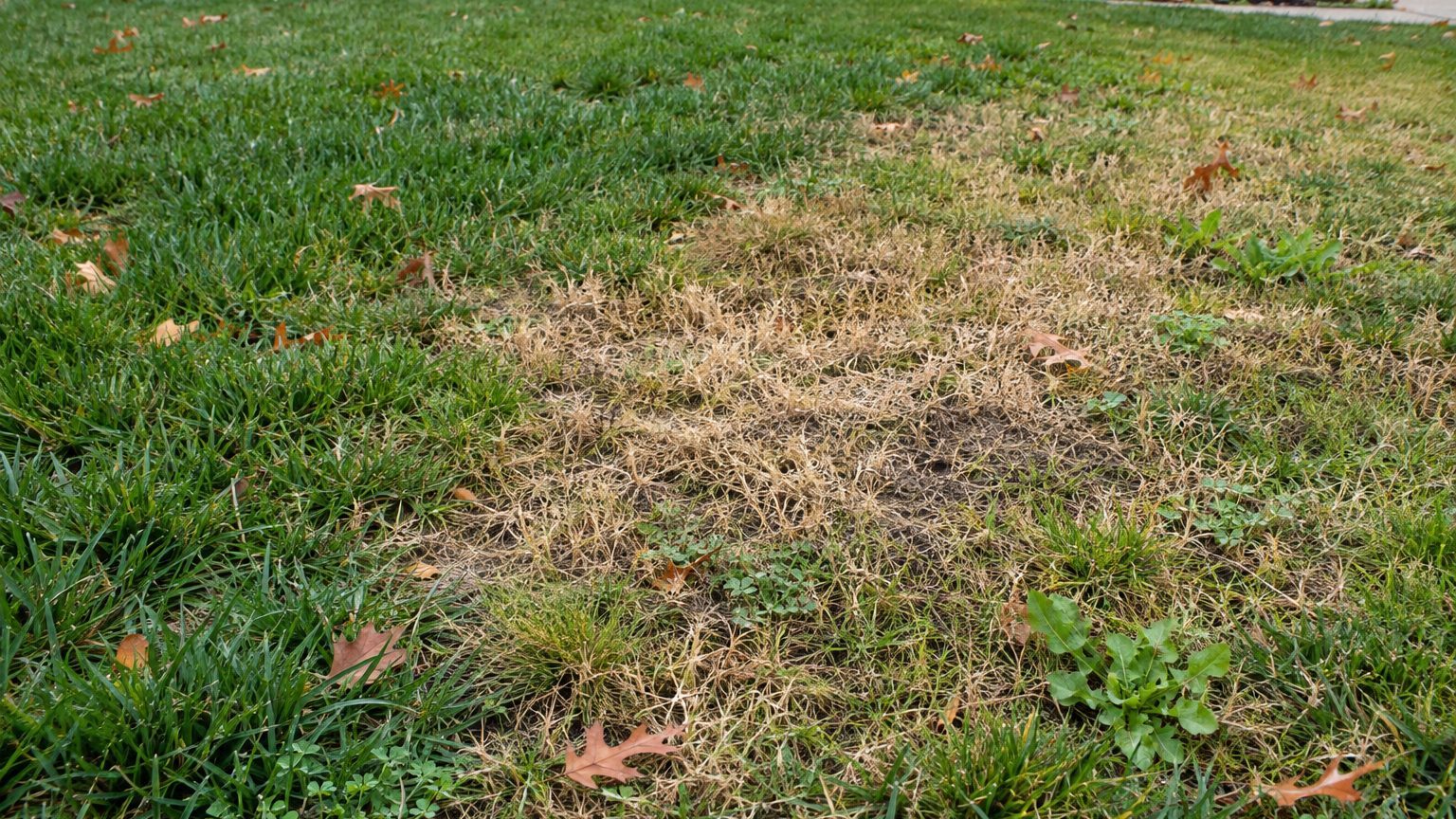
A Texas lawn usually tells you something is wrong with a patch that turns tan, thins out, or fills with coarse weeds. Common causes include crabgrass, thatch, chinch bugs, grubs, and fungi that thrive in cool, wet weather.
Lawn Pests and Diseases in Texas
Crabgrass

Crabgrass is a pale green, sprawling weed that forms flat rosettes with stems radiating outward. It sprouts as the soil warms, and it thrives where the turf is thin or scalped.
A pre-emergence preventer works only before the seedlings appear, so apply it in February or March. Once crabgrass is up, keep mowing steadily and improve turf density to reduce the open ground it can use.
Thatch Buildup
Thatch is the tan, spongy layer of stems and roots between the green blades and the soil. Bermudagrass and St. Augustine both build it, and a lawn that feels bouncy underfoot probably has too much.
A layer up to 1/2 inch thick is healthy. Above that, dethatch or core aerate, and May or June is the time to do it, while the grass is growing fast enough to recover.
Chinch Bugs
Chinch bugs are tiny insects that suck the sap from St. Augustine grass. They leave yellow, then straw-colored patches, usually along sunny edges of the lawn, next to driveways and sidewalks, where the heat is greatest.
Part the grass at the border of a damaged patch and look at the soil surface for small dark insects. Stressed, drought-weakened turf in full sun is especially vulnerable, so keep it watered through summer.
White Grubs
Grubs are fat, C-shaped, creamy larvae that chew grass roots in late summer. The turf above them goes limp and tan, and it lifts like a loose carpet because nothing anchors it.
Tug on a damaged patch. If it peels back easily, check for grubs near the soil surface before choosing a treatment. Skunks and armadillos digging up the lawn at night often point to grubs underneath.
Large Patch in Fall
Large patch is a fungus that attacks warm-season grasses, especially St. Augustine, when weather turns cool and damp. It makes rounded or irregular tan to orange patches with a brown edge.
It spreads where water sits and where lawns are overwatered or heavily fertilized late in the season. Water in the morning, ease up as the weather cools, and keep nitrogen off in late fall.
Texas — the year and the numbers
- State
- Texas
- USDA zones
- 6a-10a
- Last spring frost
- February 4 to March 1
- First fall frost
- December 1 to December 19
- Annual rain
- 52 in
- Lawn type
- warm-season
- Source
- NOAA NCEI 1991-2020 Climate Normals, 32F freeze probabilities · Houston
How to Tell Which Lawn Problem You Have
Do not diagnose a lawn problem from appearance alone. Pair what the patch looks like with where it sits, when it appeared, and what happens when you tug on it or dig a small plug.
A quick pull test, a look at the soil surface, and a note about sun or shade will narrow the list quickly.
| What you see | When and where | Likely cause |
|---|---|---|
| Coarse, pale clumps spreading flat | Summer, thin or sunny spots | Crabgrass |
| Spongy turf, thick brown layer in a plug | Growing season, anywhere | Thatch |
| Yellow to straw patches, grass stays on | Summer, hot sunny edges | Chinch bugs |
| Tan turf that peels up like carpet | Late summer, any exposure | White grubs |
| Round tan to orange patches, brown rim | Cool, wet spells, soggy spots | Large patch |
Thin grass beneath trees is a separate matter. Shade, tree roots, and heavy leaf litter starve turf of light and water, so the fix is usually more light or a shade-tolerant grass, not a treatment.
Where Lawn Problems Are Worst in Texas
Texas spans USDA hardiness zones 6a to 10a, so the same grass faces very different trouble from one region to the next.
- Panhandle: Hard winters and dry air favor winter injury and drought stress in warm-season turf, while fungus is less of a worry.
- North Texas: Hot summers and cool, wet spells bring both chinch bugs in sunny St. Augustine and large patch in fall and spring.
- Hill Country: Thin soil over limestone dries quickly, so drought stress can leave the turf weak and thin.
- Gulf Coast: Humidity keeps fungus active longer, and mild winters give thatch, weeds, and insects a longer season.
Local conditions matter as much as the region, since a shaded, poorly drained yard anywhere in Texas will see more disease.
Lawn Care Mistakes That Invite Problems in Texas
Scalping the Lawn
Cutting too low strips off the leaf surface the grass needs to feed itself, opens bare soil to crabgrass seed, and stresses turf heading into summer heat.
Raise the mower deck, cut often during the growing season, and remove only a little blade at a time. Mowing runs from April through October.
Shallow, Frequent Watering
Sprinkling a little each day keeps roots short and the surface wet, which favors fungus and leaves grass weak when real heat arrives.
Water deeply and less often, in the morning, with the heaviest demand in June, July, and August. Straight-sided containers set across the lawn can show whether the sprinkler is covering it evenly.
Feeding at the Wrong Time
Nitrogen in late fall or in hot, dry late summer pushes soft growth the grass cannot support, and it feeds large patch.
Fertilize in May or June, once the lawn has fully greened up. April and September also work, but skip the heat of late summer and the cool end of the year.
Where to Get Lawn Advice in Texas
Local help matches the diagnosis to your soil, your grass, and your part of the state, which a general guide cannot do.
- Texas A&M AgriLife Extension publishes lawn management guidance for Texas grasses, and it is a good first stop when a patch first appears.
- Your county extension office can identify insects or disease from a sample, so bring a cut section of turf from the edge of a damaged patch.
- Call before you spend money on treatments, since the wrong one on the wrong problem costs more than a short wait.
Common Questions
Can You Seed a Lawn in Texas in Summer?
Seeding works best in May, and June is a fallback. After that, the heat and dry spells make it hard for seedlings to establish.
When Should You Lay Sod in Texas?
May is the strongest month for sod, and it also works in April or June. Water it carefully while the roots knit into the soil.
Do You Need to Mow During Winter?
Warm-season grass goes dormant in cold weather and barely grows, so there is little to cut. Mowing picks up again in April and continues through October.