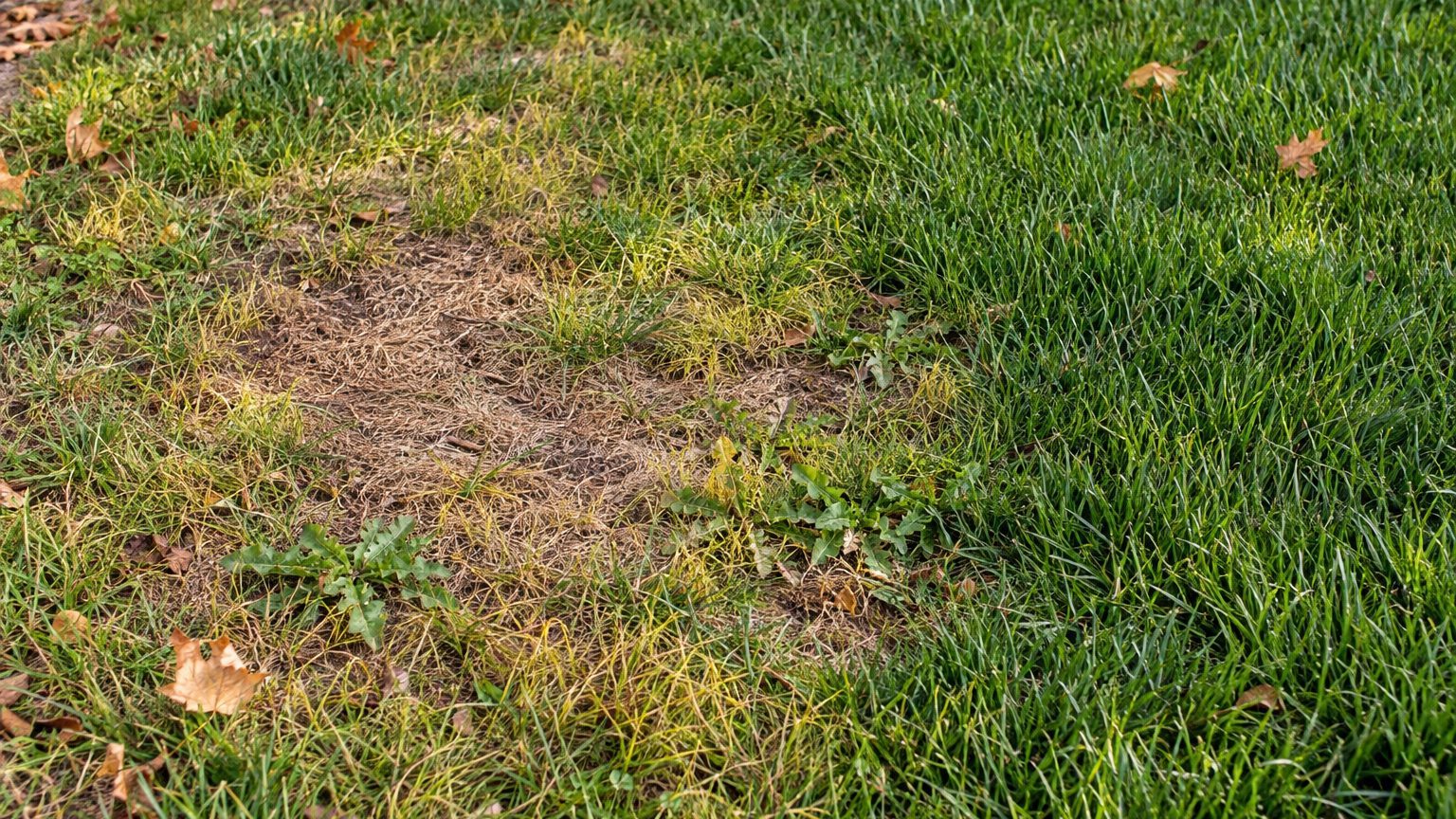
Tan patches that spread in July, weeds that crowd a dormant lawn in winter, and a spongy feel underfoot are the usual signs that an Arizona lawn needs help. Most trace back to summer heat, irrigation habits, or the season a weed prefers. Knowing which problem you have makes the fix simple.
Lawn Pests and Diseases in Arizona
Around Phoenix, lawns rarely freeze, so problems follow heat, water, and the calendar instead of frost. The pests and weeds below appear roughly in the order a low-desert lawn meets them.
Winter Weeds in Dormant Grass
When bermudagrass turns tan in the cool months, bright green weeds such as annual bluegrass and small broadleaf plants move into the gaps. They look like a patch of lawn that never went dormant. Pull them by hand while they are small, before they can set seed.
Crabgrass in Thin Spots

Crabgrass shows up as coarse, light green clumps that spread flat along the ground and pop up wherever the lawn is thin. Bare soil in spring gives it room to start. Dense turf helps crowd out crabgrass, so reseed bald areas in April or May and mow from March through November.
Spongy Thatch Buildup
If the lawn feels springy and your fingers meet a mat of brown stems before reaching soil, thatch has built up. A layer up to 1/2 inch thick is healthy. Above that, dethatch or core aerate, and May and June are the months to do it, while bermudagrass is growing fast enough to recover.
Nutsedge in Wet Spots
Nutsedge looks like grass but grows taller, with stiff, glossy, yellow-green blades and a triangular stem you can feel by rolling it between your fingers. It tends to take over low spots and areas near leaking sprinklers. Fix the drainage first, then pull the plants out, tubers included.
Armyworms in Late Summer
Armyworms chew grass blades down to stubs and leave irregular brown patches that look like drought damage. The giveaway is that the patch keeps growing while the watering stays the same. Part the grass at the edge of the damage in the morning or evening and look for green or tan caterpillars feeding.
Fungal Patches on Overseeded Lawns
Lawns overseeded with ryegrass for winter color can develop slimy, dark or yellowing patches when the soil stays wet and the nights are still warm. Overseeded ryegrass is the concern in this situation. Water earlier in the day so blades dry out, and avoid sowing the ryegrass too thickly.
Arizona — the year and the numbers
- State
- Arizona
- USDA zones
- 4b-10b
- Frost
- none in an average year
- Annual rain
- 7 in
- Lawn type
- warm-season
- Source
- NOAA NCEI 1991-2020 Climate Normals + NOAA RCC ACIS daily records, station USW00023183 — https://www.ncei.noaa.gov/access/services/data/v1?dataset=normals-annualseasonal&stations=USW00023183 · Phoenix
How to Tell Which Lawn Problem You Have
A symptom by itself is rarely enough. Look at the shape of the patch, whether the grass lifts away from the soil, the time of year, and whether the spot sits in sun or shade. Combining clues points to a cause more reliably.
Tug on the grass at the edge of a brown area. Roots that hold firm suggest drought stress or heat. Grass that lifts away easily can indicate damaged roots or rot.
| What you see | Where and when | Likely cause |
|---|---|---|
| Irregular tan patches that keep growing, blades chewed short | Late summer into fall, sunny areas | Armyworms |
| Coarse light green clumps spreading flat | Thin or bare spots, spring into summer | Crabgrass |
| Tall, glossy, triangular-stemmed blades | Low or soggy spots, summer | Nutsedge |
| Bright green weeds among tan turf | Cool months, whole lawn | Winter weeds |
| Spongy feel, brown stems under green blades | Anywhere | Thatch buildup |
| Slimy, dark or yellow patches | Overseeded lawn, damp soil, warm nights | Fungal disease |
| Dry, crisp grass that roots hold tight | Edges, slopes, near pavement, summer | Heat and water stress |
Shade still matters in the desert. If the thin area sits under a canopy and the grass is not chewed or slimy, think competition before pests.
Where Lawn Problems Are Worst in Arizona
Arizona spans USDA hardiness zones 4b-10b, so what threatens a lawn depends heavily on elevation and which part of the state you live in.
- Phoenix and Tucson: Summer heat is the main stress, and shallow irrigation, dormant-season weeds and thatch in bermudagrass are the usual complaints. Cold risk varies by location, so use local guidance before ruling it out.
- Yuma and the Colorado River valley: Heat and drying wind push water stress higher, and sandy soils drain fast, so uneven irrigation shows up quickly as dry streaks.
- Flagstaff and Prescott: Winters bring hard freezes, the growing season is shorter, and cool-season grasses take over from bermudagrass. Weeds and slow spring recovery matter more than summer heat.
If you live between these, your problems will be a blend, so watch which season produces the damage.
Lawn Care Mistakes That Invite Problems in Arizona
Mowing Too Short or Too Rarely
Scalped grass leaves bare soil, and bare soil is where crabgrass and winter weeds take hold. Skipping mowing lets stems pile up into thatch. Mow regularly from March through November and keep the grass taller during summer heat.
Shallow, Frequent Watering
Short sprinkler cycles keep roots near the surface, which suits nutsedge and fungus but leaves the lawn fragile in July. Water April through October with longer, deeper cycles so moisture reaches the root zone, and adjust for rain.
Feeding at the Wrong Time
Fertilizer pushes soft growth that wilts in the heat of midsummer and feeds weeds as much as turf. Apply it in May and June, then again in September and October, when bermudagrass can use it. Skip the dead-center of summer and the dormant months.
Where to Get Lawn Advice in Arizona
Arizona’s climate varies enough that local advice beats general tips. Local extension resources can answer a wide range of questions.
- University of Arizona Extension publishes lawn guidance written for desert and high-country conditions, useful when a symptom does not match anything you recognize.
- Your county extension office can identify weeds or insects from a sample, so bring a clipping before treating anything.
Common Questions
Why Does Bermudagrass Turn Tan in Winter in Arizona?
Cool soil sends warm-season grass into dormancy. The roots are alive, and the lawn greens up again as the soil warms. Overseeding with ryegrass is how some homeowners keep color through the cool months.
When Should You Seed a Lawn in Arizona?
For bermudagrass, April and May suit the low desert, when warming soil helps seed sprout and gives the new turf time to establish before peak summer heat.
Do You Need to Worry About Frost on an Arizona Lawn?
Around Phoenix, rarely. A cold snap that reaches 32F can occur between late December and mid January, and it matters mostly for overseeded or newly seeded turf. In Flagstaff and the high country, freezes are routine.