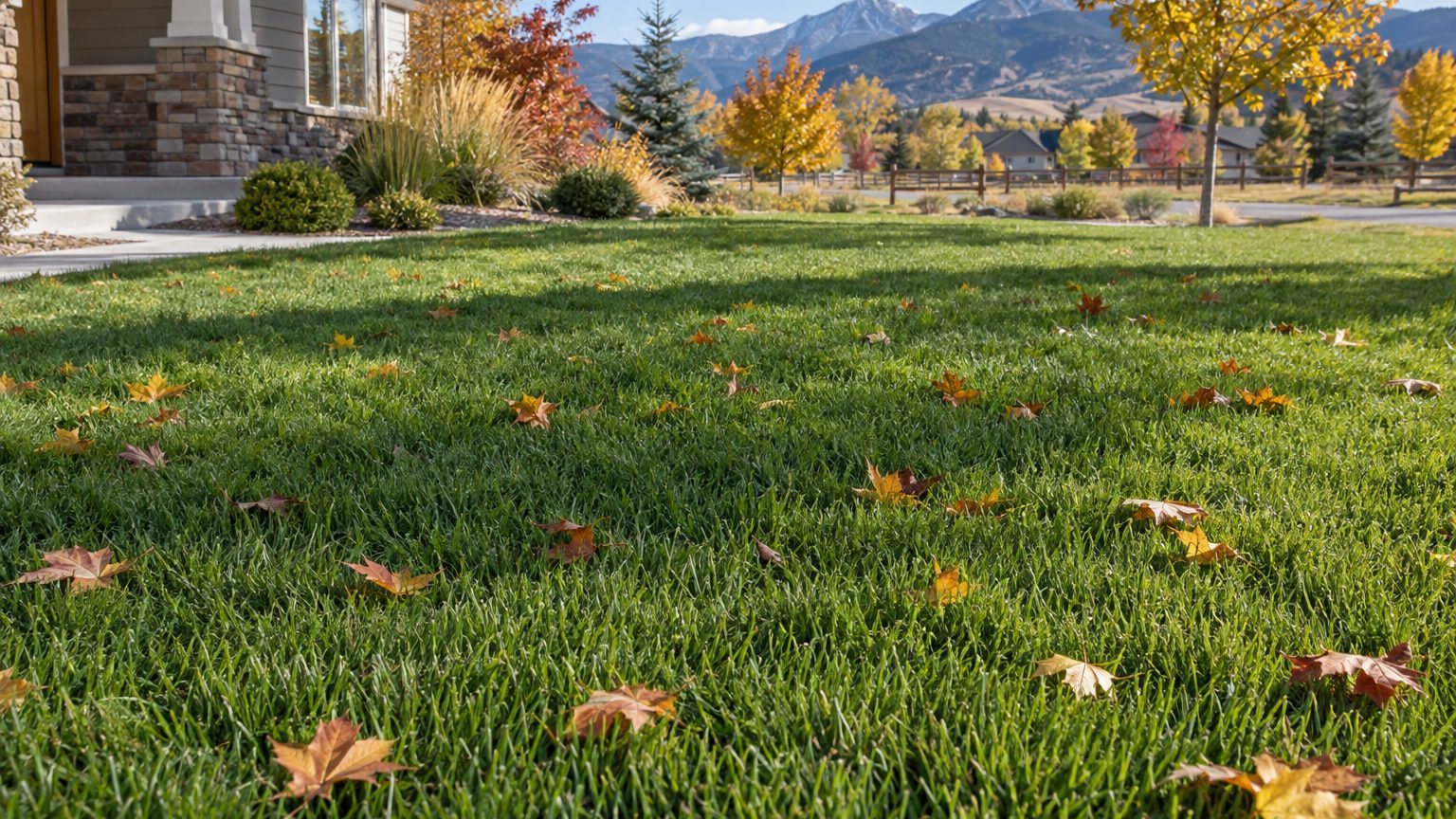
A Montana lawn spends the long winter asleep under snow, then wakes in spring for a short tidy-up before the main seeding and aeration work arrives in late summer. Most of the yearly effort lands in spring and early fall, when cool-season grass roots best. Summer is for mowing and watering.
What to Do Each Month in a Montana Lawn
Mowing runs from spring green-up to the last growth of fall. Seeding, aeration and feeding cluster around the cooler growing periods that suit cool-season grass.
| Month | In the lawn |
|---|---|
| January | Rest. The grass is dormant under snow, so keep heavy foot traffic and shoveled piles off the turf. |
| February | Rest. Nothing is due, and frozen grass breaks easily if you walk on it. |
| March | Still mostly dormant as the snow melts. Watch for soggy spots and stay off them so the crowns are not crushed. |
| April | Apply crabgrass preventer before the weed seed sprouts, and start mowing as the grass greens up. Aeration, dethatching and seeding also work this month if fall slipped by. |
| May | Keep mowing. If you missed April, preventer still works now, and a feeding or a round of seeding and aeration fits here too. |
| June | Mow regularly and begin watering as the weather dries out, since summer is when the lawn needs it. |
| July | Mow and water. Heat slows the grass, so avoid disturbing it with any other work. |
| August | Dethatch and begin seeding, because the soil is still warm and new grass has time to root. Keep mowing and watering. |
| September | The busiest month for the lawn: core aeration, seeding, dethatching and fertilizing all fit here, along with regular mowing. |
| October | Keep mowing while the grass grows and rake leaves off so they do not smother it. If you missed September, there is still time for little else, so let the lawn settle. |
| November | Fertilize and make a last mow before growth stops. |
| December | Rest. The grass is dormant, and the only job is keeping salt and plowed snow away from the edges. |
If a preferred month slips by, use only the fallback months listed for that task.
Montana — the year and the numbers
- State
- Montana
- USDA zones
- 3a-6a
- Last spring frost
- April 29 to May 10
- First fall frost
- October 1 to October 14
- Annual rain
- 14 in
- Lawn type
- cool-season
- Source
- NOAA NCEI 1991-2020 Climate Normals, 32F freeze probabilities · Billings
When Does the Lawn Season Start and End in Montana?
Growth follows soil warmth and grass type, not the date of the last frost. Cool-season seed germinates when the soil sits at 50 to 65 °F. Warm-season seed needs 65 to 70 °F to germinate.
Frost dates matter mostly for young seedlings. In Billings, the last spring freeze usually lands between April 29 and May 10, so a spring seeding can be nipped if it sprouts early. Billings is one of the milder valleys, and mountain valleys elsewhere can frost in any month.
In the fall, the first freeze in Billings tends to arrive between October 1 and October 14. Grass keeps growing a bit past that, which is why mowing carries into November. Across the state, USDA hardiness zones run from 3a to 6a, so winter lows differ a great deal from one valley to the next.
How the Lawn Calendar Shifts Across Montana
Elevation and valley shape change the calendar more than distance does, and the direction is simple: higher and colder means later starts and earlier stops.
- Billings and the Yellowstone Valley: Among the milder spots, so spring work begins early and fall tasks can run later in the season.
- Bozeman and the Gallatin Valley: Higher ground means the lawn greens up later and cools off sooner, so lean toward the early end of the fall seeding window.
- Flathead Valley around Kalispell: The big lake takes some edge off the cold, but the soil warms slowly in spring, so wait for green-up before you act.
- Missoula and the western valleys: Cold air settles in the valley bottoms, so frost can linger there longer than the surrounding hills suggest.
Use the months in this article as a guide, choosing the later spring window and earlier fall window for a high, cold yard.
Lawn Care Timing Mistakes to Avoid in Montana
Crabgrass Preventer Applied Late

Preventer works only before the weed seed sprouts, so a late application mostly wastes money. Put it down in April. If the month slips away, May still works, but after that you are fighting crabgrass instead of stopping it.
Seeding Too Late in Fall
Seed that sprouts just before winter has little time to root and often dies under the first hard freeze. Seed in August or September, while the soil is warm. Spring seeding in April or May works as a fallback, though summer heat will test those seedlings.
Feeding in Midsummer Heat
Fertilizer pushed in July asks stressed grass to grow when it wants to slow down. Feed in September and again in November, when roots store the nutrients through winter. If you miss both, May is the fallback.
Where to Get Lawn Advice in Montana
Local conditions vary widely, and the people who know your valley are close at hand. Montana State University Extension publishes lawn guidance for the state, and your county office knows the soil and weather where you live.
- Its lawn and turf publications are worth reading before mowing begins.
- Your county extension office can answer questions about local grass types and problem weeds, so call before you buy seed in August.
Common Questions
Is April Too Early to Mow a Montana Lawn?
Not once the grass has greened up and is actively growing. Mowing is a task for April through November, so start when you see new growth rather than by the date.
Is November Too Late to Fertilize a Montana Lawn?
No, November is one of the two best fertilizing months, along with September. The roots are still active enough to take the feeding up before the ground locks.
Can You Dethatch a Montana Lawn in Spring?
Yes, April works if you skipped late summer. August and September are better because the grass recovers quickly in warm soil.