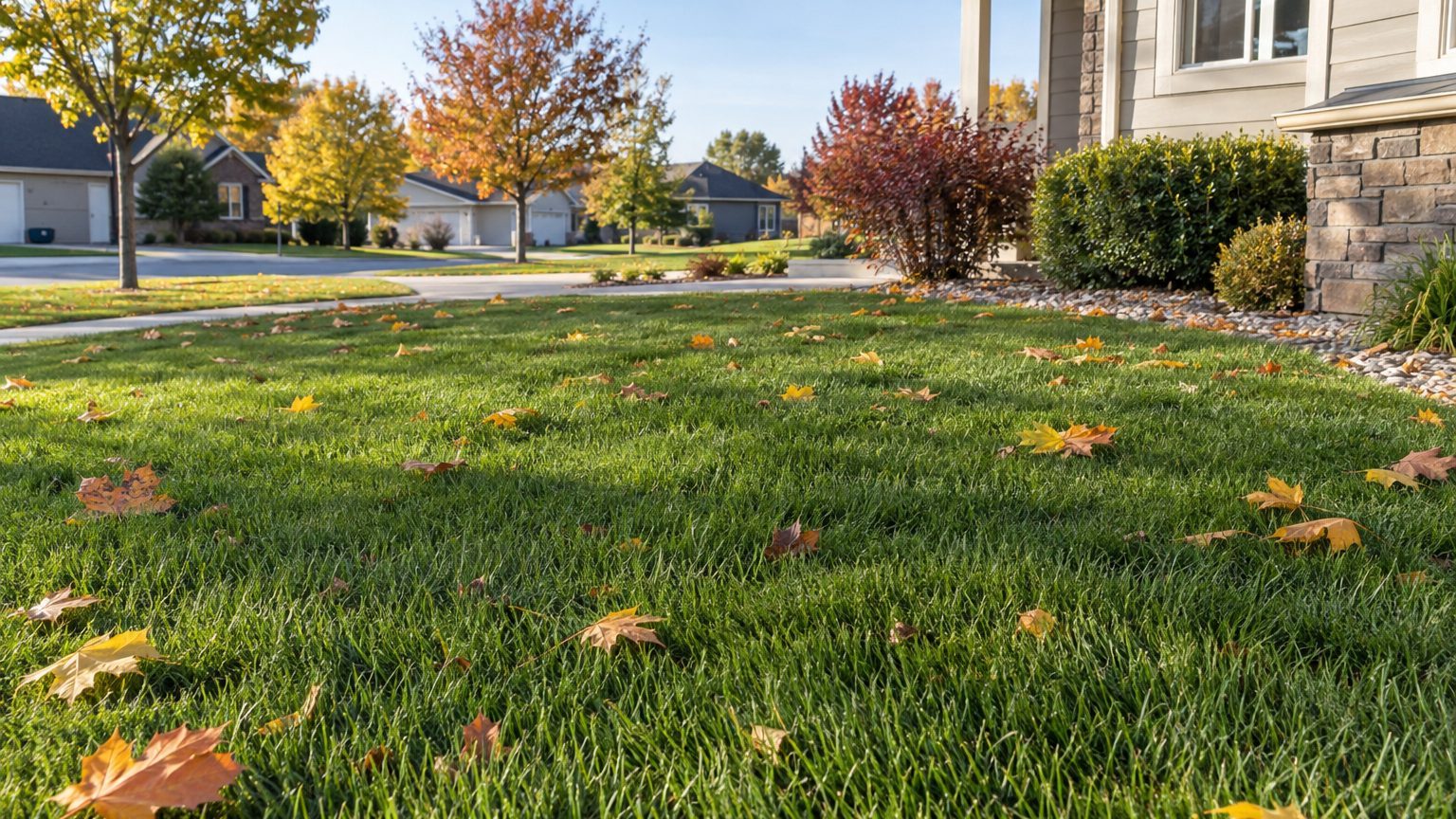
A North Dakota lawn spends its spring waiting for thawed ground and its fall racing the first hard frost. The work fits into a short stretch in May and another from August through October, with a long rest on either side.
What to Do Each Month in a North Dakota Lawn

Most of the work lands in late spring and early fall, when the grass is actively growing and the weather lets you help it. Winter and the weeks around the thaw ask for patience.
| Month | In the lawn |
|---|---|
| January | Rest. The grass is dormant under snow. |
| February | Rest. Keep foot traffic and sled runs off exposed, frozen turf, which breaks easily. |
| March | Rest. As the snow melts, look for matted, grayish patches (snow mold) and rake them lightly so the blades can dry out. |
| April | No chores yet. The grass is waking slowly, and soggy ground is easily rutted, so stay off it. |
| May | The busy start. Put down crabgrass preventer and the first feeding, begin mowing and start watering as growth picks up. Seeding is not your best option this month, since summer heat comes quickly to young grass. |
| June | Mow regularly and water when rain falls short. Roots are working hard before summer heat. |
| July | Keep mowing and watering. Growth slows in the heat, so do not push the lawn with extra products. |
| August | Core aeration, dethatching and seeding all fit here. Keep mowing and watering so new seed never dries out. |
| September | A strong month for renewal. Aerate, dethatch, seed, feed a second time, and keep mowing and watering. |
| October | Mow while the grass still grows. Seeding on cold soil (dormant seeding) is possible too. |
| November | Dormant seeding belongs here. Seed on cold ground so it sits through winter and sprouts in spring. |
| December | Rest. The grass is dormant and there is nothing to do. |
The main seeding window runs through August and September, with dormant seeding in October or November. That leaves spring as the backup, not the plan.
North Dakota — the year and the numbers
- State
- North Dakota
- USDA zones
- 3a-4b
- Last spring frost
- May 4 to May 15
- First fall frost
- September 25 to October 5
- Annual rain
- 24 in
- Lawn type
- cool-season
- Source
- NOAA NCEI U.S. Climate Normals 1991-2020, 32F freeze probabilities · Fargo
When Does the Lawn Season Start and End in North Dakota?
Grass starts growing when the soil warms, not when the calendar says spring. Cool-season lawn seed sprouts once the soil reaches 50 to 65 °F.
Frost dates matter mostly for young seedlings. In Fargo, the last spring frost usually occurs between May 4 and May 15. Farms and edge-of-town yards often get frost a week or two later, so check your own county before trusting those dates.
In the fall, the first frost tends to arrive in Fargo between September 25 and October 5, and a little earlier out in the country. Seed sown in August has time to root before then, while seed sown much later may not. Established grass shrugs off a light frost, and it keeps growing until the cold deepens, which is why mowing runs into October.
How the Lawn Calendar Shifts Across North Dakota
The state is big and mostly open, so the calendar bends a little from one corner to the next, though not as much as in states with mountains or coasts.
- Red River Valley: Around Fargo and Grand Forks, the flat, heavy-soil country has a fairly steady lawn season. Spring work and fall seeding run close to the schedule above, and wet spots are the usual complaint.
- Missouri River country: Around Bismarck, the drier air and wind pull moisture from the lawn faster, so watering matters more than it does in the east.
- Turtle Mountains and the north: Spring arrives later and fall comes sooner, which tightens the seeding window. Aim for the early part of it.
- Badlands and the southwest: Dry summers and wind stress the grass, so watering through the warm months matters.
Whichever region you live in, the broad order of the tasks stays similar, but timing and watering needs vary.
Lawn Care Timing Mistakes to Avoid in North Dakota
Crabgrass Preventer Applied Late

Preventer works by stopping crabgrass seed from sprouting, so it has to be down before the seed wakes up. Applying it after the weeds are growing does nothing. May is the month, and if you seed then, read the label carefully because many crabgrass preventers also block lawn seed.
Seeding Too Late in Fall

Seed sown after the best window may sprout but lack the roots to survive a North Dakota winter. If August and September have passed, dormant seeding can still work in October or November. The seed stays put in the cold and sprouts in spring.
Dethatching in Spring
Raking out thatch while the lawn is still thawing tears up weak, tender grass and leaves bare spots for weeds. Do it in August or September, when the grass recovers fast and new seed can follow right away.
Where to Get Lawn Advice in North Dakota
Local conditions vary more than a statewide schedule can show. Local sources can help you adjust the dates to your own yard.
- NDSU Extension publishes lawn guidance written for the state’s soils and winters, and its pages are worth reading before the August seeding window opens.
- Your county extension office can speak to your local frost timing and soil, so call in early spring, before you buy products.
Common Questions
When Should You Stop Mowing a North Dakota Lawn?
Mow through October, as long as the grass is still growing. Once growth stops and the lawn goes dormant, the mower can go away for the season.
How Many Times Should You Fertilize a Lawn in North Dakota?
The pattern is a feeding in May and another in September. Feeding in between pushes growth when the weather is working against it.
Why Does a North Dakota Lawn Turn Brown in Winter?
Cool-season grass goes dormant under cold and snow. The blades fade and the roots rest, and green returns once the soil warms in spring.