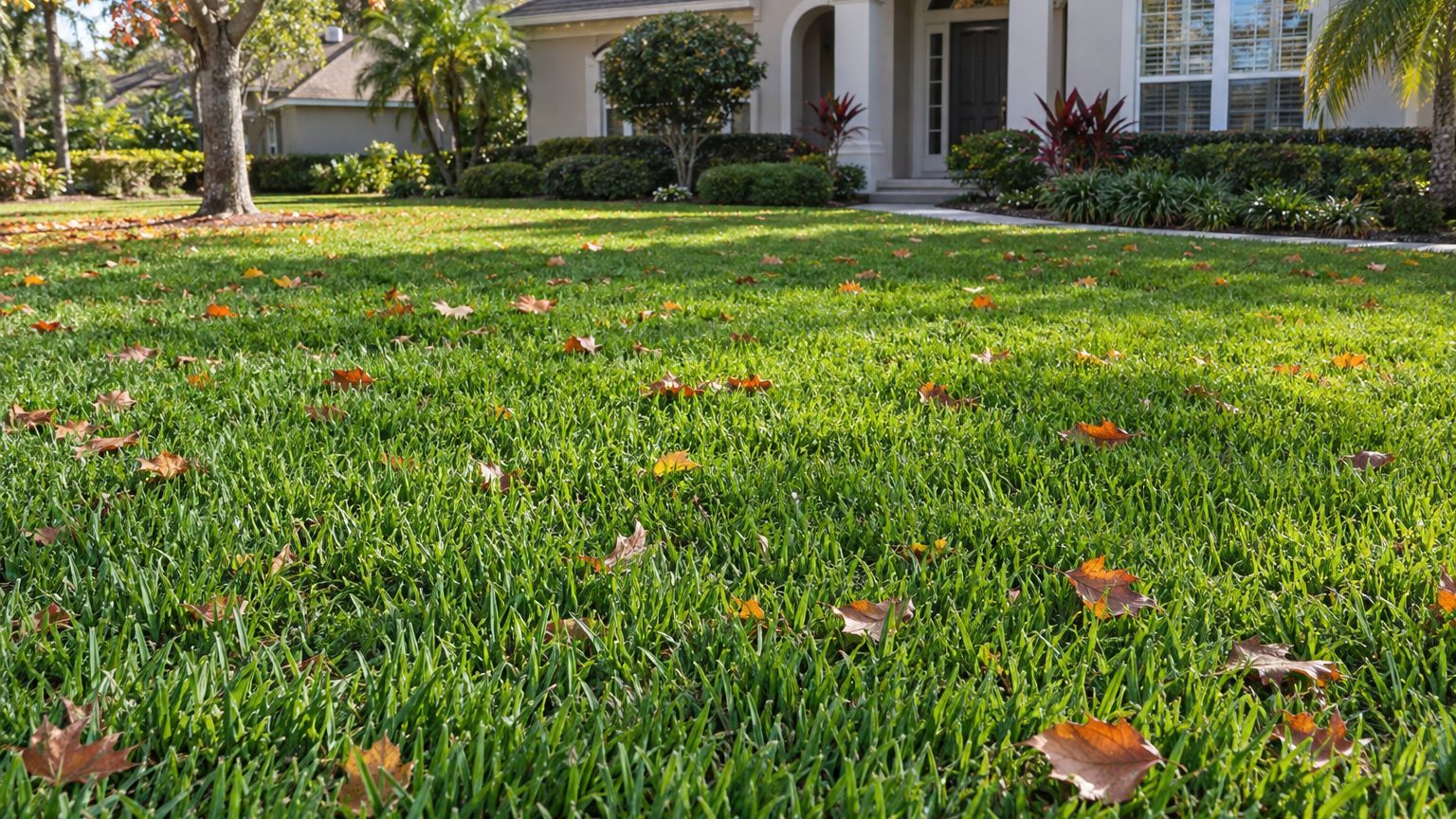
A Florida lawn rarely goes fully quiet, and the mowing never really stops. What changes is the pace: spring greening brings the first feeding, summer brings rain and restrictions, and winter slows the grass without ending the work.
What to Do Each Month in a Florida Lawn

Mowing continues year-round, so it appears below only in the months when the routine changes. The other jobs cluster between spring and early fall, when the grass is growing fast enough to recover from them.
| Month | In the lawn |
|---|---|
| January | Mow only as often as growth demands. Cool weather slows the grass, so skip feeding and heavy work. |
| February | Keep mowing at a steady height. Wait for warmth before any fertilizer, since the grass is still waking up. |
| March | Mowing picks up as the grass greens. You can also lay sod now, as long as roots can grow into the warming soil. |
| April | Feed for the first time as the grass greens up, and start watering. Sod is a good choice now. Dethatching and seeding can work too. |
| May | May keeps lawn care busy. Feed, dethatch, lay sod and seed bahia, centipede or bermuda, all while growth is strong. Water regularly. |
| June | Dethatch early, lay sod and water. Seeding can work too. |
| July | Sod still roots well in the heat if you keep it watered. |
| August | Mow, water and watch for stress in the heat. Sod can still go down. |
| September | Keep laying sod and watering this month. |
| October | This month also works for a fall feeding and for laying sod. Keep watering while the grass is still growing. |
| November | Rest from feeding and watering. Mow as growth slows. |
| December | Rest. The grass slows or goes semi-dormant in the north, so mow only when needed. |
Seeding applies only to seeded grasses. St. Augustine is sold as sod or plugs, so for that lawn the planting months are sod months.
Florida — the year and the numbers
- State
- Florida
- USDA zones
- 8b-11b
- Last spring frost
- February 16 to March 7
- First fall frost
- November 26 to December 13
- Annual rain
- 53 in
- Lawn type
- warm-season
- Source
- NOAA NCEI 1991-2020 Climate Normals, 32F freeze probabilities · Jacksonville
When Does the Lawn Season Start and End in Florida?
Growth follows soil warmth and grass type, not the calendar. Seed wants soil at 65 to 70 °F and rising, which is why seeding waits until spring is well along. In north Florida the grass greens up in spring and slows in late fall. Frost matters there mainly for young seedlings and fresh sod.
In Jacksonville, the last freeze of spring usually falls between February 16 and March 7. That is the window when a new planting could still get nipped, so hold off on tender work until it passes. The first freeze of fall tends to arrive between November 26 and December 13, and some years bring none at all.
Central and south Florida work differently. Frost is rare, so the calendar inverts: the grass grows through winter, and summer heat and rain are the hard part. Do not apply the Jacksonville dates to Orlando or Miami. Sod and plugs go down April to September in north and central Florida, and all year in the south.
How the Lawn Calendar Shifts Across Florida
A statewide date means little from the Panhandle to the Keys, so the direction of the shift matters more than the day.
- Jacksonville and the Panhandle: Winters have real freezes, and grass goes dormant and browns. Spring work starts later, and young plantings need protection until the last freeze passes.
- Orlando and Central Florida: Frost is occasional and brief. Grass slows in winter but rarely stops, so the season stretches longer than in the north.
- Miami and South Florida: Effectively frost-free, so the grass grows all year. Sod can go down in any month, and summer stress is the main concern.
Coastal lawns tend to stay milder than inland ones, which can shave a little off the cold-weather slowdown.
Lawn Care Timing Mistakes to Avoid in Florida
Fertilizing Through the Summer Ban

Many Florida counties and cities, including Orange, Pinellas, Manatee, Sarasota and Lee, ban nitrogen and phosphorus fertilizer from June 1 to September 30. Feeding in that stretch risks a fine and sends nutrients into waterways. Do the main feeding in April and May, and check your county before an October top-up.
Seeding Too Late
Seed in May if you can, with April and June as backups. Later, summer rains and heat wash seed out or stress young seedlings before roots hold. Remember that St. Augustine is not grown from seed at all.
Dethatching While Growth Is Slow
Pulling thatch in winter leaves the grass too weak to fill in gaps. Dethatch in May or June, when the lawn is growing hard and recovers fast; April also works if you miss that window.
Where to Get Lawn Advice in Florida
Florida rules and grass choices vary by county, so local advice saves guesswork. UF/IFAS Extension can connect you with local lawn advice.
- Your county extension office can confirm whether a fertilizer ban applies to your address, so call before the first spring feeding.
- Ask the same office which grass suits your soil and shade, ideally before you buy sod in April or May.
Common Questions
Can You Mow a Florida Lawn in Winter?
Yes. Mowing is on the calendar every month, though in the cool months growth slows and a cut is needed less often.
Is St. Augustine Grass Grown from Seed?
No. It is sold as sod or plugs only, so plan to lay it in the sod months rather than seed it.
Should You Water in Winter?
Watering belongs to April through October. Outside those months the grass is slowing and needs little help beyond normal rain.