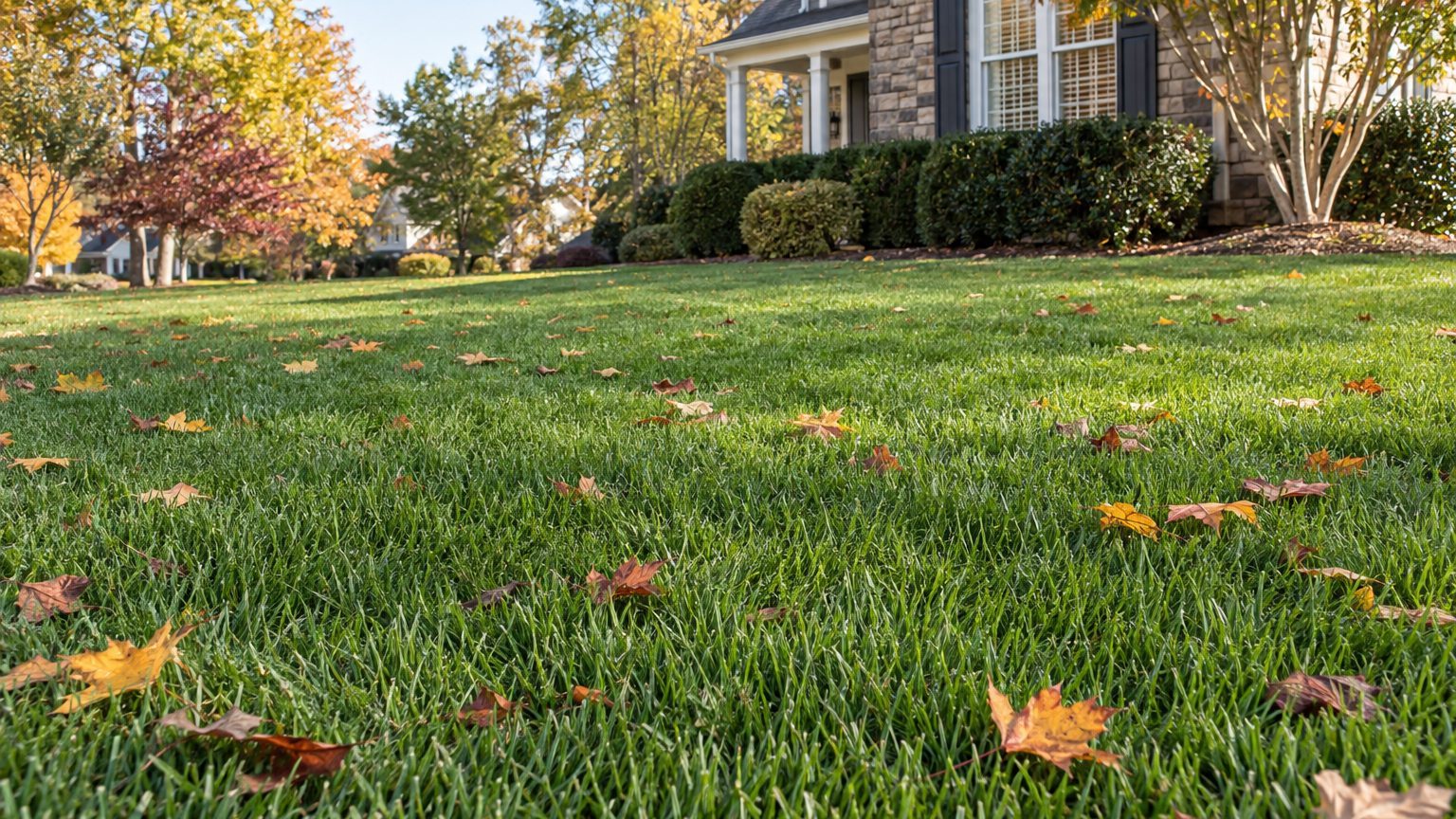
A Georgia lawn goes from tan and still to thick and fast-growing as warm weather settles in, and the work follows that swing. Most jobs cluster from spring through summer, when the warm-season grasses (bermuda, zoysia, centipede, St. Augustine) are growing hard. Winter asks very little of you.
What to Do Each Month in a Georgia Lawn
Warm-season grass wakes up with the soil, so the busy stretch runs from spring into early fall. Here is what each month asks of you, and why.
| Month | In the lawn |
|---|---|
| January | Rest. The grass is dormant, so keep foot traffic light and pull winter weeds by hand if they show up. |
| February | Rest. The lawn is still asleep, so leave feeding and seeding for the growing season. |
| March | Mowing starts as the first green returns. Cut lightly at first and leave the fertilizer in the shed until the grass is truly growing. |
| April | Keep mowing as growth picks up. Laying sod works now, and dethatching is possible if thatch has built up. |
| May | The busiest month. Aerate, dethatch, seed, lay sod and start feeding, because warm soil gets roots going fast. Seed only works for bermuda, centipede and bahia, since St. Augustine has no seed and must go in as sod. Begin watering when rain slips. |
| June | Keep feeding, mowing and watering. Dethatching still fits, and if you missed May, aeration, seeding and sod all still work now. |
| July | Feed, mow and water through the heat. Sod can still go down if you water it faithfully. |
| August | Last month for feeding. Mow and water, and watch for drought stress on slopes and sunny edges. |
| September | Keep mowing and watering while growth slows. Hold off on fertilizer so the grass is not pushed toward fall. |
| October | Mow as needed while the lawn slows down. Regular watering drops off the schedule, so just watch for drought stress. |
| November | Last mowing of the year, and the grass fades to tan as the nights chill. Rake leaves so they do not smother it. |
| December | Rest. The grass is dormant and needs nothing from you. |
If a job slips past its ideal timing, check the table before moving it, because the fallback month depends on the task.
Georgia — the year and the numbers
- State
- Georgia
- USDA zones
- 6a-9b
- Last spring frost
- March 11 to March 29
- First fall frost
- November 13 to December 1
- Annual rain
- 50 in
- Lawn type
- warm-season
- Source
- NOAA NCEI 1991-2020 Climate Normals, 32F freeze probabilities · Atlanta
When Does the Lawn Season Start and End in Georgia?
Grass starts growing when the soil warms, not when the last frost passes. Warm-season seed wants soil at 65 to 70 °F, while cool-season seed germinates at 50 to 65 °F. That gap is why bermuda and its kin sit tan well after the air feels like spring.
Frost dates matter mostly for young grass. In Atlanta, the last spring freeze usually falls between March 11 and March 29, and a seedling or fresh sod that greens up early can get nipped by a late one.
In Atlanta, the first fall freeze usually arrives between November 13 and December 1. That is when growth shuts down and the lawn turns tan for winter. Watering ends earlier, while mowing can continue into November as the grass slows.
How the Lawn Calendar Shifts Across Georgia
Georgia stretches from mountain ridges to the coast, so the same job lands on different dates depending on where you live.
- Blue Ridge mountains: Spring comes later and fall frost arrives earlier, so the growing season is shorter. Wait for the soil to warm before seeding or feeding, and expect the grass to go dormant sooner.
- Atlanta metro: City pavement holds heat, so the lawn greens up a bit earlier and stays active a bit longer than in the hills just north of town.
- Savannah and the coast: The coastal plain runs milder, with an earlier start and a later finish. Heat stress is the bigger worry, so watering matters more here in summer.
Treat the month-by-month plan as a guide, and nudge it a little earlier toward the coast and a little later toward the mountains.
Lawn Care Timing Mistakes to Avoid in Georgia
Fertilizing Too Early

A warm week in March tempts many people to feed the lawn. But grass that is not yet growing cannot use the nitrogen, and weeds and a late frost get the benefit instead. Wait until May, then feed through August.
Seeding Too Late
Warm-season seed needs warm soil and a long runway before cold. Seed put down in fall germinates poorly and the seedlings have no time to root. Seed in May, and use June as a fallback if the month slips away.
Dethatching Dormant Grass
Raking out thatch in winter or early spring tears at crowns that cannot recover yet. The grass needs active growth to fill in the gaps. Dethatch in May or June, with April as a fallback, and aerate in May, or in June if May slips away.
Where to Get Lawn Advice in Georgia
Local help can fine-tune this plan for your grass type and soil.
- University of Georgia Extension publishes turfgrass guidance for each grass type, so check it before you pick a variety or plan a renovation.
- Your county extension office can answer soil and pest questions for your area, and it can often test a soil sample, so call before you fertilize.
Common Questions
Do You Need to Water a Georgia Lawn in Winter?
Dormant grass uses very little water, so winter rain usually covers it. Check only after a long dry stretch, and save regular watering for the growing months.
How Do You Tell a Dormant Lawn from a Dead One?
Look at the whole yard and at the calendar. A lawn that is evenly tan from fall through winter and turns green again as the soil warms is dormant. Brown patches in summer that stay brown, with blades that pull out easily, point to damage instead.
Why Does Grass Thin Out Under Trees in Georgia?
Shade cuts the light that warm-season grass needs. Bermuda in particular thins under dense canopy, and St. Augustine handles shade better. Where thinning spreads, trim the lower branches for more light or use mulch in place of struggling turf.