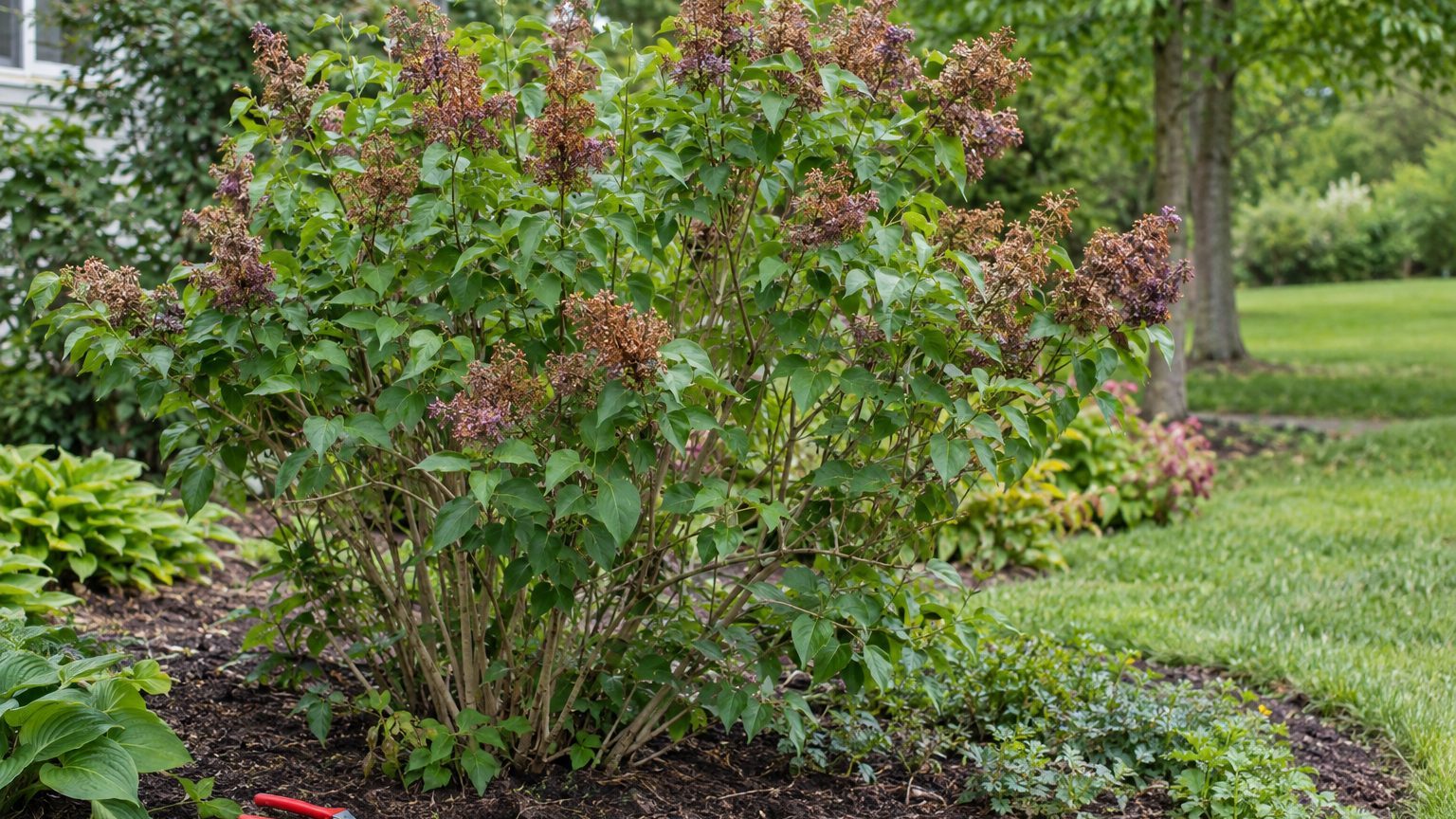
A lilac that flowers in a Florida yard carries clusters that turn brown on the stems in spring, and that is the moment for the pruners. Lilacs here are a gamble, since the common kind wants more winter cold than most of the state delivers. For a lilac that does not rebloom, pruning after the flowers fade protects the next season’s bloom.
When to Prune Lilacs in Florida

Prune right after the last flowers fade, whenever the local spring brings them. A lilac sets next year’s flower buds in summer, soon after it blooms, so pruning then avoids cutting off formed buds. A cut made later takes off buds already formed.
Lilacs also need a cold winter rest to mature those buds, which is why they struggle in hot, humid summers and may flower poorly in much of Florida.
| Type of pruning | When in Florida | Why |
|---|---|---|
| Routine shaping and removal of spent blooms | Right after the flowers fade | Next year’s buds have not formed yet |
| Low-chill and Southern lilacs | Right after the flowers fade | They bloom on wood formed the previous year |
| Any cut in late summer, fall or winter | Avoid | It removes the buds that would open the next spring |
That last row covers thinning an old, crowded shrub as well. A heavy cut belongs in the same post-bloom window, and a cut made at any other time of year gives up flowers for the following spring.
Florida — the year and the numbers
- State
- Florida
- USDA zones
- 8b-11b
- Last spring frost
- February 16 to March 7
- First fall frost
- November 26 to December 13
- Annual rain
- 53 in
- Lawn zone
- warm-season
- Source
- NOAA NCEI 1991-2020 Climate Normals, 32F freeze probabilities · Jacksonville
How to Tell When Your Lilacs Are Ready to Prune
The shrub gives clearer signals than any date, and in a state where the bloom follows a mild, uneven spring, the signals matter more than a calendar would.
- Petals that turn brown and papery on the cluster tell you the show is over and the pruners can come out.
- Clusters that stay on the stem as dried seed heads are your cue to snip them off just below the flower head.
- Fresh green growth pushing out after the bloom means the plant is already working on next year’s buds, so any shaping should happen soon.
- Stems that carried no flowers are not, by themselves, proof that the shrub needs thinning.
- A shrub that did not bloom gives you no spent blooms to follow, so judge it by its shape and leave heavy cutting alone.
Once the shrub has leafed out fully after bloom, treat the pruning window as closing.
Should You Prune Lilacs in Fall or Winter in Florida?
No. Cutting in fall or winter removes the buds the shrub set the previous summer, and you lose that spring’s flowers. Winters are mild here, and a tidy-up on a pleasant winter day is tempting, but the buds sit on the wood you would be cutting.
A late-winter reshaping is no different, and it comes at the same cost in flowers. If a lilac has grown leggy or lopsided, save the correction until right after it blooms and avoid removing too much flowering wood during that pruning.
How Lilac Pruning Time Shifts Across Florida
Florida spans USDA hardiness zones 8b to 11b, and winter chill drops sharply from the top of the state to the bottom, so your odds of a bloom depend on where you live.
- Jacksonville and north Florida: Freezes still arrive in winter here, so lilacs get at least some of the cold rest they need. North Florida offers more winter chill than the rest of the state, and pruning follows the fading blooms.
- Orlando and Central Florida: Winters are close to frost-free, so buds often fail to mature. A lilac may leaf out well and give few flowers, and there may be no fading clusters to prune after.
- Miami and South Florida: Frost is essentially absent, and summer is the hard season for the plant. Common lilacs are a poor match, so consider a Southern lilac or a type suited to mild winters.
In the warmer parts of the state, the shrub’s health in summer matters more than any pruning date.
Where to Get Lilac Advice in Florida
The state’s land-grant extension service, UF/IFAS Extension, has a local office in each county, staffed to answer plant questions from homeowners.
- The county office can tell you which lilacs, if any, have done well in your part of Florida, so call before you buy one.
- Local garden advisers can help assess a struggling shrub.
Common Questions
Which Lilacs Can You Grow in Florida?
Look for early-blooming types sold as Southern lilacs or lilacs for the South. Southern lilacs may grow and bloom in Florida, though they may be less fragrant than lilacs from colder places. Descanso hybrids such as Angel White and Blue Boy were developed in Southern California.
Do Lilacs Get Powdery Mildew in Florida’s Humidity?
Common lilacs struggle in high heat and humidity, conditions that can lead to powdery mildew. Hot, humid summers can raise the risk for a common lilac, so leave good air movement around it.
Do Low-Chill Lilacs Need a Cold Winter?
Some low-chill cultivars have been developed. Even low-chill cultivars perform best after an extended, cold winter rest, so they may still bloom lightly in Florida, particularly toward the south.