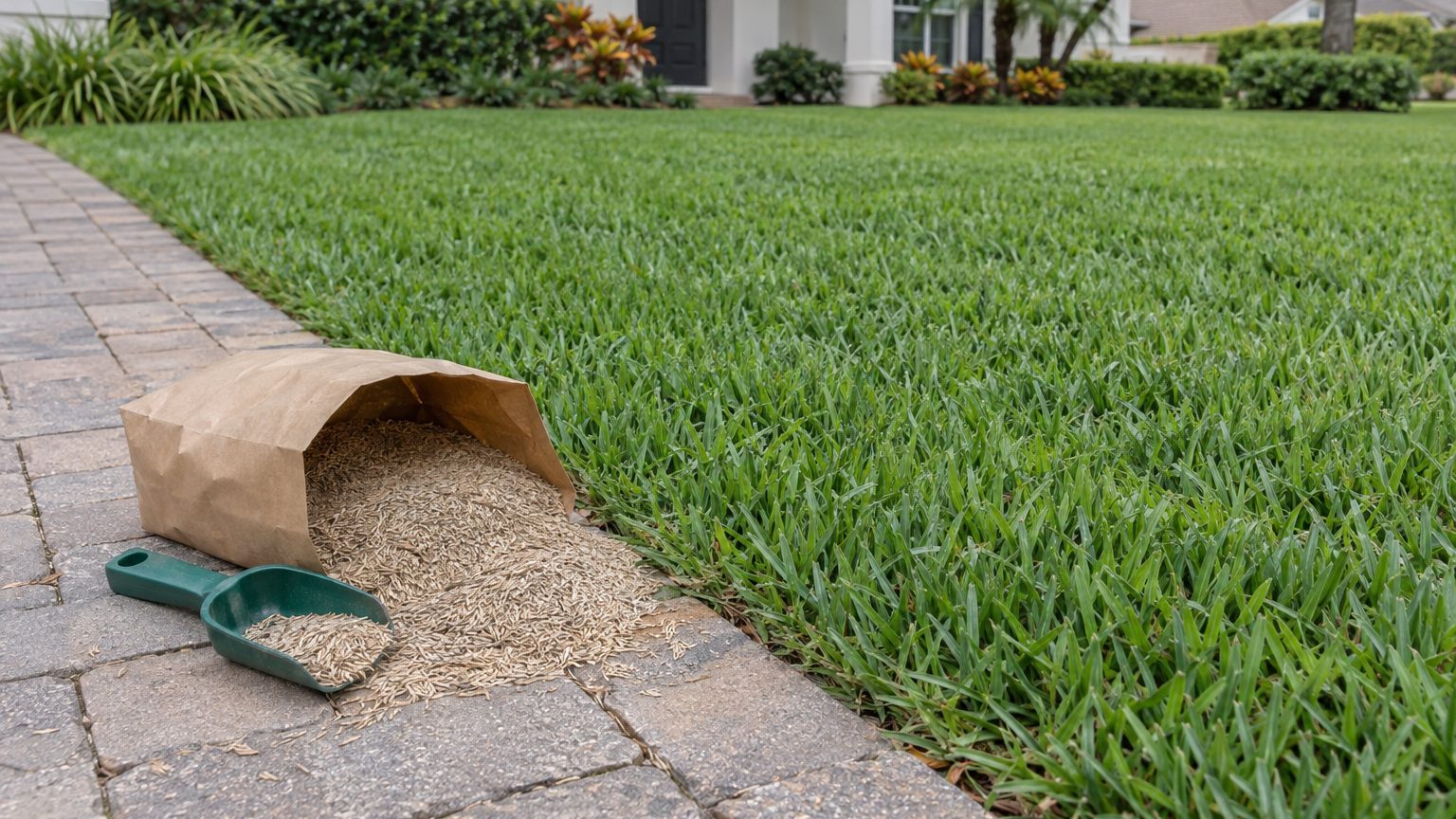
A Florida lawn with thin spots after a long, wet summer makes a bag of seed tempting. Warm-season grasses are the ones that hold up here, and only a few of them are sold as seed: bahiagrass, centipedegrass and bermudagrass. St. Augustinegrass, a familiar Florida lawn grass, comes as sod or plugs.
Which Grass Grows Best in Florida?

Warm-season grasses suit Florida because winters are mild across the state, and central and south Florida are effectively frost-free. Cool-season grasses give out in the summer heat and humidity. Florida spans USDA hardiness zones 8b to 11b, so the choice shifts a little between the Panhandle and the Keys. These lawn grasses are recommended for the state, and each comes with different maintenance needs.
St. Augustinegrass
This grass is common in Florida neighborhoods. It spreads by runners, tolerates some shade, and handles heat and humidity well. You cannot buy it as seed, so plan on sod or plugs.
Bahiagrass
Bahiagrass grows from seed and copes with sandy, poor soil and dry spells. The texture is coarser and the look is less refined, but it asks little of you. It suits large, sunny yards where easy care matters more than a manicured finish.
Centipedegrass
Centipedegrass is a slow, low-growing lawn grass that grows from seed and prefers acidic soil. It can fit a lower-input lawn-care routine. Heavy foot traffic wears it down, so it fits yards that are looked at more than played on.
Bermudagrass
Bermudagrass takes full sun and heavy use, and it recovers quickly from wear. It also grows from seed. Shade is its weak point, and it asks for regular mowing and feeding to look its best.
Zoysiagrass
Zoysiagrass forms a dense, fine-textured carpet once established. It grows slowly, so a damaged patch takes a while to fill in. It does well in sun and light shade but is not a quick fix for bare ground.
Seashore Paspalum
Seashore paspalum was made for salty conditions, which makes it a natural for yards near the coast. Its upkeep can be demanding. Away from salt, the other grasses are simpler.
Florida — the year and the numbers
- State
- Florida
- USDA zones
- 8b-11b
- Last spring frost
- February 16 to March 7
- First fall frost
- November 26 to December 13
- Annual rain
- 53 in
- Lawn type
- warm-season
- Source
- NOAA NCEI 1991-2020 Climate Normals, 32F freeze probabilities · Jacksonville
How to Choose Grass Seed for a Florida Yard
Start with the light. A yard that gets full sun most of the day opens up every option, while a shaded yard narrows the field fast. Then think about how much you want to mow, water and maintain.
Foot traffic matters too. A play area needs a grass that bounces back, and a front lawn that is only looked at can use a slower, gentler one.
| Grass | Planted from | Fits a yard that |
|---|---|---|
| St. Augustinegrass | Sod or plugs | Has some shade and can be watered regularly |
| Bahiagrass | Seed | Is sunny, sandy and mowed or watered little |
| Centipedegrass | Seed | Is sunny, sees light traffic and gets mowed less often |
| Bermudagrass | Seed | Gets full sun, heavy play and regular mowing |
Zoysiagrass suits a sunny to lightly shaded yard when you can wait for a dense lawn to fill in. Seashore paspalum is the pick for salty coastal lots. For a very shady yard, a different groundcover is often more realistic than any turfgrass.
Which Grasses Grow Where in Florida
Florida is long enough that the far north and the far south behave like different climates, and the coast adds its own twist.
- The Panhandle and Jacksonville area: Winters bring real freezes, so lawns here turn brown and go dormant for a spell. Bermudagrass, centipedegrass and zoysiagrass all work, and sod goes down mainly from April to September.
- Orlando and central Florida: Frost is rare, so grass stays greener longer and grows nearly year round. Summer heat and local fertilizer restrictions are the hard part, and St. Augustinegrass and bahiagrass are common choices.
- Miami and South Florida: The yard is effectively frost-free, and sod can go down all year. Heat and heavy rain shape the lawn more than cold does.
- The beaches and barrier islands: Salt spray and sandy soil rule out many grasses, and seashore paspalum earns its place here.
Check which of these describes your lot before you shop, because a grass that thrives in Pensacola can struggle on a Keys shoreline.
Grass Seed Mistakes to Avoid in Florida
Buying St. Augustine Seed
A bag labeled as St. Augustinegrass seed should raise a flag, because the grass is not sold that way. If you want it, order sod or plugs. If you want to seed, choose bahiagrass, centipedegrass or bermudagrass.
Seeding Outside the Window
Seed needs warm soil and steady moisture to take. In Florida, May is the month to seed, and April or June also work. Keep in mind that many Florida counties and cities, including Orange, Pinellas, Manatee, Sarasota and Lee, ban nitrogen and phosphorus fertilizer from June 1 to September 30, so check your county before planning a feeding.
Burying or Skimping the Seed
Cover seed with no more than 0.25 inch of soil, then press it down to improve seed-to-soil contact. Deeper than that and the sprouts struggle to reach daylight. Follow the rate printed on the bag for your species. Sowing thin leaves gaps for weeds, and sowing heavy makes seedlings compete.
Where to Get Lawn Advice in Florida
Soil, salt, shade and county rules all vary, so local advice saves guesswork. Florida’s extension network exists for exactly these questions and is built around each county.
- The University of Florida IFAS Extension site offers lawn guides for each grass, so read up before you buy anything.
- Your county extension office can tell you which fertilizer rules apply where you live, so call before you feed in late spring.
- Ask your county office whether it offers soil testing, especially when you are choosing between grasses or preparing to plant.
Common Questions
When Can You Lay Sod in Florida?
Sod and plugs go down while the grass is actively growing. That means April to September in north and central Florida, with March and October as a fallback, and all year in the South.
Is July Too Late to Seed a Florida Lawn?
For seed, yes. May is the main month to seed, while April or June can still work. If July finds you with bare ground, sod is the better route because it can go down all summer.
When Should You First Feed a New Florida Lawn?
Wait until the grass greens up in spring, which in Florida means April or May. If you miss that, October still works. Watering through the warm months is just as important, and April to October is the period when a new lawn needs it most.