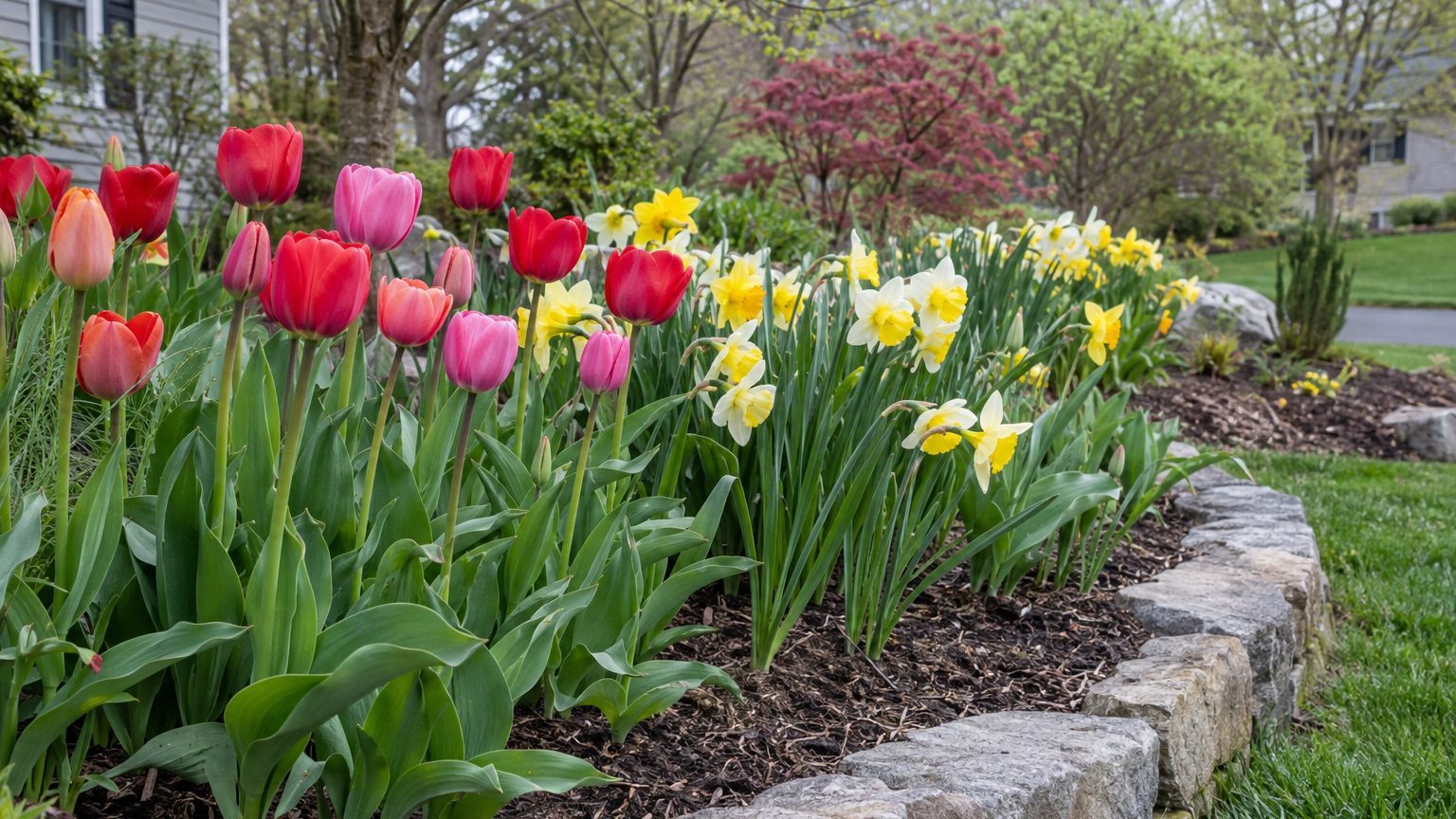
Green daffodil spears pushing through mulch and tulip buds opening on a cool morning are scenes most northern yards share. Florida plays by different rules. Tulips and daffodils behave differently here, and the reason is how much winter cold your bulbs actually get.
When Do Tulips and Daffodils Bloom in Florida?

Bloom follows the warming of spring, and no single month fits the whole state. What decides the show is whether a bulb got the cold rest it needs, which Florida winters rarely supply to tulips and true daffodils.
| Bulb | When it blooms in Florida | What sets the timing |
|---|---|---|
| True daffodils | Follows spring warming, with little success expected | Winters too mild to give the cold they want |
| Polyanthus narcissus (paper white, Grand soleil d’or) | Follows spring warming, and these do well | Better suited to mild winters |
| Tulips | Follows spring warming, once chilled | Refrigerator chilling before planting |
| Hyacinths | Follows spring warming, once chilled | Refrigerator chilling before planting |
| Alliums | Follows spring warming | Needs winter cold to bloom |
Crocus, early tulips and late tulips have no separate Florida timing worth promising, since they depend on the same missing cold. Of the group, alliums and the polyanthus narcissi are the ones that suit a Florida yard without a workaround.
Florida — the year and the numbers
- State
- Florida
- USDA zones
- 8b-11b
- Last spring frost
- February 16 to March 7
- First fall frost
- November 26 to December 13
- Annual rain
- 53 in
- Lawn zone
- warm-season
- Source
- NOAA NCEI 1991-2020 Climate Normals, 32F freeze probabilities · Jacksonville
How to Tell Your Bulbs Are About to Bloom
Because bloom follows the weather and not a fixed date, the bulbs themselves are a better clock than any calendar.
- Green tips breaking the soil mean roots are working and the bulb has settled in, so keep the bed lightly moist and leave the mulch alone.
- A leaf rosette that keeps widening says the bulb is gathering energy, so protect it from foraging animals and from being stepped on.
- A thick stalk rising from the center of the leaves means a flower is on the way, which is your cue to clear nearby weeds so the stem stays upright.
- A swollen bud still wrapped in green tells you color is close, and a cool spell will hold it back while warm days hurry it along.
- A bud showing color at the tip is close to opening, so enjoy the flowers where they stand.
- Leaves with no flower stalk usually mean a bulb that never got enough cold, which is common with tulips and hyacinths planted straight from the bag.
A bulb that sends up only leaves may not have received enough winter cold.
What to Do After Tulips and Daffodils Bloom in Florida
Snip off the faded flowers and leave everything else. The leaves feed the bulb for next year, so they stay in place until they turn yellow and then brown. Do not braid, knot or tie them, which cuts down the surface that gathers sunlight.
Expect tulips and daffodils to behave differently after bloom. Tulips are often short-lived in the garden, and Florida winters are too warm for the rest they need. Daffodils last longer and are the more reliable perennial bulb, though polyanthus types suit Florida better than the true daffodil.
Once the leaves have browned, they pull away easily and the bed can be tidied. Treat tulips as a seasonal color you replace, and keep your long-term bulb space for the kinds that return.
How Bloom Time Shifts Across Florida
Florida is long enough that winter cold changes a lot from the top of the state to the bottom, and the USDA hardiness zone system reflects that with a range of 8b to 11b.
- Jacksonville and north Florida: Freezes still happen here, and the last one falls between February 16 and March 7 at Jacksonville. North Florida gets more outdoor cold than central and south Florida, though tulips still do not get the cold rest they need.
- Orlando and central Florida: Frost is effectively absent, so bulbs that need a cold rest almost never get one outdoors. Refrigerator chilling is the reliable route, and bloom comes with spring warmth.
- Miami and south Florida: Winters are warm, so tulips and hyacinths need refrigerator chilling, and according to Iowa State University Extension, alliums need the cold of winter to bloom.
Do not use the Jacksonville frost window for Orlando or Miami, because it does not apply there.
Where to Get Bulb Advice in Florida
Local growing conditions vary enough that advice written for your county beats general rules. University of Florida/IFAS Extension publishes bulb guidance for the state and offers local help.
- The extension website carries bulb lists written for Florida yards, so look there before you buy anything new.
- Your county office can tell you how cold your area really gets, so ask before you plant a bulb that needs a chill.
- Call or visit before planting season, when staff can point you to bulbs that suit your soil and climate.
Common Questions
When Should You Plant Spring Bulbs in Florida?
Plant once the soil has cooled below about 60°F. That leaves roots time to form without pushing the bulbs into sprouting too early.
Will Animals Eat Your Tulips and Daffodils?
Voles, squirrels, rabbits and deer eat tulips and crocus. Daffodils are left alone, so animal damage is less of a worry.
Do You Need to Chill Bulbs Before Planting in Florida?
Most spring-flowering bulbs need about 12 to 16 weeks of cold to flower. Where winters are too mild to give it, tulips and hyacinths are chilled in the refrigerator before planting, and alliums need the cold of winter to bloom.