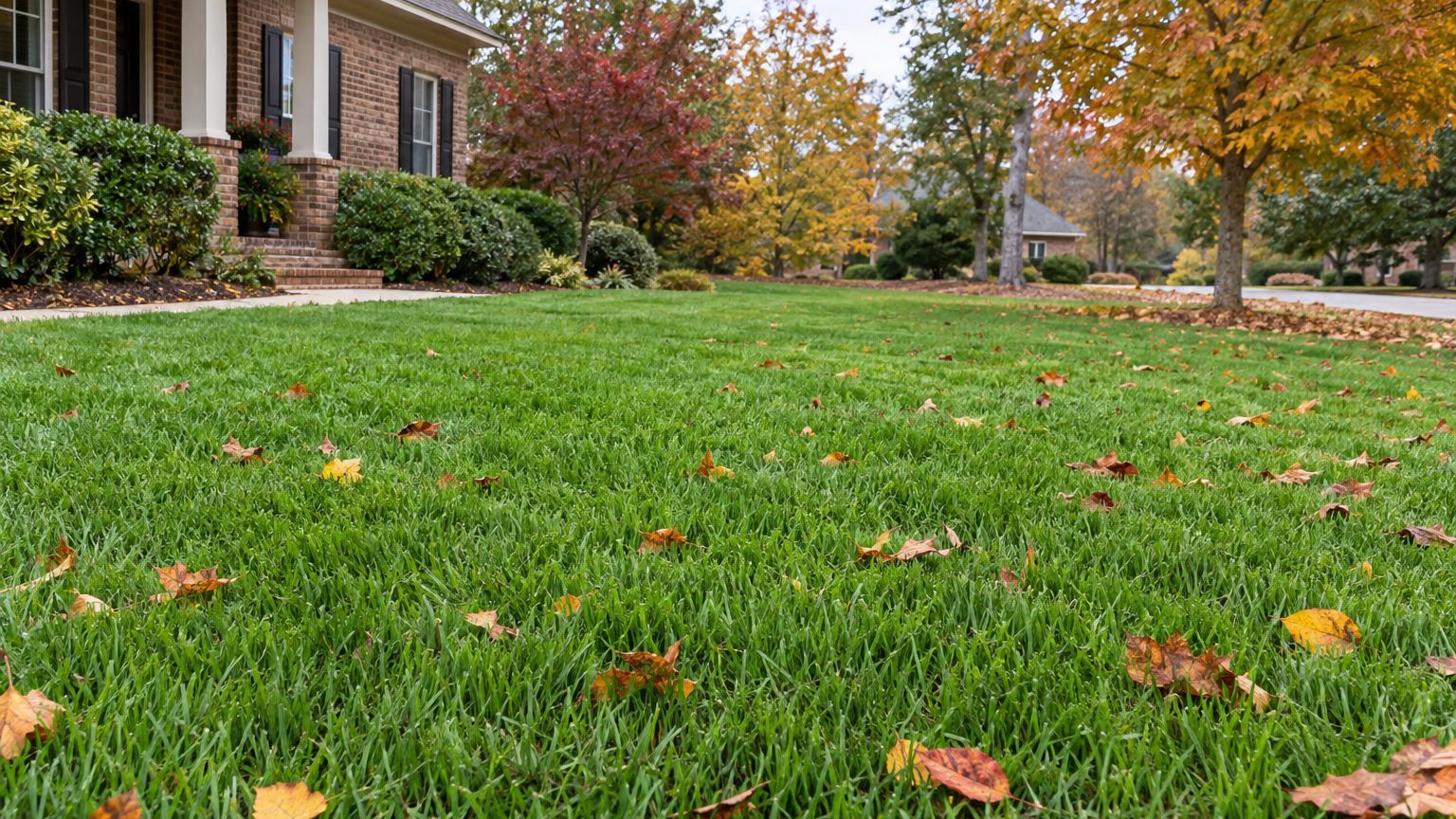
Warm-season grass in Alabama wakes slowly in spring, greens up as the soil warms, and keeps growing through the long, hot summer. That rhythm sets the whole year of lawn care here, from the first mowing in March to the last one in November.
What to Do Each Month in a Alabama Lawn

Alabama lawns are mostly warm-season grasses such as bermuda, centipede, zoysia and St. Augustine, so the busy months run from spring through early fall. Winter is mostly rest.
| Month | In the lawn |
|---|---|
| January | Rest. The grass is dormant, so keep traffic light and pull winter weeds by hand when you see them. |
| February | Rest. Dormant turf is not ready for feeding or seed, so use the time to sharpen the mower blade. |
| March | Mowing begins as the first green returns. Resume mowing at the proper height for your grass as green growth returns. |
| April | Mow regularly as growth picks up. Dethatching also works now, and sod can go down if you are ready to lay it. |
| May | The main month for the big jobs: core aeration, dethatching, seeding bermuda, centipede or bahia, and laying sod. Fertilizing and watering start too. |
| June | Fertilize, water deeply when rain falls short, and dethatch if you skipped May. Aeration and seeding still work, and sod can be laid. |
| July | Feed the lawn, water through dry spells, and keep mowing. Sod laid now needs steady moisture to root in the heat. |
| August | Fertilize if the lawn needs it and keep watering. Heat stress often shows on thin or shaded turf, so watch for dry, curling blades. |
| September | Keep mowing and watering as growth slows with shorter days. No feeding or planting is needed now. |
| October | Mow as needed while the grass winds down. Rake fallen leaves so they do not smother the turf. |
| November | Make the last mowings of the year as the grass fades toward dormancy. Then put the mower away. |
| December | Rest. The lawn is dormant, so just keep leaves off it and stay off frozen or soggy ground. |
St. Augustine has no seed, so sod or plugs are the way to plant it. Check the grass type before you buy anything.
Alabama — the year and the numbers
- State
- Alabama
- USDA zones
- 7a-9a
- Last spring frost
- March 19 to April 3
- First fall frost
- November 2 to November 16
- Annual rain
- 54 in
- Lawn type
- warm-season
- Source
- NOAA NCEI 1991-2020 Climate Normals, 32F freeze probabilities · Huntsville
When Does the Lawn Season Start and End in Alabama?
Growth follows soil warmth and grass type, not the calendar. Warm-season grasses start moving when the soil sits at 65 to 70 °F and rising, which is why seeding waits for May rather than the first mild days of spring.
Frost dates only tell you the risk to young plantings. In Huntsville, the last spring frost falls between March 19 and April 3, and a fresh seeding or new sod caught by a late freeze can be set back.
In fall, the first frost arrives between November 2 and November 16 in Huntsville. Your own yard will likely differ. Suburban and rural lots usually freeze later in spring and earlier in fall, and more so at elevation, so check with your county before you plan around any date.
How the Lawn Calendar Shifts Across Alabama
Spring arrives earlier on the Gulf Coast than in the Tennessee Valley, and Alabama spans USDA hardiness zones 7a to 9a.
- Huntsville and the Tennessee Valley: Spring warms later and fall cools sooner, so green-up and the first jobs sit toward the later side of each window.
- Birmingham and central Alabama: This is the middle of the pattern, and the calendar above fits it well.
- Mobile and the Gulf Coast: Soil warms earlier and stays warm longer, so mowing starts sooner and the growing season runs later into fall.
Higher ground in the northeast corner behaves like the Tennessee Valley, only cooler still.
Lawn Care Timing Mistakes to Avoid in Alabama
Seeding Too Early
Warm-season seed sown on cool spring soil sits and rots, or sprouts into a frost. Wait for May, when the soil has warmed, and if you miss it, June still works.
Fertilizing Too Late
Feeding in September or October can leave tender growth vulnerable just as the grass is slowing. Keep fertilizer to May through August, when the grass can use it.
Aerating or Dethatching in Dormancy
Tearing into a dormant lawn in winter opens bare soil to weeds and the grass cannot fill it in. Aerate in May, with June as a backup, and dethatch in May or June, with April also fine.
Where to Get Lawn Advice in Alabama
Lawn problems vary by soil, grass and county, so local advice beats general rules.
- Alabama Cooperative Extension System publishes lawn guides by grass type, and it is a good first stop before you plan spring work.
- Your county extension office can answer questions about your own yard and tell you how local frost and soil conditions shift the timing.
Common Questions
Which Grass Types Grow Best in Alabama?
Bermuda, centipede, zoysia and St. Augustine are the common warm-season choices. Bermuda wants full sun, centipede suits low-maintenance yards, and St. Augustine handles some shade but comes only as sod or plugs.
Can You Plant Sod Outside the Main Window?
Yes. Sod goes down best in May, and it also works in April, June and July. Water it steadily so the roots take hold before the heat peaks.
Should You Mow Dormant Grass in Winter?
No. Mowing starts in March once the grass greens up and stops in November when growth fades, so winter is a rest from the mower.