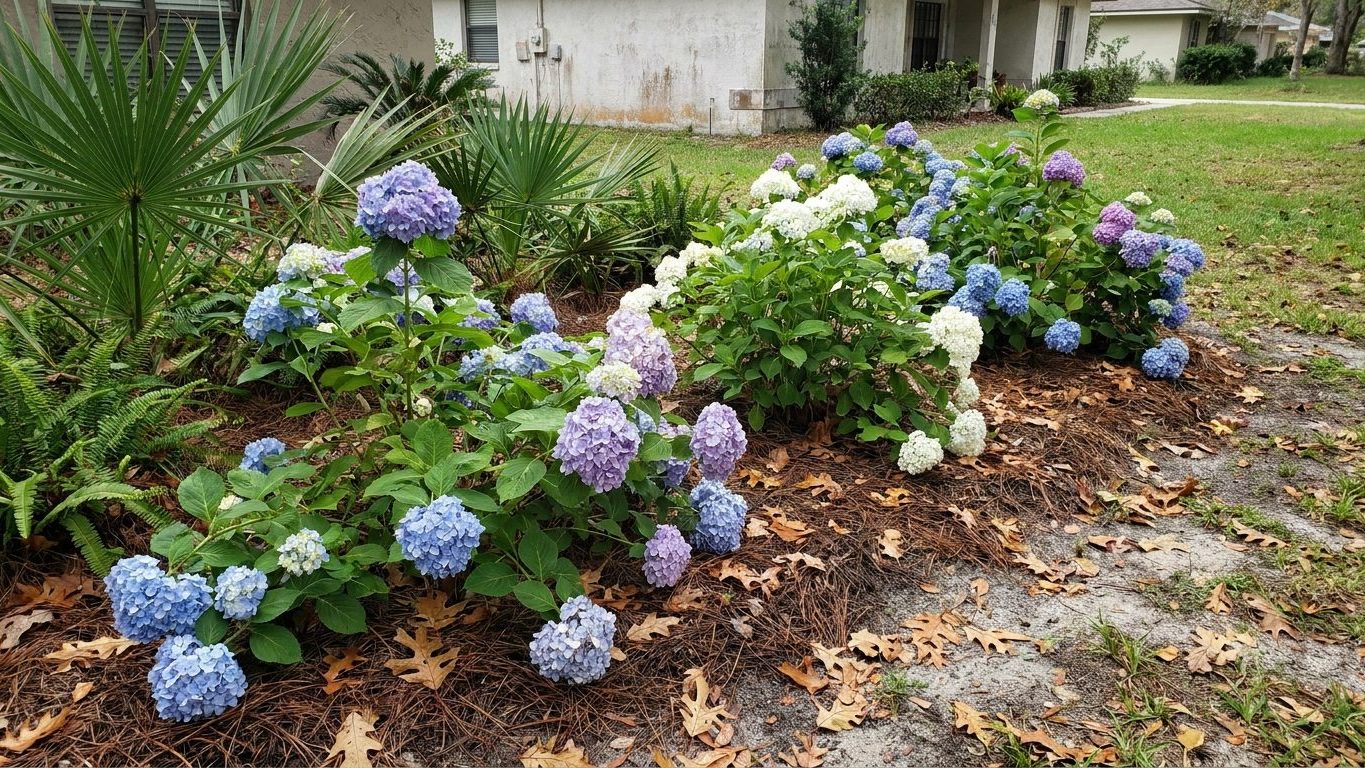
Plant hydrangeas in Florida during February, March, September, or October, the months this state’s calendar marks for planting, with Jacksonville anchoring the frost-driven part of that window since its last spring frost falls between February 16 and March 7. Prune bigleaf types in June or July, right after bloom. South of the frost line, the whole pattern flips, and this guide sorts out both.
When to prune hydrangeas in Florida: The Short Answer
Jacksonville anchors the frost-dated half of this calendar, and NOAA NCEI 1991-2020 Climate Normals puts its last spring frost between February 16 and March 7, with the first fall frost landing November 26 to December 13. Plant hydrangeas in February, March, September, or October under this state’s calendar, and prune bigleaf types in June or July, once the blooms fade.
- January: North Florida sits deep in dormancy, well ahead of the last frost window. Central and south growers are mid-season and should keep feeding lightly.
- February: The planting window opens statewide. Near Jacksonville, hold off until the last frost window closes in early March if soil still feels cold.
- March: Planting and the year’s first fertilizing round both fall here. This is usually the last month with real frost risk near Jacksonville.
- April: New transplants settle into warming soil. Check for winter dieback and cut blackened stems back to live wood.
- May: The second fertilizing round lands now. Watch rainfall since spring showers can taper off before summer heat sets in.
- June: Prune bigleaf hydrangeas right after the spring flush fades, since next year’s buds form on this year’s new wood.
- July: Pruning and the third fertilizing round overlap. Finish cuts early so new growth hardens before fall arrives.
- August: Peak heat stresses shallow roots statewide. Water deeply in the morning and mulch to keep root zones cool.
- September: The fall planting window opens as the heat breaks. New roots get a full season to establish before winter.
- October: Planting continues into cooler weather. This is the last easy month to get shrubs in before frost risk returns further north.
- November: The first fall frost window begins late in the month near Jacksonville. Central and south Florida keep growing straight through it.
- December: North Florida shrubs go dormant once frost arrives. South of that line, hydrangeas often keep their leaves and stay active.
This ribbon assumes the frost-driven pattern that defines north Florida. Below the Ocala line, hydrangeas often stay in leaf year-round, and the riskiest month flips from January to August, so treat this as a starting point rather than a fixed script.
Florida — the year and the numbers
- State
- Florida
- USDA zones
- 8b-11b
- Last spring frost
- February 16 to March 7
- First fall frost
- November 26 to December 13
- Annual rain
- 53 in
- Lawn zone
- warm-season
- Source
- NOAA NCEI 1991-2020 Climate Normals, 32F freeze probabilities · Jacksonville
How to Work Out the Dates for Your Own Yard
Frost windows set the anchor, and everything else here counts backward or forward from that anchor in weeks, not fixed dates.
- Find your local last frost date: Jacksonville’s window runs February 16 to March 7 under NOAA NCEI 1991-2020 Climate Normals, so gardeners near that station should count from the later end of the range.
- Check your hardiness zone: Florida spans 8b to 11b under the USDA Plant Hardiness Zone Map, and a shrub rated for 8b in a catalog will winter fine even in the state’s coldest pocket.
- Match the zone to your ZIP code: a yard near Pensacola sits closer to 8b while one near Naples sits near 11b, and that gap decides whether frost matters at all.
- Push planting later if you’re inland: inland cold snaps often linger past the coastal date, so add a week or two to the February start if frost still shows up on local forecasts.
- Pull pruning earlier if you’re south of Ocala: bigleaf types finish blooming sooner in warmer zones, so June pruning can slide into late May without harming next year’s buds.
None of this replaces a look at your own thermometer. Two yards ten miles apart can differ by a full zone once elevation or distance from water gets involved.
Florida North to South: How the Dates Shift
Zone alone doesn’t decide the date on this state’s calendar. Elevation, distance from the coast, and how far south you sit inside Florida all push these frost windows in different directions.
- The Panhandle and North Florida (Jacksonville, Tallahassee, Pensacola): frost is real here, and the calendar above, anchored to Jacksonville, applies most directly to this stretch.
- Central Florida (Orlando, Tampa, Ocala): freezes turn rare, and the growing season leans toward winter rather than the frost-driven pattern further north.
- South Florida (Miami, Naples, Fort Lauderdale): frost essentially disappears, and the calendar flips, with summer heat replacing winter cold as the season to plan around.
The state guide breaks down exactly where that inversion starts and what it means for planting and pruning dates in each region.
Mistakes Florida Punishes
No flowers the following spring
Bigleaf hydrangeas set next year’s buds on this year’s wood soon after they bloom, so cutting them back in September or October removes flowers before they form. Keep pruning inside the June to July window and skip fall cleanup on this species entirely.
Planting in peak summer heat
New roots planted in July or August fight heat and humidity at once, and many never establish before stress sets in. Wait for the state’s fall window in September or October, when the ground cools and rainfall steadies.
Treating the whole state alike
A calendar built around Jacksonville’s frost dates doesn’t hold once you cross into central or south Florida, where frost barely registers and summer becomes the tough season instead. Check the by-state guide for the region that actually matches your yard.
Florida Extension Offices and County Contacts
The state’s frost windows and hardiness range only go so far, and a county office fills in the rest, from soil quirks to local pest pressure. The University of Florida IFAS Extension network covers every county with an office and a horticulture agent.
- Your state page: the frost dates and the pruning window where you live.
- Which ones hold up here: the varieties worth planting in this climate.
- What goes wrong here: the pests and problems specific to Florida yards.
Call your county office before you plant if your yard sits in a frost pocket the state map doesn’t show.
Common questions
Can I plant hydrangeas in Florida during summer?
It’s not the best idea. Summer planting months fall outside this state’s planting window, and July and August heat stresses new roots before they can establish. Wait for the September or October window instead.
Why won’t my hydrangea bloom in central Florida?
Bigleaf types set buds on old wood shortly after flowering, so a late prune, a hard cutback, or an off-schedule trim in the wrong month can remove next year’s flowers before they ever form.
Does frost hurt an established hydrangea in North Florida?
Established roots usually survive a frost near Jacksonville’s typical window without lasting harm. Stems can blacken and die back, but new growth from the base returns once spring warms the soil again.