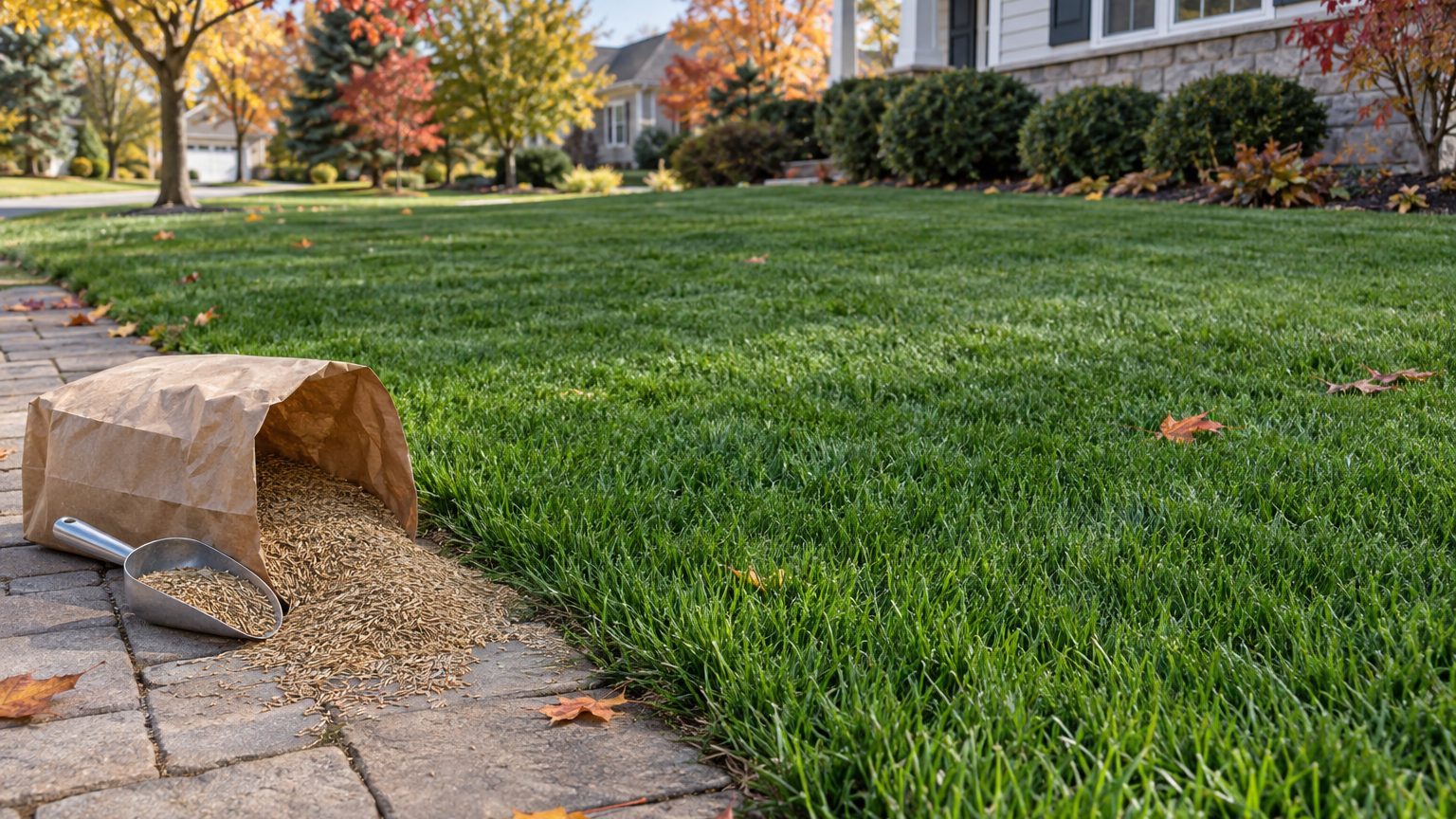
Tan, thinning patches after a hot Ohio summer usually point to a grass that was never quite right for the spot. Ohio sits squarely in cool-season territory, so the seed worth buying comes from four families: Kentucky bluegrass, tall fescue, fine fescues, and perennial ryegrass. Which one fits depends on sun, traffic, and how much watering you want to do.
Which Grass Grows Best in Ohio?
Cool-season grasses suit Ohio. They grow hard in spring and fall, slow down in summer heat, and shrug off winters that fall within USDA hardiness zones 5b to 6b. Warm-season grasses struggle with that winter cold, which is why every dependable lawn seed here comes from the cool-season group.
Kentucky Bluegrass
This is the classic Ohio lawn, with a dense, deep green look that holds up well across the state’s winters. It spreads sideways on underground stems, so it fills small bare spots on its own once established.
Bluegrass wants full sun and is slow to sprout from seed. Expect it to turn tan in dry midsummer spells, then green up again when cooler weather and rain return.
Tall Fescue
Tall fescue sends roots deeper than bluegrass, which helps it ride out the dry stretches Ohio often gets in July and August. It stays greener through heat with less watering, and it tolerates kids and dogs well.
It grows in clumps rather than spreading, so thin spots need reseeding instead of waiting for the grass to fill in. It handles light shade better than bluegrass.
Fine Fescues
Creeping red, chewings, and hard fescue make up this group, and they are the ones to reach for under maples and oaks. The blades are thin, the growth is slow, and the lawn needs less mowing and less fertilizer.
The trade-off is traffic. Fine fescues wear down under running kids and heavy foot paths, and they dislike soggy, compacted soil.
Perennial Ryegrass
Perennial ryegrass sprouts fast, which makes it useful for quick cover and for mixing into other seed. Its quick growth provides early cover while slower grasses establish.
On its own it carries more risk in Ohio, because hard winters and summer stress can thin it out. Treat it as a partner in a mix rather than the whole lawn.
Ohio — the year and the numbers
- State
- Ohio
- USDA zones
- 5b-6b
- Last spring frost
- May 5 to May 15
- First fall frost
- October 5 to October 15
- Annual rain
- 42 in
- Lawn type
- cool-season
- Source
- Ohio State University Extension — Ohio Gardening Calendar · Columbus
How to Choose Grass Seed for an Ohio Yard
Start with the light, because shade can change the answer. Then think about how the yard gets used and whether you are willing to run a sprinkler through summer.
An Ohio yard can combine conditions, such as a sunny front slope and a shaded back corner. Seeding each area with the grass that suits it works better than forcing one type everywhere.
| Your yard | Grass | Why it fits |
|---|---|---|
| Full sun, kids and pets | Kentucky bluegrass or tall fescue | Both take wear, and bluegrass repairs itself by spreading |
| Shade under trees | Fine fescues | They tolerate low light better than bluegrass |
| Little watering | Tall fescue | Deep roots keep it greener through dry spells |
| Less mowing | Fine fescues | Slow, fine growth means fewer trips with the mower |
| Quick cover on bare soil | Perennial ryegrass in a mix | It sprouts fast and shields slower grasses |
A mix of bluegrass and fine fescue is a common way to cover a yard with both sun and partial shade. If you are unsure, note where the old lawn thinned out, then check light, traffic, drainage, and soil before choosing seed.
Which Grasses Grow Where in Ohio
The same four grasses work across the state, but their balance shifts a little from the lake to the river.
- Lake Erie shore: Cleveland, Toledo, and the towns along the lake get cooler summers and lake-moderated weather, which suits bluegrass and fine fescue and keeps summer stress lower.
- Northwest Ohio: The flat, heavy-soil farm country around Findlay and Defiance holds water in spring, so choose grasses that tolerate wet, compacted ground and plan for good drainage.
- Columbus and central Ohio: Summers run hotter and drier here, so a tall fescue or a bluegrass and tall fescue blend gives a safety margin.
- Cincinnati and the Ohio River valley: Warmer summer conditions can favor tall fescue where heat stresses bluegrass.
Wherever you live, the neighborhood matters too, since a shaded street in Cleveland may need the same fine fescue as one in Cincinnati.
Grass Seed Mistakes to Avoid in Ohio
Seeding at the Wrong Time
Cool-season seed wants warm soil and cool air together, and Ohio delivers that in August and September. Spring seeding in April and May also works, but young grass then has to survive its first summer.
If you seed in spring, skip the crabgrass preventer in that area, because the same barrier that stops weed seed also stops grass seed. Preventer belongs on lawns you are not seeding, usually in April.
Burying the Seed Too Deep
Grass seed needs shallow placement and firm soil contact to sprout well. Cover it no more than 0.25 inch, and press it into the soil so every seed touches the ground firmly.
Raking the seed into a thick layer of soil buries it. A light raking followed by a roller or a walk across the area works better.
Sowing Too Much or Too Little
More seed does not make a thicker lawn. Crowded seedlings compete, stay weak, and invite disease, while a thin sowing leaves gaps for weeds to claim.
Follow the rate printed on the bag for the grass you bought, and spread it evenly so the coverage matches across the yard.
Where to Get Lawn Advice in Ohio
Local help is easy to find, and it is worth using before you buy seed. Soil, drainage, and shade vary from one neighborhood to the next.
- Ohio State University Extension publishes lawn guidance written for Ohio conditions, so check it before choosing a grass.
- Your county extension office can answer questions about your own soil and weeds, and it can point you to a soil test before you seed.
Common Questions
Can You Mix Different Grass Seeds in an Ohio Lawn?
Yes. Blends of bluegrass, fine fescue, and ryegrass are common because each covers a different condition. Just check that the mix suits your light, since a sun mix will thin out in shade.
Should You Aerate Before Overseeding?
Core aeration in September opens the soil so seed reaches the ground and roots. If thatch has built up, dethatching in August or September clears the way before you spread seed.
How Wet Should New Grass Seed Be Kept?
Keep the top of the soil damp until the seed sprouts, since dry spells at that stage kill seedlings. Once the lawn is established, the main watering season runs June through August.