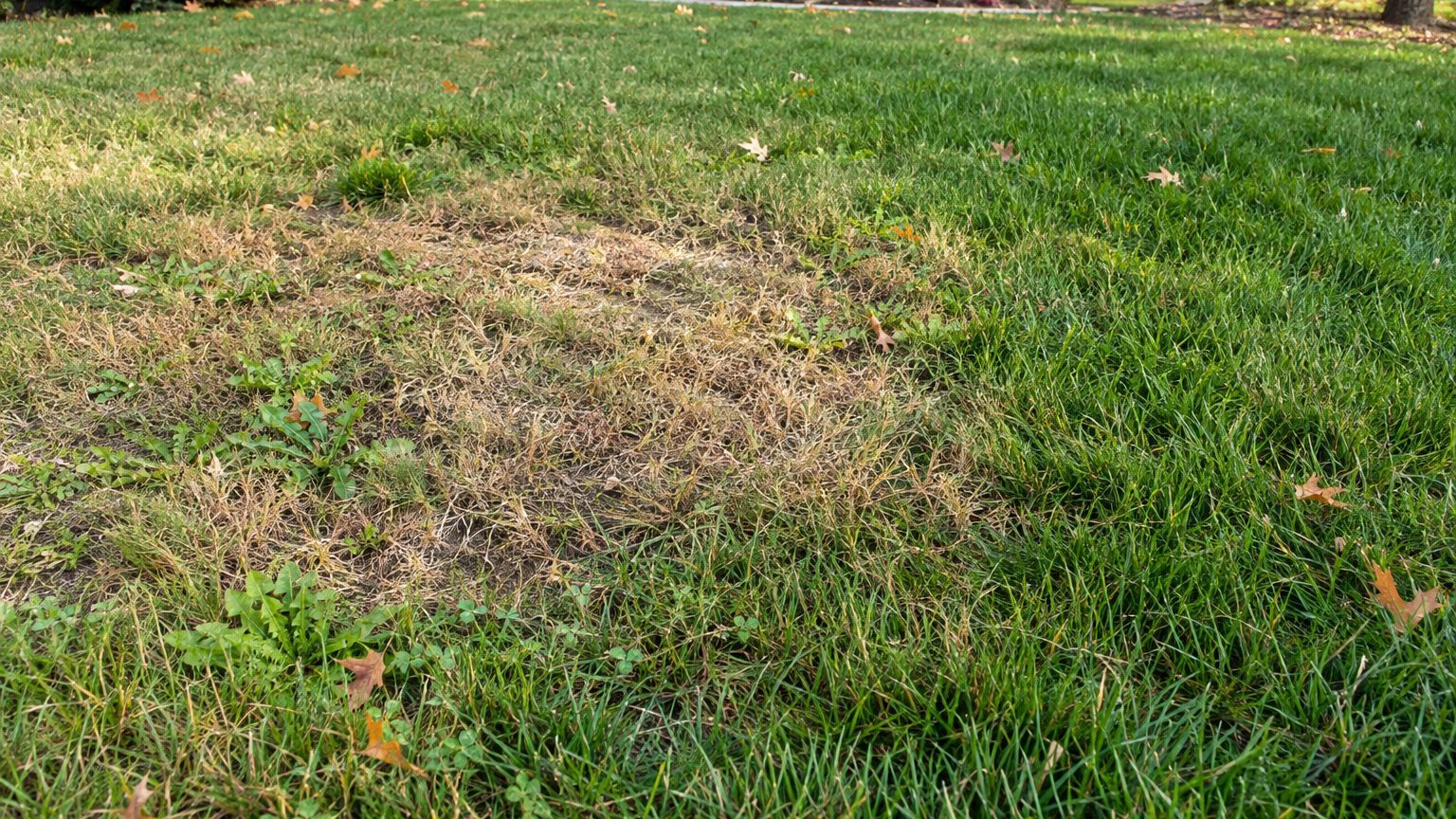
Tan rings spreading across the grass on a humid July morning, crabgrass sprawling along the driveway, a spongy lawn that sheds water: Virginia lawns show trouble in familiar ways. The state grows cool-season tall fescue alongside warm-season bermuda and zoysia, and each has its own weak spots. Once you know the sign, the season and the fix, most problems stay small.
Lawn Pests and Diseases in Virginia
Crabgrass

Coarse, pale green blades fan out flat from a central point, usually along pavement and in thin spots. It dies with the first hard frost and leaves bare soil that invites more seedlings the next year.
A pre-emergence preventer goes down in March, and it also works in February, April or May if spring runs odd. Dense turf is the lasting fix, since seedlings struggle without light.
Brown Patch
Roundish tan or brown patches, sometimes ringed with a dark, smoky edge on dewy mornings, appear on tall fescue in hot, muggy weather. The blades die, but the crowns often survive and recover.
Water early in the day during June, July and August so the blades dry out by afternoon. Wet grass overnight is what feeds the fungus.
White Grubs
Irregular patches turn brown in late summer and feel loose underfoot. Tug the turf and it peels back like a carpet, with white, C-shaped grubs curled in the soil. Crows, raccoons and skunks tearing at the lawn can point to grubs as well.
Treatment depends on how many grubs you find, so ask your county extension office before treating.
Thick Thatch Layer
Thatch is the tight, spongy mat of stems and roots between the green blades and the soil. A layer up to 1/2 inch is healthy. Above that, dethatch or core aerate.
On tall fescue, dethatching works in August and September. Bermuda and zoysia want it in May and June, and April also works.
Virginia — the year and the numbers
- State
- Virginia
- USDA zones
- 5a-8b
- Last spring frost
- March 20 to April 3
- First fall frost
- November 10 to November 24
- Annual rain
- 47 in
- Lawn type
- cool- and warm-season
- Source
- NOAA NCEI 1991-2020 Climate Normals, 32F freeze probabilities · Virginia Beach
How to Tell Which Lawn Problem You Have
Start with the shape of the damage, then check the season and whether the grass pulls up. Diagnosis rarely rests on a clue in isolation; consider the clues together.
Get down on your knees, tug a handful of blades, and look at the soil underneath. That quick check can narrow the diagnosis.
| Sign | Likely cause | When to act |
|---|---|---|
| Coarse, pale clumps spreading flat in summer sun | Crabgrass | Preventer in March |
| Spongy turf, water beading and running off | Heavy thatch | August or September on fescue |
| Thin, bare grass in open sun after summer | Stressed tall fescue | Aerate and overseed in August |
Tan rings in muggy weather that stay put when you tug the blades point to brown patch. Loose turf that rolls back like a rug, plus animals digging at it, points to grubs.
Where Lawn Problems Are Worst in Virginia
Virginia stretches from ocean to mountains, and the problems shift with it.
- Virginia Beach and Hampton Roads: The mildest part of the state, so crabgrass and warm-weather fungus get a long run. Warm-season grasses such as zoysia and bermuda do well here.
- Blue Ridge: Spring comes weeks later and fall arrives sooner, so preventer and seeding timing slide with it. Tall fescue is more at home, with less summer disease stress.
- Southwest Virginia: Cold arrives early, which gives late-summer seed less time to root. Plan on seeding toward the front of the window.
The Piedmont, including Richmond, sits between these extremes, so use the middle of each timing window.
Lawn Care Mistakes That Invite Problems in Virginia
Mowing Too Short
Scalped grass has less leaf to feed itself, and bare soil between blades gives crabgrass its opening. Mow regularly through the growing season, which runs March to November for tall fescue and April to October for bermuda and zoysia. Raise the deck, keep the blade sharp, and avoid removing too much height at once.
Sprinkling Lightly
A quick daily splash keeps roots shallow and the surface damp, which is just what brown patch likes. Soak the lawn deeply and less often during June, July and August, and let the top of the soil dry between waterings.
Feeding Fescue in Summer
Nitrogen in hot weather pushes soft growth that disease attacks first. Never fertilize tall fescue in summer. Feed it in March, September and October instead, and April works as a fallback.
Bermuda and zoysia are the reverse, and they eat best in May, June and July.
Where to Get Lawn Advice in Virginia
Lawn trouble is easier to name with someone who has seen the soil and the weather you deal with. Virginia Cooperative Extension is the state’s land-grant service, with offices serving local communities.
- The extension website has lawn care publications you can read before a problem gets worse, such as when patches first appear.
- Your county extension office can answer questions about your own yard, including soil testing, and is worth calling before you buy a treatment.
Common Questions
Can You Grow Bermuda or Zoysia in Virginia?
Yes, both are grown in the state, mostly in the warmer east and south. Seed warm-season grass in May, with June as a fallback. Sod goes down in May, and June and July also work.
Is Virginia One Hardiness Zone?
No. In the USDA system, Virginia spans zones 5a to 8b, based on average annual extreme minimum temperature. Mountain areas sit at the colder end and the coast at the warmer end, so check your own location.
Does the Last Frost Date Tell You When to Seed?
Not by itself. Frost date marks the risk of a freeze, and grass growth follows soil warmth and the grass type. For tall fescue, late summer is the seeding time, with August best and September as a fallback.