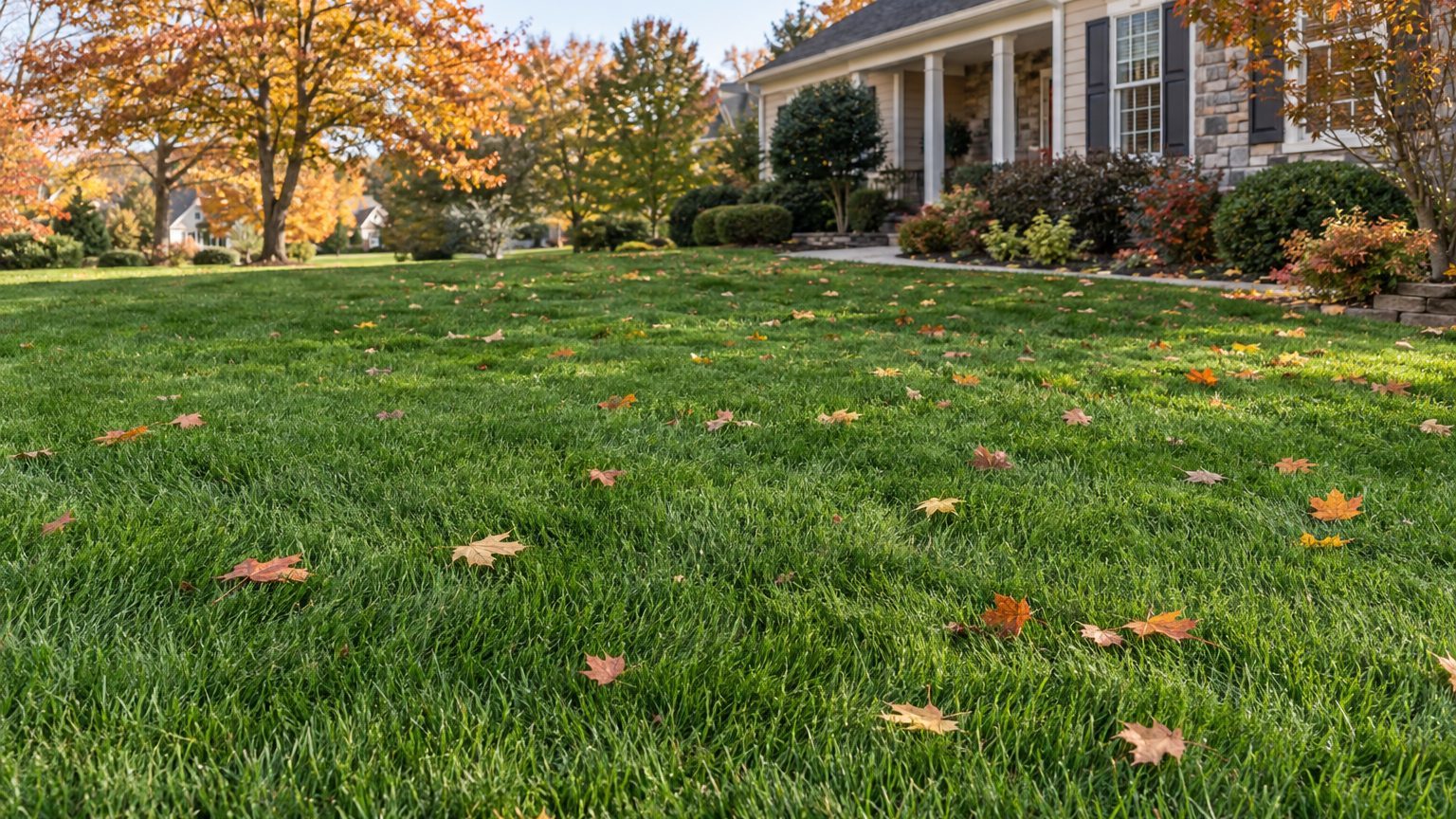
Tall fescue greens up in early spring while the bermudagrass next door stays straw-brown into May. That gap drives the whole Virginia lawn schedule.
What to Do Each Month in a Virginia Lawn

Most Virginia lawns are cool-season grass, usually tall fescue, with bermuda and zoysia more common in the warmer parts of the state. Tasks below apply to cool-season turf unless a line names warm-season grass.
| Month | In the lawn |
|---|---|
| January | Rest. The grass is dormant, so stay off it when it is frozen and let it sleep. |
| February | Still quiet. In a mild spell, crabgrass preventer also works now, before the soil wakes up. |
| March | Put down crabgrass preventer and feed tall fescue as it starts growing again. Virginia law says lawn maintenance fertilizer sold in the state contains no phosphorus, which is reserved for new lawns and repairs. Start mowing as growth picks up. |
| April | Keep mowing. If March slipped by, preventer and fertilizer still work now. Warm-season lawns begin growing, so start mowing them and dethatch them if the thatch is thick. |
| May | Warm-season month. Seed or lay sod bermuda and zoysia, dethatch them, and start feeding them. Preventer still works if you are late. |
| June | Water deeply as heat builds. Keep feeding and dethatching warm-season grass, and if you missed May, you can still seed or sod it. |
| July | Water through dry spells and keep mowing. Warm-season lawns take their last feeding of the season now, while fescue gets no fertilizer in summer. Sod still works for warm-season grass. |
| August | Core aerate, dethatch and seed tall fescue, since late summer gives new seed warm soil and falling heat. Keep watering the new seed. |
| September | Feed the fescue and keep mowing. If August got away from you, aerating, dethatching and overseeding still work now. |
| October | Feed again for root growth before dormancy and keep mowing. Warm-season grass slows down and heads toward its tan winter color. |
| November | Make the final mows of the year for cool-season grass while it still grows, and keep fallen leaves from smothering it. |
| December | Rest. The lawn is dormant, and there is nothing to do but watch for matted leaves. |
Water only when rain falls short, and aim for deep soakings rather than daily sprinkles. Roots follow the water, so shallow watering leaves summer grass weak.
Virginia — the year and the numbers
- State
- Virginia
- USDA zones
- 5a-8b
- Last spring frost
- March 20 to April 3
- First fall frost
- November 10 to November 24
- Annual rain
- 47 in
- Lawn type
- cool- and warm-season
- Source
- NOAA NCEI 1991-2020 Climate Normals, 32F freeze probabilities · Virginia Beach
When Does the Lawn Season Start and End in Virginia?
Growth follows soil warmth and grass type, not the calendar. Cool-season seed germinates when soil sits at 50 to 65 °F, but Virginia fescue is seeded in late summer so young roots are not exposed to the next summer’s heat. Warm-season seed needs soil at 65 to 70 °F, so bermuda and zoysia start later and stop sooner.
Frost dates matter mainly for young seedlings. In Virginia Beach, the last spring freeze usually falls between March 20 and April 3, and a seedling that sprouts before then can be nipped.
The first fall freeze in Virginia Beach usually comes between November 10 and November 24. Fall-seeded fescue has the weeks before that to root in. Inland and in the mountains, both dates shift, so treat these as the mild end of the state.
How the Lawn Calendar Shifts Across Virginia
Elevation and distance from the Atlantic help move the calendar, and each part of the state runs a little differently.
- Hampton Roads and Virginia Beach: The mildest spring and fall in the state. Fescue wakes up early here, and bermuda and zoysia do well, so you can start tasks at the early end of each window.
- Shenandoah Valley and the Blue Ridge: Spring comes weeks later and fall frost arrives sooner. Lean toward the later end of spring tasks and seed fescue promptly in late summer.
- Southwest Virginia: Cooler and higher, with the same pattern as the Blue Ridge. Warm-season grasses are a harder sell here, and fescue is the safer bet.
Northern Virginia and the Richmond area fall between these, so use the middle of each window.
Lawn Care Timing Mistakes to Avoid in Virginia
Seeding Fescue in Spring
Spring seed sprouts, then meets summer heat before roots are deep. Weak seedlings burn out, and crabgrass moves into the gaps. Seed tall fescue in August instead, and if you miss it, September still works.
Feeding Fescue in Summer
Fertilizer in July pushes soft growth on a stressed lawn and feeds disease. Tall fescue wants fertilizer in early spring and fall. Keep summer feeding for bermuda and zoysia, which grow hardest then.
Dethatching at the Wrong Time
Tearing out thatch from bermuda or zoysia in late summer leaves the grass too little time to recover before dormancy. Do it in May or June, when it is growing fast. Cool-season lawns are the opposite, and August and September are their windows.
Where to Get Lawn Advice in Virginia
Virginia Cooperative Extension publishes lawn guidance written for the state’s soils and grasses, and every county has an office staffed by local agents.
- The extension website covers grass choice, weed control and seeding, so check it before you buy seed or fertilizer.
- Your county extension office can explain a soil test, which tells you what the lawn needs before feeding in spring or fall.
- A call to the county office works best when you describe the problem and where on the lawn it shows.
Common Questions
How Can You Tell If Your Lawn Is Tall Fescue or Bermuda?
Look at the color in winter and the blades in summer. Fescue stays green or dull green through winter and has wide, coarse blades. Bermuda turns tan after frost and has fine blades and creeping runners.
Is a Soil Test Worth Doing Before Fertilizing?
Yes, especially if the lawn is thin even though you feed it. A test shows acidity and nutrient levels, so you add what the soil lacks instead of guessing, and you can take a sample any time the ground is workable.
What Should You Do with Fallen Leaves on a Lawn?
Mow light layers into small pieces so they break down in the turf. A thick, matted layer blocks light and holds moisture, which invites disease, so rake or mulch it off before it covers the grass.