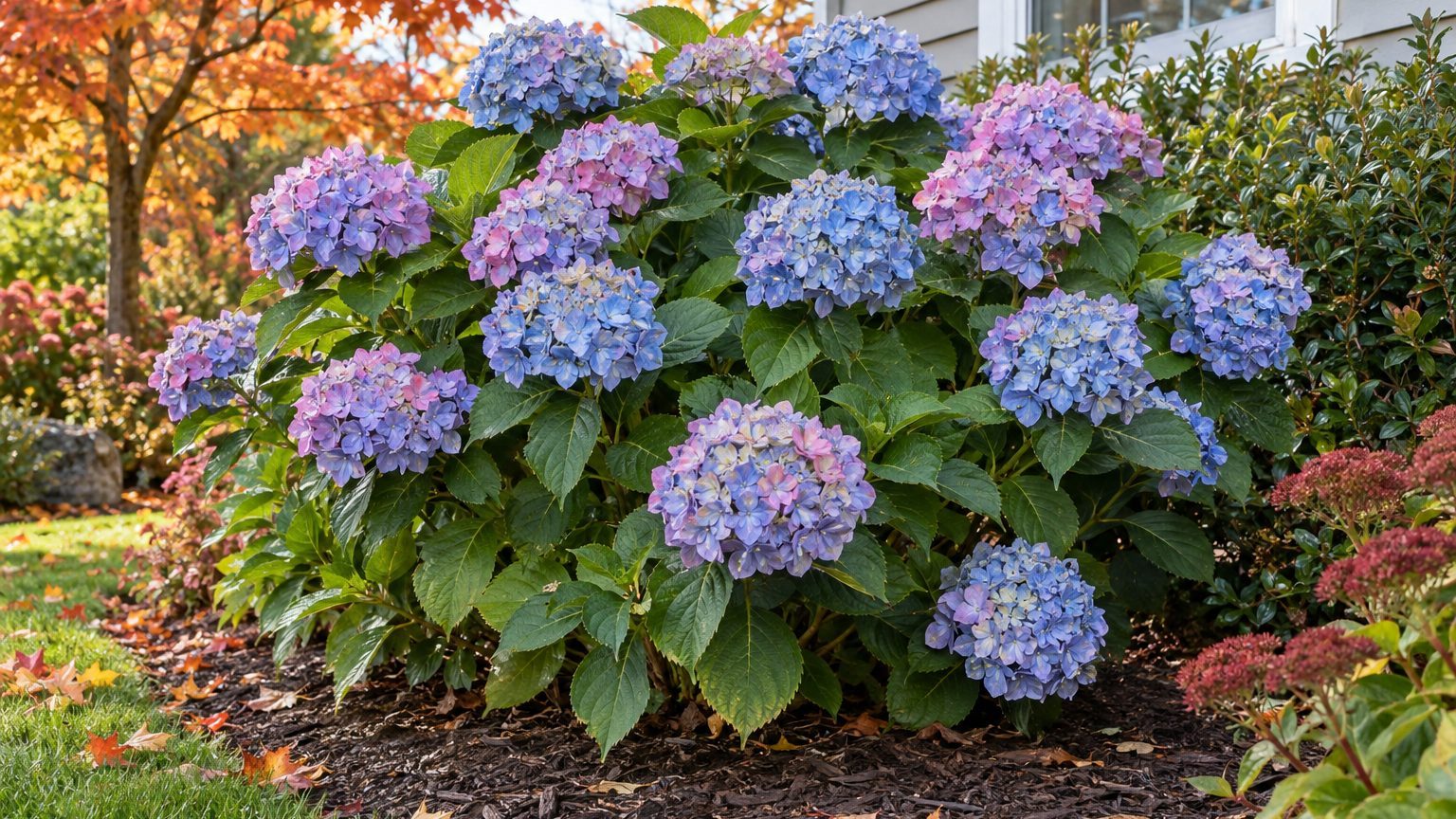
In Virginia Beach, the state’s mildest reference point, hydrangeas go into the ground twice a year: in spring once the soil clears the last frost window of March 20 to April 3, and again in fall between September and October before the first frost lands between November 10 and November 24.
When to prune hydrangeas in Virginia: The Short Answer
Here is how the twelve months break down for a hydrangea bed anywhere from the Tidewater to the Blue Ridge.
- January: The ground is dormant and too cold to dig, so this month is for ordering stock and picking a site with morning sun. No fertilizer, no pruning, just planning.
- February: Frost still grips most of the state, weeks ahead of the last spring frost. Prep the planting hole now so it’s ready the moment soil temperatures climb.
- March: NOAA NCEI 1991-2020 Climate Normals puts Virginia Beach’s last spring frost at March 20 to April 3, and planting can start once that risk fades. This is also the first of three fertilizing months.
- April: Planting continues as the frost window closes statewide. New root systems need steady moisture through this stretch, not just a one-time soak.
- May: A second fertilizing round feeds the flush of leaf growth. Skip planting this month and let spring-set roots establish instead.
- June: Bigleaf pruning opens now, limited to spent blooms and dead wood. Cutting further back risks removing next year’s flower buds.
- July: The pruning window for bigleaf hydrangeas closes at month’s end, alongside the third and final fertilizing round. Afternoon shade matters more than ever as heat peaks.
- August: No fertilizing and no pruning this month, since either would push tender growth into an unforgiving stretch of heat. Deep, infrequent watering keeps root balls from drying out.
- September: Fall planting opens back up as nights cool. Roots set now have two full months before the first fall frost to anchor themselves.
- October: The second fall planting month, and the better one for cooler soil and steadier rain. This is the last comfortable window before frost returns.
- November: The first fall frost lands somewhere between November 10 and November 24 depending on elevation. Mulch goes down now, not before, to insulate roots without inviting rot.
- December: The shrub is fully dormant and needs nothing but a check on mulch depth after any hard freeze. Save the pruning tools for June.
Spring and fall are the two safe doors into a Virginia hydrangea bed, with summer heat and winter dormancy locking everyone else out. The exact week still depends on where in the state that yard sits, which is what the next section works out.
Virginia — the year and the numbers
- State
- Virginia
- USDA zones
- 5a-8b
- Last spring frost
- March 20 to April 3
- First fall frost
- November 10 to November 24
- Annual rain
- 47 in
- Lawn zone
- transition-season
- Source
- NOAA NCEI 1991-2020 Climate Normals, 32F freeze probabilities · Virginia Beach
How to Work Out the Dates for Your Own Yard
Working out a planting date for one specific yard means counting backward from the frost window instead of copying a date off a calendar.
- Check the local hardiness zone first: The USDA Plant Hardiness Zone Map puts Virginia’s range at 5a to 8b, and a yard near the coast sits at the warm end while a Blue Ridge property lands close enough to 5a that a marginal variety struggles some winters.
- Confirm the local frost window: Virginia Beach’s last spring frost falls between March 20 and April 3, but that date shifts later with every mile inland and every foot of elevation gained.
- Count forward past the last frost date before digging: That buffer lets soil temperature catch up to air temperature, which matters more to a hydrangea’s roots than the calendar does.
- Watch the soil, not just the thermometer: Cold, waterlogged soil in early spring can rot a new root ball even after the air has warmed past frost risk.
- Count backward from the first fall frost for a September or October planting: with the first fall frost landing November 10 to November 24, a plant set in September gets close to two months to root in before cold arrives, while an October planting gets far less cushion.
- Pick the species before the date: a panicle hydrangea tolerates a wider planting window than a bigleaf, which is pickier about both heat at planting and cold once it’s established.
None of this replaces watching the specific yard. A south-facing bed against brick warms weeks ahead of an open lawn, and that gap is often bigger than the difference between two Virginia counties.
Virginia North to South: How the Dates Shift
Elevation and distance from the water move these dates more than latitude alone does.
- Tidewater and the coast (Virginia Beach, Norfolk, Hampton Roads): the mildest corner of the state, where the reference frost dates above apply almost exactly and the growing season runs longest.
- The Piedmont (Richmond, Charlottesville): sits inland enough that spring arrives later and fall arrives sooner than the coastal reference dates, trimming the season from both ends.
- The Shenandoah Valley (Winchester, Harrisonburg): valley cold air pools overnight, so frost lingers later into spring than the elevation alone would suggest.
- The Blue Ridge and southwest (Blacksburg, Abingdon): the coldest ground in the state, where spring planting waits longest and fall planting has to start earliest to beat frost.
The state hydrangea guide lines up these regional shifts against the coastal reference dates for a specific county.
Mistakes Virginia Punishes
Pruning bigleaf in fall or winter
Bigleaf hydrangeas set next year’s flower buds on the current season’s wood by late summer, so a fall or winter cut removes blooms before they ever open. Keep pruning inside the June and July window and limit it to spent flower heads and dead stems.
Fertilizing past July
A late feeding in August or September forces soft new growth that has no time to harden before the first fall frost arrives in November. Stop after the third round in July and let the plant slow down on its own.
Planting into a Tidewater heat wave
Setting a hydrangea into the ground during a hot, dry stretch of Virginia Beach summer stresses roots that haven’t spread far enough to keep up with water loss. Hold off until the September or October window, when cooler soil gives roots a real head start.
Virginia Extension Offices and County Contacts
Virginia’s hardiness range of 5a to 8b covers coastal Norfolk to the Blue Ridge, and Virginia Cooperative Extension‘s county offices narrow that down to a specific soil and frost pattern.
- Your state page: the frost dates and the pruning window where you live.
- Which ones hold up here: bigleaf, panicle, and other names weighed against this state’s winters.
- What goes wrong here: the pests and mistakes this climate makes worse, and the fix that actually works.
Common questions
Can I plant hydrangeas in Virginia in summer?
Nothing stops a summer planting except the hydrangea’s odds. July and August heat in Virginia Beach and points west stresses new roots before they’ve spread, so most gardeners wait for the September window instead.
Do hydrangeas need winter protection in Virginia?
Most of the state’s 5a to 8b range doesn’t require covering a hydrangea, but a bigleaf variety planted at the cold edge near the Blue Ridge benefits from a mulch layer applied once the first fall frost settles in.
What happens if I miss the fall planting window?
Spring is the fallback, and it works nearly as well once the last spring frost has passed in late March or early April. The trade-off is a shorter head start before summer heat arrives.