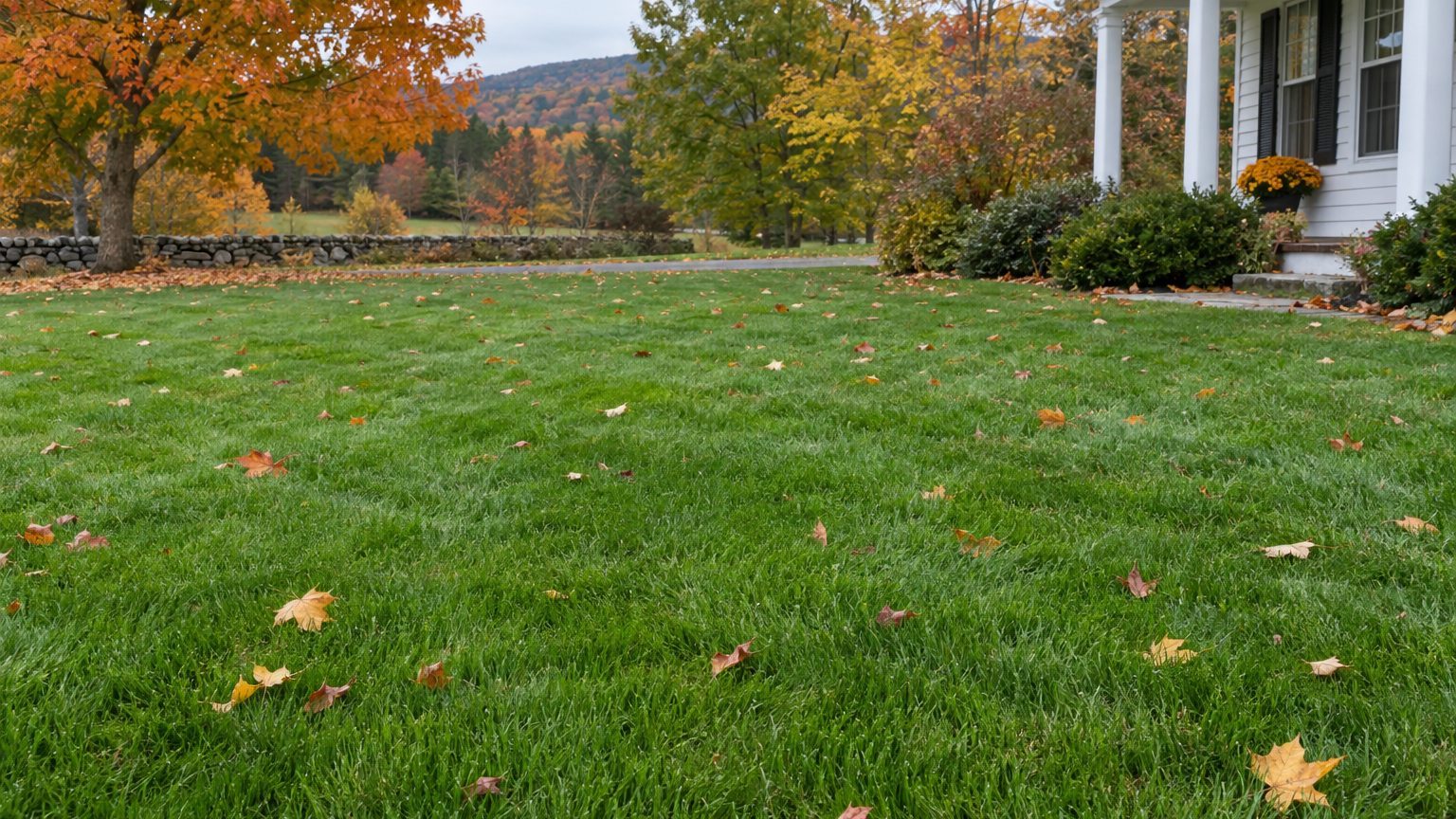
Vermont lawns spend a long stretch under snow, then green up fast once the soil thaws and drains. The work comes in a spring push, a quieter summer, and an early-fall rush.
What to Do Each Month in a Vermont Lawn
Cool-season grasses carry the Vermont lawn, so the big jobs cluster in spring and early fall, when roots and shoots can recover. Summer is for mowing and watering, and winter is for staying off the turf.
| Month | In the lawn |
|---|---|
| January | Rest. The grass is dormant under snow, so keep foot traffic and plow piles off the turf. |
| February | Rest. Nothing is growing, and frozen or soggy ground is easily damaged by walking. |
| March | Still dormant. Watch for matted, gray patches as the snow melts, and rake lightly only once the ground is firm. |
| April | Start mowing as growth picks up, and put down crabgrass preventer before the weed seed sprouts. |
| May | Feed the lawn as it grows hardest. If you missed April, crabgrass preventer still works now, and so do seeding, aeration and dethatching for a spring fix. |
| June | Mow regularly and start watering when rain falls short. Deep soaking beats frequent sprinkling. |
| July | Keep mowing and watering through the heat. Brown, crisp turf in dry spells is often dormancy, not death. |
| August | Begin seeding bare or thin areas, and keep the seedbed moist. Mow and water as in July. |
| September | The big month. Core aerate, dethatch, seed and feed while warm soil and cool nights help roots take hold. |
| October | Keep mowing. If you missed September, feeding still works now. Vermont law bars lawn fertilizer on frozen ground and after October 15. It also bars it before April 1. |
| November | Mow until growth stops, and clear fallen leaves so they do not smother the grass. |
| December | Rest. The grass is dormant, and the lawn needs nothing from you. |
Seeding is easy to push into the wrong season. August and September give seedlings warm soil and the whole fall to root, while spring seeding has to race summer heat and weeds.
Vermont — the year and the numbers
- State
- Vermont
- USDA zones
- 3b-5b
- Last spring frost
- April 30 to May 10
- First fall frost
- October 3 to October 13
- Annual rain
- 38 in
- Lawn type
- cool-season
- Source
- NOAA NCEI 1991-2020 Climate Normals, 32F freeze probabilities · Burlington
When Does the Lawn Season Start and End in Vermont?
Grass wakes up when the soil warms, not when the calendar says spring. Seed germinates once the soil reaches 50 to 65 °F, which is why April mowing starts slowly and why seed tossed on cold ground just sits there. Cool-season lawns slow as soil cools in late fall, and mowing carries on into November until growth stops.
Frost dates matter mainly for young grass. In Burlington, the last spring frost usually falls between April 30 and May 10, so seedlings sown in spring can still get nipped. Other parts of the state run later.
The first fall frost arrives between October 3 and October 13 in Burlington. Seed sown in late summer needs time to establish before then, which is the reason August and September are the seeding months. Higher ground sees frost sooner.
How the Lawn Calendar Shifts Across Vermont
USDA hardiness zones run from 3b to 5b across the state. Elevation and Lake Champlain both shape local lawn conditions.
- Champlain Valley: The lake keeps the Burlington area mildest. Spring work starts here first and fall work can stretch a little longer.
- Green Mountains: Cold air and a shorter season push spring jobs later. Do your fall seeding toward the early part of the August to September window.
- Northeast Kingdom: This area has a substantially shorter season than Burlington, so fall work may need to start sooner. Seed in August, and wait for the soil to warm before spring work.
At higher elevations, use local soil and growth conditions to adjust the statewide windows.
Lawn Care Timing Mistakes to Avoid in Vermont
Fertilizing Too Late in Fall

Feeding after the grass has slowed pushes soft top growth right before hard cold, and frozen ground sheds the fertilizer into runoff instead of the roots.
Feed in September, when roots are active. If you miss it, early October is the fallback.
Crabgrass Preventer Applied Late
Preventer works only before crabgrass seed sprouts. Spread it after the weeds are up and you have paid for a product that does nothing.
Apply it in April. May still works if spring got away from you, but treat it as a last window.
Seeding After the Season Cools
Seed that goes down in October has little time to root before the first hard frost, and winter heaves thin seedlings out of the ground. A late sowing often looks fine in fall and then vanishes in spring.
Seed in August or September while soil is warm. Spring seeding in May is the fallback, but expect more weed competition.
Where to Get Lawn Advice in Vermont
Vermont’s soils and microclimates vary a lot from one town to the next, so local advice is worth the call. University of Vermont Extension and your county office can sort out a problem patch in your own yard.
- University of Vermont Extension offers lawn guidance and soil testing information, and a test before fall feeding tells you what the grass truly needs.
- Your county extension office can help with specific problems like thin turf or weeds, so go before the September seeding window opens.
Common Questions
Is October Too Late to Seed a Lawn in Vermont?
Usually, yes. Seed goes in during August and September, so seedlings can root before cold. If you miss that window, try again in May rather than sowing in late fall.
When Should You Stop Mowing in Vermont?
Keep mowing through November, until the grass stops growing. After that the lawn is dormant, and there is nothing to cut until April.
Do You Need to Water a Vermont Lawn in Spring and Fall?
Not routinely. Regular watering matters most in June, July and August. In other months, water only new seed, which needs to stay moist while it sprouts and roots.