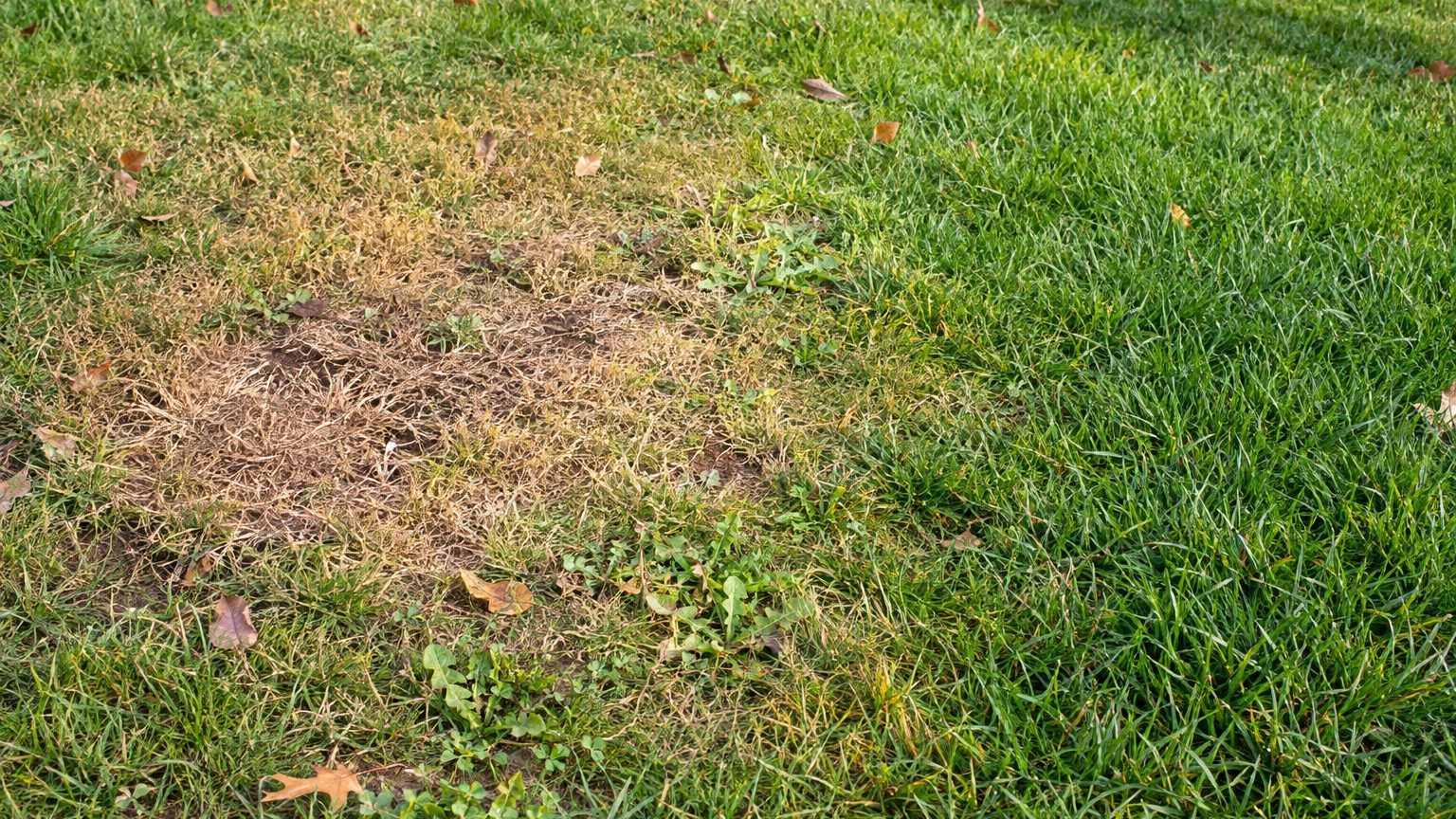
Brown rings on tall fescue in July, thin spots in the shade, and crabgrass crowding the driveway edge are problems Tennessee lawns show year after year. Heat, humidity and the mix of cool-season and warm-season grasses all contribute. Knowing which problem you have, and when it starts, decides whether the fix works.
Lawn Pests and Diseases in Tennessee

Large Patch in Spring and Fall

Large Patch hits warm-season lawns such as zoysia and bermuda. It shows up as roughly circular tan or orange patches that can spread into broad areas, usually when the grass is waking up in spring or slowing down in fall.
Wet, mild weather feeds it, and so do heavy thatch and soggy soil. Water in the morning only when the lawn needs it, and ease off on nitrogen until the grass is growing strongly. Fertilizing warm-season turf in May through July keeps it out of the vulnerable shoulder seasons.
Crabgrass

Crabgrass is a coarse, light green grass that spreads flat and wide, leaving fingered clumps where a fine lawn used to be. It sprouts from seed in thin turf as the soil warms, then dies at first frost and leaves bare patches behind.
Stopping it means acting before it sprouts. A pre-emergence preventer goes down best in March, though February, April and May can work too. Once crabgrass is up, pull it by hand while it is small, and thicken the lawn so less seed finds light.
Brown Patch in Midsummer
Brown patch is the classic tall fescue disease. Look for irregular brown circles with a smoky, darker edge in the early morning, often after humid nights in July and August.
It thrives where the grass stays wet and overfed. Water deeply but only when needed, in the early morning so blades dry fast. Skip heavy nitrogen in summer and keep the mower blade sharp, since ragged cuts give the fungus an easy way in.
White Grubs in Late Summer
White grubs are fat, C-shaped larvae that chew grass roots. The giveaway is turf that feels loose and peels back like carpet, often with skunks, raccoons or birds digging at the damage.
Damage is easiest to spot from late summer into fall, when the grass wilts even though the soil is moist. Lift a small piece of sod and look at the roots. A few grubs are normal, and a lawn with healthy roots tolerates them far better than a stressed one.
Tennessee — the year and the numbers
- State
- Tennessee
- USDA zones
- 5b-8a
- Last spring frost
- March 31 to April 12
- First fall frost
- October 28 to November 8
- Annual rain
- 51 in
- Lawn type
- cool- and warm-season
- Source
- NOAA NCEI 1991-2020 Climate Normals, 32F freeze probabilities · Nashville
How to Tell Which Lawn Problem You Have
Start with the shape of the damage, then pull on the grass. Turf that lifts easily has lost roots, so inspect the root zone for insects and other damage. Turf that holds firm but looks dead may have a disease or watering problem.
Then check the season, and whether the spot is in sun or shade. Together, those clues can narrow the likely causes.
| What you see | When | Points to |
|---|---|---|
| Tan or orange rings in zoysia or bermuda | Spring green-up and fall | Large Patch |
| Coarse, spreading clumps with fingered seed heads | Late spring through summer | Crabgrass |
| Brown circles with a dark edge in tall fescue | Humid July and August nights | Brown patch |
| Grass that rolls back like a rug | Late summer into fall | White grubs |
| Thin, weak grass under trees | Any growing season | Too much shade |
| Spongy turf that sheds water | Any time | Thatch buildup |
Spongy turf deserves a closer look. A thatch layer up to 1/2 inch thick is healthy, but thicker than that, dethatch or core aerate. Tall fescue takes core aeration best in August, and dethatching in August or September. Warm-season lawns do better with dethatching in May or June.
Where Lawn Problems Are Worst in Tennessee
Tennessee stretches from the Mississippi River to the Appalachians, so the same lawn problem shows up on a different schedule depending on where you live.
- Memphis and West Tennessee: Long, hot, humid summers push fungal disease harder here, and tall fescue struggles more through July and August. Warm-season grasses are the more comfortable fit.
- Nashville and Middle Tennessee: This is the transition zone, where tall fescue and warm-season grasses both grow but neither is fully at ease. Brown patch and summer stress are common on fescue lawns.
- East Tennessee and the Cumberland Plateau: Spring comes later and summers run cooler, so cool-season grass holds up better. Warm-season lawns green up late and can be slow to recover from winter damage.
Shade from mature oaks and maples adds its own pressure everywhere, because thin grass in low light invites weeds and moss in every part of the state.
Lawn Care Mistakes That Invite Problems in Tennessee
Cutting the Grass Too Short
Scalping a lawn exposes soil to sunlight, which wakes crabgrass seed and stresses the roots. Short, ragged cuts also make easy entry points for disease.
Raise the mower deck and keep the blade sharp. Cool-season lawns get mowed March through November, while warm-season lawns grow actively from April through October, so match your schedule to the grass you have.
Watering a Little Every Day
Light daily sprinkling keeps the surface wet, which is exactly what brown patch and Large Patch want. It also keeps roots shallow, so the lawn browns fast in a dry spell.
Water deeply and less often, in the early morning, mainly in June, July and August. A quick test is to push a screwdriver into the soil. If the soil is still moist below the surface, hold off.
Feeding Fescue in Summer
Nitrogen in the heat pushes soft, lush growth on tall fescue just when disease pressure peaks. For fescue, feed in early spring and fall, never in summer.
Warm-season lawns are the reverse. Zoysia and bermuda want their feeding in May, June and July, when they are growing hard and can use it.
Where to Get Lawn Advice in Tennessee
When a patch does not match anything you have read, local experts can name it. University of Tennessee Extension publishes lawn guidance for the state, and each county has its own office.
- Visit the extension website for lawn calendars and grass-type guidance suited to Tennessee conditions, ideally before a problem peaks in summer.
- Call or stop by your county extension office with a photo or a plug of affected turf, soon after you notice damage.
- Ask the office about a soil test in spring or fall, and take a sample from the problem area.
Common Questions
When Should You Seed a Lawn in Tennessee?
For tall fescue, August is the best month, September also works, and aerating first helps seed reach the soil. Warm-season lawns such as bermuda and zoysia are seeded in May, or in June if you miss that window.
Can You Lay Sod in Summer in Tennessee?
Warm-season sod goes down best in May, and June or July also work. Keep it watered regularly while the roots knit into the soil below.
How Long Is the Mowing Season in Tennessee?
Cool-season lawns are mowed March through November. Warm-season grasses start later and stop sooner, running April through October, because they slow down as the soil cools.