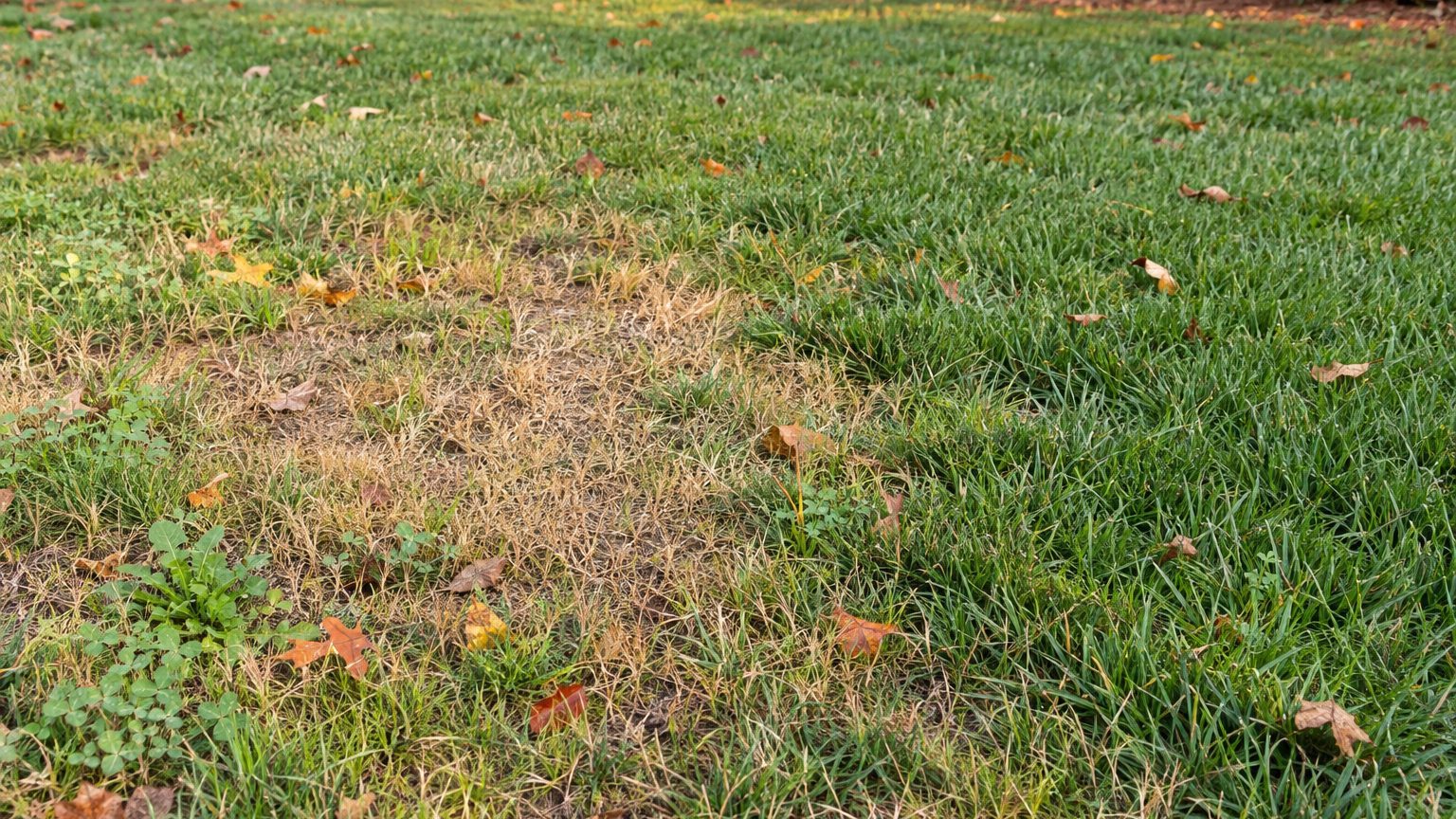
Thin spots, tan patches and weeds that outrun the grass show up in Alabama lawns every year. Warm, wet weather feeds fungus, insects and weeds as readily as it feeds grass. Telling the problems apart and recognizing which ones come from lawn-care habits helps keep the fix small.
Lawn Pests and Diseases in Alabama
Spring Weeds in Thin Turf

Clover, henbit and wild onion appear where the lawn is thin or still waking up. They move into bare soil, so the lasting fix is a denser lawn. Mowing regularly from March through November keeps grass thick enough to crowd them out, and hand-pulling works well on small patches.
Large Patch in Cool Wet Weather
Large patch is a fungus of warm-season grasses such as zoysia, centipede and St. Augustine. Look for rounded, tan to orange patches that grow wider, with leaf sheaves that pull loose at the base. It strikes in spring and fall dampness. Water in the morning, skip heavy nitrogen when the grass is slowing down, and let the turf dry between waterings.
Crabgrass in Summer
Crabgrass is a coarse, light green grass that sprawls out from a center in a star shape and sets seed late in the season. It takes hold in thin, scalped or drought-stressed turf. A taller mowing height shades the soil, and pulling young plants before they seed prevents next year’s crop.
Chinch Bugs in Hot Dry Spots
Chinch bugs favor St. Augustine in full sun. Yellowing patches near driveways or sidewalks that keep browning even after watering are a strong clue. Part the grass at the edge of a patch and look at the soil surface for tiny dark insects. Heavy thatch and drought stress make the damage worse.
White Grubs in Late Summer
Grubs are fat, C-shaped beetle larvae that chew roots. Damaged turf feels spongy and lifts like a loose carpet, and skunks or armadillos digging in the lawn often give them away. Healthy, deeply rooted grass can tolerate limited grub activity. Confirm them by lifting a small section of sod and checking the root zone.
Armyworms After Storms
Armyworms are caterpillars that can strip a lawn quickly, often after warm, wet spells in late summer. Brown, ragged patches with birds feeding on them point to an outbreak. Check at dawn or dusk, when the caterpillars climb up to feed, and act while the damage is still small.
Alabama — the year and the numbers
- State
- Alabama
- USDA zones
- 7a-9a
- Last spring frost
- March 19 to April 3
- First fall frost
- November 2 to November 16
- Annual rain
- 54 in
- Lawn type
- warm-season
- Source
- NOAA NCEI 1991-2020 Climate Normals, 32F freeze probabilities · Huntsville
How to Tell Which Lawn Problem You Have
A clue is rarely conclusive on its own. Pair what you see with where it happens and when, then confirm with a simple test, such as tugging the grass or digging up a small square of sod.
Patch shape can help narrow the possibilities. Rings and circles can suggest fungus, irregular patches near pavement can point to insects, and even thinning under trees often points to shade.
| What you see | Where and when | Points to |
|---|---|---|
| Tan or orange rounded patches, sheaths pull loose | Spring and fall dampness | Large patch |
| Yellow then brown patches that ignore watering | Sunny edges by pavement, summer | Chinch bugs |
| Spongy turf that rolls back like carpet | Late summer, animals digging | White grubs |
| Ragged brown patches, birds feeding | Late summer after warm rain | Armyworms |
| Coarse, star-shaped sprawl | Summer, thin or scalped turf | Crabgrass |
| Even thinning, moss at the soil | Under trees, shade year-round | Too little light |
If grass pulls out with no roots attached, suspect grubs or fungus. If it stays firmly rooted but looks brown, think drought, heat or a nutrient issue before reaching for any treatment.
Where Lawn Problems Are Worst in Alabama
The state stretches from the Tennessee line to the Gulf, and soil, winters and humidity change along the way.
- Tennessee Valley: Cooler winters mean more winter injury to warmer-climate grasses, and tall fescue lawns struggle in summer heat. Fungus follows long humid spells.
- Black Belt: Heavy clay holds water, so lawns suffer from poor drainage, compaction and root rot after wet periods.
- Mobile and the Gulf Coast: Sandy soil dries fast, humidity feeds disease, and mild winters let insects such as chinch bugs stay active longer. Salt spray adds stress near the beach.
Check your county conditions, since a lawn on a north-facing slope can behave differently from one on a nearby sunny ridge.
Lawn Care Mistakes That Invite Problems in Alabama
Scalping the Lawn
Cutting too low stresses grass, exposes soil to weed seed and weakens roots just when summer heat arrives. Mow regularly from March through November, raise the blade for shaded areas, and avoid removing so much leaf that the lawn looks scalped.
Watering Little and Often
Short, frequent sprinkling keeps roots shallow and leaves blades wet, which invites fungus. During the main watering months, May through September, soak the lawn thoroughly and let the surface begin to dry before watering again. Water in the early morning.
Feeding Too Early
Fertilizer applied in early spring pushes top growth before the roots are ready, and warm-season lawns are more prone to large patch. Wait for steady growth and feed from May through August, following a soil test and label rates.
Where to Get Lawn Advice in Alabama
Local help matches your soil and grass. Alabama Extension publishes lawn guidance for the whole state and has an office in every county.
- Statewide guides cover grass types, weeds and diseases, so check them before buying anything for an unexplained patch.
- Your county office can take a soil sample and help identify insects or diseases, which is useful when a patch keeps spreading.
- Bring a plug of affected turf in a bag, with a photo of the whole yard, on your next visit.
Common Questions
When Should You Dethatch a Lawn in Alabama?
Dethatch only if the layer is thicker than 1/2 inch, since up to 1/2 inch is healthy. Dethatch in May or June; April also works. Core aeration is an alternative for thick thatch.
Can You Plant St. Augustine Grass from Seed in Alabama?
No, St. Augustine has no seed and must be established from sod or plugs. Lay St. Augustine in May; April, June and July also work. Bermuda, centipede and bahia can be seeded in May, or in June.
When Should You Aerate a Lawn in Alabama?
Aerate in May; June also works. Core aeration can help compacted clay in the Black Belt because it improves drainage and gives roots more room.