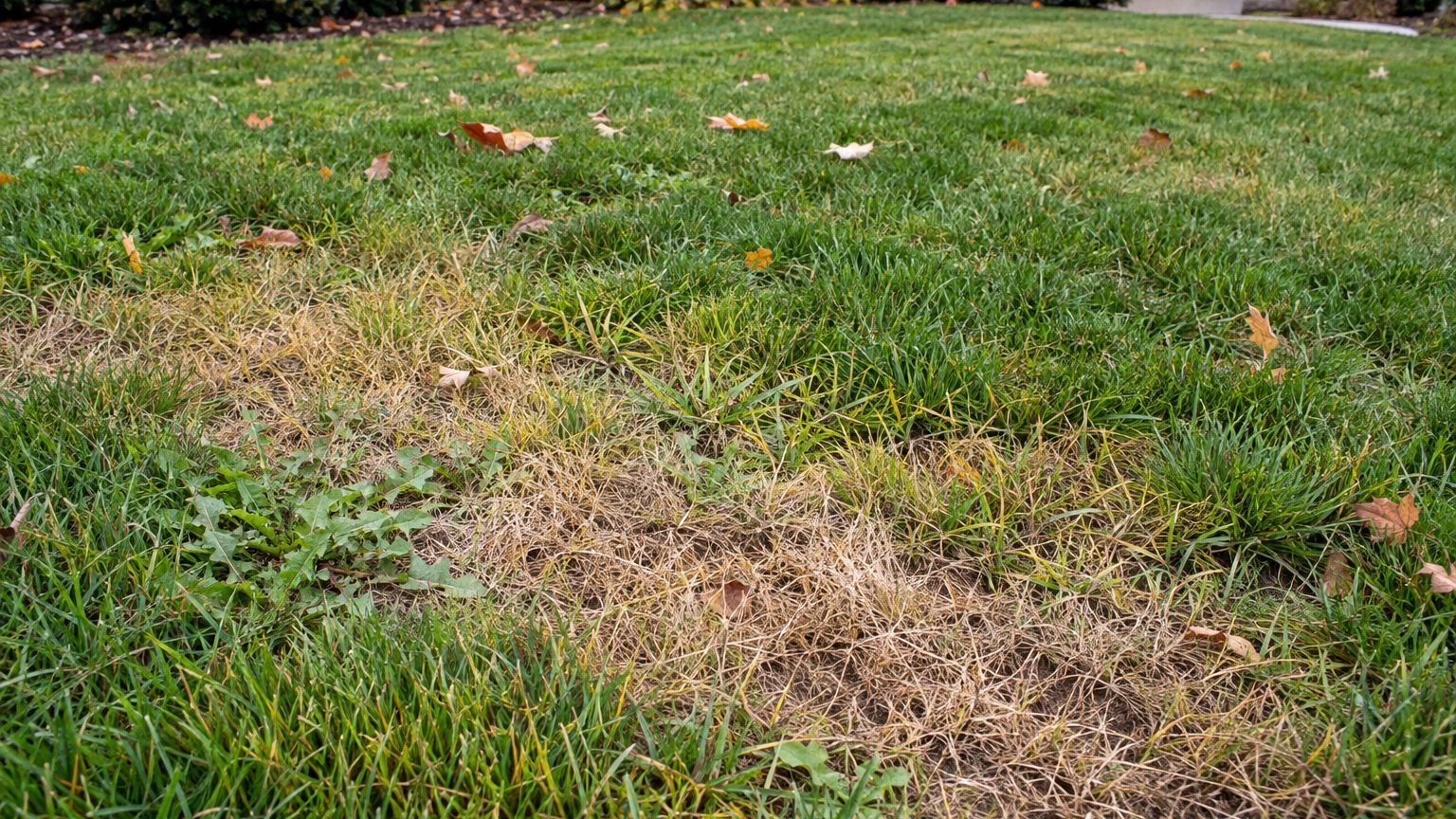
Brown patches that spread in July, grass that pulls up like a rug, thin turf under the maples: Kentucky lawns show their troubles in familiar ways. Most of them trace back to a few causes tied to the state’s humid summers, cold-to-mild winters and the cool-season grasses that dominate yards here. Knowing the sign and the season usually points to the fix.
Lawn Pests and Diseases in Kentucky
Crabgrass in Thin Spots

Crabgrass is a coarse, light green grass that sprawls flat in a star shape and fills bare or thin areas through summer. It sprouts as soil warms, so a preventer goes down in March, or as late as May if you miss it. Thick, tall-mown turf shades out most seedlings.
Thatch Buildup
Thatch is the spongy mat of stems and roots between the green blades and the soil. A layer up to 1/2 inch is healthy. Above that, water and fertilizer struggle to get through, and disease settles in. Dethatch or core aerate in August or September on cool-season lawns.
Brown Patch in Hot Weather
Brown patch shows up as roughly circular tan to brown areas in tall fescue during humid summers, often with a darker edge in the early morning. Kentucky’s warm, damp nights suit it well. Water deeply in the morning rather than in the evening, and hold off on summer fertilizer, which feeds the disease.
White Grubs Feeding on Roots
Grubs are fat, C-shaped white larvae that chew roots in the soil. The giveaway is turf that peels back like a loose carpet, often with skunks or raccoons digging nearby. Damaged areas decline in late summer, and healthy, deeply rooted grass tolerates a light population far better than stressed turf.
Fall Weeds in Thin Turf
Broadleaf weeds such as clover and dandelion creep into thin grass as growth slows. The long-term answer is denser turf. Aerate and overseed tall fescue in August, or in September if August slips by, so new grass fills in before weeds claim the gaps.
Kentucky — the year and the numbers
- State
- Kentucky
- USDA zones
- 6a-7a
- Last spring frost
- March 24 to April 4
- First fall frost
- November 2 to November 12
- Annual rain
- 48 in
- Lawn type
- cool- and warm-season
- Source
- NOAA NCEI 1991-2020 Climate Normals, 32F freeze probabilities · Louisville
How to Tell Which Lawn Problem You Have
One clue rarely settles it. Pair what the patch looks like with where it sits and when it appeared, then give the grass a tug. Roots that let go easily suggest damage below ground; stubborn roots rule out that clue but do not identify a single cause.
Sunlight matters too. Shade holds moisture on the blades, which favors disease, while full-sun spots dry out and favor weeds and stress browning.
| What you see | Where and when | Likely problem |
|---|---|---|
| Coarse, sprawling light green grass | Thin or bare sun spots, summer | Crabgrass |
| Circular tan patches, dark edge in the morning | Tall fescue, hot humid weather | Brown patch |
| Turf lifts like a rug, animals digging | Late summer into fall | White grubs |
| Spongy feel, water runs off | Anywhere, thick mat at the soil line | Thatch buildup |
| Clover or dandelions in sparse grass | Thin turf, spring and fall | Weeds from low density |
Thinning under trees without any distinct patch shape may reflect shade and root competition rather than a pest. Try a stronger shade-tolerant seeding in late summer, and keep leaves raked off in fall.
Where Lawn Problems Are Worst in Kentucky
Kentucky spans zones 6a to 7a on the USDA hardiness system, so trouble shifts a little with the map.
- Louisville and the Bluegrass: Humid summers and heat held by city pavement can favor brown patch in tall fescue lawns, while the Louisville reference figures place fall frosts earlier than in surrounding rural Jefferson County.
- Western Kentucky and the Purchase: Warmer winters and long, hot summers lengthen the season for crabgrass and grubs, and cool-season lawns feel more stress in August.
- Eastern Kentucky hills: Slopes, shade from ridges and thinner soils dry some lawns fast and leave others damp, so thin turf and weeds in the shade show up more than heat damage.
Rural yards often see a tighter frost window than city ones, which matters when you time fall seeding.
Lawn Care Mistakes That Invite Problems in Kentucky
Mowing Too Short
Scalped grass has little leaf to feed roots and lets sunlight reach weed seeds. Mow regularly from March through November and take off only a little at a time, letting tall fescue stay on the tall side through summer.
Watering a Little Every Evening
Light, late watering keeps blades wet overnight and roots shallow, an open invitation to brown patch. Water deeply and less often, in the morning, mostly June through August when the lawn truly needs it.
Fertilizing Tall Fescue in Summer
A summer feeding pushes soft growth right when disease pressure peaks. Feed tall fescue in early spring and in fall, with March, September and October the best fits, and leave July alone. Bermuda and zoysia are different, and they take fertilizer in May through July.
Where to Get Lawn Advice in Kentucky
When a problem will not match a description, the state’s land-grant extension system can look at a sample and name the cause for your soil and grass.
- University of Kentucky Extension offers lawn guides and disease and pest information, handy to browse before you buy anything.
- Your county extension office can identify weeds and damaged turf from a sample, so bring a piece with roots and soil when the problem first appears.
Common Questions
Is It Too Late to Fix a Bare Lawn in September?
Not for tall fescue. August is the best time to aerate and overseed, and September still works, giving seedlings time to root before cold weather.
Can You Use the Same Care on a Bermuda or Zoysia Lawn?
No. Warm-season grasses grow in late spring and summer, so seeding goes in May or June, and dethatching works in May and June too.
Why Does the Lawn Feel Spongy Underfoot?
A spongy feel usually means a thick thatch mat. Check by cutting a small plug and inspecting the brown layer before deciding whether to core aerate.