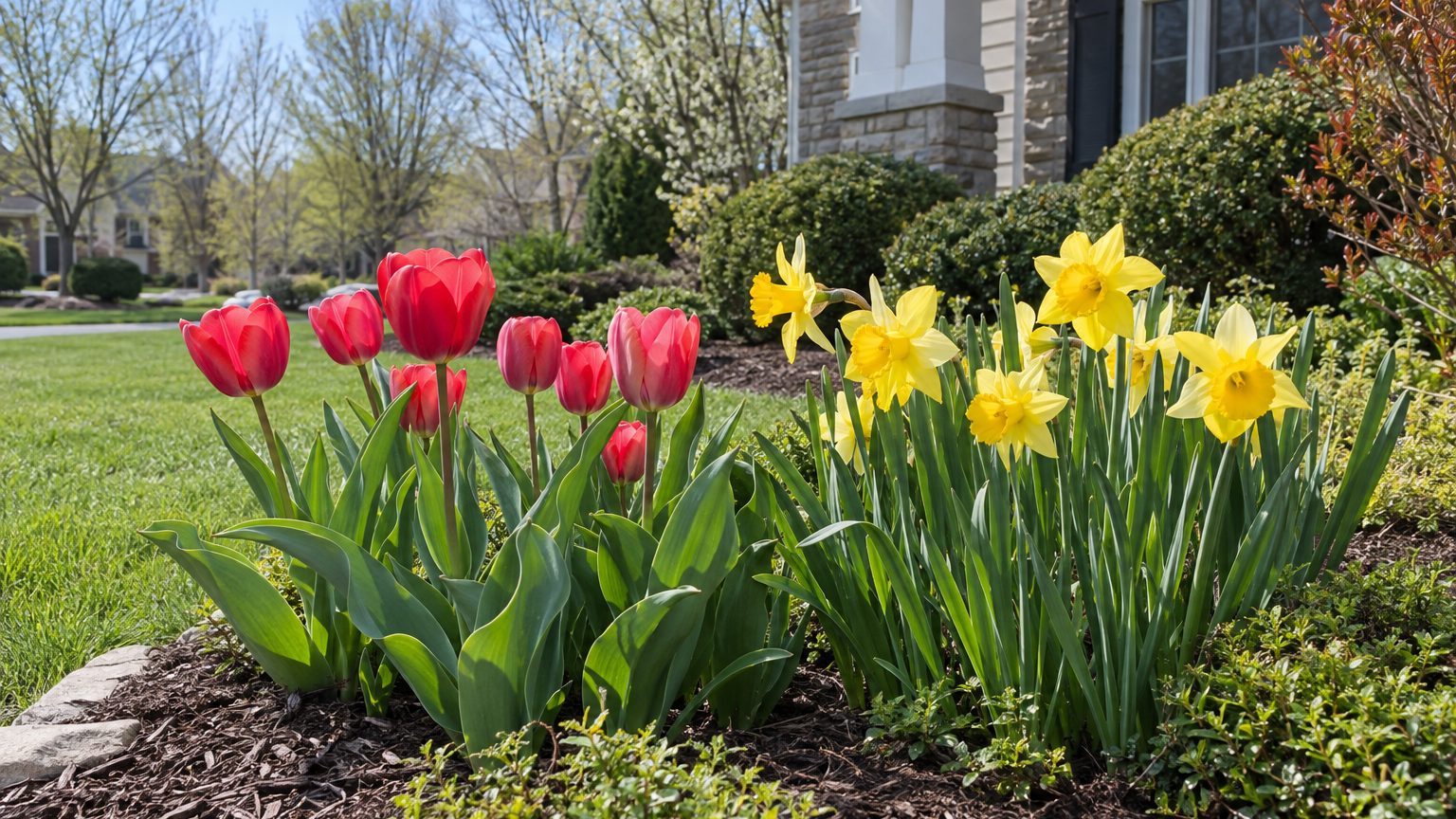
Daffodils pushing through cold soil in March are the most dependable sign that a Tennessee bulb planting worked. Hyacinths, alliums and a few smaller bulbs join them, while tulips and crocus take more care.
Best Spring Bulbs to Grow in Tennessee

Daffodils, hyacinths, alliums, fritillaria and scilla hold up in Tennessee, largely because deer and squirrels leave them alone and the daffodil comes back on its own. Tulips and crocus can work too, but they are on the menu for animals. All of them go in the ground in October.
Daffodils
Daffodils are hardy perennial bulbs that should return year after year, which makes them the dependable backbone of a Tennessee bulb planting. They never have to be dug up, and deer and rabbits ignore them.
They are also good for naturalizing, so scatter clumps along a fence line, under trees or across a slope and let them spread.
Hyacinths
Hyacinths are among the bulbs that deer and squirrels pass over. That matters in a yard where animals visit, since a bulb that gets dug up or nibbled never has a chance to flower.
Plant them in groups near a walkway or entry, where the scent is easy to enjoy.
Alliums
Alliums, the ornamental onions, are another bulb that deer and squirrels leave alone. They do not need a chill period to bloom, so they are forgiving of a mild stretch in winter.
They tend to carry the show at the tail end of the bulb season, when the early flowers have faded.
Fritillaria and Scilla
Fritillaria and scilla round out the list of bulbs that deer and squirrels tend to skip. They suit gardeners who want something beyond daffodils without inviting animal damage.
Tuck them into beds near the daffodils so the planting reads as one drift.
Tulips
Tulips are edible to voles, squirrels, rabbits and deer, so they struggle in yards with regular wildlife traffic. They are also often short-lived in the garden, giving a strong display and then fading.
Treat them as a seasonal treat in a protected bed, and lean on daffodils for permanence.
Crocus
Crocus share the problem of being eaten by voles, squirrels, rabbits and deer. They are small and easy to tuck in, but expect some losses.
Plant them close to the house or in a spot you can watch, away from the edge of the woods.
Tennessee — the year and the numbers
- State
- Tennessee
- USDA zones
- 5b-8a
- Last spring frost
- March 31 to April 12
- First fall frost
- October 28 to November 8
- Annual rain
- 51 in
- Lawn zone
- transition-season
- Source
- NOAA NCEI 1991-2020 Climate Normals, 32F freeze probabilities · Nashville
How to Choose Spring Bulbs for Your Tennessee Garden
Start with who visits your yard and how much time you want to spend. Animal traffic and upkeep narrow the choices faster than color or height does.
The right bulb is the one that survives the neighbors, wild or otherwise, and returns without fuss.
| Your situation | What suits it in Tennessee | Why |
|---|---|---|
| Deer, squirrels or rabbits visit | Daffodils, hyacinths, alliums, fritillaria, scilla | These are bulbs animals tend to leave alone |
| You want little upkeep | Daffodils | They never have to be dug and return year after year |
| You want a planting that lasts | Daffodils over tulips | Tulips are often short-lived, daffodils are the more reliable perennial |
| You worry winter cold will fall short | Alliums need winter cold to bloom | They need winter cold to bloom, and most spring bulbs need about 12 to 16 weeks of cold |
| You want flowers across the season | A mix of early and late bulbs | Spring bulbs bloom in a long succession, from snowdrops and winter aconites to alliums |
Crocus and tulips fit best where you can protect them or accept some loss, since animals eat both.
Which Spring Bulbs Suit Different Parts of Tennessee
Tennessee spans USDA hardiness zones 5b to 8a, so the bulb list stays similar statewide while timing and expectations shift with local cold.
- Nashville and Middle Tennessee: the calendar here follows the Nashville area, with planting in October and the usual mix of daffodils, hyacinths and alliums.
- East Tennessee: cooler than Nashville and later in spring, so flowers open a little behind Middle Tennessee gardens. Daffodils are a safe base.
- Cumberland Plateau: cooler as well, with spring arriving later, so allow extra time for the show and favor hardy daffodils.
Your own yard may run warmer or cooler than these regional patterns, so watch where your first bulbs bloom and adjust.
Spring Bulb Buying Mistakes to Avoid in Tennessee
Planting Too Early
Bulbs set out while the soil is still warm can sprout in fall and get caught by cold. Wait until the soil has cooled below about 60°F, which gives roots time to form before the ground freezes without pushing top growth.
Cutting Back Green Leaves
Tulips and daffodils flower on the energy stored by their leaves, so the foliage has real work to do after bloom. Remove only the faded flowers and leave the leaves until they turn brown, even if the bed looks untidy for a while.
Holding Bulbs Over the Winter
A bulb still in its bag is better planted late than stored. Plant as long as the ground can be dug, and do not hold unplanted bulbs until the following year.
Where to Get Spring Bulb Advice in Tennessee
The University of Tennessee Extension and your county extension office can answer questions that depend on your soil, your elevation and the animals in your neighborhood.
- The state extension site has plant and gardening resources to read before you shop, ideally in late summer.
- Your county office can tell you how local conditions affect bulb choice, so call before you plant.
Common Questions
Can You Plant Spring Bulbs in September or November in Tennessee?
Yes. October is the main window, but the planting can also be done in September or in November. A late planting still beats leaving bulbs in the bag.
When Do Tulips and Daffodils Bloom in Tennessee?
Expect flowers in March, April and May, with some starting as early as February.
What Blooms at the Start and End of the Spring Bulb Season?
Snowdrops and winter aconites open the season, and ornamental onions, the alliums, close it out. Daffodils, hyacinths and tulips fill in between.