Skip to content

Rose Cane Borers on Roses: How to Spot Them and Get Rid of Them

Rose Cane Borers on Roses: How to Spot Them and Get Rid of Them

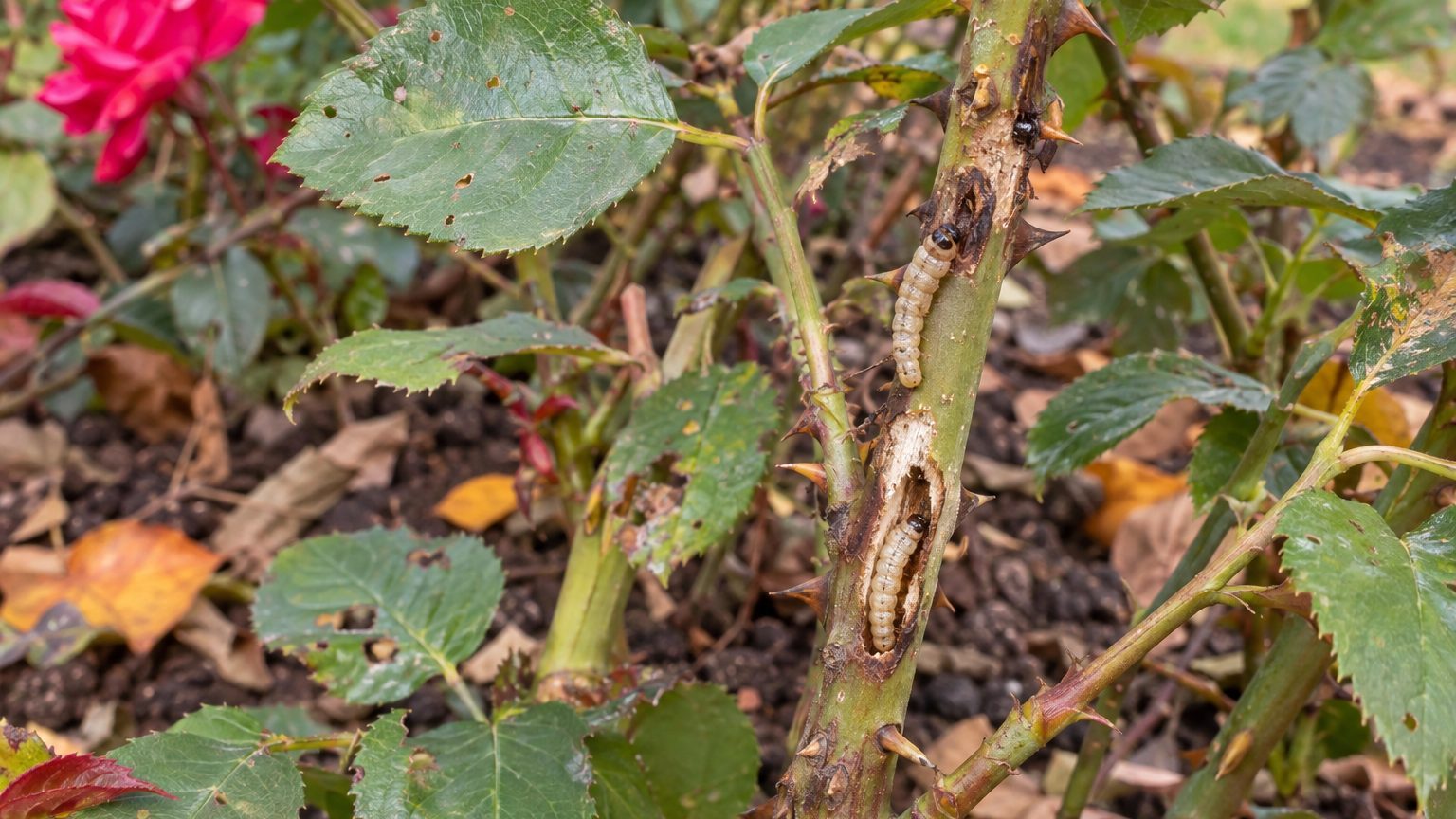
A rose cane that browns and dies back from a fresh pruning cut may have a cane borer, but a hole alone can also belong to a harmless hunting wasp. The larva tunnels inside the cane, so the damage shows at the cut end or in a wilting tip. The fix starts with your pruning shears.

Rose Cane Borers: What You See

Rose Cane Borers on Roses: How to Spot Them and Get Rid of Them

Look at the cut ends of your canes first, then at the tips and leaves.

  • A tunnel in a freshly cut cane can come from a cane borer or a harmless hunting wasp, so look for browning or dieback as well.
  • In Arizona, this tunneling starts soon after winter pruning, and January is when gardeners there tend to find it.
  • Canes brown and die back from the cut, and the damage becomes more serious as the larva burrows toward the base of the cane.
  • Two rings of punctures circle the cane, and they sit 4-6 inches below the growing tip, which then wilts.
  • The adult rose stem girdler is a slender, flattened, metallic beetle with copper-colored wing covers, and it is slightly less than 1/4 inch long.
  • Small, sparse, yellow or wilted leaves can accompany tunnels, while rose stem girdler larvae can cause gall-like swellings and cane breakage.

The rings are about 1/2 inch apart, so they are easy to miss unless you run your eye slowly along the cane.

Rose Cane Borers or Something Else?

Not every tunnel in a rose cane means trouble. Hunting wasps nest in the same soft pith, and their holes can look just like a borer’s entry.

Yellow, thin leaves also have many causes, so the cane itself has to settle the question.

Looks like How to tell them apart
A tunnel in the cut end of a cane, from hunting wasps The wasps are small, harmless and beneficial, and they nest in the pith without injuring the plant, so the cane stays green and keeps leafing out past the tunnel.
Small, sparse, yellow or wilted leaves Split the cane and look for a tunnel, then check the tip for rings of punctures below it. A borer shows browning that creeps down from the cut or a wilted tip.

A hole alone proves nothing. A hole with browning wood below it, or with a wilting tip above a ringed stem, points to a borer rather than a wasp.

What Causes Rose Cane Borers, and Where It Is Worst

The cause is an insect that lays eggs on or in the cane, and the larva does the rest from the inside. On freshly pruned roses, the open cut gives it an easy way into the pith. Fresh pruning cuts can provide an entry into the pith.

Timing depends on the borer and the place. In Arizona, the trouble comes soon after winter pruning, so January is when you watch the cut ends. In Kentucky, the raspberry cane borer adult appears about June, punctures the rings in the cane and lays an egg between them.

The rose stem girdler also attacks wild rose, raspberry and blackberry. Where larvae tunnel, canes swell, weaken and break. Cane borers can enter freshly cut canes, while the rose stem girdler can cause gall-like swellings and cane breakage.

How to Treat Rose Cane Borers

Treatment is mostly careful pruning, done in this order.

  1. Find the hole or browning at the cut end, then cut back gradually to locate healthy wood.
  2. Cut the cane back an inch or two at a time until the hole is no longer visible.
  3. Keep cutting until the pith is clean and the cane is healthy, since leftover damaged wood lets the problem continue.
  4. Remove a browning, dying cane a few inches at a time until all the damaged wood is gone, which saves as much of the healthy cane as possible.
  5. Seal the new cut with white wood glue, so that the next insect cannot enter the same way.

For anything beyond pruning and sealing, ask your county or state extension office what is approved where you live.

How to Prevent Rose Cane Borers Coming Back

Prevention is a matter of closing wounds and checking canes on time.

  • Seal every pruning cut with glue right away to keep cane borers from entering.
  • In Arizona, check the cut ends in January for holes, since that is when the first damage turns up.
  • About June in Kentucky, run your eye along the canes for rings of punctures, when raspberry cane borer adults appear.
  • Through the growing season, look regularly for wilting tips and browning canes, and cut them back to healthy wood before the larva reaches the base.
  • After every pruning session, seal the fresh cuts, including any made to remove damage.

Keeping wood glue in your tool bucket makes it easy to seal fresh cuts.

Where This Comes From

The details here come from university extension and government pages written for gardeners in Arizona, Kentucky and other states. Pest timing and approved treatments vary by place, so check with your state’s extension service before you act on anything beyond pruning and sealing.

Common Questions

Can a Cane Borer Kill a Rose Cane?

Yes. Tip dieback is the early sign, and as the larva works down toward the base of the cane, the whole cane can die.

What Do Cane Borer Eggs Look Like?

The eggs of the rose stem girdler are round and flattened, and they measure 1/16 inch, which makes them hard to spot without a close look.

Do the Same Borers Attack Raspberries and Blackberries?

They do. The raspberry cane borer attacks blackberry, raspberry and rose, and the rose stem girdler can thin out a raspberry planting or even kill it. Check any nearby bramble patch as well.
Aphids on Roses: How to Spot Them and Get Rid of Them

Aphids on Roses: How to Spot Them and Get Rid of Them

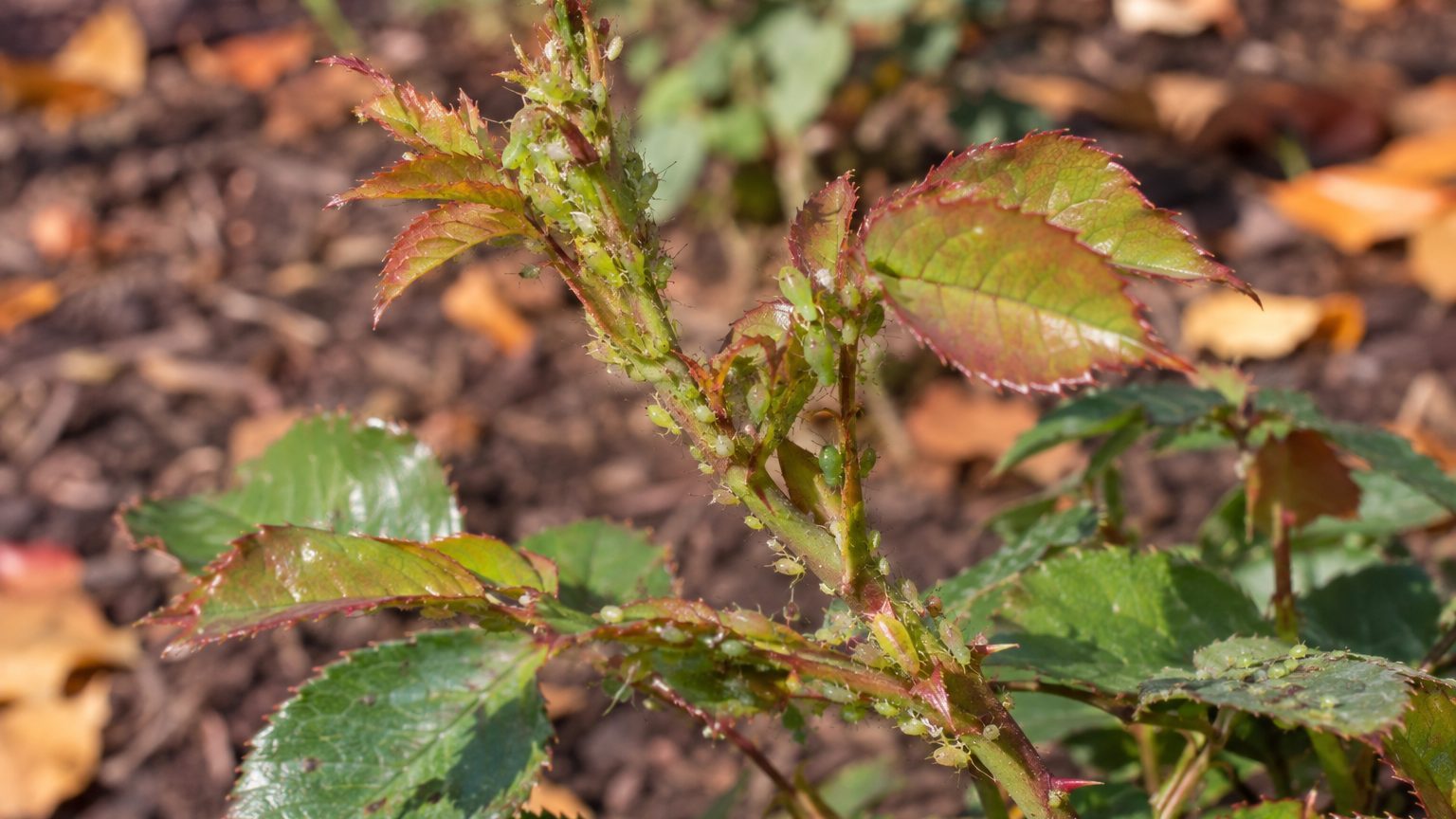
Sticky, curled new growth and tight clusters of tiny insects on rose buds are classic signs of aphids. Those insects are aphids, and the fix is usually simple and gentle. A strong rinse and help from insects that prey on aphids can keep a small infestation in check.

Aphids: What You See

Aphids on Roses: How to Spot Them and Get Rid of Them

Start with the clusters themselves, because the insects give themselves away before any damage does.

  • Soft-bodied insects packed tightly along buds and shoot tips, each only about ⅛ inch long in the case of the rose aphid.
  • Colonies tucked on the underside of leaves and on young, tender growth, where the sap is easiest to reach.
  • A shiny, sticky film on leaves and nearby surfaces, which is the honeydew the insects excrete as they feed.
  • Curled leaves and twisted buds or branch tips, the distortion that comes from sap being drained.
  • Pale cast skins left on the leaves, which in Georgia can be the only hint that aphids were there.
  • Blackened streaks on leaves where sooty mold has settled on the honeydew.

In South Carolina, aphids can turn up at any point from spring to fall, and winged adults appear when a colony gets crowded and leave to start new ones.

Aphids or Something Else?

Some of what you see on a rose is aphid fallout rather than the insect. A dark coating or white flecks can send you after the wrong problem, so pair what you see with where it sits and what is around it.

Looks like How to tell them apart
Black, sooty film on leaves Sooty mold grows on honeydew, so the leaves feel sticky and the film sits below clusters of aphids on new growth.
White flecks scattered on leaves Cast skins are left behind as aphids grow, so they gather near colonies, often beside sticky honeydew.

Aphids on roses are not always the rose aphid either. The potato aphid and the cotton aphid also feed on roses, so the insects on your canes may be a different species from the one in the pictures.

What Causes Aphids, and Where It Is Worst

Aphids reproduce quickly and run through multiple generations in a year, and they favor rapidly growing tissue such as buds and shoots. A flush of soft new growth on a rose is exactly the meal they look for. Roses also share the yard with other hosts, including zinnias and coreopsis, so colonies can move in from nearby plantings.

Natural enemies usually keep aphids at levels you never notice, and tiny parasitic wasps do a lot of that work. Trouble starts when those helpers fall behind and numbers jump. Ants make it worse, because in Georgia they are drawn to the honeydew and tend to nurture the aphids.

Aphids are common rose pests, but their timing varies by place. Timing varies by place. In South Carolina, populations can appear from spring to fall. In California, a naturally occurring fungal disease may control aphids when conditions are wet or humid.

How to Treat Aphids

Begin with the gentlest step and move up only if the colonies keep growing.

  1. Inspect the shoot tips, buds and leaf undersides, so that you know whether you have a few insects or a crowd, since a low population does little damage to a rose bush.
  2. Rinse the plant with a strong stream of water, which knocks the aphids off and washes away some of the honeydew.
  3. Leave the natural enemies alone, because the parasitic wasps and other predators are doing steady work that you want to keep.
  4. Look along the canes for ants, since in Georgia they may tend aphid colonies.
  5. Reach for insecticidal soap if the colonies rebuild, as it is among the alternatives to plain water.
  6. Before using any insecticide, check that it is approved where you live and suitable for roses.

In California, the convergent lady beetle is sold at nurseries for release against aphids, though it may give only limited control even when released properly. Sooty mold grows on the honeydew and blackens leaves.

How to Prevent Aphids Coming Back

Prevention is mostly about timing your attention to the way roses grow through the season.

  • Check tender shoots and buds as soon as new growth appears, since young, succulent growth is where aphids settle first.
  • When you feed the roses, choose a slow-release or low-nitrogen formula, because high nitrogen levels in the plant encourage aphids to reproduce.
  • Through the growing season, look under the leaves regularly, as aphids can arrive from spring to fall in South Carolina.
  • Ants may be attracted to the honeydew, and since they tend to nurture the aphids, this creates an additional nuisance.

Heavy feeding can lower both the quantity and the quality of the flowers, so catching the first colonies protects the blooms as well as the leaves.

Where This Comes From

This guidance reflects conditions described for Georgia, South Carolina and California. Check local guidance for treatments and timing suited to your roses.

Common Questions

Will Aphids Kill a Rose Bush?

A low population does little harm, but aphids reproduce rapidly and can quickly reach damaging numbers. Severe infestations damage leaves and flowers, and feeding can make leaves drop, which weakens the plant.

Can Aphids Spread Disease to Other Plants?

Some aphids can spread plant viruses as they move from plant to plant. Their honeydew also feeds sooty mold, which blackens leaves.

What Else in the Yard Do Aphids Feed On?

Besides roses, landscape hosts include zinnias, coreopsis and many other ornamentals, along with vegetables, shrubs, fruit trees and shade trees. A colony on a neighboring plant is worth checking when your roses keep getting reinfested.

Voles on Spring Bulbs: How to Spot Them and Get Rid of Them

Voles on Spring Bulbs: How to Spot Them and Get Rid of Them

Bulbs that never came up, with little trails and holes in the soil where they were planted, usually point to voles working underground. These small rodents go after tulips and crocuses especially. Spotting the signs early, then cutting off their cover and their access, is what protects next year’s planting.

Voles: What You See

Voles on Spring Bulbs: How to Spot Them and Get Rid of Them

Most vole signs show up in the soil and on the bulbs themselves.

  • Little trails or mounds in the soil, with small holes here and there, mark where voles come and go.
  • Bulbs that fail to sprout or vanish completely can reveal feeding that happened out of sight underground.
  • Melting snow can reveal a criss-cross network of runways in the lawn, which is how Pennsylvania homeowners often discover meadow voles.
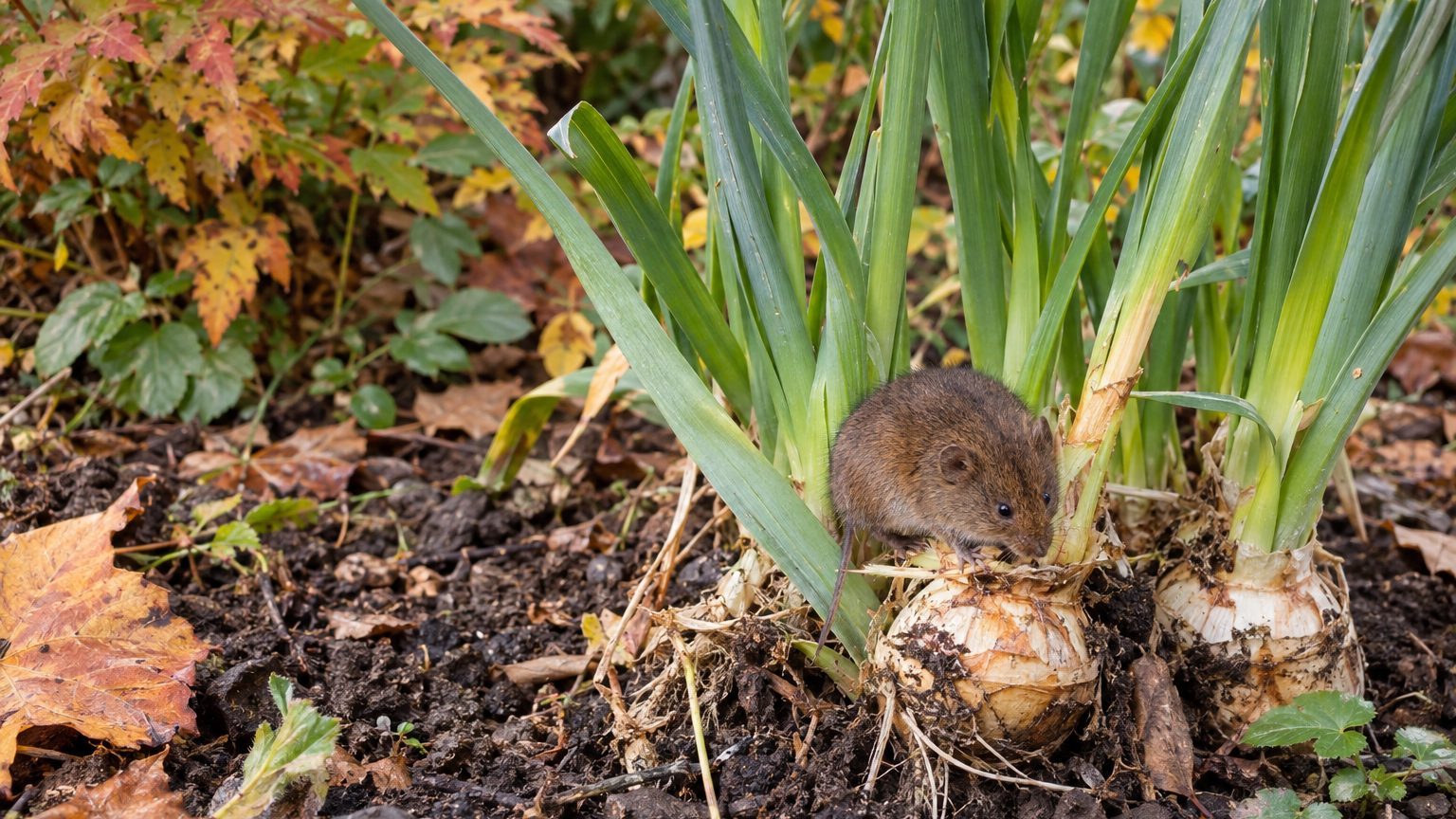
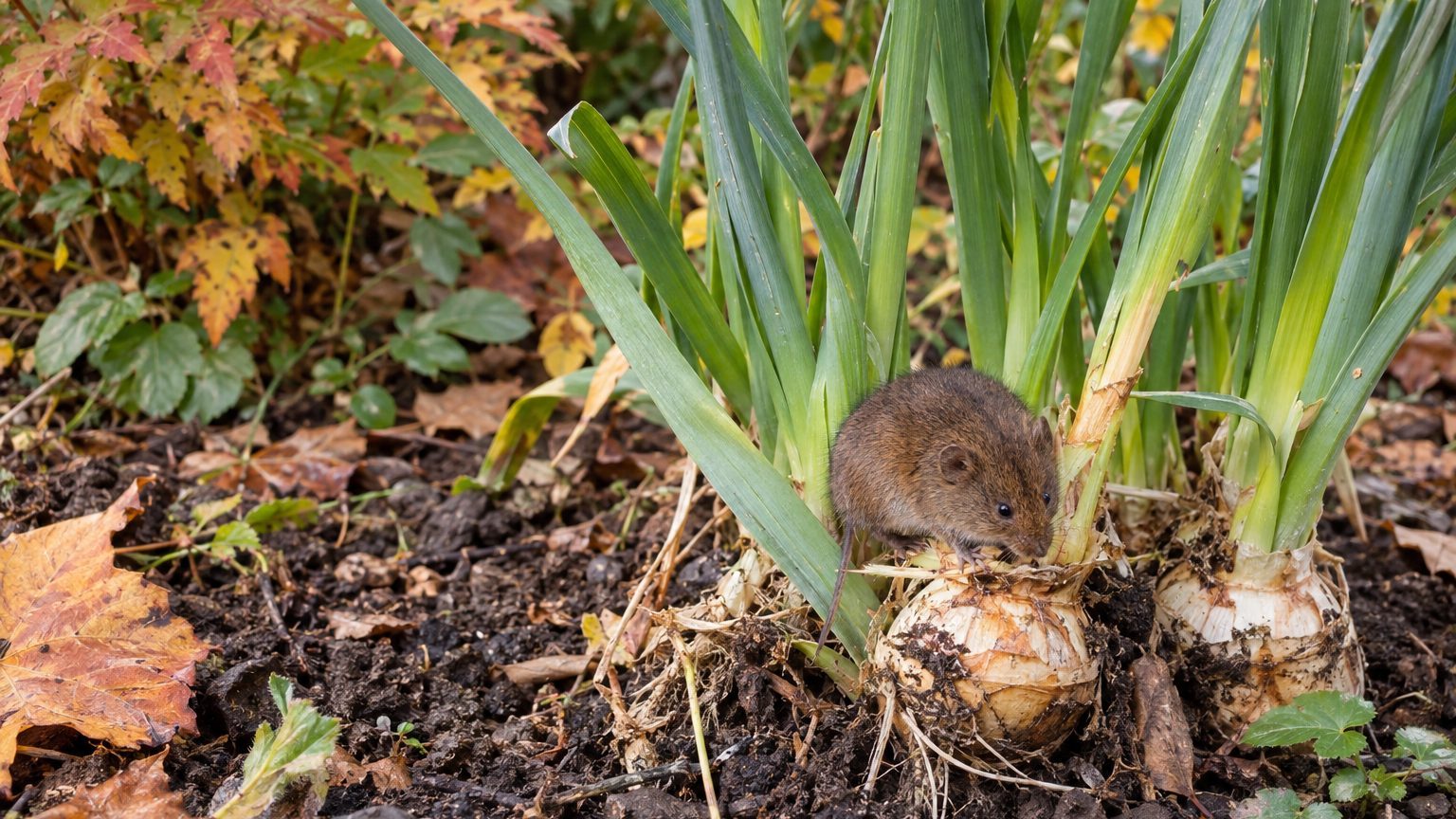
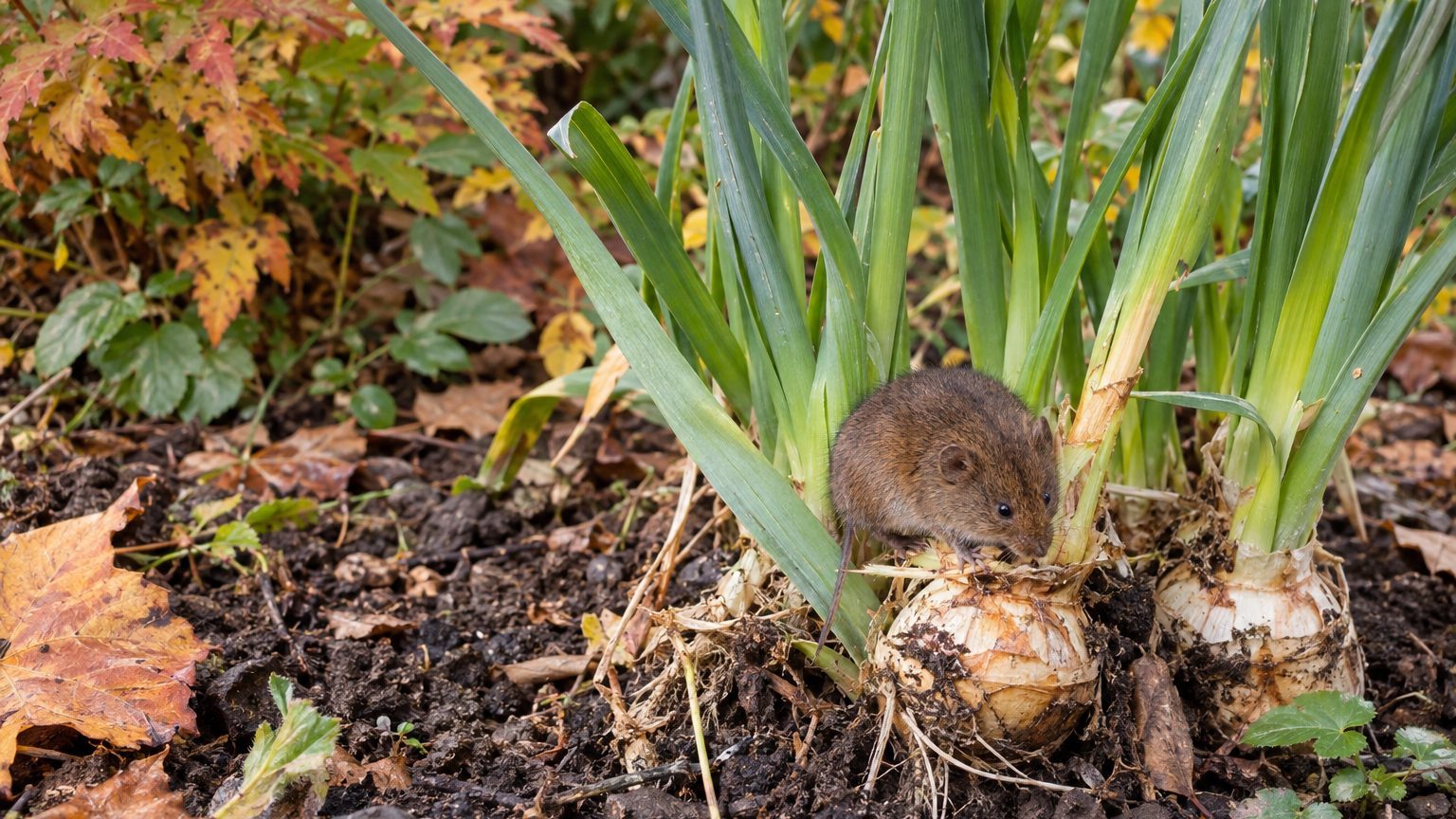
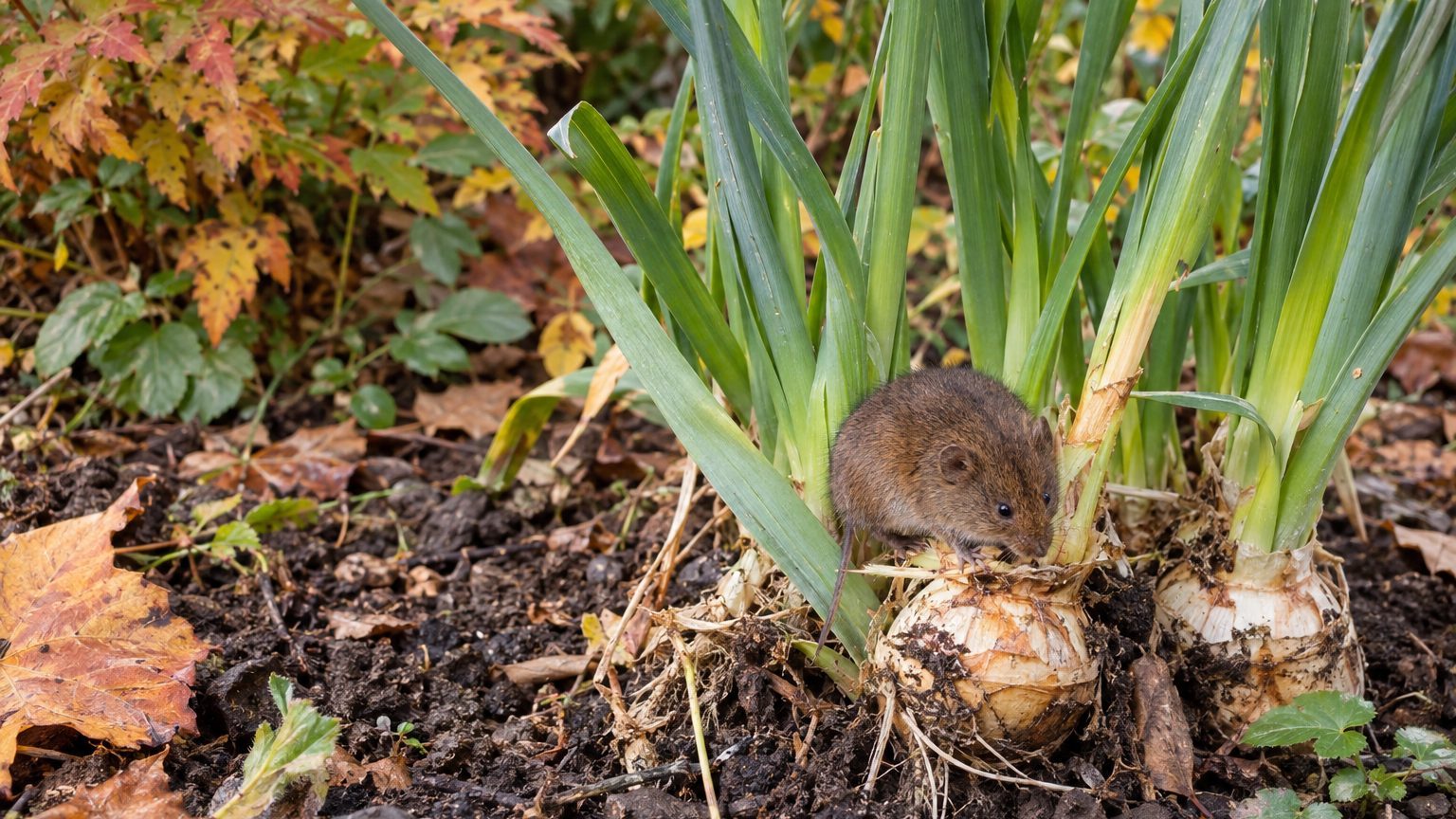
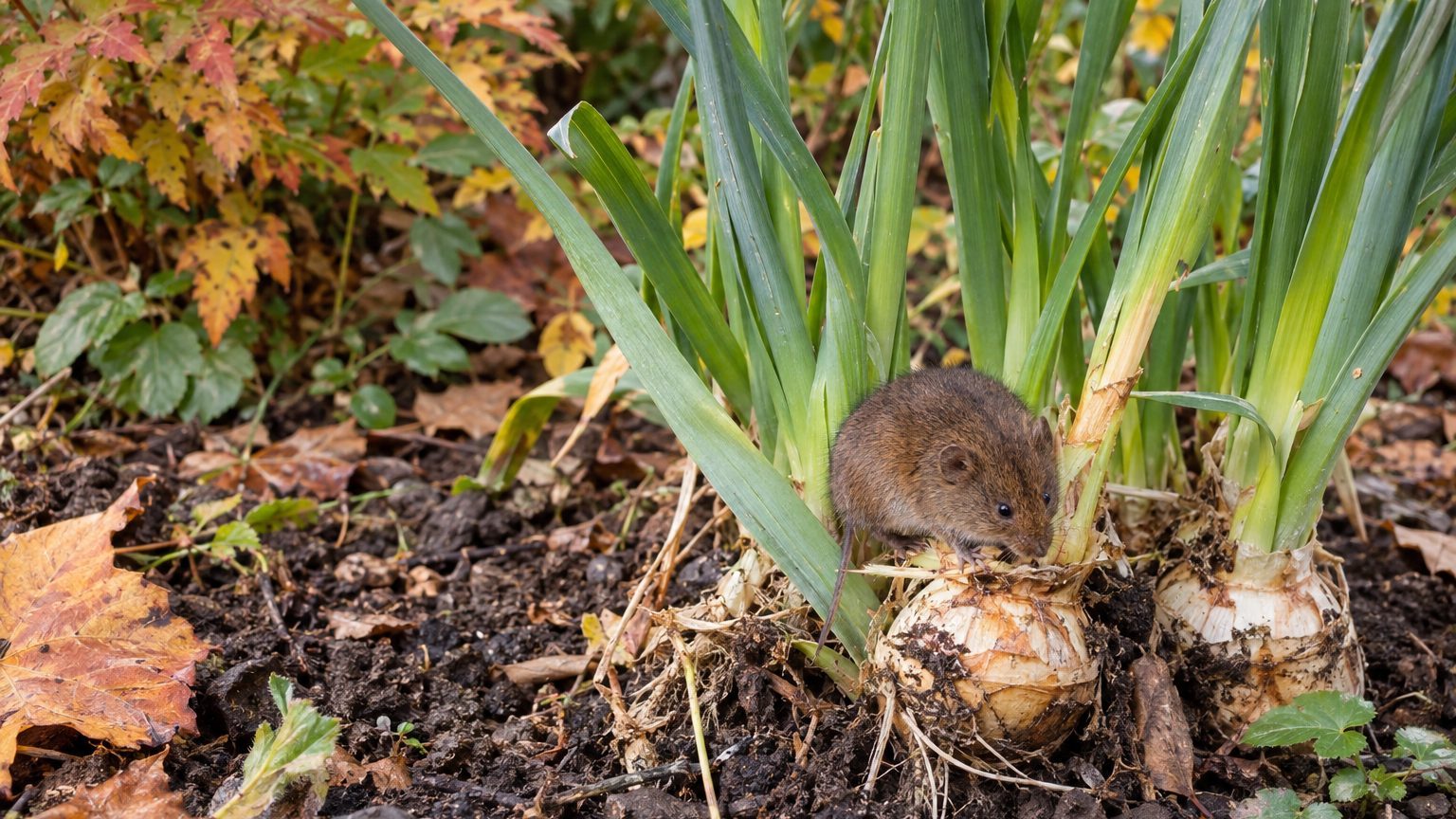
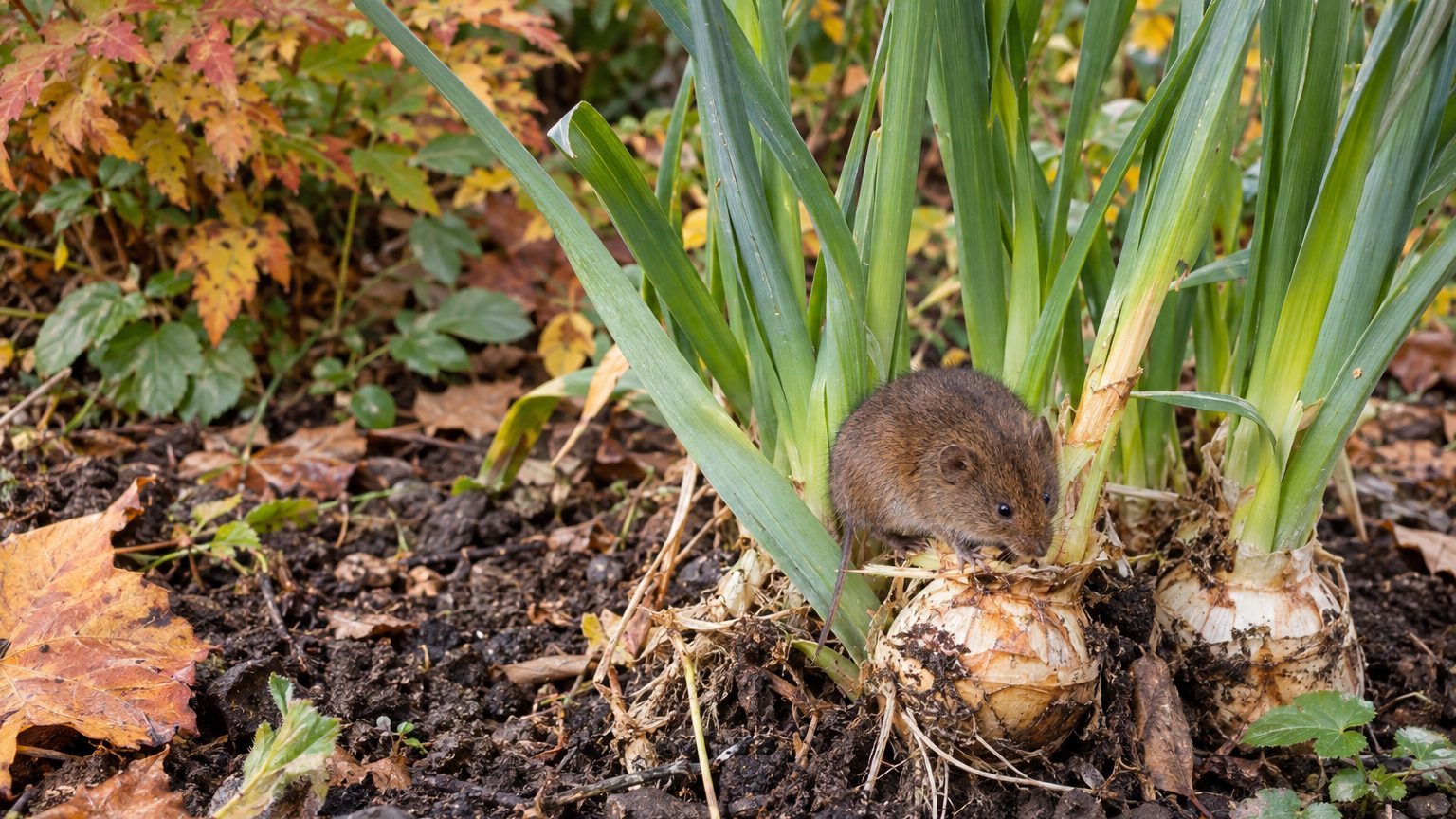
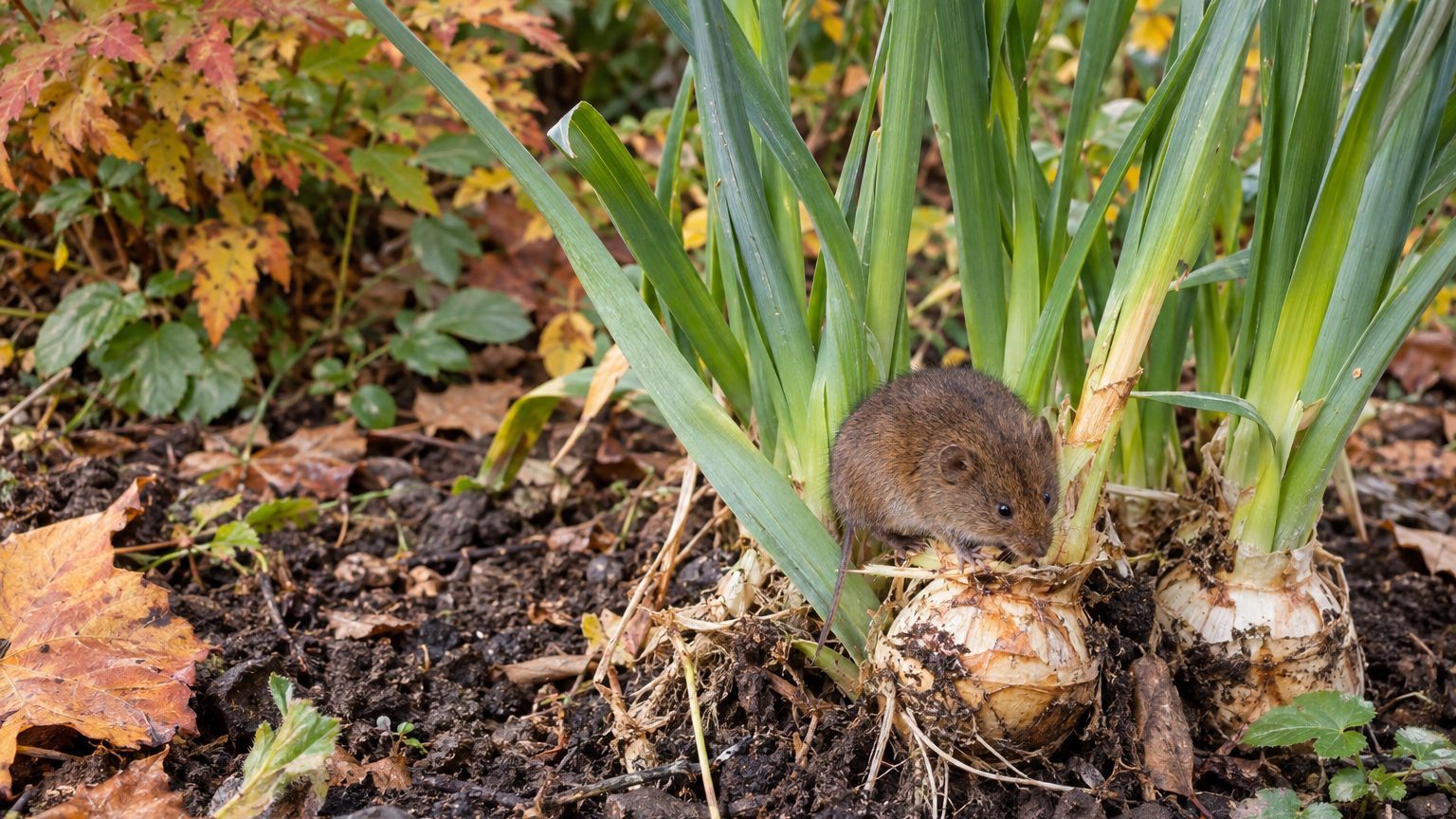
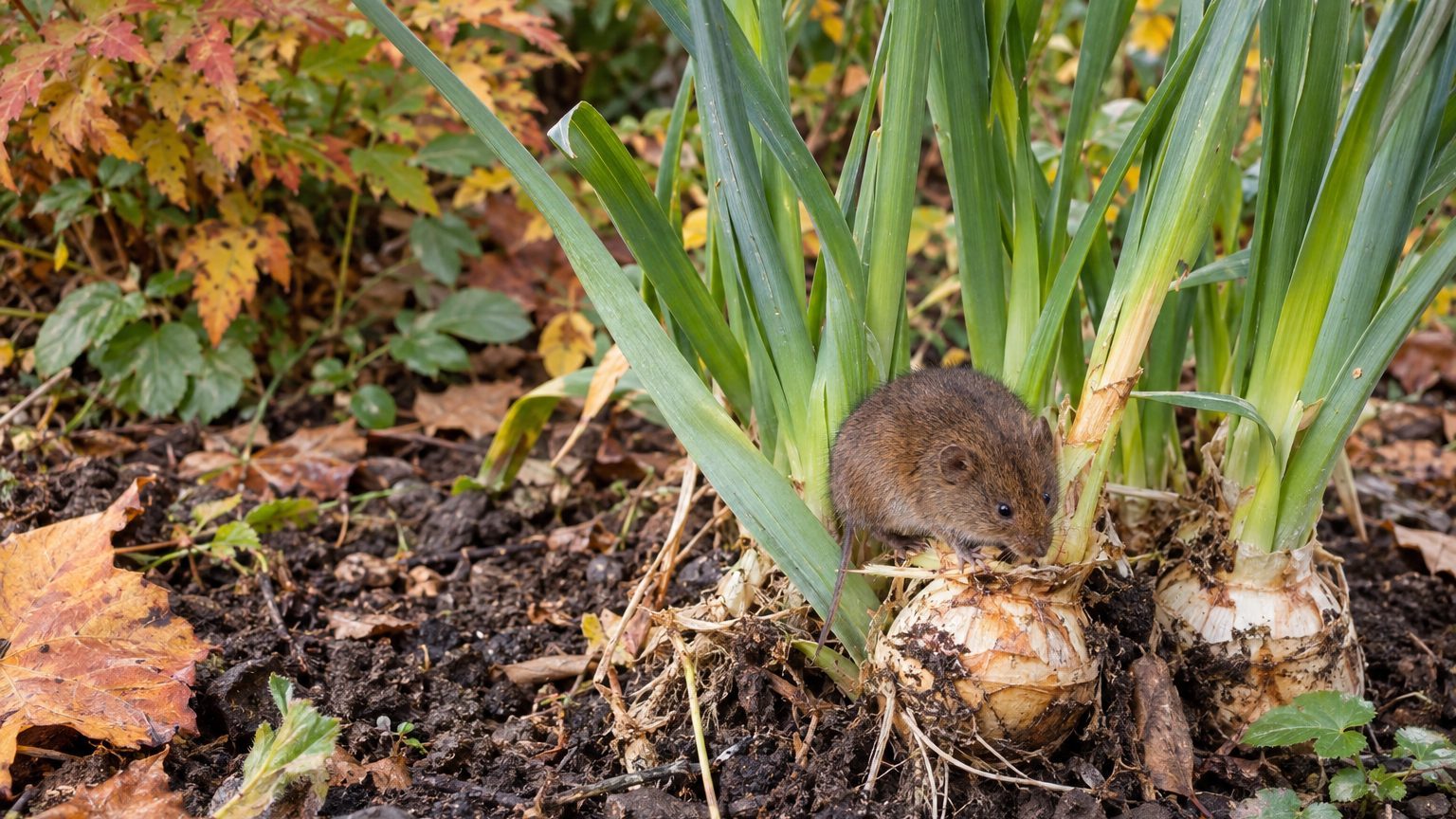
  • Voles are smaller than moles, about the size of a mouse.
  • Pine voles are reddish brown and 2-4 inches long, and their damage stays underground with no surface runways.
  • In Nebraska, individual tooth marks may be about 1/16-inch wide. They may be approximately ⅜-inch long.

Any of these near a bed of tulips or crocuses is a good reason to look closer.

Voles or Something Else?

Tunnels in a bed are not proof of voles. Moles leave similar trails and mounds, and the two animals often get blamed for each other’s work.

The bulbs tell the story. A mole is a meat-eater, so chewed or missing bulbs and roots point to a plant eater.

Looks like How to tell them apart
Moles: tunnels and mounds running through the bed Moles eat meat, so bulbs eaten or gone from the tunnel route mean voles. A vole is also smaller than a mole, about the size of a mouse.

Both can be present at once. Voles are opportunists and travel through tunnels that moles dug earlier, which gives them a ready path to flower bulbs and other roots.

What Causes Voles, and Where It Is Worst

Voles settle where the ground is moist and cool and where cover hides them. Garden beds with thick mulch, tall grass, brush piles and fallen debris give them exactly that. They tunnel under mulch to feed on roots and stems, and they will eat just about any kind of plant.

They stay active all year. In North Carolina, feeding can become particularly destructive in fall and winter, when voles burrow beneath the soil to stay warm. In Pennsylvania, voles store seeds, tubers, bulbs and rhizomes in late summer and fall, so a bed of bulbs makes a handy pantry.

Numbers can jump fast. Prairie and meadow voles normally have 5 to 10 litters per year, and populations are often cyclic, climbing from 10 to 250 voles per acre. In Nebraska, breeding runs through most of the year with peaks in spring and fall. Dense cover and mulch make a yard more appealing to voles.

How to Treat Voles

Treatment starts with finding where they work, then removing what shelters them and protecting what is left.

  1. Look over the beds for fresh trails, mounds and small holes, so that you know which plantings are being visited.
  2. Pull mulch back from bulb beds and clear fallen debris, so that the tunnels lose their cover.
  3. Replant lost tulips and crocuses inside cages or planting-hole liners of hardware cloth with openings of 1/4 inch or less, so that voles cannot squeeze through and the roots can still grow out.
  4. Set wire cylinders 18 to 24 inches high into the ground around young tree trunks, so that meadow voles cannot girdle the bark.

Leaves on surviving bulbs stay until they turn yellow.

How to Prevent Voles Coming Back

Voles return to yards that stay comfortable for them, so prevention follows the seasons.

  • Clear brush piles and cut down tall grass and dense vegetation near the beds to remove shelter.
  • Use mulch only where it is really needed and keep beds clear of fallen leaves and debris.
  • Keep grass well mowed beside gardens and around the base of trees to reduce cover.
  • In Pennsylvania, look for runways after the snow melts; they show where meadow voles traveled under the snow.
  • Keep cover from building up again along bed edges and fences.

Daffodils and alliums are generally more resistant to vole damage because of their unappealing taste.

Where This Comes From

Voles favor cool, moist beds that provide dense cover and easy access to roots and bulbs.

Common Questions

Do Voles Eat Daffodils?

Daffodils are generally more resistant because voles find them unappealing, and the same goes for alliums. Daffodils are also poisonous to rodents and deer, so they make a safe choice in beds where voles are a worry.

When Is Vole Damage to Trees Worst?

In Nebraska, voles usually damage woody plants from late fall through early spring. In Pennsylvania, bark damage is generally most severe in winter, when other food sources are limited.

Do Voles Eat Seeds and Young Plants Too?

They do. Voles clip off young plants and dig up seeds, and they can damage or eat garden plants and vegetables as well as flower bulbs. They also gnaw the roots of trees and shrubs.

Thrips on Spring Bulbs: How to Spot Them and Get Rid of Them

Thrips on Spring Bulbs: How to Spot Them and Get Rid of Them

Silvery speckles on a leaf, or petals that look scuffed before they open, often point to a pest too small to notice at first glance. Thrips feed on spring bulbs and their relatives through the growing season, and the damage shows up well before the insects do. Knowing what the scarring looks like, and where the insects hide, makes them manageable.

Thrips: What You See

The insect itself is hard to spot, so the damage is usually what gives it away.

  • Silver or bronze speckles on the surface of leaves or petals come from species that inject digestive enzymes into the wound as they feed.
  • Leaves that look scarred and stippled, then twist or crinkle because they stop elongating properly, are the usual sign in Kentucky.
  • The insects are slim, winged and only about 1/20 of an inch long, so they look like moving specks.
  • Look low in the plant, where young leaves gather in the inner neck, because young and adult thrips both settle there.
  • On gladiolus, look at the flowers and the corms, where gladiolus thrips gather, with dark bodies and grayish wings.

Warm spring weather is when adults start flying to new plantings, so that is the time to start checking.

Thrips or Something Else?

Silvery stippling is not a signature that belongs to thrips alone. Other small pests leave a similar pattern, and treating the wrong one wastes effort.

A quick test helps. Hold a sheet of white paper under a leaf, tap the leaf, and watch what falls and moves.

Looks like How to tell them apart
Spider mites: fine pale stippling on leaves Fine webbing on the underside of the leaf, and tapped specks that crawl without wings
Aphids: distorted, curled new growth Soft, pear-shaped insects clustered on the stems and buds, with a sticky film on the leaves below
Thrips: silver or bronze speckles Slim winged specks hiding in the inner neck, and scarring that clusters on the youngest leaves

Cold or dry spells can also leave pale, scuffed leaves, but those marks show up on a whole bed at once and no insects turn up on the paper.

What Causes Thrips, and Where It Is Worst

Thrips arrive on their own. They have a broad host range, so weeds, crop debris and neighboring plants all keep them nearby. Weeds inside or outside a high tunnel can harbor them, and in mild climates they overwinter as adults or larvae on debris and weeds, ready for spring.

Warmth speeds them up. Their populations increase rapidly under hot, arid conditions. In Kentucky, development from egg to adult can take as little as 20 days, and a single year can bring 6 to 8 generations, so a few insects in spring can become a crowd by summer. In Utah, adults fly to new onion plantings once spring temperatures warm.

Gladiolus thrips follow a different pattern. This tropical species will not survive temperatures colder than 50° F (10° C), so in cold-winter yards it carries over on stored corms, bulbs, or plants kept in a greenhouse. They also infest iris, lily, and other plants grown from tubers and bulbs.

How to Treat Thrips

Start with the cheapest steps, and work toward anything stronger only if the damage keeps spreading.

  1. Inspect the inner neck of the plants and the youngest leaves, so that you confirm thrips before doing anything else.
  2. Pull weeds around the bed and along its edges, so that the insects lose a place to live and breed.
  3. Clear plant debris from the bed, so that adults and larvae have nowhere to wait out the cool months.
  4. Hang blue or yellow sticky traps near the plants, so that you can see whether numbers are rising or falling.
  5. Look over gladiolus corms and bulbs that you handle, so that infested ones do not carry the pest into next season.
  6. Contact your state extension service about what is approved in your state, so that any spray you choose is legal and suited to your plants.

Timing matters because the life cycle moves quickly. In Kentucky, females insert eggs into plant tissue and the nymphs emerge 4 to 10 days later. The young feed for 5 to 7 days before dropping into the soil to pupate. Keep checking regularly instead of treating once and walking away. Leave green foliage alone: the leaves are still feeding the bulb for next year, even when they look scuffed.

How to Prevent Thrips Coming Back

Prevention follows the calendar, because thrips move with the weather and the state of the bed.

  • In early spring, pull weeds in and around the bed before adults begin flying to new plantings.
  • Once the weather warms, set out sticky traps and look at them regularly, since numbers climb fast in warm, dry spells.
  • Through the growing season, check the inner neck of the plants now and then, because young leaves there are where thrips like to feed.
  • After the leaves have turned yellow and withered, clear the debris from the bed so overwintering adults and larvae lose their cover.
  • At lifting time in fall, look over gladiolus corms and any other bulbs you dig before they go into storage.
  • In winter, keep greenhouse plants away from stored corms and bulbs, since thrips can overwinter on either.

Any bulb still unplanted can go in as soon as the ground can be dug, and a clean bed gives it a better start.

Where This Comes From

The details here come from university extension pages written for Kentucky, Utah and Virginia, and timing can differ in your yard. Your state’s extension service can tell you which thrips are active locally and what is approved for use there.

Common Questions

Do Thrips Spread Disease in the Garden?

They often carry plant diseases from one plant to the next as they scrape and suck plant fluids. That is one more reason to deal with them early, even when the visible scarring looks minor.

Are Thrips Attracted to Flowers?

Adults are drawn to flower pollen. Even so, young and adult thrips mostly feed on plant tissue, using rasping and sucking mouthparts to draw out plant fluids, so leaves are damaged too.

Can Thrips Hurt Onions Growing Near Your Bulbs?

Yes. Thrips damage to bulb onions costs yield and storage quality, and the early stage of bulb development is when the plants are most sensitive. Check onions and ornamentals alike when you see speckling.

Squirrels on Spring Bulbs: How to Spot Them and Get Rid of Them

Squirrels on Spring Bulbs: How to Spot Them and Get Rid of Them

Scattered bulbs on top of the soil, or a row of small empty holes where you planted last week, usually mean a squirrel has been through the bed. Tulips and crocuses are the usual targets, and the damage tends to show up soon after planting in the fall. A few simple barriers protect them.

Squirrels: What You See

Squirrels leave a pattern in the bed, and the clues are easy to read once you know where to look.

  • Bulbs lie loose on the surface of the soil or across the lawn nearby, often with the papery skins torn off.
  • Small, shallow holes appear in freshly planted ground, usually in the days after the bed was dug.
  • Tulip bulbs and crocus corms go missing, leaving gaps in a planting that should be filling in.
  • Soil is kicked out onto the path or the edge of the bed, as if something was digging in a hurry.
  • Daffodil bulbs stay where you put them, even when the bulbs beside them have been dug up.

That last sign matters, because a bed with only daffodils left intact points to a digger that knows what it likes.

Squirrels or Something Else?

Other animals take bulbs too, and the fix differs. The difference is in what remains: a squirrel works from the top down and leaves a mess of soil, while others leave the surface tidy or chew the plant rather than the bulb.

Looks like How to tell them apart
Voles or mice Bulbs vanish without a crater on top, and you may find narrow tunnels in the soil or lawn edge, where a squirrel would leave open holes and loose soil.
Rabbits or deer Leaves and shoots are nibbled off cleanly in spring, but the bulb is still in the ground when you lift a clump to look.
Dogs or other diggers Holes are wide and deep and cut across several plantings, rather than small and scattered near newly turned soil.

Chipmunks can also take bulbs and leave small holes, so a quick look at the hole size and whether bulbs are lying on top helps settle it.

What Causes Squirrels, and Where It Is Worst

Squirrels watch people plant. Freshly dug earth works like an X marking the spot, and a bulb is an easy meal buried just under it. The soil you turned over to plant is exactly what draws them in.

Nothing about this is limited to one climate or soil type. A Colorado gardener describes finding newly planted bulbs scattered around the yard after a night of rodent feasting, and in Nebraska tree squirrels are known to dig up bulbs and seeds, bury nuts in turf and landscaped beds, and chew on spring potted plants. Wherever tree squirrels live near your yard, the bed is at risk.

The risk is highest right after planting, when the soil is loose and the scent is fresh. Beds close to trees, fences or feeders get more visits, since that is where squirrels already travel.

How to Treat Squirrels

The most dependable fix is a physical barrier set in place as you plant, and the order of the steps matters because the wire has to go under the bulbs and over them.

  1. Dig a trench slightly deeper than the planting depth you want, so that the wire at the bottom sits below the bulbs.
  2. Lay poultry wire along the bottom of the trench so squirrels can’t tunnel up from underneath.
  3. Add soil and set the bulbs at their usual depth, so they grow normally above the lower wire.
  4. Lay another strip of poultry wire over the planting, so that the bulbs are completely encased.
  5. Finish by covering the wire with dirt, so that the bed looks untouched and gives squirrels nothing to notice.

Fallen leaves also work as a cover. Spread a generous layer over the planting area, lay a square of burlap on top, and pin it down with landscape staples driven in with a mallet or hammer. In Colorado, a wrap of 1″ wire mesh is used around tulips and other bulbs. Contact your state’s cooperative extension office for what is approved where you live before using any repellent or trap.

How to Prevent Squirrels Coming Back

Prevention follows the gardening year, with most of the effort at planting time and little afterward.

  • In fall, as soon as the bulbs are in, smooth the soil and cover it the same day, so squirrels never see bare, freshly dug earth.
  • After planting, put the leaf and burlap cover over the bed, since leaves insulate the soil and hide the spot.
  • In the first winter, check that the staples and wire edges are still holding after wind and rain.
  • In spring, leave the foliage alone as it grows and fades, because the leaves feed the bulb for next year.
  • Through the seasons, keep bird feeders away from bulb beds, since squirrels raid them and then keep returning to the area.

Fall is the key moment, because once the first season passes, the bulbs are less of a target.

Where This Comes From

The advice here draws on university extension and government pages written for gardeners in states such as Colorado and Nebraska. Rules and approved methods vary by state, so check with your state’s cooperative extension service before relying on any single approach.

Common Questions

Do Squirrels Eat Daffodil Bulbs?

Rarely. Daffodil bulbs are poisonous to squirrels and generally remain untouched, which makes them a safe pick for beds that get raided every year.

Can You Use Chicken Wire Over a Bulb Bed?

Yes. Cover the bed with chicken wire and bury it under soil. Extend the wire beyond the edge of the flower bed so squirrels can’t dig around it.

Do Squirrels Damage Anything Besides Bulbs?

They do. Squirrels strip bark from trees, usually in winter and spring, and clip twigs most often in spring and early fall. They also raid bird feeders and sometimes destroy them to reach the food.

Do You Have to Cover Bulbs Every Year?

Not for the long-lived kinds. Daffodils, muscari and crocus come back each year without being dug up, so the cover is only needed the year they are first planted.

Rabbits on Spring Bulbs: How to Spot Them and Get Rid of Them

Rabbits on Spring Bulbs: How to Spot Them and Get Rid of Them

Tulip shoots that look clipped off overnight, with the stems left standing and the buds gone, usually point to a rabbit feeding in the yard. Spring bulb beds draw them because the young growth is tender. The answer is to confirm the signs first, then cover some of the areas with chicken wire when planting.

Rabbits: What You See

Rabbit damage shows up on the plant and on the ground around it, and the cut on the stem is the clearest sign.

  • Stems about the size of a pencil are nipped off cleanly at a 45-degree angle, with no ragged or torn edge.
  • Young, growing tulip shoots are eaten in spring, often alongside clover and other tender plants growing nearby.
  • Pea-sized individual pellets, the droppings, lie scattered on the soil or mulch around the bed.
  • Gnaw marks sit irregularly on the trunks of trees and shrubs a few inches aboveground, and sometimes on exposed roots.
  • Each cottontail incisor mark is about 1/4 to 3/8 inches wide.

Seeing the angled cut together with the pellets is what lets you name the culprit with confidence.

Rabbits or Something Else?

Deer and squirrels also go after spring bulbs, and the damage can look similar from a distance. Check the cut on the stem and the state of the soil before you decide.

A close look at one damaged stem and the ground around it usually settles the question.

Looks like How to tell them apart
Deer browsing The stem is torn with a jagged edge, and this holds on stems pencil-sized or larger, where a rabbit leaves a clean angled cut.
Squirrels digging Bulbs are dug up and missing, with holes in the soil, whereas rabbits nip the shoots above ground and leave pea-sized pellets.

Squirrels and rabbits respond to the same kind of protection, so a bed fenced against one often helps against the other.

What Causes Rabbits, and Where It Is Worst

Rabbits come to the bed because spring offers them soft, fresh food. In Nebraska, rabbits prefer young, growing vegetation in spring, including tulips. A yard with all of those side by side is an easy meal.

Nothing in the sourced material ties the problem to one region, so treat it as a risk anywhere cottontails live near a lawn or garden. The beds with the most tender new growth and the least protection take the damage first.

How to Treat Rabbits

Work from the barrier outward, starting with the plants most often eaten.

  1. Confirm the culprit by checking for angled stem cuts and pea-sized pellets, so that you protect against rabbits and not against the wrong animal.
  2. Cage the tulips in hardware cloth if they have been eaten before, so that the shoots cannot be reached.
  3. Plant tulips in clusters, so that one cage can cover a whole group instead of single bulbs.
  4. Lay chicken wire over the planting area, so that rabbits and squirrels cannot dig the bulbs up.
  5. Sprinkle red pepper around the plants as a deterrent, and repeat the application after every rainfall, since rain washes it away.

For anything stronger, such as repellents or other controls, your state’s cooperative extension service can tell you what is approved where you live.

How to Prevent Rabbits Coming Back

Prevention starts at planting and carries through the growing season, so the timing matters more than any single product.

  • At planting time, cover some of the areas with chicken wire so that rabbits and squirrels cannot dig up the bulbs.
  • When planting, set tulips in clusters, which makes it easy to cage them later with hardware cloth.
  • When choosing bulbs, look for varieties sold as deer and rabbit resistant, which also attract pollinators and butterflies.
  • In spring, as the young shoots push up, keep the cages in place and renew any pepper deterrent after each rainfall.

Leave the foliage alone until it turns yellow.

Where This Comes From

The signs and steps here draw on university extension guidance for spring bulbs and wildlife. Rules and approved controls differ by state, so confirm the details with your state’s cooperative extension service before you buy or apply anything.

Common Questions

Do Rabbits Eat Daffodils?

The sourced guidance does not say that daffodils are or are not eaten. It does say that some bulb selections include varieties that are deer and rabbit resistant, so check the label when you buy.

Will Chicken Wire Stop Rabbits from Digging Up Bulbs?

Covering part of the planting area with chicken wire at planting time helps keep rabbits and squirrels from digging bulbs up. Hardware cloth cages protect tulips that have been eaten before.

Does Red Pepper Keep Rabbits Away from Bulbs?

It sometimes deters squirrels and rabbits, but it does not last. Reapply it after every rainfall, and pair it with a physical barrier for better results.

Bulb and Stem Nematodes: How to Spot Them and Get Rid of Them

Bulb and Stem Nematodes: How to Spot Them and Get Rid of Them

Twisted, stunted shoots in a spring bulb bed are often the first sign of trouble, and tulips, narcissus and hyacinths can all be affected. The cause is a microscopic worm that lives inside the plant. Getting rid of it means removing infested bulbs and changing how the bed drains, since no quick fix exists for a bulb already infested.

Bulb and Stem Nematodes: What You See

The most telling sign is inside the bulb, so a trowel and a sharp knife help as much as your eyes.

  • Cut a suspect bulb crosswise and look for darkened scales that form rings in the cut face.
  • Shoots come up twisted, stunted and oddly shaped, often early in the season.
  • Leaves look distorted, and the outer scales of the bulb turn brown.
  • Bulbs fail to grow or never flower.
  • Rot begins in single scales rather than across the whole bulb.

Phlox in the same bed can show similar distortion, which is a useful hint that the problem is spreading beyond the bulbs.

Bulb and Stem Nematodes or Something Else?

Several bulb problems produce poor, misshapen growth. The difference usually lies in what you find when you dig the bulb up and cut it open.

Looking at the plant above ground is rarely enough, so pair the leaf symptoms with a look at the bulb itself.

Looks like How to tell them apart
Basal rot on narcissus (bulb rots, plant fails to grow) Nematode rot starts in individual scales, and the cut bulb shows dark rings, with twisted shoots above ground
Viruses on tulips (distorted, poor leaves) Browned scales and ringed cross sections inside the bulb point to nematodes instead

Narcissus can also suffer from scorch and lesion nematodes, and tulips from fire and root rot.

What Causes Bulb and Stem Nematodes, and Where It Is Worst

The cause is a nematode in the Ditylenchus genus, a worm too small to see that lives mostly inside the plant, feeding on cells in stems, leaves and bulbs. It infects tulip, narcissus, hyacinth and phlox, and many other crops and weeds can host it, so a weedy bed keeps it going.

It moves in moist, mild weather. In California, young and adult worms travel in a thin film of water on the plant surface, entering through leaf pores when temperatures sit between 59° and 68°F. Egg development is best between 59° and 70°F.

Numbers build fast. In Maryland, symptoms often show early in the season. Rich, wet soil high in humus favors the problem, and no region is singled out beyond that.

How to Treat Bulb and Stem Nematodes

Treatment means removal and a change of conditions, done in this order.

  1. Dig up a suspect clump carefully, so that you see the bulb and do not scatter infested pieces through the bed.
  2. Cut a bulb crosswise and look for ringed, darkened scales, so that you know the cause before you pull healthy neighbors.
  3. Remove every infested plant, because the worms live inside the tissue and will move on to nearby bulbs.
  4. Bag the bulbs and soil clinging to them and send them out with household trash, so that infested tissue does not return to the garden.
  5. Rework the bed to drain well, since rich, wet soil with a lot of humus favors the nematodes.
  6. Call your state extension office if the diagnosis is unclear, so that a lab can confirm what is in the bulb.

Treatment choices and any registered products depend on your state, so that office is the place to ask. Leave healthy plants alone and let their leaves yellow naturally, since green foliage is still feeding next year’s bulb.

How to Prevent Bulb and Stem Nematodes Coming Back

Prevention follows the bulb year, with a few checks timed to the season.

  • In early spring, watch shoots as they emerge and pull any that look twisted or stunted before the worms spread.
  • As the weather turns mild and damp in spring, keep the bed from staying soggy, since moisture on leaves lets nematodes travel.
  • After flowering, pull weeds and nearby phlox that look distorted, because they can carry the nematode between seasons.
  • When you dig or divide bulbs in summer, discard any with browned scales or rot confined to single scales.
  • Before planting in fall, choose a spot with well-drained soil and avoid rich, wet ground with a high humus content.

Bulbs that are still unplanted go into the ground as soon as the soil can be dug, in a bed that has passed these checks.

Where This Comes From

The facts here come from university extension and government plant health pages, including notes written for Maryland and California. Timing and temperature details hold where they were written, so check them with your state’s extension service before you act.

Common Questions

Can You See Bulb and Stem Nematodes Without a Microscope?

No. The worms are too small to see, and what you notice is the damage: twisted shoots, browned scales and ringed cross sections inside the bulb. A lab can confirm the cause if the signs are unclear.

Can a Bulb Look Healthy and Still Be Infested?

It can. Rot starts confined to individual scales, so the outside may look sound while the inside is already darkened. Cutting a doubtful bulb open tells you far more than its outer skin.

Should You Replant Bulbs in the Same Spot?

Remove all infested plants first, and avoid planting again in rich, wet soil with high humus. Whether to wait or switch plants depends on local conditions, so ask your state’s extension service.

Narcissus Bulb Flies: How to Spot Them and Get Rid of Them

Narcissus Bulb Flies: How to Spot Them and Get Rid of Them

A fat, hairy fly resting on daffodil leaves in spring, banded like a small bumble bee, is worth a second look. Narcissus bulb flies lay eggs near the base of the plant, and their maggots hollow out the bulb underground. The damage stays hidden until the leaves come up weak and the bulb turns soft.

Narcissus Bulb Flies: What You See

The adult is the easiest stage to spot, while the larva stays out of sight inside the bulb.

  • The adult looks like a small bumble bee, hairy and heavy-bodied, with bands of yellow or orange brown over black.
  • It is a small fly, usually seen resting on leaves and other vegetation.
  • In California, adults often hover around blooming plants on warm sunny days, feeding on pollen and nectar.
  • The maggot inside the bulb is plump, wrinkled and dirty white to yellow, growing from 1/16 inch when newly hatched to ¾ inch when mature.
  • A damaged bulb feels soft and spongy, and the inside may be hollowed out or reduced to a brown mass.
  • In Washington, a bulb that is not too badly damaged may send up a few grassy-looking leaves.

Adults can show up in Colorado from late April or early May and stay through June.

Narcissus Bulb Flies or Something Else?

The adult fly is a mimic, so it is easy to mistake for a harmless visitor. A soft bulb has several possible causes too, which is why a single clue is never enough.

Look at the insect and its location together, then cut open a doubtful bulb to settle it.

Looks like How to tell them apart
A real bumble bee or another helpful fly, hairy and banded yellow and black The bulb fly is heavy-bodied and often sits on leaves near the base of the plants, and digging there turns up a soft bulb with a maggot at its base.
Maggots from other bulb flies, found in daffodil, iris, lily and tulip The narcissus bulb fly maggot is plump and wrinkled, ½ to ¾ of an inch long, with a short brown or blackish breathing tube at the rear, and it lives in the base of a narcissus bulb.
A bulb that rotted for another reason, soft and brown A leaf-weak clump alone proves nothing, but a plump yellowish white larva inside the soft bulb confirms the fly.

Bumble bees and other beneficial species deserve to be left alone, so confirm the maggot before you act against anything flying in the bed.

What Causes Narcissus Bulb Flies, and Where It Is Worst

The cause is the adult female. She lays eggs on the leaves near the soil surface or on the crowns, and when the eggs hatch the maggots tunnel into the bulb and feed on the soft tissue. They often burrow in near the basal plate, destroying bulb scales and flower parts.

Timing depends on where you garden. In Washington, the female lays eggs near the bulbs in early summer. In California, eggs go on exposed bulbs or stems at the base of plants in spring or summer. Colorado adults normally emerge in late April or early May and are present through June.

One generation is produced each year. In Colorado, winter is spent as a full-grown larva in a cavity in the base of the bulb. In South Carolina, the larvae overwinter in the bulb and move into the soil in spring to finish their life cycle. The pest can turn up where narcissus grow, so check your local county or provincial extension office for guidance.

How to Treat Narcissus Bulb Flies

No cure brings a hollowed bulb back, so treatment means finding the infested bulbs and removing the maggots before they spread the problem.

  1. Squeeze suspect bulbs when you dig or handle them, so that soft, spongy ones are separated from firm ones.
  2. Cut open any soft bulb and look at the base, so that you can confirm a plump larva rather than guess from the rot.
  3. Discard infested bulbs in the trash instead of the compost pile, so that the maggots cannot finish developing in your yard.
  4. Leave the leaves on healthy plants until they turn yellow, so that the remaining bulbs keep feeding for next year.
  5. Replant only firm, clean bulbs, so that you are not putting a maggot back into the ground.
  6. Ask your county extension office which treatments are approved in your state, so that you use only what is legal and suited to your yard.

Dig carefully, because the bulbs are easy to nick and a damaged bulb invites rot.

How to Prevent Narcissus Bulb Flies Coming Back

Prevention follows the fly’s calendar, so check your local county or provincial extension office for guidance.

  • In fall, when you plant new bulbs, check each one and set aside any that feel soft, so that you never bring the pest in with the stock.
  • In spring, as adults begin to fly (late April or early May in Colorado), watch the bed on sunny days for the bumble-bee-like fly resting on the leaves.
  • In early summer, when females are laying eggs near the bulbs in Washington, keep an eye on the base of the plants where the eggs go.
  • After the leaves have turned yellow, tidy the bed and note any clumps that came up with small, weak leaves, because those bulbs are the ones to dig and check.

A clump that has weakened once is a good candidate for a spot check the following year.

Where This Comes From

The details here come from university extension and government pages written for South Carolina, Washington, California and Colorado. Timing and local advice differ from state to state, so check with your own state’s extension service before you act.

Common Questions

How Many Maggots Live in One Bulb?

Usually only one larva develops in each bulb. That single maggot is still enough to hollow it out.

Where Do the Maggots Go in Spring?

In Colorado, the larvae leave the plant in early spring, often exiting through the neck, and pupate in the soil about an inch below the surface. In South Carolina, they also move from the bulb into the soil in spring.

Can an Infested Bulb Recover?

Once infested, bulbs often rot. Some survive but generally produce small, weak leaf blades the following year.

Gophers on Spring Bulbs: How to Spot Them and Get Rid of Them

Gophers on Spring Bulbs: How to Spot Them and Get Rid of Them

Fan-shaped mounds of loose soil showing up in a bed of tulips, along with shoots that vanish overnight, point to a pocket gopher at work beneath the surface. Spring and fall bring the most digging. The animal is after bulbs and roots, so a planted bed makes an easy meal, and the steps for your yard stop the loss and keep it from happening again.

Gophers: What You See

The clearest sign is the mound, and the rest of the evidence follows from it.

  • Mounds are flatter on top and fan-shaped, with the hole sitting off to one side instead of in the middle.
  • The hole is plugged with dirt, which marks the tunnel entrance and exit.
  • Tulip stems and those of other plants are severed below ground, and sometimes the entire plant gets pulled down into the burrow.
  • Bulbs and roots go missing from the bed, since gophers favor them.
  • New mounds appear in quick succession, one to three a day, which can add up to as many as 70 in a month.

The animal itself is about the size of a ground squirrel, though you will rarely see it, because it stays in its tunnels.

Gophers or Something Else?

Other tunneling animals leave soil piles too, and bulbs disappear for more than one reason. Treating the wrong culprit wastes a season, so match the mound shape with a second clue before you act.

A trap set in the wrong tunnel catches nothing, and the damage keeps going.

Looks like How to tell them apart
Mole mounds Moles leave round, volcano-like piles, while gopher mounds are flatter and fan-shaped with the hole off to the side.
Missing daffodil or onion-family bulbs Gophers leave daffodils and onion relatives alone, so losses there point to another animal, while missing tulips fit gophers.
Plants cut off at the soil line Gophers do their damage underground, cutting stems and dragging plants into the burrow, often right beside a plugged hole.

Moles also turn up in beds, and the same barrier ideas apply to both animals.

What Causes Gophers, and Where It Is Worst

Pocket gophers dig for roots and bulbs. During warmer months they frequently eat whatever they meet while tunneling, then pull more of the plant down into the tunnel and eat that too. A bed of tulips gives them roots, bulbs and tender stems in one place.

Tunneling can happen at nearly any time of year. In Iowa, spring and fall are the prime seasons.

One animal can dig a long network, up to 200 yards of tunnels in Iowa. Females there reach breeding age at the end of their first year and give birth to a litter of 3-4 young (sometimes up to ten) from April-June. A small problem in one season can turn into a larger one the next.

How to Treat Gophers

Work in this order, and check with your state’s extension service about which controls are allowed where you live.

  1. Find the fresh mounds and the plugged holes, so that you know where the active tunnels run before you do anything else.
  2. Cultivate the area, because turning the soil destroys burrows and forces the animal to rebuild or leave.
  3. Set two-pronged pincher traps in the active tunnels, since they are effective against gophers when placed where the animal travels.
  4. Mow or trim the surrounding area to remove the plants gophers find attractive, so that the bed is less appealing.
  5. Line the bed with gopher mesh, so that the roots and bulbs sit out of reach.
  6. Check the bed regularly for new mounds, so that any returning animal is caught early.

Rebuilding a tunnel takes the animal time, which is why fresh mounds after cultivating tell you the burrow is still in use.

How to Prevent Gophers Coming Back

Prevention works best when it follows the calendar, because spring and fall bring the most tunneling.

  • Line the bed with gopher mesh so the bulbs go into protected ground.
  • At planting time, choose daffodils and onion-family bulbs for exposed spots, since gophers do not eat them, while tulips go inside the lined area.
  • In spring, keep the area around the bed mowed or trimmed so that plants attractive to gophers do not build up.
  • In raised beds, put welded-wire barriers on the bottom, which keep moles and gophers from coming up from underneath.
  • In fall, cultivate the surrounding ground to destroy any burrows that formed over the season.

Where This Comes From

The details here come from university extension and government pages on gophers and spring bulbs, and the timing figures were written for Iowa. Your state’s extension service can confirm what works and what is allowed in your area.

Common Questions

Do Gophers Eat Daffodils?

No. Daffodils and members of the onion family are safe from them, while tulips are on the menu.

Can Gophers Pull a Whole Plant Underground?

Yes. They cut stems below ground and pull the plant into the burrow, so a plant can disappear and leave nothing behind on the surface.

Will Mowing Alone Keep Gophers Away from a Bulb Bed?

Mowing removes plants that attract them, which helps. It works best alongside mesh under the bed and trapping where tunnels are active.

Deer on Spring Bulbs: How to Spot Them and Get Rid of Them

Deer on Spring Bulbs: How to Spot Them and Get Rid of Them

Tulip shoots that were green and plump one day and are chopped off the next point to a hungry deer. Spring bulbs sit right at the height deer browse, and a few nibbling visits can strip a bed of its buds. Knowing the damage and the plants deer pass over lets you protect a planting before the flowers open.

Deer: What You See

Deer damage shows up on the parts above the soil, and the pattern gives it away.

  • Shoots and leaf tops are torn off ragged, leaving short stubs rather than a neat, clean cut.
  • Flower buds disappear before they open, as mule deer have been seen eating sprouting plants and flower buds.
  • Tulips are stripped while daffodils growing a few feet away stand untouched.
  • Damage lands in early spring, when the first shoots are among the few green things in reach.
  • Split hoofprints and scattered droppings sit in the soft ground beside the bed.

The bulb itself is usually still in the ground, just robbed of the leaves that would feed it.

Deer or Something Else?

Rabbits, digging animals and a late cold snap can all leave a bed looking chewed. The difference lies in the height of the damage and in what is left behind, so check the stem and the soil together.

Looks like How to tell them apart
Rabbits Stems are cut low and clean at a slant, and the damage stays close to the ground, unlike the ragged, higher tearing deer leave.
Squirrels or voles The bulb is gone from the soil, and there is a hole or tunnel nearby, while the shoots of neighboring plants are left alone.
Frost damage Leaves turn limp or blackened but stay attached, and the whole planting is hit after a cold night rather than single plants being eaten.

Hoofprints beside the bed settle the question when the stubs are ambiguous.

What Causes Deer, and Where It Is Worst

Hunger drives it. Deer eat whatever is green and tender, and in early spring there is little else. In Utah, the first plants to sprout take the heaviest browsing because deer have few alternatives at that time of year.

The same squeeze happens farther east. In Arkansas, deer find themselves in a similar spot in early March, when the first spring ephemerals push up through the fallen leaves.

Beds that border woods, fields or open land get visited most, since deer travel those edges. Taste matters too. Tulips were browsed heavily in one planting study, which suggests deer find them palatable.

How to Treat Deer

Work from confirming the culprit to keeping the next flush of shoots safe.

  1. Confirm the animal by checking the stem tops and the tracks, so that you do not build a deer fence against a rabbit.
  2. Cover or fence the bed as soon as shoots appear, because sprouts are what deer eat and a barrier up before the first browsing keeps buds intact.
  3. Leave the surviving leaves alone until they turn yellow, since even chewed foliage keeps feeding the bulb for next year.
  4. Ring the tastier bulbs with daffodils, which deer tend to avoid, so that a foraging deer meets them first.
  5. Ask your state’s extension service which deer repellents are registered where you live, so that you use only something approved for your yard.

Netting or fencing works at any bed size. A small patch can be enclosed in a minute, while a long border may need a taller fence or the daffodil edge.

How to Prevent Deer Coming Back

Prevention follows the bulb year, starting in the fall when the planting plan is made.

  • Plant daffodils as a border around tulips and other favorites, and add Dutch iris, scilla and puschkinia, which deer favor less.
  • In woodland beds, use winter aconite, snowdrops and daffodils, which Indiana gardeners find are rarely damaged by deer.
  • In late winter, before the first shoots show, put the fence or netting in place so it is up before browsing starts.
  • After the flowers fade, leave the leaves until they yellow, and keep the barrier up so the bulbs can recharge.
  • By late spring, note which bulbs were browsed and replace them with less favored kinds at the next planting.

Moving a few tulips into pots near the house also keeps them out of the deer’s usual route.

Where This Comes From

These notes draw on university extension and government publications, all listed in the Sources box. Deer pressure and the plants they pick differ from place to place, so check with your state’s extension service for what holds in your area.

Common Questions

Do Deer Eat Crocus?

Crocus were rarely eaten in one planting study. Damage to them seems to come from their early sprouting rather than from their taste, so they get hit when little else is green.

Do Deer Go After Woodland Wildflowers Too?

Yes. Trilliums, bellworts and ladyslipper orchids are favorite early spring browse in Arkansas, and studies in the northern states and Canada found deer love trilliums. Fencing small patches showed that browsing reduced blooming by as much as 90 percent over a few years, and given enough time it could kill out a stand.

Is a Bulb Dead After Deer Eat the Shoots?

The bulb is still in the soil. Any leaves left on the plant keep feeding it, so protect new growth and leave the foliage to yellow.

The almanac, state by state. Every date on this site comes from a state’s own frost facts and its extension service’s calendar — and says where it comes from.