Skip to content

Ants on Peonies: How to Spot Them and Get Rid of Them

Ants on Peonies: How to Spot Them and Get Rid of Them

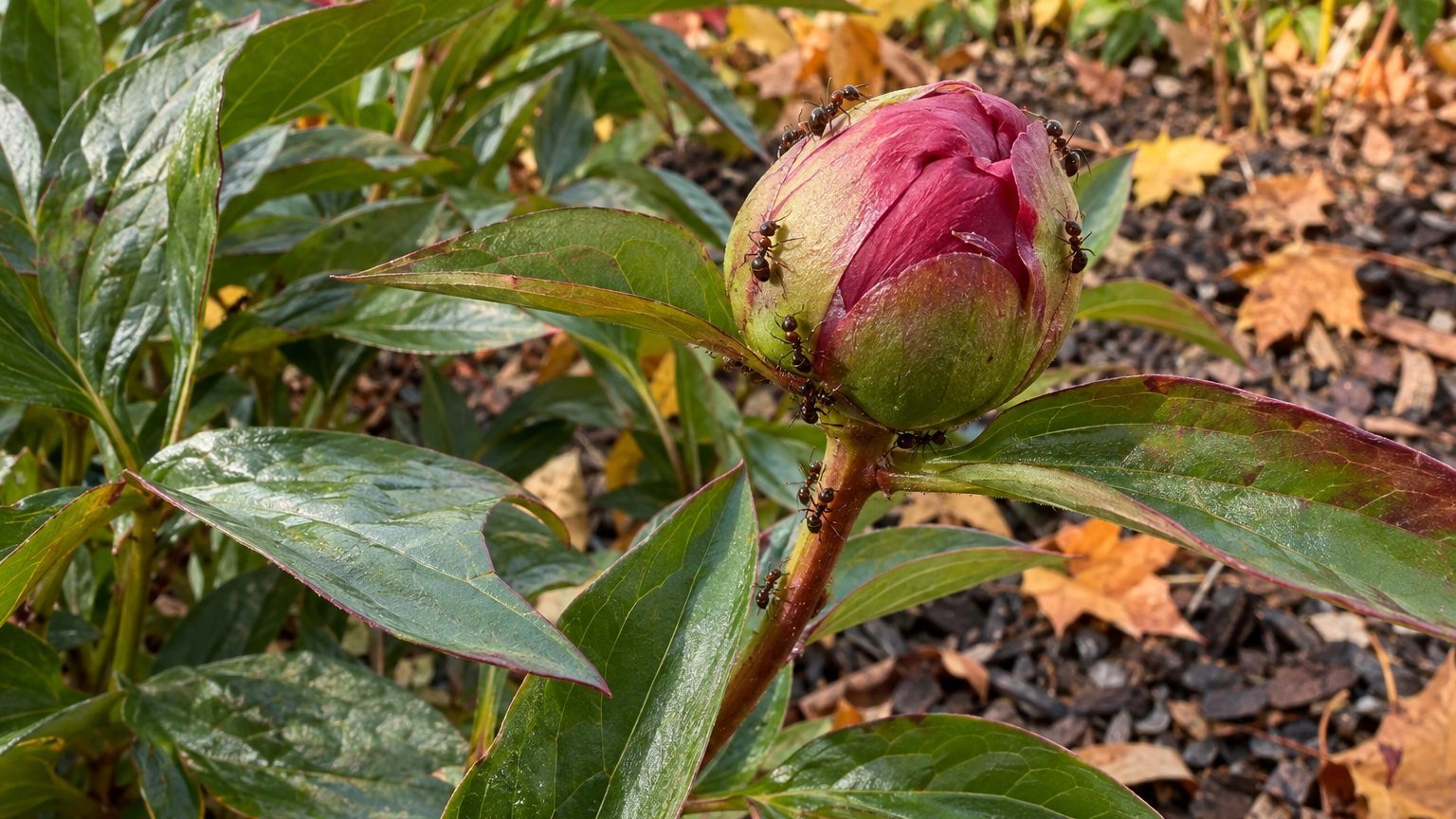
Ants crawling over peony buds as the flowers develop look like trouble, but they are after a sweet, sticky liquid the buds make on their own. The ants cause no damage to the plant. Knowing what you are looking at, and what to leave alone, saves you from reaching for a spray you do not need.

Ants: What You See

Ants on Peonies: How to Spot Them and Get Rid of Them

The ants show up with the buds, so look closely at the round, tight flower buds before they open.

  • Small ants roam over the surface of the spherical buds, often in enough numbers to alarm you at first glance.
  • They are black and measure 1/8 to 1/4 inch long.
  • The buds feel sticky or look glossy in spots, because a sweet liquid oozes from the outside of each one.
  • The activity peaks as the flowers bloom, and in Minnesota that means especially late May.
  • Once bloom is complete, the ants leave the flowers and look for food somewhere else.

The buds are the main draw because that is where the nectar is.

Ants or Something Else?

Ants on peony buds are easy to recognize once you have seen them, but other things can be mistaken for them or confused with what they leave behind.

Check the insect itself and where it sits on the bud. Then look at the sticky surface, because the stickiness alone is not a sign of a problem.

Looks like How to tell them apart
Other flower-feeding insects on the buds Ants are black and 1/8 to 1/4 inch long, and they roam the bud surface. An insect that looks different and stays put on the bud is not the ant visitor, and ants tend to keep such insects away.
Sticky, glossy patches on the buds with no insect in sight The buds make a sweet liquid on their outside, so the shine is nectar. If ants are on the same bud, they came for it.

If buds are chewed, misshapen, or failing to open, the ants are not the cause; ask a local garden center for help identifying the problem.

What Causes Ants, and Where It Is Worst

Peony buds have extrafloral nectaries, small structures that secrete nectar on the outside of the bud. That sweet liquid draws ants looking for an early season food source, and it is a major one for them early in the year, as gardeners in Pennsylvania are told.

Sap from the developing buds is part of the draw too. As peony flowers develop, ants may arrive, so this is not a regional quirk.

The timing follows the bloom. In Minnesota the ants are especially present in late May, while the peonies are in flower. Gardeners in Illinois and Kansas describe the same crowds on the buds, and in Kansas it is called common and no cause for concern. Expect them whenever your own peonies reach the bud stage.

How to Treat Ants

The honest treatment is mostly restraint, since the ants cause no damage to the peony.

  1. Look closely at the buds to confirm black ants and a sticky sheen, so that you know the visitors are the harmless kind.
  2. Leave the ants where they are, because they take the nectar and the plant loses nothing it needs.
  3. Skip any spray on the buds, since there is no damage to stop.
  4. Let the bloom finish, so that the ants move on to another food source on their own.
  5. Dunk cut flowers upside down in a bucket of plain water before bringing them into the house, so that any hitchhikers wash off.

Knocking ants off with your hands is pointless, because more will return while the buds are producing nectar. The washing step is for the vase and nothing else.

How to Prevent Ants Coming Back

There is nothing to prevent in the usual sense, but a few habits through the season keep the ants from becoming a worry.

  • In spring, as the buds swell and form, expect ants to arrive and treat them as part of the show.
  • When bloom begins, usually late May in Minnesota, hold off on any control plans, since the crowds are at their peak then.
  • Before you cut stems for a vase, plan on a quick dunk in plain water so the ants stay outside.
  • Once bloom is complete, expect the ants to be gone from the flowers as they find food elsewhere.
  • Next spring, start from the same plan, because the buds will make their nectar again and the ants will follow.

Since the ants are tied to the buds, they return on the plant’s own schedule, whatever you do.

Where This Comes From

Common Questions

Do Peonies Need Ants to Bloom?

No. That is a myth that has persisted for many years, and the blooms are not dependent on ants. The flowers open just fine on their own.

Do Ants Do Anything Useful for Peonies?

Yes, in a small way. The relationship is a mutualism, since the peony feeds the ants and the ants protect the blossoms from other floral-feeding insects.

Are Ants a Sign Something Is Wrong with the Plant?

No. They are drawn to nectar on the buds, so their presence alone does not mean something is wrong.
Verticillium Wilt on Peonies: Signs, Treatment and Prevention

Verticillium Wilt on Peonies: Signs, Treatment and Prevention

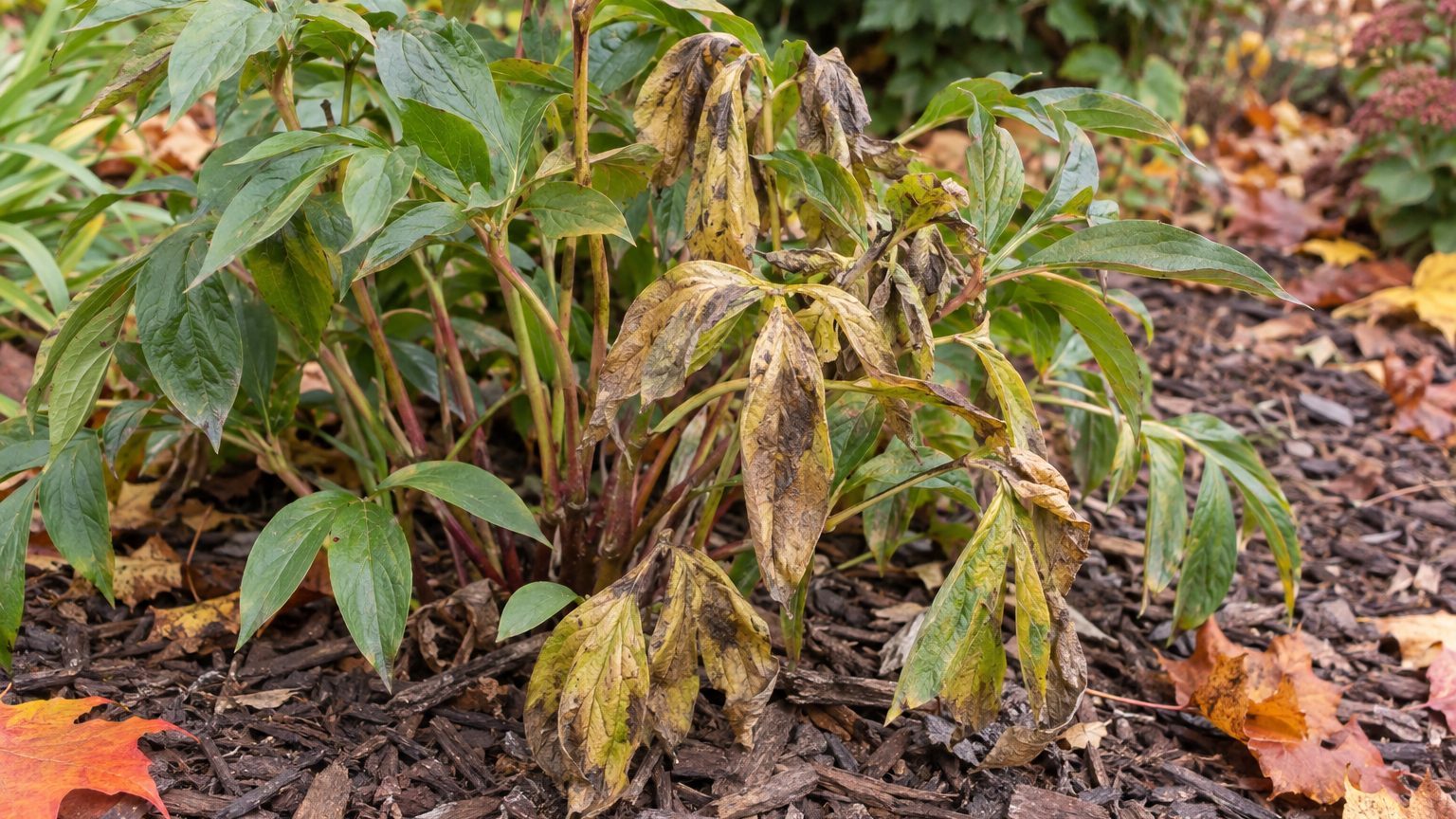
Some shoots on a peony wilt and droop while the rest of the clump looks fine. That lopsided collapse often comes from a fungus living in the soil, not from thirst. Once it is in the plant there is no fixing it, so the work is spotting it early, removing the plant and keeping the bed from reinfecting a replacement.

Verticillium Wilt: What You See

Verticillium Wilt on Peonies: Signs, Treatment and Prevention

The clearest clue is a plant that looks sick above and sound below.

  • Some shoots wilt while the base of the plant still looks perfectly sound.
  • Cut a wilted shoot near the base and look at the cross section, where the water-conducting tissue inside the stem has turned brown.
  • The wilting tissue soon yellows, then browns and dies.
  • In California, shoots and branches are reported to die back, often starting on one side of the plant, and whole plants may die.
  • A plant can carry the infection for a while before any symptom shows, as noted in Illinois.

When a clump droops unevenly, check the inside of a wilted stem near the base.

Verticillium Wilt or Something Else?

Several ordinary problems make a peony wilt, and in Illinois they are known to be mistaken for this disease. A single droopy stem proves nothing, so pair what the foliage does with what the stem and soil tell you.

Looks like How to tell them apart
Seasonal die-back of foliage Seasonal die-back affects foliage as the season ends; check a wilted stem for internal browning before deciding.
Drought Check whether the soil is dry, then inspect a wilted stem for internal browning before deciding.
Too much soil moisture Check whether the soil is waterlogged, then inspect a wilted stem for internal browning before deciding.

Fusarium wilt, bacterial wilt and root rots can also look like this disease. A brown inner stem on a shoot that wilted while the base stayed sound points toward verticillium.

What Causes Verticillium Wilt, and Where It Is Worst

Two soil fungi cause it, Verticillium albo-atrum and V. dahliae. They enter through the roots, then grow inside the xylem, the tissue that carries water and nutrients up the plant. The plant’s own response plugs the xylem, which cuts off water and food and leads to wilt and poor growth.

The fungus does not leave when the plant does. V. dahliae forms tiny black resting structures that survive in soil for many years without a host. When a susceptible plant goes into that soil, they germinate and infect it.

Treat any bed with a history of the disease as infested.

How to Treat Verticillium Wilt

Verticillium is a destructive fungus that is nearly impossible to kill because it lives in the soil, so treatment mostly means confirming the problem and removing the plant.

  1. Cut a wilted shoot near the base and check the inside, so that you can see whether the water-conducting tissue has browned.
  2. Rule out dry soil and waterlogged soil, so that you do not dig up a plant that only needs better watering.
  3. Remove the infected plant and destroy it, but assume the fungus remains in the soil.
  4. Skip the idea of waiting out the fungus with a long rotation of other plants, since long rotations with nonsusceptible plants are not effective against it.
  5. Keep susceptible plants out of that spot, so that the resting structures in the soil have nothing to infect.

Confirm the diagnosis before removing the plant.

How to Prevent Verticillium Wilt Coming Back

Prevention is mostly about where you plant and how closely you watch, and it follows the growing season.

  • As the shoots come up, look over each clump for a shoot that wilts while its neighbors stay firm.
  • Before planting a new peony, avoid any bed with a history of verticillium wilt, since the fungus survives in soil for many years.
  • Water evenly so that drought stress does not blur the picture when you diagnose a wilting stem.
  • After removing a sick plant, wash your tools, so that you do not carry soil to the next clump.

After a peony dies from verticillium wilt, do not put another susceptible plant in that bed.

Where This Comes From

Common Questions

How Fast Does Verticillium Wilt Kill a Peony?

It depends on the plant. In California, small plants may die in a single season, while larger plants usually decline more slowly.

Can Irrigation Water Spread Verticillium Wilt?

The fungus produces spores called conidia that can travel in irrigation water, though they are not long-lived. The longer-lasting risk is the resting structures in the soil.

Which Other Garden Plants Get Verticillium Wilt?

Many flowers are susceptible, including dahlia, chrysanthemum, snapdragon, impatiens, phlox, poppy, delphinium, aster and bleeding heart. Some garden vegetables are also susceptible.

Rust on Peonies: Signs, Treatment and Prevention

Rust on Peonies: Signs, Treatment and Prevention

Reddish-brown spots on peony leaves usually point to a fungus called leaf blotch, not true rust. The spots show up on the upper leaf surface and spread over the season. Leaf blotch is best managed through careful cleanup, and learning to tell it from its look-alikes keeps you from treating the wrong problem.

Rust: What You See

Rust on Peonies: Signs, Treatment and Prevention

Leaf blotch, also called red spot, measles or stem spot, leaves a clear trail on leaves and stems.

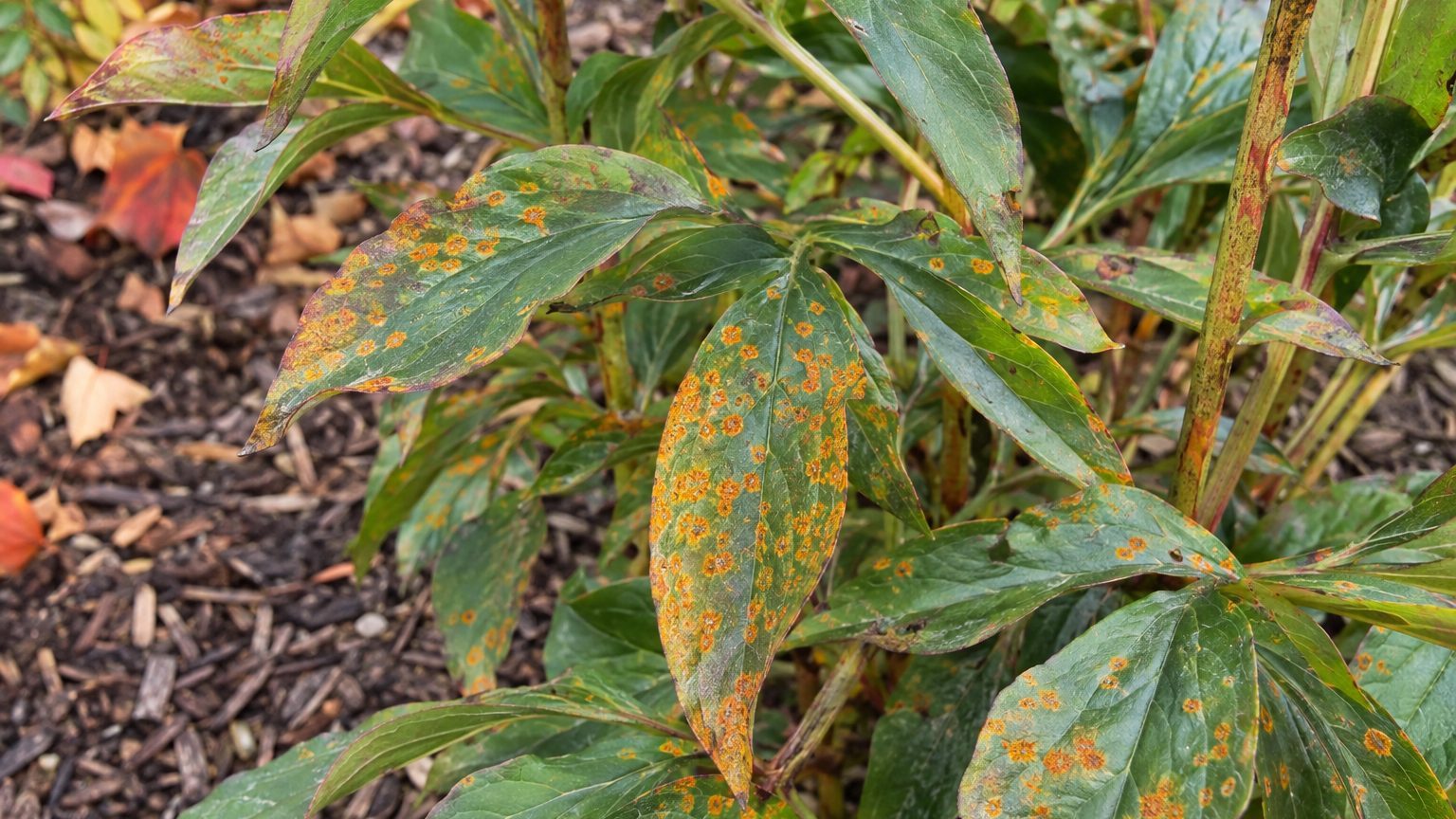
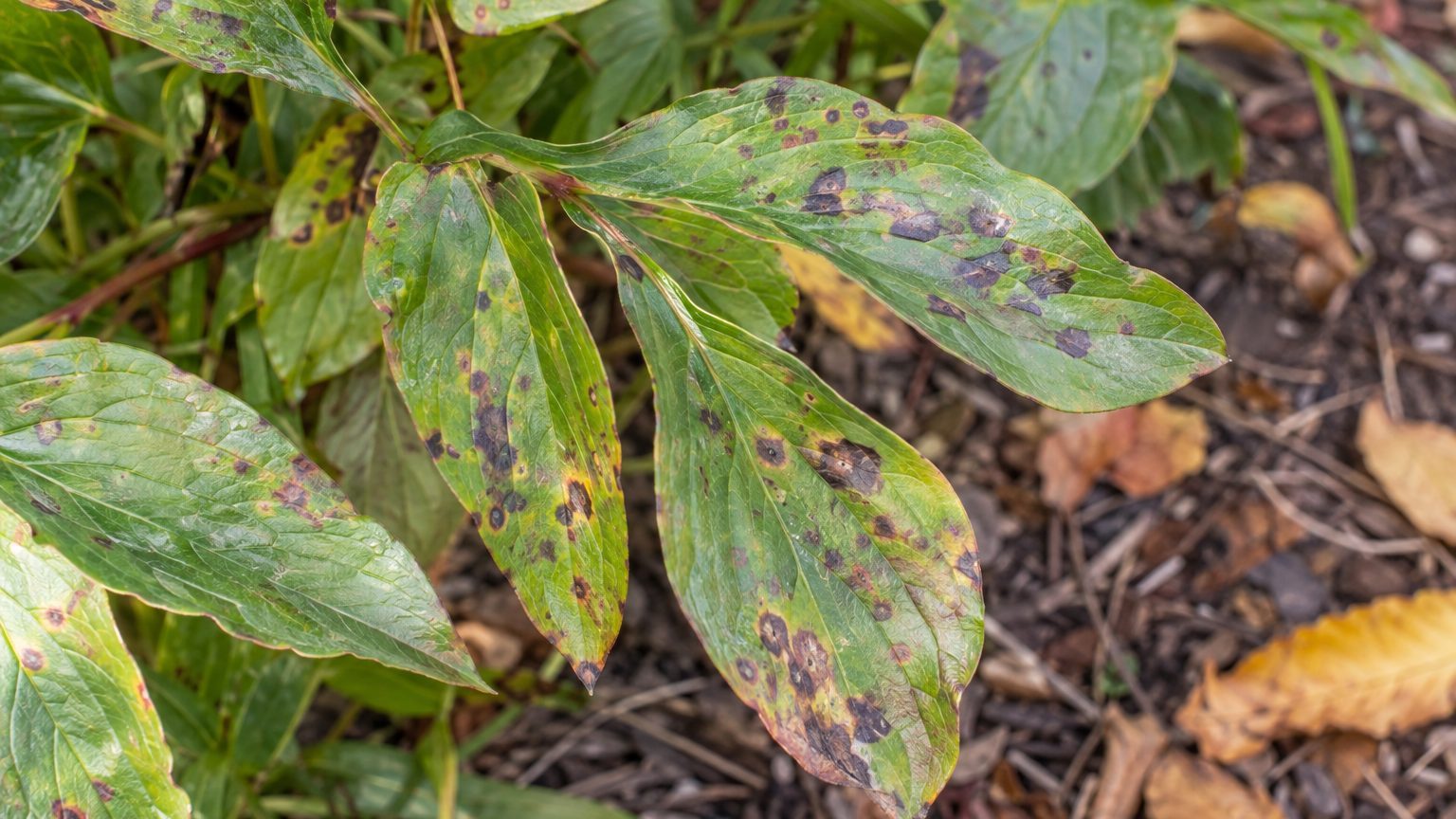
  • On the upper side of a leaf, the spots are glossy and purplish-brown, while the underside of the same spot turns chocolate brown or chestnut-brown.
  • Infection is generally more pronounced at the margins of the outer leaves.
  • Over time the spots expand and grow together into large blotches of dead tissue.
  • On young stems, distinct red to reddish-black spots appear, sometimes raised, and they can merge into short reddish-brown to purple streaks.
  • In Ohio, stem spots typically show up ahead of the leaf symptoms and keep enlarging as the season goes on.

Stem spots tend to appear before leaf blotch, so check young shoots before the leaves change.

Rust or Something Else?

Different peony diseases leave brown, purple or discolored patches, and they call for different handling. A spot’s color alone is a poor guide, so match it with the spot’s position on the plant and the other symptoms nearby.

Powdery mildew looks very different once you see it up close, and the gray mold group can mimic leaf blotch on young leaves.

Looks like How to tell them apart
Powdery mildew Small white spots on the leaves that can quickly spread into a white-to-gray powdery coating over the whole leaf surface.
Botrytis blight Reddish-purple leaf spots together with shriveled, discolored buds. A hand lens may reveal brown or gray fuzzy masses of spores on affected tissue.
Phytophthora blight In Wisconsin, black lesions several inches long can appear on the lower half of young shoots, and the entire shoot may collapse. Symptoms also start at the base of blighted leaves.

Powdery mildew mostly affects the look of the plant and does not usually cause significant damage. Phytophthora can invade the entire crown in severe cases, so a collapsing shoot deserves a quick call to your extension office.

What Causes Rust, and Where It Is Worst

Leaf blotch comes from a fungus, Graphiopsis chlorocephala, formerly known as Cladosporium paeoniae. It survives the winter in plant debris, which is why last year’s leaves left at the base of the clump matter so much. Warm, humid weather provides ideal conditions for new infections.

Warm, humid weather provides favorable conditions for leaf blotch. In Illinois, measles (red blotch or leaf blotch) is among the most common summer and fall foliar problems, alongside Botrytis blight and powdery mildew.

Powdery mildew follows a different weather pattern, with cool nights and hot, humid days. Plants stressed by drought are also susceptible, and the disease has become increasingly common over the years.

How to Treat Rust

Management starts with sanitation, and the order below keeps spores from spreading as you work.

  1. Cut off spotted leaves and stems as soon as you see them, so that fewer spores are left to blow or splash onto healthy growth.
  2. Bag the removed material and dispose of it away from the garden instead of composting it.
  3. Pull damp, thick mulch back from the crown, since constant dampness keeps fungal problems going.
  4. Water at the base of the plant in place of overhead sprinkling, so that leaves dry off between waterings.
  5. Check with your state’s extension service before using any fungicide, since it knows which products are registered for peonies where you live.

Treatment aims to protect the foliage you still have, because spotted leaves will not return to normal. Keep any healthy foliage that remains while removing spotted leaves and stems.

How to Prevent Rust Coming Back

Prevention follows the peony year, with each gesture timed to the point where the fungus is most active or most easily removed.

  • Look over new shoots for small red spots because stem symptoms tend to appear before leaf blotch.
  • During dry spells, water the soil under the plant rather than wetting the foliage.
  • During warm, humid weather, keep stems from crowding and keep mulch loose, so the center of the clump dries out.
  • Once the foliage has finished for the year, clear every leaf and stem remnant from the bed, because that debris is where the fungus spends winter.

Sanitation is the dependable way to manage leaf blotch because the fungus survives in plant debris.

Where This Comes From

The symptom descriptions and management advice here draw on university extension guidance on peony diseases, including notes written for Ohio, Illinois, Maine and Wisconsin.

Disease pressure and legal treatment options vary by state, so your state’s extension service can confirm what applies to your yard.

Common Questions

Is Peony Measles the Same as Leaf Blotch?

Yes. Measles and red spot are names for the stem-spot stage of the same fungal disease, and in Ohio the leaf spots follow later.

Does Powdery Mildew Kill Peonies?

Generally it affects the appearance of the plant but does not cause significant damage, so a white coating is mostly a cosmetic problem.

Why Do Peony Buds Turn Brown and Rot?

Blights can make buds brown and rot suddenly at any stage of development. Botrytis can also leave buds shriveled and discolored, so check the stems and leaves for other signs before deciding which disease is at work.

Root Rot on Peonies: Signs, Treatment and Prevention

Root Rot on Peonies: Signs, Treatment and Prevention

Peony shoots that blacken at the soil line and then flop over are a sign of root rot. The fungus Phytophthora cactorum causes it, and in Iowa, cool, wet conditions during spring favor the disease. Once the crown is infected, the plant usually cannot be saved. What you can do is recognize the signs early, remove the plant and protect the peonies nearby.

Root Rot: What You See

Root Rot on Peonies: Signs, Treatment and Prevention

The disease looks different at each stage, but the tissue color and texture stay consistent from shoot to crown.

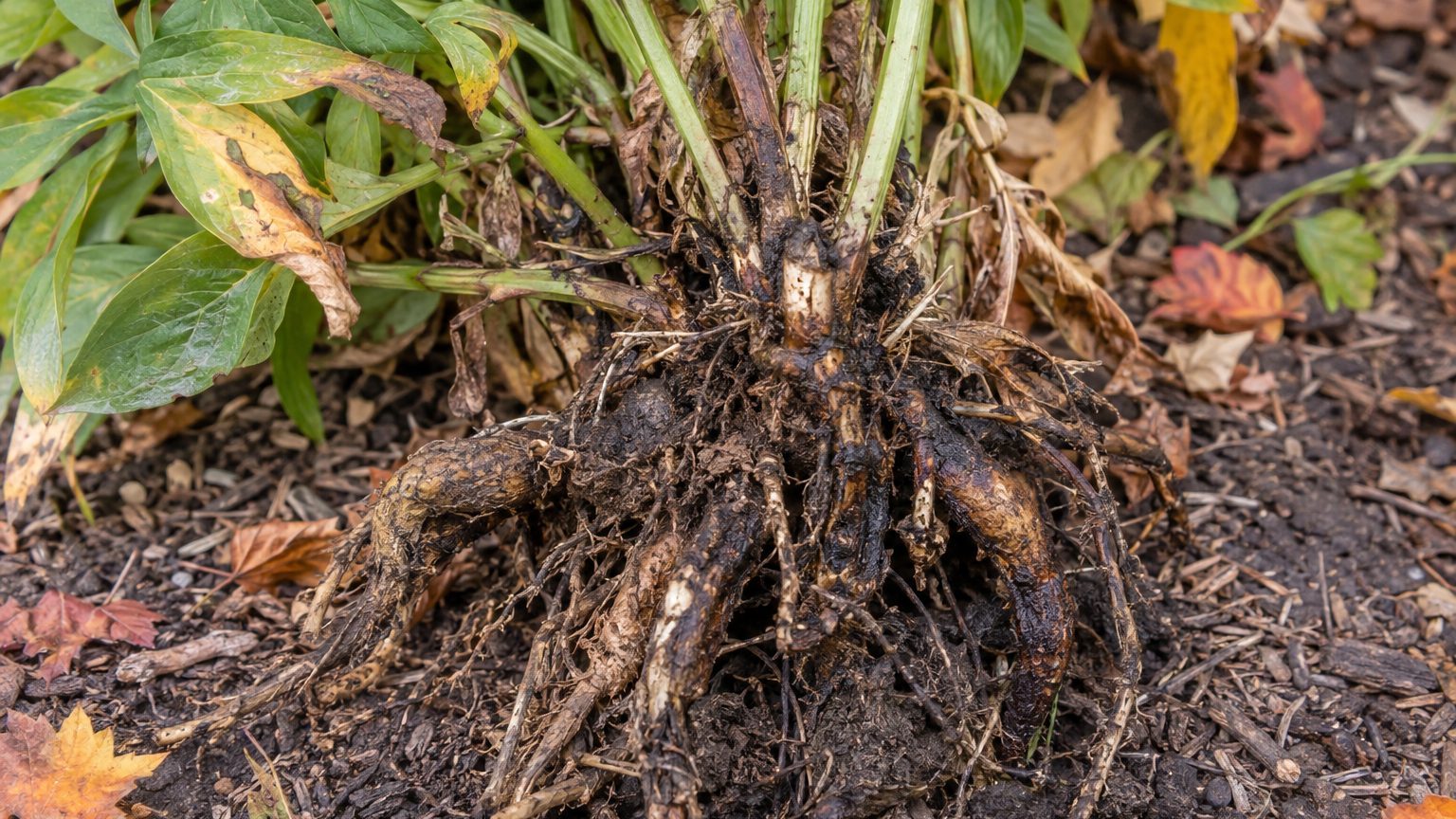
  • Infected tissue turns dark brown to black and feels leathery rather than soft and green.
  • Small, water-soaked spots show up first on emerging shoots, stems, leaf stalks, buds or leaves.
  • In Iowa, black, often sunken areas can extend several inches and may also appear on upper stem tissue.
  • In Iowa, stems tend to fall over at the lesions, while in Texas, stem cankers may also make them fall over.
  • Flowers, buds and leaves may also turn dark brown or black.
  • When the crown and roots are infected, a wet rot sets in and the whole plant collapses and dies.

Phytophthora initially attacks roots or developing shoots at soil level, so watch that area for blackening and decay.

Root Rot or Something Else?

Different peony problems can blacken tissue, so color alone proves little. Match what you see with where it sits on the plant and what the tissue feels like when you handle it.

Looks like How to tell them apart
Frost-nipped shoots, with blackened tips after a cold night Damage sits on the exposed tips and leaves, while the stem base stays firm and green. Root rot lesions start at the soil line and feel leathery.
Gray mold on buds, with brown, collapsing buds in a damp spring Look for a fuzzy gray coating on the buds and stem tissue, and the base of the stem is still sound. Root rot shows dark, sunken, leathery areas low on the stem.

A rotted crown is dark and leathery at the base.

What Causes Root Rot, and Where It Is Worst

The fungus Phytophthora is common in most soils, so it is usually already in the bed. It attacks either the roots or the developing shoots at soil level, which causes the blackening and decay of stem tissue.

Wet conditions give it the upper hand. In Iowa, cool, wet weather in spring is known to favor the disease. Peonies planted where drainage is poor are the ones that develop blight and stem canker.

Because the trigger is soggy soil rather than a particular climate, the risk follows your own yard. Low spots and heavy clay hold moisture around the crown.

How to Treat Root Rot

Treatment for a rotted peony is mostly removal, done in an order that protects the rest of the bed.

  1. Confirm the signs by checking the stem base and crown for dark, leathery or wet, mushy tissue, so you do not dig up a plant that only suffered frost.
  2. Dig out the whole infected plant, crown and roots included.

Removing and destroying infected plants is the only reliable means of control, and once symptoms are noticed, chemical treatments are usually not effective. Your state extension service can tell you what is legal and sensible where you live.

How to Prevent Root Rot Coming Back

Prevention comes down to keeping the crown dry and the bed open, and the work follows the seasons.

  • Through summer, keep lawn sprinklers aimed away from the bed, because spray that keeps soil wet around the crown invites rot.
  • When planting or moving a peony, choose a spot with good drainage and loosen the soil first, so water drains away from the roots.

Good drainage matters more than spacing because wet soil favors the disease.

Where This Comes From

The details here come from university extension guidance written for Texas, Arkansas and Iowa. Check with your own state’s extension service for local timing and approved options.

Common Questions

Can You Plant a New Peony Where One Died?

A different spot is not automatically safer, because Phytophthora is common in most soils. If you must reuse the site, improve the drainage first by loosening the soil or raising the bed.

Should You Put Infected Peony Stems in the Compost?

No. Bag them and discard them with household trash so the fungus does not carry over into compost you spread on other beds.

Does Mulch Cause Root Rot on Peonies?

Mulch itself does not cause it, but mulch piled against the crown holds moisture there. Keep it pulled back from the shoots so the base can dry out between rains.

Powdery Mildew on Peonies: Signs, Treatment and Prevention

Powdery Mildew on Peonies: Signs, Treatment and Prevention

White patches on peony leaves, as if someone dusted the plant with flour, are a sign of a fungal disease that gardeners now meet more often than they used to. Powdery mildew on your peonies is easy to spot once you know the signs, but once it appears on the leaves there is little that a gardener can do.

Powdery Mildew: What You See

Powdery Mildew on Peonies: Signs, Treatment and Prevention

The disease announces itself on the leaves, and it changes fast once it starts.

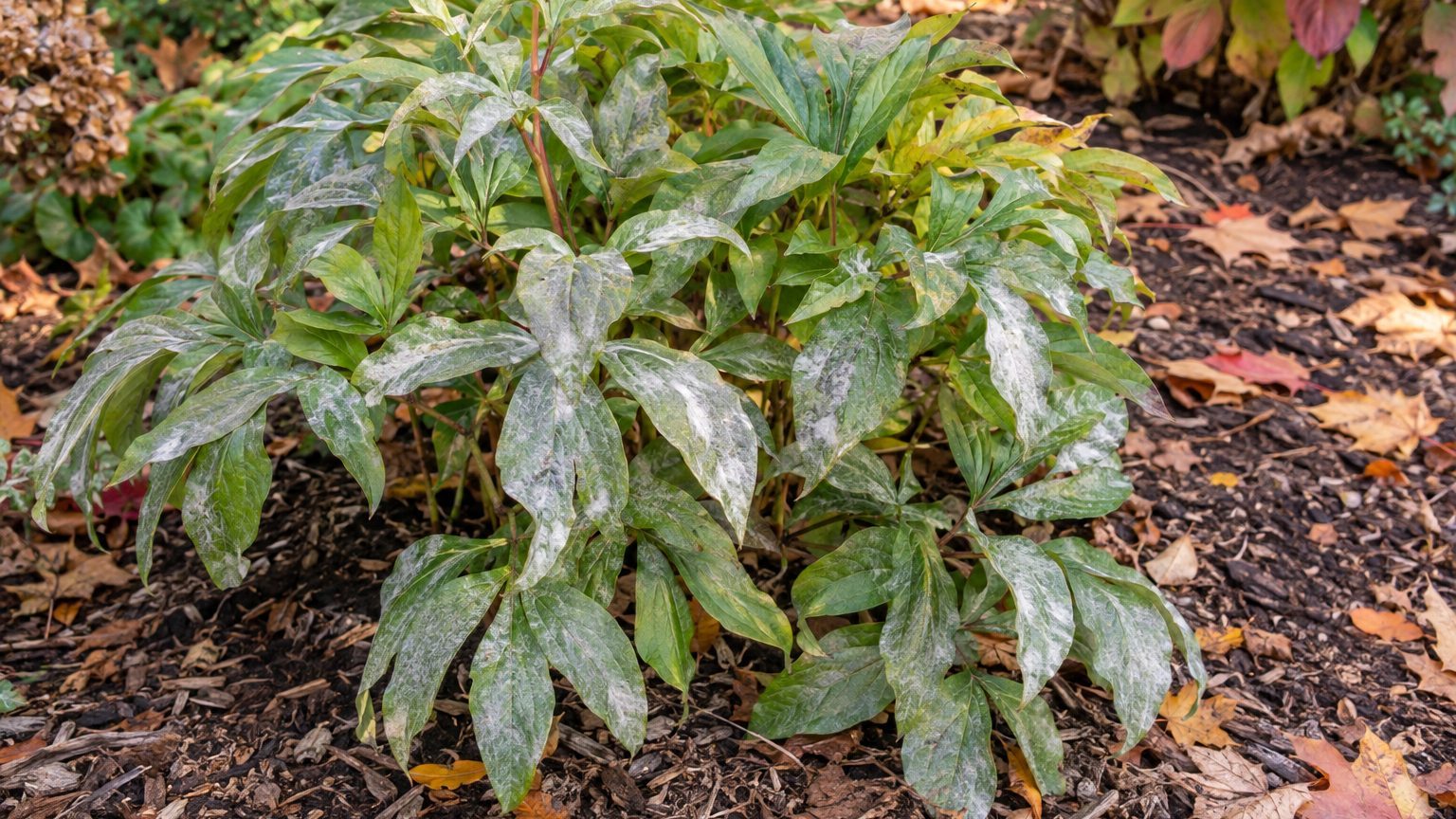
  • Small white spots appear on the leaves first, often looking like scattered snowflakes.
  • The spots merge quickly until the whole leaf surface wears a white-to-gray powdery coating.
  • The coating sits on the foliage and is easy to see, so a heavily affected plant looks dusted.
  • It tends to show up later in the growing season, well after the plant has leafed out.
  • Peonies in partial shade or in crowded spots with little air movement are more likely to show it.

Spotting those first white flecks early gives you a chance to act before the whole plant is coated.

Powdery Mildew or Something Else?

Other things can leave pale or fuzzy marks on peony foliage, so check before you act. Pairing what you see with where it sits, or with a quick touch test, settles most doubts.

Looks like How to tell them apart
Dust or dried spray residue Pale film that wipes off cleanly with a damp finger and often sits only on the leaves nearest a path, a hose spray or a treated area. Mildew leaves a growing coating that spreads from small spots.
Gray mold on buds and stems Fuzzy gray growth with soft, collapsing tissue, mostly on buds and stem bases in damp spells. Mildew stays powdery and dry on the leaf surface.

Brown or purplish blotches on the leaves are a different matter from mildew. They are spots in the leaf tissue, not a white powder lying on top of it. If a wipe test leaves the coating in place and the white growth is spreading across the leaf, you are dealing with mildew.

What Causes Powdery Mildew, and Where It Is Worst

A fungus in the Erysiphe group causes it. The spores are light and easily dislodged, so wind or splashing water carries them from leaf to leaf and from plant to plant. The fungus also overwinters on diseased plant material, which is how it returns to the same bed.

Conditions matter more than region here. Poor air movement and shade make the disease more likely, and peonies growing in partial shade get it more often than those in open sun. It is a common problem later in the growing season, especially on plants in too much shade with poor air circulation.

The disease is not tied to a single part of the country. Wherever a peony sits in a shady, closed-in corner, the risk goes up. Powdery mildew is also common on lilac and bee balm.

How to Treat Powdery Mildew

Once the coating is on the leaves, there is little a gardener can do to clear it, so the work is about limiting what comes next.

  1. Check the leaves closely and confirm the white coating is mildew, so that you are not treating dust or another problem.
  2. Scout the other peonies, since the spores travel easily from leaf to leaf by wind and water.
  3. Call or visit your state’s extension service to ask which fungicides are registered where you live, so that you use only what is legal and suited to your garden.
  4. Apply a fungicide before infection takes hold, at the first sign of mildew or ahead of it on plants that had it before, because it works as protection and not as a rescue.
  5. Move shaded peonies to a sunnier spot when they can be transplanted, since this often reduces mildew over time.

Always follow the label on whatever product your extension office points you to. A coating that has already covered the leaves will not turn green again, but you can keep it from reaching the next plant.

How to Prevent Powdery Mildew Coming Back

Prevention follows the calendar of the peony itself, from the first shoots to the final cleanup.

  • In early spring, note which peonies sit in shade or in a crowded corner, since full sun with good air movement helps minimize the disease and those are the plants to move.
  • As the shoots grow, keep neighboring plants from crowding the clumps so air can move through the foliage.
  • Through the growing season, scout the leaves regularly, with extra attention in the later months when mildew tends to arrive.
  • If mildew showed up the year before, ask your extension service about timing a preventive fungicide before infection, since that is when it can be effective.
  • At the end of the growing season, cut the plants down to the ground, rake out all diseased material and keep it out of the compost pile.

Sanitation matters because the fungus overwinters on leftover leaves, so a clean bed starts next spring with far fewer spores.

Where This Comes From

The advice here draws on university extension guidance, including advice written for Illinois and Iowa. Your own state’s extension service can confirm the timing and the products allowed where you garden.

Common Questions

Does Powdery Mildew Mean the Peony Is Dying?

No. This foliar disease does not typically kill peony plants, though it makes them look rough.

Is Powdery Mildew New on Peonies?

It has become increasingly common in landscapes over the years. It was relatively rare on peonies until the last few years, which is why it is worth scouting for.

Can Powdery Mildew Spread from Other Plants to Peonies?

The spores move easily by wind and water, and the disease is common on plants like lilac and bee balm. Keeping an eye on your peonies helps you catch it early.

Phytophthora Blight on Peonies: Signs, Treatment and Prevention

Phytophthora Blight on Peonies: Signs, Treatment and Prevention

Young peony shoots can turn black and rot where they meet the soil. That is the usual look of Phytophthora blight, a soil fungus that favors cool, wet ground. Knowing the signs, what to pull out and how to keep the bed drier makes a big difference to the peonies you keep.

Phytophthora Blight: What You See

Phytophthora Blight on Peonies: Signs, Treatment and Prevention

Young shoots that blacken and rot at soil level are a key sign.

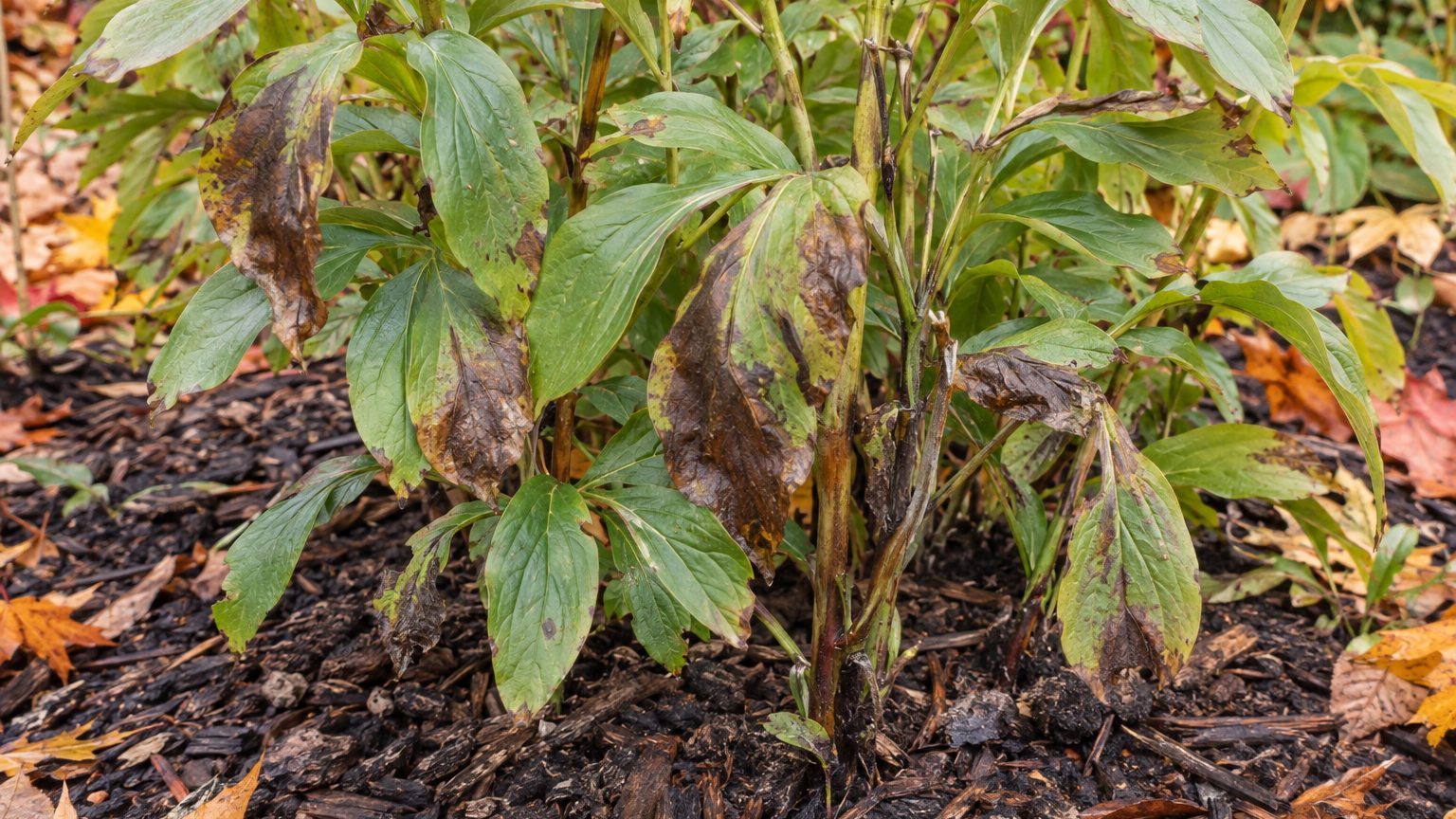
  • Young shoots turn black and rot at soil level, then die.
  • Small, water-soaked spots show up first on emerging shoots, stems, leaf stalks, buds or leaves.
  • The spots darken to brown or black, turning into leathery, elongated lesions.
  • In Wisconsin, the black lesions on the lower half of young shoots can be several inches long, and the whole shoot may collapse.
  • Higher on the plant, leaves and stems turn dark brown or black and feel somewhat leathery, and in Iowa stems tend to fall over at the lesions.
  • In Kansas cankers may appear along the stem, and in Iowa the sunken black patches sometimes appear on upper stem tissue too.

Phytophthora Blight or Something Else?

Peony problems in spring can look alike at first glance. Dark, collapsing growth has different possible causes, so a quick look at the surface of the damage helps.

Gray mold can look similar. The damage is similar, but the surface tells the story.

Looks like How to tell them apart
Botrytis blight (gray mold), with browning buds and darkened stems and leaves Botrytis carries a velvety growth on the damaged tissue. Phytophthora blight does not, and its lesions are leathery and often start right at the soil line.

Scorched-looking foliage can also come from Phytophthora root rot. If the scorching shows up in a bed that stays soggy, look at the roots and crown before blaming the leaves.

What Causes Phytophthora Blight, and Where It Is Worst

The cause is a fungus, Phytophthora cactorum, that lives in the soil. It is common in most soils and starts on either the roots or the developing shoots at ground level, blackening and decaying the stem tissue.

The disease is driven by wetness more than by region. It does best in cool, wet conditions such as very heavy rains, excessive irrigation and poor drainage. In Iowa, cool, wet spring weather is what favors it.

Drainage is the other half of the story. In Arkansas, peonies planted where water lingers may develop blight and stem canker. A bed that sits wet after rain, a low corner of the yard or a spot soaked by a sprinkler can set the stage in any state.

How to Treat Phytophthora Blight

Once symptoms are visible, chemical treatments are usually not effective, so the work is removal and cleanup.

  1. Cut away the infected shoots and stems as soon as you see them, so that the fungus has less tissue to spread through.
  2. Remove the entire plant and the soil right around it if most of the plant is infected.
  3. Clean up the soil around the planting carefully, so that no blackened scraps are left behind to feed the fungus.
  4. Bag the debris and keep it out of the compost pile.
  5. Check the drainage before replanting and correct any persistent wetness.

How to Prevent Phytophthora Blight Coming Back

Prevention comes down to keeping the crown and shoots out of standing water through the wet part of the year.

  • When you plant or replant a bed, grow the peonies in raised beds so that excess water drains away from the crown.
  • In Iowa, hold back on irrigation when shoots emerge into cool, wet spring soil, since excessive watering favors the disease.
  • After heavy rains, check the bed for puddles or soggy patches and note which spots stay wet, because those need better drainage.
  • Through the growing season, water only when the soil needs it and keep sprinklers from soaking the base of the plants.
  • At cleanup, clear diseased debris from the bed and keep it out of the compost.

A well-drained bed is less favorable to this disease.

Where This Comes From

This soilborne fungus attacks roots or developing shoots at soil level.

Common Questions

Can Phytophthora Blight Kill the Whole Peony?

Yes. When the fungus reaches the crown and roots, it causes a wet rot that often destroys the entire plant. Shoots that blacken near the center of an older plant are a warning that the crown may be involved.

Does Phytophthora Blight Also Hit Peony Buds?

It can. Buds may turn brown and rot suddenly, and flowers and leaves can darken to brown or black. The symptoms often develop at the base of blighted leaves.

Why Do Some Stems Show Damage on Only One Side?

Infections sometimes appear on just one side of a stem. On older, multi-stemmed plants, they more often develop near the center of the plant, so look inside the clump as well as at the outer shoots.

Leaf Spot on Peonies: Signs, Treatment and Prevention

Leaf Spot on Peonies: Signs, Treatment and Prevention

Glossy purple blotches on peony leaves are a sign of leaf blotch, a fungal disease that looks worse than it is. Peony leaf blotch makes the foliage ugly but rarely harms the plant itself.

Leaf Spot: What You See

Leaf Spot on Peonies: Signs, Treatment and Prevention

Look at the upper surface and then turn the leaf over; the colors are different.

  • The upper surface of the leaf carries glossy, purplish-brown spots, and the underside of the same spots is chestnut brown.
  • Spots start small, round and red or purplish on young leaves, just before the peony blooms.
  • Each spot starts at 0.02 to 0.04 inch and reaches 0.08 to 0.12 inch across before penetrating the leaf.
  • As spots spread later in the season, they run together into large, irregular, dark purple blotches.
  • Infection tends to be heavier along the margins of the outer leaves.
  • Leaves may twist or distort slightly as they keep growing.

Despite the look, the plant keeps its vigor, and the disease does not cause early leaf drop or stem dieback.

Leaf Spot or Something Else?

Leaf problems can look similar, and the colors of the spots help sort them out. Check the color of the growth and which side of the leaf shows it before settling on a name.

Powdery mildew can look similar, and it has become more common over the years.

Looks like How to tell them apart
Powdery mildew: small white spots on leaves that can spread across the whole leaf The coating is white to gray and powdery, and it sits over the leaf surface. Leaf blotch is glossy purple on top and chestnut brown underneath.
Leaf blotch: purplish-brown glossy spots Spots begin small and round on young leaves, then merge into blotches, with a brown underside.

In Illinois, both mildew and leaf blotch show up fairly regularly during the summer months. If a leaf has a dusty white film, think mildew. If it has glossy purple patches, think blotch.

What Causes Leaf Spot, and Where It Is Worst

A fungus causes it, now called Graphiopsis chlorocephala and formerly Cladosporium paeoniae. It grows on the surface of leaves, stems and petioles. The fungus survives on infected peony debris and probably on infected scales of the crown buds, which is why old foliage left in the bed matters so much.

Warm, humid weather gives the fungus ideal conditions to infect. In California, the disease is favored by rainy weather in spring.

Some peonies are hit harder than others. Susceptibility is quite variable, and many older cultivars are the most susceptible. The disease is also called red spot, measles or stem spot.

How to Treat Leaf Spot

Treatment is mostly cleanup, since the fungus lives in leftover debris and the plant itself is not in danger.

  1. Confirm the diagnosis by turning a leaf over, so that you match the glossy purple top to a chestnut brown underside before acting.
  2. Remove badly spotted leaves once the plant is done blooming, so that the fungus has less material to spread from.
  3. Discard those leaves in the trash rather than composting them, because the fungus survives on infected debris.
  4. In Arkansas, cut all spent top growth to ground level in fall and carry it out of the garden.
  5. Keep sanitation steady through the season, so that spores do not build up in the bed.

Cleanup removes infected debris that can carry the fungus.

How to Prevent Leaf Spot Coming Back

Prevention follows the peony year, and nearly all of it is housekeeping.

  • Pick up any old peony leaves left on the ground, since the fungus survives on infected debris.
  • Just before bloom, watch young leaves for small red or purple circles, which is when the first spots appear.
  • After blooming ends, remove and discard spotted leaves so the infection does not carry forward.
  • During rainy spring weather in California, look over the plants more often because those conditions favor the disease.
  • In Arkansas, cut all spent top growth to ground level in fall and remove it from the garden.

If you are adding new plants, remember that many older cultivars are the most susceptible, so cleanup matters even more with them.

Where This Comes From

Leaf blotch develops when the fungus survives in infected debris and reaches peony foliage.

Common Questions

Will Leaf Spot Kill a Peony?

No. It looks ugly, but it does not significantly damage the plant, and it does not cause early leaf drop or stem dieback.

Can You Compost Peony Leaves with Leaf Spot?

It is safer to discard them. Infected debris carries the fungus, so spotted leaves are better kept out of the compost.

Do All Peonies Get Leaf Spot Equally?

No. Susceptibility varies quite a bit, and many older cultivars are the most susceptible.

Botrytis Blight on Peonies: Signs, Treatment and Prevention

Botrytis Blight on Peonies: Signs, Treatment and Prevention

Gray fuzz on peony stems and buds after a rainy spell, or a young shoot that wilts and flops in spring, usually points to botrytis blight. The fungus starts early, sometimes as the new shoots push out of the ground. It spreads in damp, crowded foliage, and a few habits in how you water, space and clean up make the difference.

Botrytis Blight: What You See

Botrytis Blight on Peonies: Signs, Treatment and Prevention

The clearest sign shows up after moisture, so look after rain, overhead watering or a humid day.

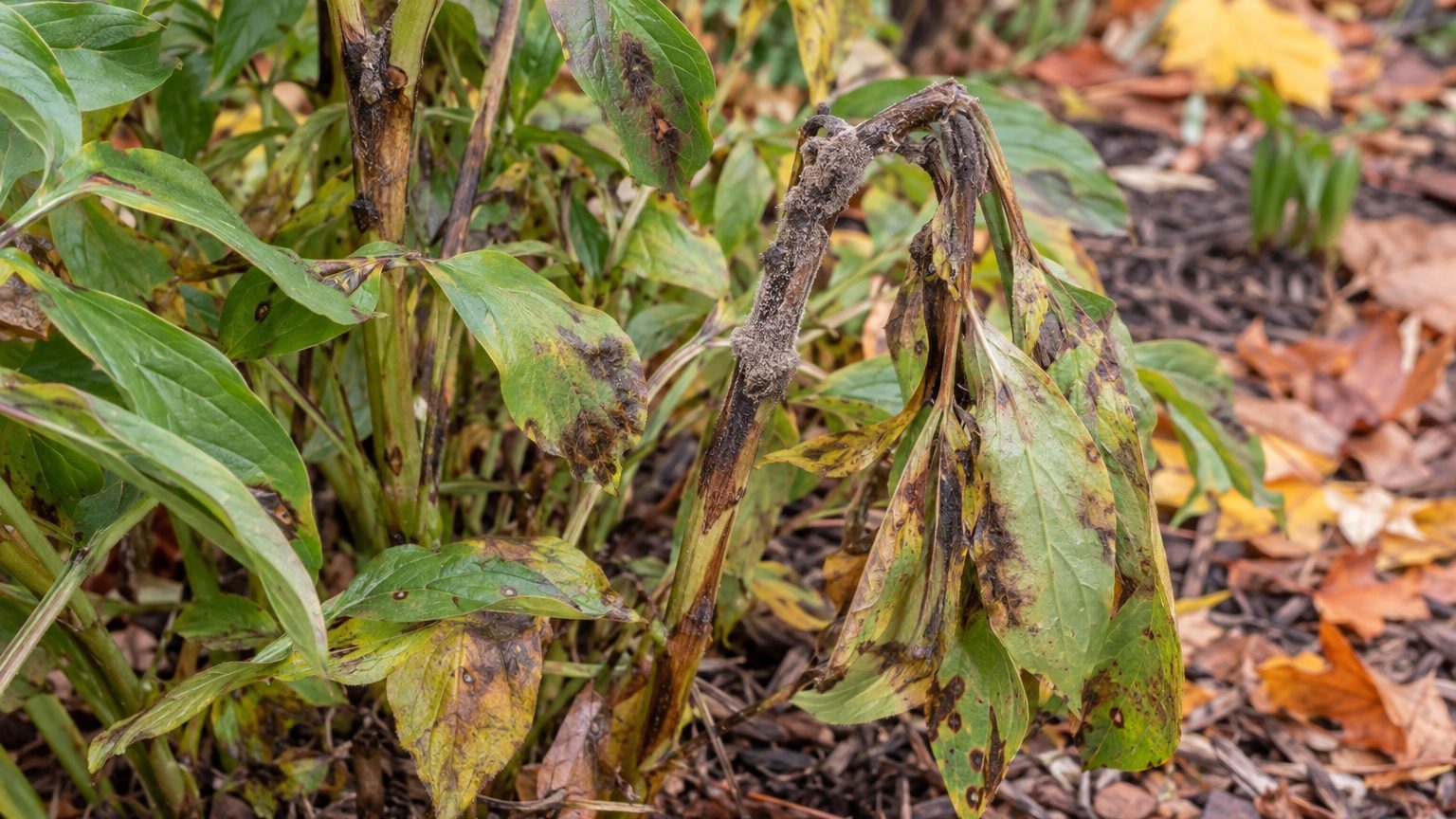
  • Fuzzy, gray fungal growth covers the surface of affected tissue once the plant has been wet.
  • Blighted areas usually sit on the lower half of young shoots or stems, and the entire shoot may collapse.
  • Black lesions several inches long can form on those stems, as reported in Wisconsin.
  • In Wisconsin, buds may shrivel, turn brown and rot suddenly at any stage of development.
  • Leaves develop reddish-purple spots, and stems and petals may discolor, wilt or shrivel, as reported in Illinois.

Because the disease begins as new shoots emerge, early spring is the time to start checking.

Botrytis Blight or Something Else?

Peonies suffer from more than one fungal problem, and several leave dark, collapsing tissue. Gray fuzz is the detail that separates botrytis from most of them, so pair what you see with where it sits on the plant.

Looks like How to tell them apart
Phytophthora blight, with dark lesions and a collapsing shoot Botrytis is more likely to cause bud rot, and it produces fuzzy gray spores once the plant is moistened.
Other leaf spots, with discolored patches on foliage Botrytis can cause reddish-purple spots and shriveled, discolored buds.

Two different botrytis fungi can infect peonies. One, Botrytis cinerea, attacks many kinds of plants, while Botrytis paeoniae infects only peonies. Control recommendations differ slightly between them, so seek local guidance to help confirm which one you have.

What Causes Botrytis Blight, and Where It Is Worst

A few related species of the fungus Botrytis cause the disease, including B. cinerea. It can affect every above-ground part of the plant, though leaves and buds show symptoms most often. The fungus makes dense thickets of spores that blow or splash away to start new infections.

Wet foliage is what lets it spread. Rain, overhead watering and humid days all give the spores the moisture they need, and crowded plants hold that moisture longer.

Where spring growth stays damp, conditions can favor the fungus. On older, multi-stemmed clumps, infections show up more often near the center of the plant, where air moves least. Sometimes only one side of a stem is affected.

How to Treat Botrytis Blight

Treatment is mostly about removing infected tissue and drying out the plant, and the order matters.

  1. Inspect new shoots as they emerge, looking for gray fuzz or dark lesions on the lower stems.
  2. Cut off collapsed shoots and rotted buds at the base, so that the spore-covered tissue is no longer feeding new infections.
  3. Bag the removed material and put it in the trash, because spores blow and splash away from dead tissue and a compost pile is no safe place for it.
  4. Water at the base of the plant and skip the overhead spray, so that the foliage stays dry between rains.
  5. Keep neighboring plants from crowding the clump so that air can move through and dry the leaves.
  6. Check local guidance before choosing a fungicide so that it is approved where you live and suited to the disease you have.

Cleanup comes first, and sprays are an addition rather than a replacement. In a severe case, gray fungal growth may be visible after wet weather.

How to Prevent Botrytis Blight Coming Back

Prevention follows the season, and most of it comes down to keeping air moving and leaves dry.

  • In early spring, start checking as the first shoots come up, since the disease can begin before the plant has leafed out.
  • When you plant or divide, choose a spot with full sun and good drainage, because peonies prefer both.
  • Through the growing season, keep plants spaced so that air flows between them, which helps deter fungal foliar disease.
  • During dry spells, water at the soil line rather than over the leaves, since overhead watering wets the foliage that the fungus needs.
  • After rain or humid weather, look over the plants again for gray fuzz, as it appears once the plants have been moistened.

A sunny, open bed supports the dry foliage and airflow that help deter fungal leaf disease.

Where This Comes From

The supporting references appear in the Sources box below. Because timing and symptoms can vary with local weather, seek advice suited to your yard.

Common Questions

Can Botrytis Blight Kill a Peony?

It can collapse whole shoots and rot buds, which ruins a season of growth on the affected stems. Removing infected tissue promptly keeps the damage from spreading across the clump.

Should You Water Peonies from Above?

Overhead watering wets the leaves and buds, and gray fungal growth shows up after plants have been moistened. Watering at the base keeps the foliage drier.

Is It Too Early to Look for Botrytis in Spring?

No. The disease can start while new shoots are just coming out, so spring checks are worth making from the moment growth appears.

Leaf Blotch on Peonies: Signs, Treatment and Prevention

Leaf Blotch on Peonies: Signs, Treatment and Prevention

Purple-red blotches can spread across peony leaves; in Minnesota, they typically appear in mid to late summer after bloom. That is leaf blotch, a fungal disease that looks ugly but rarely harms the plant. What matters is what you do with the cut stems and fallen leaves, because that is where the fungus waits out winter.

Leaf Blotch: What You See

Leaf Blotch on Peonies: Signs, Treatment and Prevention

Start with the upper side of the leaves, where the first marks show up.

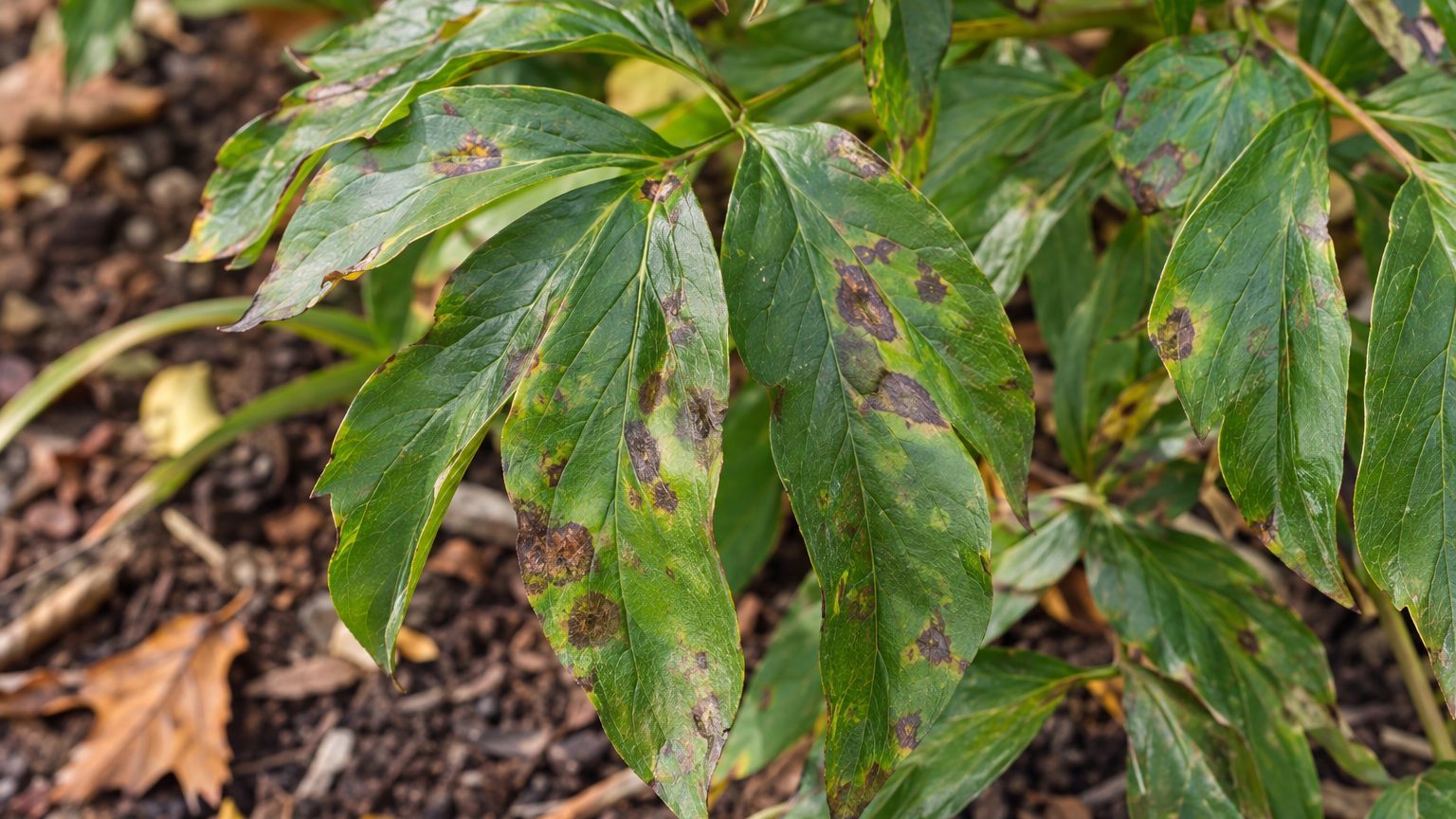
  • Glossy, purplish-brown spots sit on the upper side of the leaf, while the underside of the same spot turns chestnut brown.
  • Early spots are small, circular and red or purplish, often appearing on young leaves just before bloom.
  • Later the spots merge into large, irregular, dark purple blotches, some 1 inch or larger.
  • Older spots dry out into dead tan areas with irregular black lines through the center.
  • Young stems can show elongated, reddish-brown streaks; in Minnesota, leaves near a spot may curl or twist.

In severe cases, the leaves die completely but stay attached; in Minnesota, the disease is typically seen in mid to late summer after bloom.

Leaf Blotch or Something Else?

Dark marks can have different causes, and relying on color alone can mislead you. Check the color of the spot and where on the plant it sits, then flip the leaf over.

Botrytis blight can look similar and is common in wet springs.

Looks like How to tell them apart
Botrytis blight Stems soften and decay, and flower buds blacken and fail to open; those signs point to Botrytis blight.
Red spot on stems only Raised individual spots on the upper stems with glossy purple blotches on the leaves above point to leaf blotch, not a stem rot.

A soft, collapsing stem or a rotting bud points to Botrytis blight rather than leaf blotch. Firm tissue with glossy purple spots and a chestnut-brown underside points to it.

What Causes Leaf Blotch, and Where It Is Worst

A fungus causes it, now named Graphiopsis chlorocephala and formerly called Cladosporium paeoniae. It grows on the surface of leaves, stems and leaf stalks, which is why the damage looks so unsightly but stays shallow.

The fungus survives on infected peony debris and probably on infected scales of crown buds, so last year’s leftovers feed this year’s outbreak. Warm, humid weather gives the best conditions for infection, and in California the disease is favored by rainy spring weather.

How to Treat Leaf Blotch

Treatment is mostly cleanup, since sanitary measures give the strongest control of this disease.

  1. Remove spotted leaves as you see them, so that fewer spores sit on the plant while it keeps growing.
  2. In Washington, cut all stems at ground level in the fall or early spring so that infected tissue is not left in the bed.
  3. Bag the cut stems and leaves and put them in the trash, so that the fungus cannot overwinter in a compost pile or on the soil.
  4. Rake away infected peony debris around the crown, where the fungus can survive.

Spots that show up late in the season usually do no harm to growth. In Illinois, early-season infection on susceptible plants may reduce vigor.

How to Prevent Leaf Blotch Coming Back

Prevention follows the calendar, and nearly all of it is cleanup.

  • In Indiana, do a thorough fall cleanup of old, infected stems, leaves and other plant debris so that the fungus has less material in which to overwinter.
  • In Washington, cut back any missed stems in early spring and clear the crown area before new shoots emerge.
  • In Minnesota, check the leaves after bloom, when blotches typically appear in mid to late summer, and remove badly affected leaves.

Where This Comes From

Leaf blotch begins when the fungus survives in infected plant material and reaches peony foliage or stems.

Common Questions

Does Leaf Blotch Kill a Peony?

Not usually. It looks bad and does not significantly damage the plant, though leaves can die in severe cases while staying attached.

Will Peonies Still Bloom After Leaf Blotch?

In Minnesota, the disease typically shows after bloom in mid to late summer, when the flowers are usually finished. Early infection can reduce vigor.

Is Leaf Blotch the Same as Peony Measles?

Yes. Peony measles, red spot and stem spot are other names for the same disease.

Best Peonies for Florida

Best Peonies for Florida

A peony in a Florida bed usually gives you plenty of leaves and few or no flowers. The plant needs a cold winter rest to bloom, and most of Florida never delivers one. A few kinds still deserve a try, mainly in the northern part of the state, and they are worth knowing before you spend money.

Best Peonies to Grow in Florida

Best Peonies for Florida

Florida’s climate is too mild and too hot for peonies to do well. Peonies are ill-suited to Florida’s summer heat and humidity, and they also miss the winter chill they need to flower. If you want to experiment, tree peonies and Itoh peonies are generally more resistant to botrytis blight and peony measles than garden peonies, and early bloomers have the best odds.

Tree Peonies

Tree Peonies — Best Peonies for Florida

Tree peonies (Paeonia suffruticosa and relatives) are upright, multi-stemmed and woody, and the woody stems stay on the plant year-round to carry next year’s growth. They are generally more resistant to botrytis blight than garden peonies, which matters in damp Florida air.

Give them airy spacing and never cut the stems to the ground.

Itoh Peonies

Itoh Peonies — Best Peonies for Florida

Itoh peonies, also called intersectional hybrids, cross a herbaceous peony with a tree peony. They carry short woody stems that die back to the ground in winter, and they resist botrytis blight and peony measles better than garden peony cultivars.

That resistance makes them the more sensible herbaceous-style choice for a humid state.

Early-Blooming Cultivars

Early-blooming cultivars do best in the South because they flower before hot weather sets in. They are also less prone to botrytis blight.

The same logic applies in north Florida. When you shop, look for descriptions that say early, and expect the flowering window to be short.

Herbaceous Garden Peonies

Herbaceous peonies (Paeonia lactiflora) are the familiar bushy mounds that die back to the ground in winter. They often do not perform well in the lower South because the winter chilling falls short.

Treat them as a gamble here, not a plan.

How to Choose a Peony for a Florida Garden

Start with how forgiving the plant is of damp heat, then ask how much winter cold your yard really gets. Peonies do best where winters are cold and may flower poorly in mild-winter climates, so lower expectations the farther south you garden.

The rows below match common Florida situations to a type.

Your situation What suits it in Florida Why
Hot, humid summers Tree or Itoh peonies They are generally more resistant to botrytis blight than garden peonies
Summer comes on fast after a mild spring Early-blooming cultivars They flower before hot weather sets in
Mild winters with little chill No peony type reliably suits mild winters Peonies need a cold winter rest to flower, and herbaceous types struggle in the lower South
Little time for fall cleanup Tree peonies The woody stems stay on the plant, so there is no cutting back

Which Peonies Suit Different Parts of Florida

The state runs from a place with real winter freezes to one with almost none, and that spread decides how much any peony has to work with.

  • North Florida, around Jacksonville: Winters here give a peony a modest chance of getting enough chill. Try tree or Itoh peonies, or an early-blooming cultivar, in a bed with good air movement.
  • Central Florida, around Orlando: Winters are effectively frost-free, so peonies get little rest, and summer is the hard season for them. Flowering is unlikely, and the garden calendar here favors cool-season color over peonies.
  • South Florida, around Miami: Frost-free winters and long, wet summers leave peonies with almost nothing in their favor. Spend the garden budget on plants built for the heat.

Even in the north, expect a result that varies from year to year with how cold the winter turns out.

Peony Buying Mistakes to Avoid in Florida

Buying a Herbaceous Peony and Expecting Flowers

The classic garden peony needs a cold winter rest. In a mild winter it may grow leaves and skip the bloom, which leaves you with a plant that takes up a bed for nothing.

If you still want one, choose an early-blooming cultivar and plant it in north Florida. Otherwise lean toward a tree or Itoh type.

Choosing a Variety That Wants More Chill

Chill needs vary by cultivar, and some are written for much colder places. Peonies need winter cold to flower, and Florida often cannot supply enough.

Read the plant tag or catalog description for the chill it asks for, and pass on varieties pitched at cold-winter gardeners.

Planting Too Deep

A peony set too deep may bloom poorly or not come up at all. Keep the eyes near the soil surface when you plant, and resist the urge to bury them against the heat.

Shade from afternoon sun and a little air space around the plant do far more to help it through a Florida summer.

Where to Get Peony Advice in Florida

Local advice matters more here than in a cold-winter state, because results vary by region. Check locally before you buy.

  • The UF/IFAS Extension site has guidance written for Florida gardens, including what to plant instead of cold-climate flowers.
  • Your county Extension office can tell you how much winter chill your neighborhood gets, so call or stop in before you order plants.

Common Questions

Will a Peony Bloom the First Spring After Planting?

It may not bloom the first spring.

Do You Cut Back Peonies in Florida?

A herbaceous peony dies back each year and is cut back after frost. A tree peony keeps its woody stems and is never cut back, and an Itoh peony dies back to the ground in winter like a herbaceous one.

The almanac, state by state. Every date on this site comes from a state’s own frost facts and its extension service’s calendar — and says where it comes from.