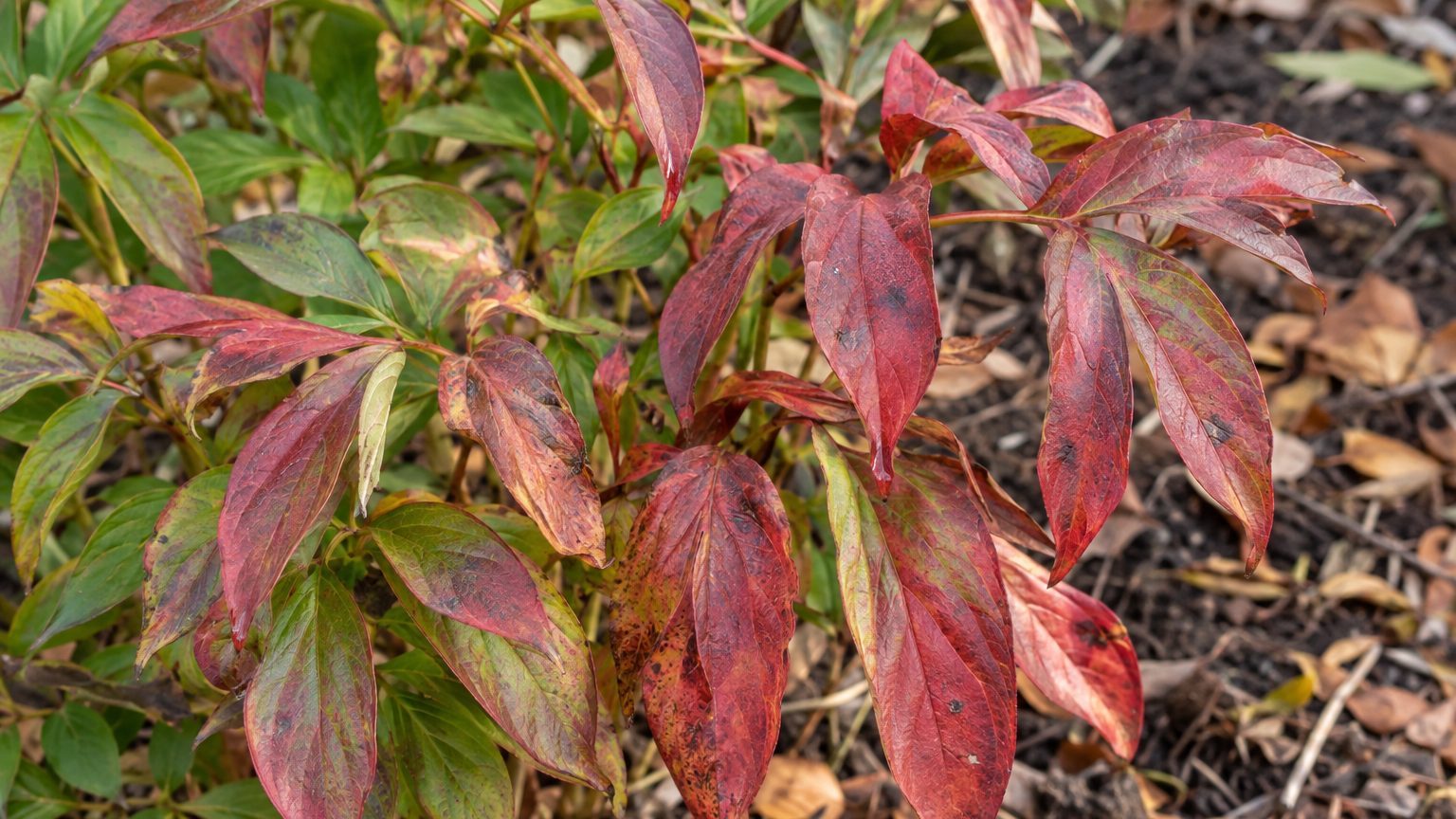
Peony leaves that blush red or purple can look alarming. One possible cause is a fungus responsible for leaf blotch, and the damage can look far worse than it is.
Peony Leaves Turning Red: What You See

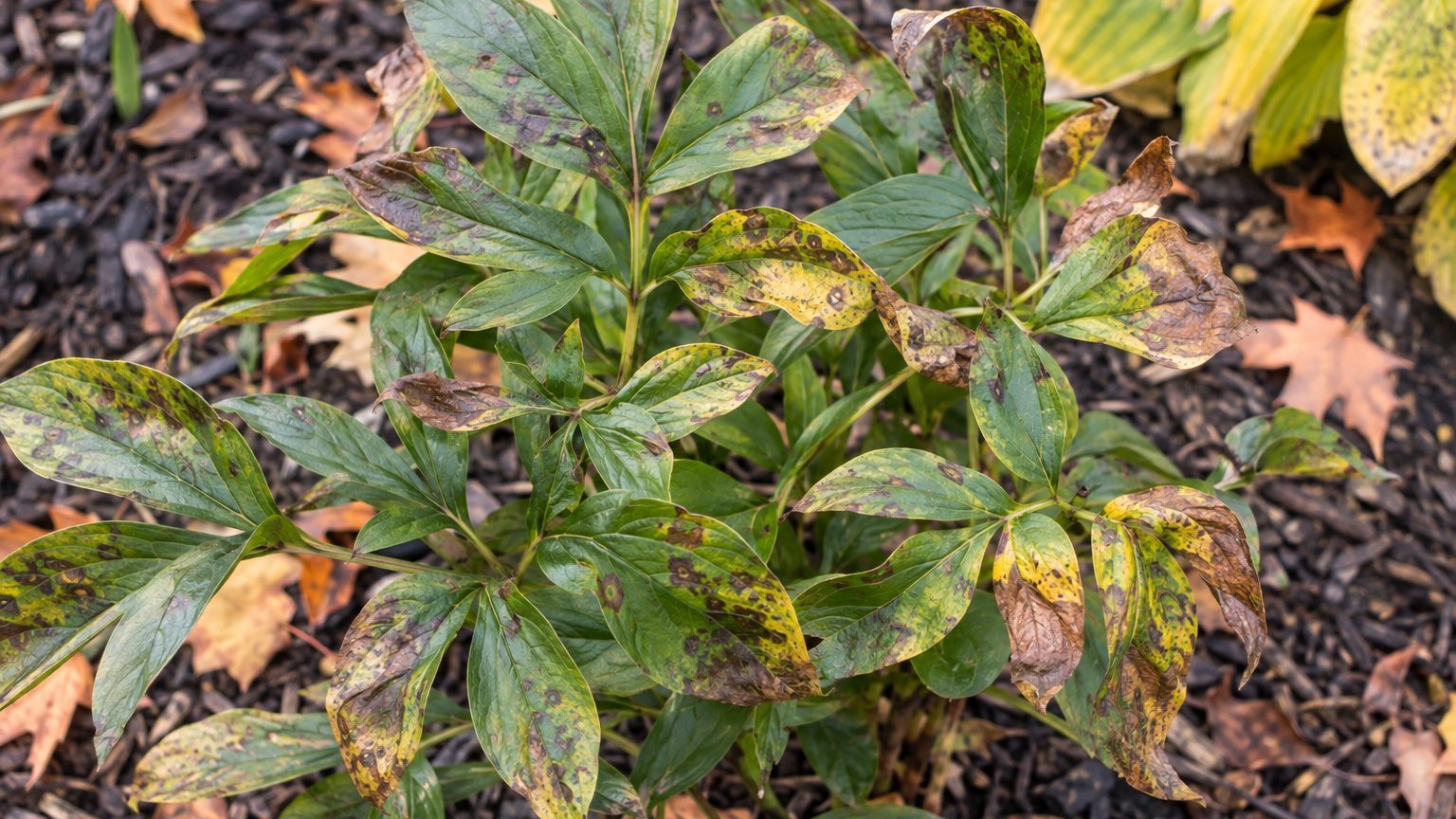
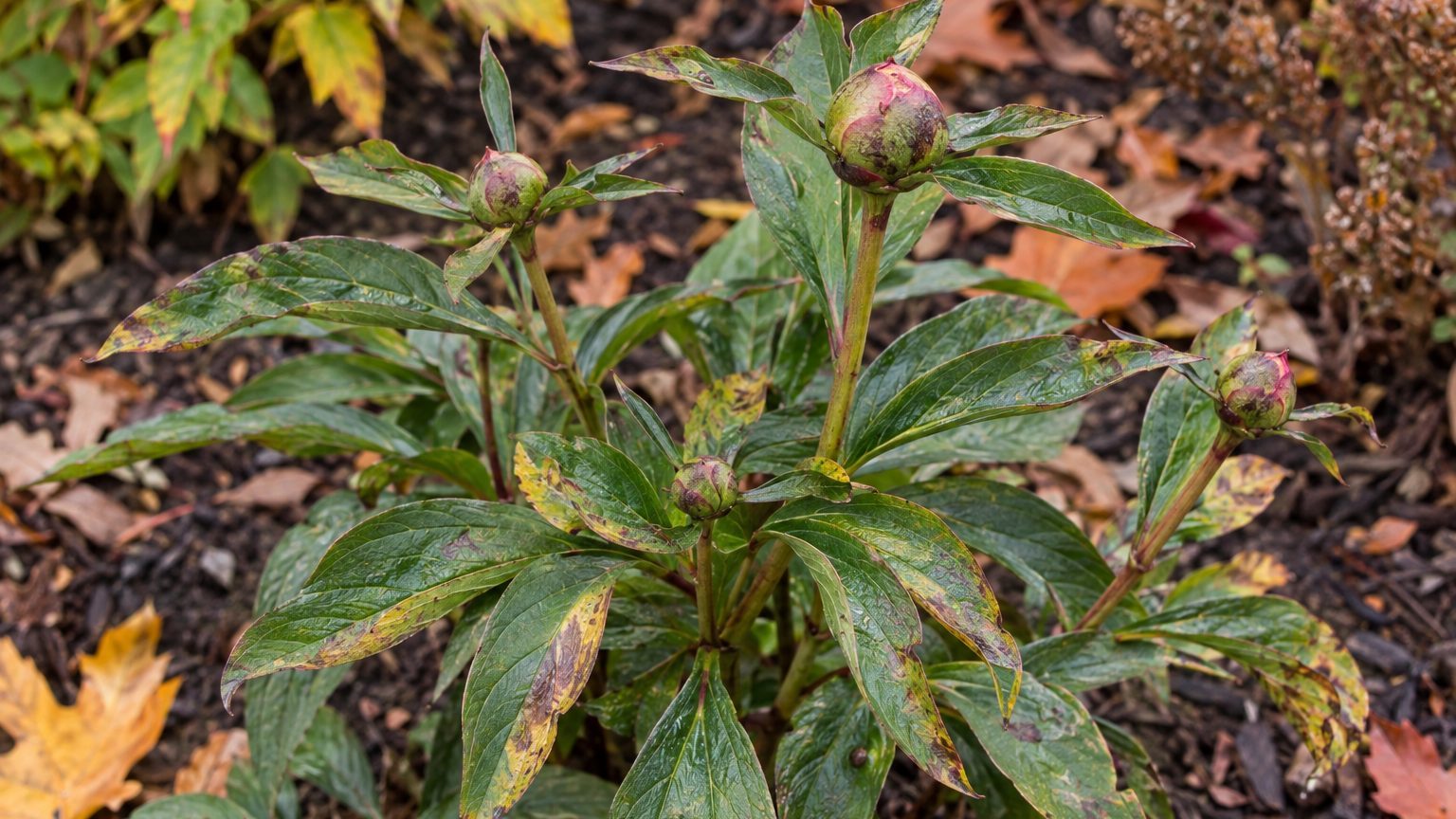
Small, round red or purple spots can appear on the upper surface of young leaves just before the peony blooms.
- The spots are small and circular at first, then merge later in the season into large, glossy, irregular, dark purple blotches.
- Flip a leaf over and the matching patches on the underside are tan-brown to chestnut brown.
- Infection tends to be heaviest at the margins of the outer leaves.
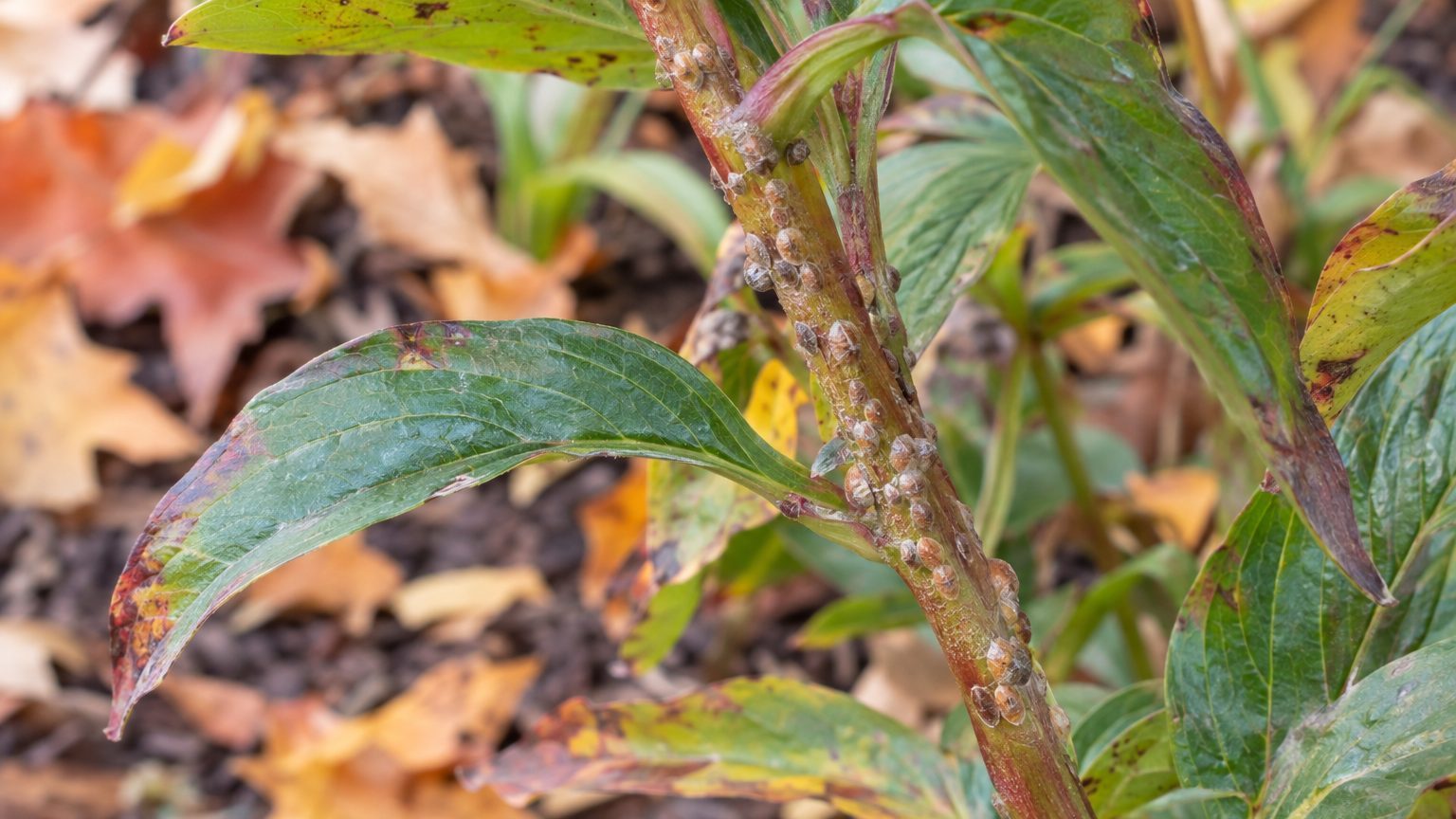
- Stems may carry purple-red flecks or streaks with soft, fuzzy edges, sometimes called red spot.
- Leaves can curl or distort slightly as they keep growing.
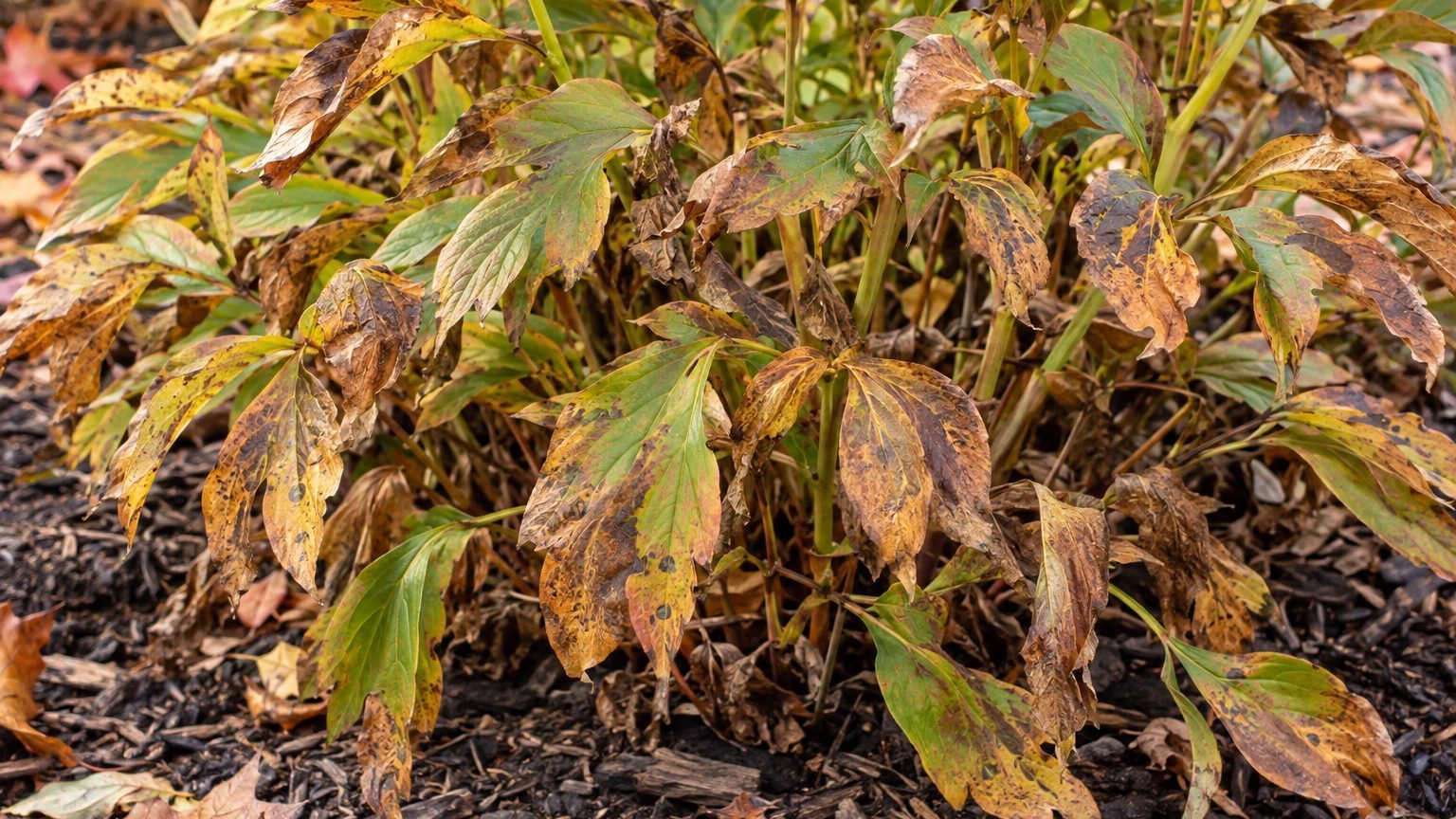
In Colorado, healthy foliage can turn yellow or reddish-maroon in autumn.
Peony Leaves Turning Red or Something Else?
Red or purple on a peony is not always leaf blotch. Botrytis blight is another possible cause, while autumn color can be harmless.
Check the part of the plant and the time of year together before you decide anything.
| Looks like | How to tell them apart |
|---|---|
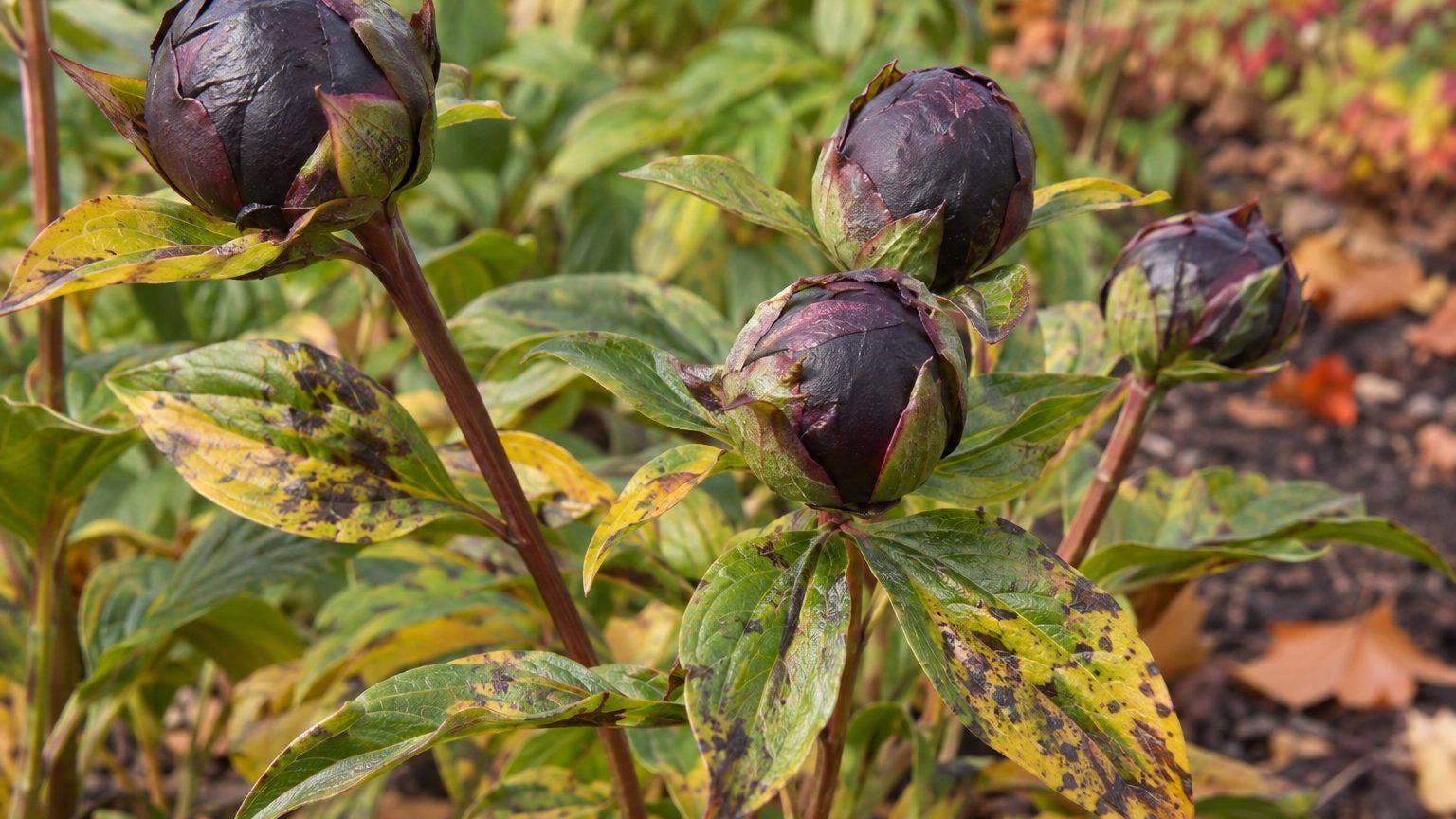
| Botrytis blight | Reddish-purple leaf spots come with shriveled, discolored buds that never open, while leaf blotch leaves the buds alone. |
| Autumn color | In Colorado, whole leaves can turn yellow or reddish-maroon in fall, rather than showing glossy spots with brown undersides. |
Botrytis paeoniae is a specific gray mold fungus that peonies are prone to. If buds are failing along with the leaf spotting, Botrytis blight is another possibility.
What Causes Peony Leaves Turning Red, and Where It Is Worst
The cause is a fungus, Graphiopsis chlorocephala, formerly named Cladosporium paeoniae. It grows on the surface of leaves, stems and leaf stalks, which is why gardeners also call the problem measles, red spot or stem spot.
Warm, humid weather gives the fungus ideal conditions; in Illinois, the disease usually appears in spring or early summer.
The reassuring part is the effect on the plant. In Illinois, early infection can look unappealing and may reduce vigor on susceptible plants, while the disease generally does not cause early leaf drop or stem dieback or significantly affect plant vitality. Spotting that appears late is usually no problem for growth.
How to Treat Peony Leaves Turning Red
Because the fungus lives on the surface and rarely harms the plant, the work is mostly cleanup and keeping foliage dry.
- Confirm the symptoms by turning a leaf over, so that chestnut-brown undersides tell you it is leaf blotch rather than something that affects buds.
- Check the buds for shriveling or discoloration, so that you catch Botrytis blight early if it is present.
- Cut off badly spotted stems and leaves and bag them, so that fewer spores remain near the crown.
- Water at the soil line in the morning, so that leaves dry quickly and stay unfavorable to the fungus.
- Thin crowded stems and pull back nearby plants, so that air moves through the clump.
- If you are considering a fungicide, make sure its label permits use on peonies where you live.
Do not strip the plant in a panic. Remove only what is clearly diseased and leave healthy green growth in place.
How to Prevent Peony Leaves Turning Red Coming Back
Prevention follows the season, because spores overwinter on old foliage and spread in damp weather.
- Remove old leaf debris and stems from around the base so infected material does not remain near the plant.
- As the plants leaf out, keep sprinklers off the foliage and water the soil instead.
- Space or stake stems so air can circulate through the clump.
- In Illinois, check for new spots during warm, wet weather in spring or early summer.
- After the foliage has died back, cut the stems down and discard them rather than composting them.
Keep mulch away from the stems to reduce splashing onto lower leaves.
Where This Comes From
This guidance focuses on the symptoms that distinguish leaf blotch from Botrytis blight and normal autumn color. Timing and severity vary with the weather, so use the condition of your own plants to decide what needs attention.
Common Questions
Is Peony Leaf Blotch Going to Kill the Plant?
No. The fungus does not cause early leaf drop or stem dieback, and it does not significantly affect plant vitality even though the leaves look rough.
Why Do Peony Stems Have Red Spots Before the Leaves Do?
Measles-type stem symptoms typically appear before leaf blotch, and the stem lesions expand as the season goes on. Both come from the same fungus.
Can You Still Enjoy the Flowers If the Leaves Are Spotted?
Usually yes, since leaf blotch affects leaves and stems rather than buds. If buds are shriveled or discolored, suspect Botrytis blight instead.