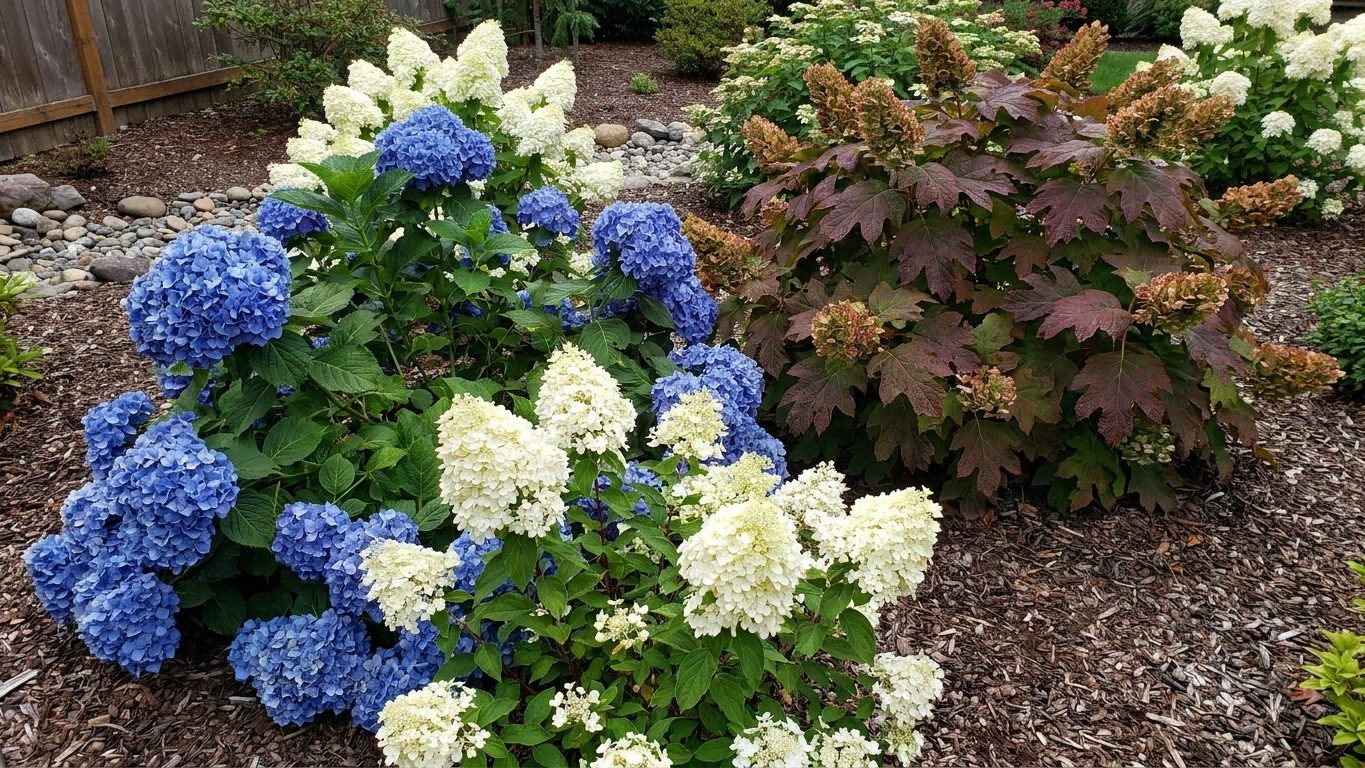
Panicle and smooth hydrangeas grow well across New Hampshire, including around Concord, where winters test the state’s USDA zone 3b to 6a range. Both bloom on new wood, so a hard freeze that kills the buds doesn’t erase the season. Bigleaf and mountain hydrangeas struggle here unless the yard sits in a sheltered pocket near the coast or a large lake.
Hydrangeas that grow well in New Hampshire: The Short Answer
The USDA Plant Hardiness Zone Map puts New Hampshire between zone 3b and 6a, with Concord itself sitting in the milder end of that range. That spread decides which hydrangea species make sense here more than soil type or sun exposure ever will. The six below run from safest bet to genuine gamble for a typical New Hampshire yard.
Panicle hydrangea

This is the one nearly every New Hampshire nursery pushes toward first-time buyers, and for good reason. It blooms on new wood each summer, so winter dieback never costs you the flowers. It tolerates more sun and colder ground than any other hydrangea sold in the state.
Smooth hydrangea

Native to the eastern woodlands and often sold as ‘Annabelle’ types, this species dies back hard some winters and simply regrows from the base each spring. It blooms on new wood too, which makes it nearly foolproof through a Concord winter. It prefers a bit more shade than panicle types.
Climbing hydrangea

Slow to establish, sometimes taking three or four seasons before it flowers at all, but once rooted it handles New Hampshire cold without much complaint. It clings to brick, stone, or a sturdy trellis and rewards patience with lacy white blooms in early summer. Not a shrub for anyone in a hurry.
Oakleaf hydrangea

This one holds up fine in the warmer pockets of southern New Hampshire but gets iffy farther north or at elevation. Its flower buds form on old wood, so a severe winter can wipe out the coming season’s show even while the plant itself survives. Site it against a wall for extra warmth.
Mountain hydrangea

A close cousin of bigleaf that’s marketed as slightly hardier, mountain hydrangea still sets most of its buds on old wood. In a typical New Hampshire winter those buds often don’t make it, leaving a healthy plant with few or no blooms. Some newer rebloomers hedge that bet a little.
Bigleaf hydrangea

This is the classic mophead sold in every big-box garden center each spring, and it’s the riskiest choice on this list for New Hampshire. Its buds form on old wood the previous fall, and this state’s winters kill them often enough that many gardeners get leaves but no flowers most years.
New Hampshire — the year and the numbers
- State
- New Hampshire
- USDA zones
- 3b-6a
- Last spring frost
- April 16 to April 27
- First fall frost
- October 13 to October 26
- Annual rain
- 40 in
- Lawn zone
- cool-season
- Source
- NOAA NCEI U.S. Climate Normals 1991-2020, 32F freeze probabilities · Manchester
How to Work Out the Dates for Your Own Yard
Your own yard rarely matches the airport weather station exactly, so treat the numbers below as a starting point you adjust after a season of watching your own ground.
NOAA NCEI U.S. Climate Normals puts Concord’s last spring frost between April 16 and April 27, and its first fall frost between October 13 and October 26. Everything else works backward or forward from that window.
- Mark your last spring frost window: count on soil staying cold into late April here, so don’t rush new-wood hydrangeas into the ground before that window closes.
- Mark your first fall frost window: October 13 to October 26 is when you stop feeding and start thinking about winter protection for old-wood types.
- Fertilize on the state’s rhythm: feed in March, May, and July, then stop, so soft new growth isn’t still forming when the fall frost window opens.
- Plant inside the safe windows: April, May, August, and September give roots enough warm soil to settle before either frost date arrives.
- Prune bigleaf only in June or July: prune earlier or later and you risk cutting off next year’s flower buds before they’ve even set.
- Walk your own yard for a week: a low spot or a north wall can run a full zone colder than your neighbor’s yard even inside the same 3b to 6a range.
A smooth hydrangea shrugs off a late frost because it blooms on new wood that hasn’t even emerged yet. A bigleaf planted in that same spot can lose an entire season’s buds to the same night, which is the whole case for choosing new-wood types first in this state.
New Hampshire North to South: How the Dates Shift
Elevation and distance from water move these dates around more than latitude does in a state this size.
- The North Country (Coos County, the White Mountains): frost can linger into late spring and return early in fall, pushing every date earlier in fall and later in spring.
- The Lakes Region (Belknap and Carroll counties): large bodies of water hold heat into fall, which buys old-wood bloomers a few extra weeks before the first hard freeze.
- The Seacoast (Rockingham County, coastal towns): the Atlantic moderates both ends of the season, giving bigleaf and oakleaf their best odds anywhere in the state.
- The Merrimack Valley and South (Hillsborough and Merrimack counties, near Concord): this is the reference zone for the dates, and the mildest ground the state has to offer inland.
Check the state guide for the frost and pruning windows that match the county you actually garden in, since a single statewide number never fits a place with mountains, lakes, and coastline this close together.
Mistakes New Hampshire Punishes
Pruning bigleaf in fall
Cutting back a mophead after the leaves drop feels tidy, but it removes the old wood carrying next year’s flower buds. Prune bigleaf only in June or July, right after it finishes its first flush, and check the calendar page before you reach for shears in October.
Planting outside the safe windows
A hydrangea set into the ground in late June or October rarely builds enough root before extreme heat or hard frost arrives. Stick to April, May, August, or September so roots have real time to establish before either stress hits.
Skipping winter protection on old-wood types
Leaving a bigleaf or mountain hydrangea bare through a Concord winter all but guarantees a bud-free summer. Mound mulch over the crown before the ground freezes, or skip the gamble entirely and plant a panicle or smooth hydrangea instead, covered on the which-ones-hold-up page.
New Hampshire Extension Offices and County Contacts
The state’s 3b to 6a range is only a starting point. Your county extension office knows the frost pockets, soil types, and local pest pressure that no statewide map can capture.
- Your state page: the frost dates and the pruning window where you live.
- UNH Extension: county contacts and soil test kits for the ground you’re actually planting into.
- What goes wrong here: the pests and problems New Hampshire growers report most often.
Call before you plant if you’re within a season of your first hard frost, since a county agent can tell you in a five-minute conversation whether your particular yard runs closer to zone 3b or zone 6a.
Common questions
Can bigleaf hydrangeas survive winter in New Hampshire?
Some do, especially in sheltered spots near the Seacoast or a large lake, but most New Hampshire winters kill the old-wood flower buds even when the plant itself lives. Panicle and smooth hydrangeas are the safer bet for reliable blooms.
What is the best hydrangea for New Hampshire’s cold winters?
Panicle hydrangea handles the state’s 3b to 6a range with the least fuss, since it blooms on new wood that grows fresh each spring regardless of how hard the previous winter hit.
When should I plant hydrangeas in New Hampshire?
Plant in April, May, August, or September, giving roots time to settle into warm soil before the last spring frost or the first fall frost arrives.