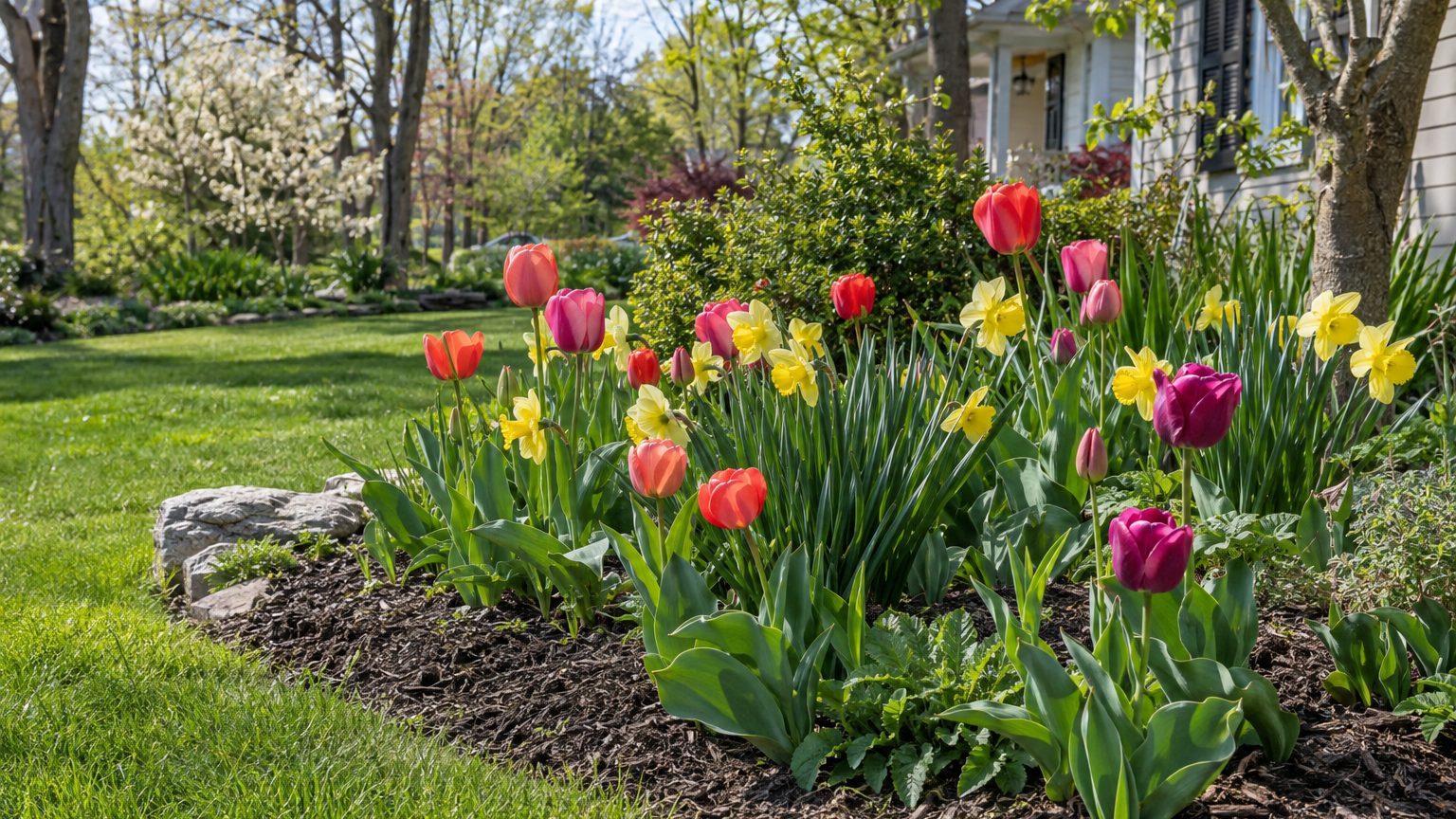
Green spears push through the cold soil along the south side of the house, and soon the first flowers open in the beds. In New Brunswick, tulips and daffodils flower in spring, with the exact week set by how quickly your yard warms.
When Do Tulips and Daffodils Bloom in New Brunswick?

Tulips and daffodils bloom in April and May in New Brunswick, and the hardiest early bulbs can open as soon as March. The dates follow the nearest comparable climate, so confirm local timing with a garden centre, a garden society or the provincial gardening groups.
Bulbs flower when the soil and air warm, not on a fixed date. A mild spring pulls the show forward, and a cold, late one holds it back.
| Bulb | When it blooms in New Brunswick | What sets the timing |
|---|---|---|
| Snowdrops and winter aconites | From March, at the start of the spring bulb season | The first stretch of spring warmth |
| Early hardy daffodils | March into April | Hardiness of the variety and how early the ground thaws |
| Later daffodils and tulips | Late April and May | Variety, plus how fast spring warms your yard |
| Alliums | At the end of the spring bulb season | Needs winter cold to bloom |
Crocus and hyacinths also follow the warming of spring. Plan on the same rhythm: a long succession of flowers, starting with snowdrops and winter aconites and finishing with alliums. Mixing early and late varieties of tulips and daffodils stretches the color across both months instead of squeezing it into a single burst.
New Brunswick — the year and the numbers
- State
- New Brunswick
- Hardiness zones
- 5a
- Last spring frost
- May 23
- First fall frost
- October 2
- Annual rain
- 47 in
- Lawn zone
- cool-season
- Source
- Environment and Climate Change Canada — Canadian Climate Normals 1981-2010, station MONCTON · Moncton
How to Tell Your Bulbs Are About to Bloom
The bulbs announce themselves well before the first petal opens, and a walk along the beds on a mild afternoon will tell you more than the calendar.
- Green tips poking through the soil or mulch mean the bulb has had its winter cold and is awake, so pull back any heavy leaf litter that might smother them.
- Leaves that stand several inches tall show the plant is feeding itself, which means the flower stalk is on its way up from the center.
- A fat, closed bud rising from between the leaves means the bloom is close, and a hard frost at this stage is worth covering for if you can.
- Buds that show a stripe of color through the green sheath are only a short time from opening, which is the moment to enjoy them rather than fuss over them.
- Leaves with no bud at all usually point to a bulb that is too young, too shaded or worn out, and tulips are the likeliest to do this because they tend to be short-lived.
Bulbs on the sunny south wall of the house wake first, so you can use them as an early warning for the rest of the yard.
What to Do After Tulips and Daffodils Bloom in New Brunswick
Snip off the faded flowers and leave everything else alone. Removing only the spent blooms keeps the plant from spending energy on seed, while the leaves stay on and keep working.
Those leaves feed the bulb for next year’s flowers, so they stay on the plant until they turn yellow and then brown. Do not cut them back while they are green, and do not braid or tie them into neat bundles, since that cuts down the surface they use to gather light. A sprinkling of later perennials or annuals nearby will hide the ripening foliage.
Expect different staying power from each bulb. Daffodils last longer and are the more dependable perennial, returning and spreading year after year. Tulips are often short-lived in the garden, so plan to top up the planting now and then. Fosteriana tulips are a group known to perennialize well.
How Bloom Time Shifts Across New Brunswick
New Brunswick is not one climate, and the same bulb can flower noticeably earlier or later depending on where in the province you garden.
- Saint John River Valley: Inland yards around Fredericton warm up sooner than the coast, so bulbs here tend to open ahead of those on the Fundy shore.
- Bay of Fundy coast: Cool water holds spring back in places like Saint John, so expect bloom to arrive a little later than in sheltered spots inland.
- Moncton and the southeast: This is the area the province’s spring frost reference comes from, with a mean last frost on May 23, so treat it as the midpoint of a risk window and not a safe planting date.
- Edmundston and the northern uplands: Higher and colder ground runs further behind, and tulips and daffodils here bloom toward the later side of the season.
Watching your own yard from year to year gives you a better guide than any regional average.
Where to Get Bulb Advice in New Brunswick
Canada has no county extension offices, so help comes from federal and provincial agriculture departments, local gardeners and nurseries. Agriculture and Agri-Food Canada is the federal starting point, and the provincial agriculture department covers the province.
- Local garden centres can tell you which varieties do well in your town and are worth a visit in early fall, when bulbs are in stock.
- Garden societies and master gardener groups can share what blooms when in your area, and spring is the best time to attend a meeting or walk a member’s garden.
- The provincial agriculture department can answer broader questions about growing conditions, so contact it before you plan a large planting.
Common Questions
What If Bulbs Are Still in the Bag in Late Fall?
Plant them as soon as the ground can be dug. October is the usual month so roots form before the ground freezes, and November or December works if the soil is not frozen. Soil cooled below about 60°F (about 16°C) keeps bulbs from sprouting too early. A bulb planted late is better off than one stored over winter.
Do Deer and Squirrels Eat Tulips and Daffodils?
Voles, squirrels, rabbits and deer eat tulips and crocus, while daffodils are left alone. If animals are a problem in your yard, daffodils are the safer choice, and they can even help protect more tempting plants nearby.
How Much Winter Cold Do Bulbs Need to Flower?
Most spring-flowering bulbs need about 12 to 16 weeks of cold to bloom, and a New Brunswick winter supplies that on its own. According to Iowa State University Extension, alliums need the cold of winter to bloom, like other spring-flowering bulbs.