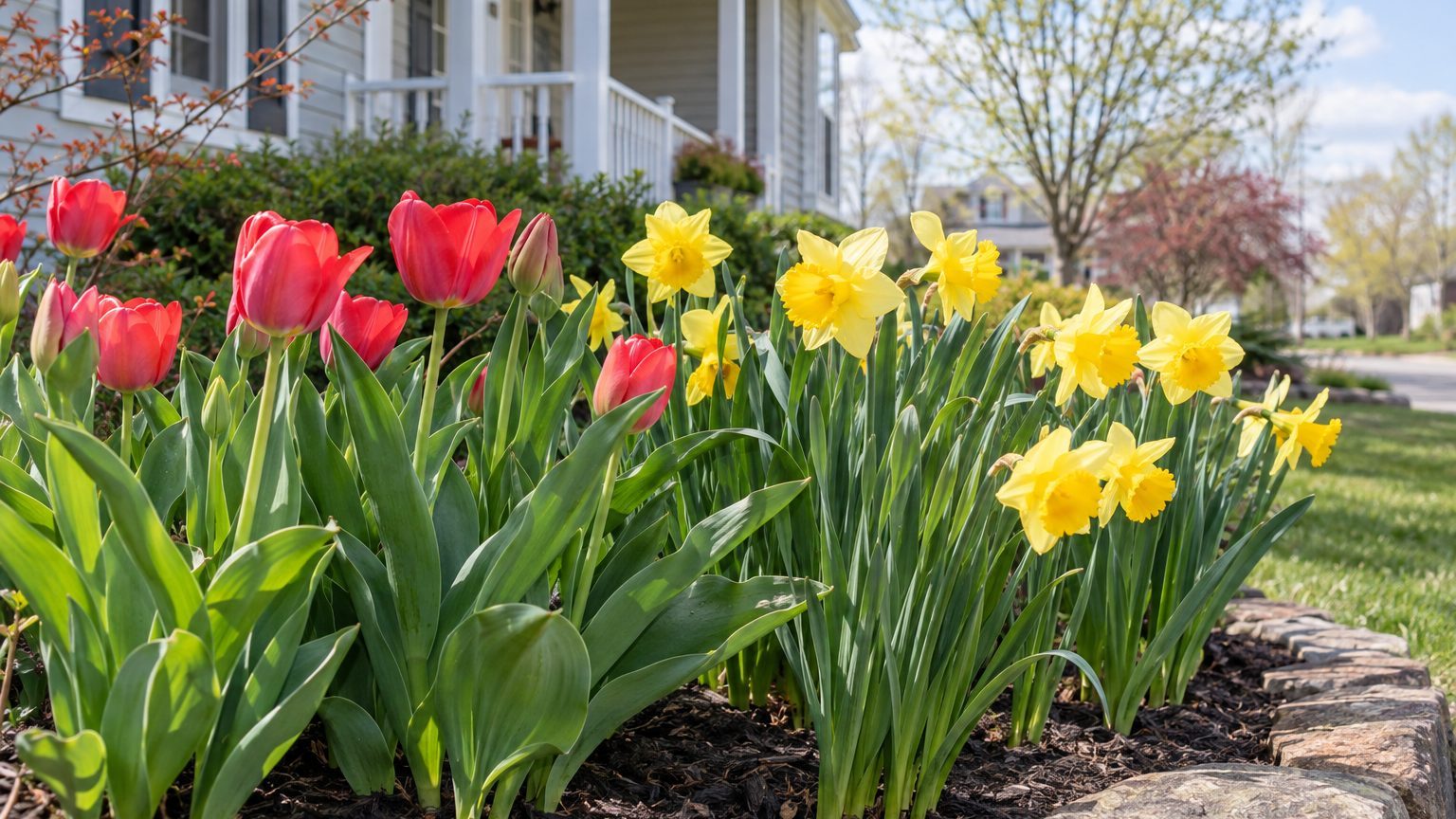
A drift of daffodils nodding beside the front steps, long after the snow has gone, is the picture most gardeners in New Brunswick want. Bulbs go in the ground in fall and do their work through a long, cold winter.
Best Spring Bulbs to Grow in New Brunswick

Daffodils, fosteriana tulips and alliums suit New Brunswick well, and crocus can work if animals leave them alone. Most spring-flowering bulbs need about 12 to 16 weeks of cold to flower. Planting happens in October, once the soil has cooled below about 16°C (60°F), so roots form before the ground freezes without the bulbs sprouting early.
Daffodils
Daffodils are the dependable perennial bulb here. They last longer in the garden than tulips and keep returning with little fuss.
Voles, squirrels, rabbits and deer leave them alone. They also naturalize well, especially in partly shady spots under trees or along a fence line.
Fosteriana Tulips
Most tulips fade after a few seasons, but fosteriana tulips perennialize well. If you want tulip color that comes back, this group is the one to look for.
Plant them in October with the other fall bulbs, in a spot where animals are less likely to dig.
Alliums
According to Iowa State University Extension, alliums, the ornamental onions, need the cold of winter to bloom. That takes pressure off the timing if a cold snap arrives early or the planting window runs late.
Their onion scent also makes them less appealing to most nibblers than tulips.
Crocus
Crocus belong in a New Brunswick bulb mix, but voles, squirrels, rabbits and deer eat them along with tulips. Where animals visit often, plant crocus close to the house or among daffodils.
Leave the leaves in place after the flowers fade until they turn brown, since they feed next year’s bloom.
New Brunswick — the year and the numbers
- State
- New Brunswick
- Hardiness zones
- 5a
- Last spring frost
- May 23
- First fall frost
- October 2
- Annual rain
- 47 in
- Lawn zone
- cool-season
- Source
- Environment and Climate Change Canada — Canadian Climate Normals 1981-2010, station MONCTON · Moncton
How to Choose Spring Bulbs for Your New Brunswick Garden
Start with the conditions you actually have. New Brunswick sits in Canadian hardiness zone 5a for the reference city, a rating that does not convert to a USDA zone. Winters are cold enough to satisfy most bulbs, so your choice comes down to animals, light and how long you want the planting to last.
| Your situation | What suits it in New Brunswick | Why |
|---|---|---|
| Cold winters and snow cover | Most spring bulbs, including tulips and hyacinths | Winter supplies the 12 to 16 weeks of cold they need, so no refrigerator chilling is required |
| Deer, voles, squirrels or rabbits visiting | Daffodils | Animals leave them alone, while tulips and crocus get eaten |
| Partly shady beds | Daffodils | They naturalize well in partial shade |
| Bulbs that should return for years | Daffodils and fosteriana tulips | Daffodils outlast tulips, and fosteriana tulips perennialize well |
| Unsure about the cold or the timing | Alliums | They need the cold of winter to bloom. |
| Unplanted bulbs still in the bag | Plant them as soon as the ground can be dug | Late planting beats storing them over winter |
Daffodils can also serve as deer training plants, placed beside tender plants that deer like to browse.
Which Spring Bulbs Suit Different Parts of New Brunswick
The province is not one climate, and the choice of bulbs shifts a little between its southeast and its north.
- Moncton and the southeast: Tulips, daffodils and alliums all have room to work here. The average last spring frost at Moncton is May 23, which is the midpoint of the frost window and not a safe date, because in one year out of two frost falls later.
- Northern New Brunswick: Districts here run behind Moncton in spring and take their cold harder. Lean on daffodils, which are the more reliable perennial bulb, and treat tulips as a bonus that may fade sooner.
The planting months in this guide follow the nearest comparable climate, so confirm local timing with a local garden centre, a garden society or the provincial gardening groups.
Spring Bulb Buying Mistakes to Avoid in New Brunswick
Planting Too Early
Bulbs set in the ground while the soil is still warm can sprout in fall, and that soft growth gets caught by winter. Wait until the soil has cooled below about 16°C (60°F).
October is the month to aim for, so the roots settle before the ground freezes.
Cutting the Leaves Too Soon
Tidy gardeners often braid or snip the foliage once the flowers are done. That starves the bulb, because the leaves are feeding it for next year’s bloom.
Remove only the faded flowers, and let the leaves stay until they turn brown.
Counting on Tulips Alone
Tulips are often short-lived in the garden, and voles, squirrels, rabbits and deer all eat them. A bed planted only with tulips can empty out fast.
Mix in daffodils for the long haul, and choose fosteriana tulips if you want tulip color that returns.
Where to Get Spring Bulb Advice in New Brunswick
Canada has no county extension offices, so local help comes from other places. For provincial gardening guidance, Agriculture and Agri-Food Canada is the federal starting point.
- A local garden centre can tell you what has done well in nearby yards, and early fall is a good time to ask.
- A garden society or master gardener group can confirm planting timing for your own district before October arrives.
- Bring a photo of your planting bed and a note on its light, and ask which bulbs to start with.
Common Questions
Can You Plant Spring Bulbs in November or December in New Brunswick?
Yes, as long as the ground is not frozen. Late November or early December works as a fallback when October slipped by. A bulb still in the bag does better planted late than stored over winter, so dig as long as the soil allows.
When Do Tulips and Daffodils Bloom in New Brunswick?
Expect flowers in April and May. The hardiest early bulbs can open from March, and the later ones carry on into late April and May.
Can Daffodils Protect Other Plants from Deer?
They can help. Daffodils work as deer training plants, so setting them around tender plants that deer love may discourage browsing.