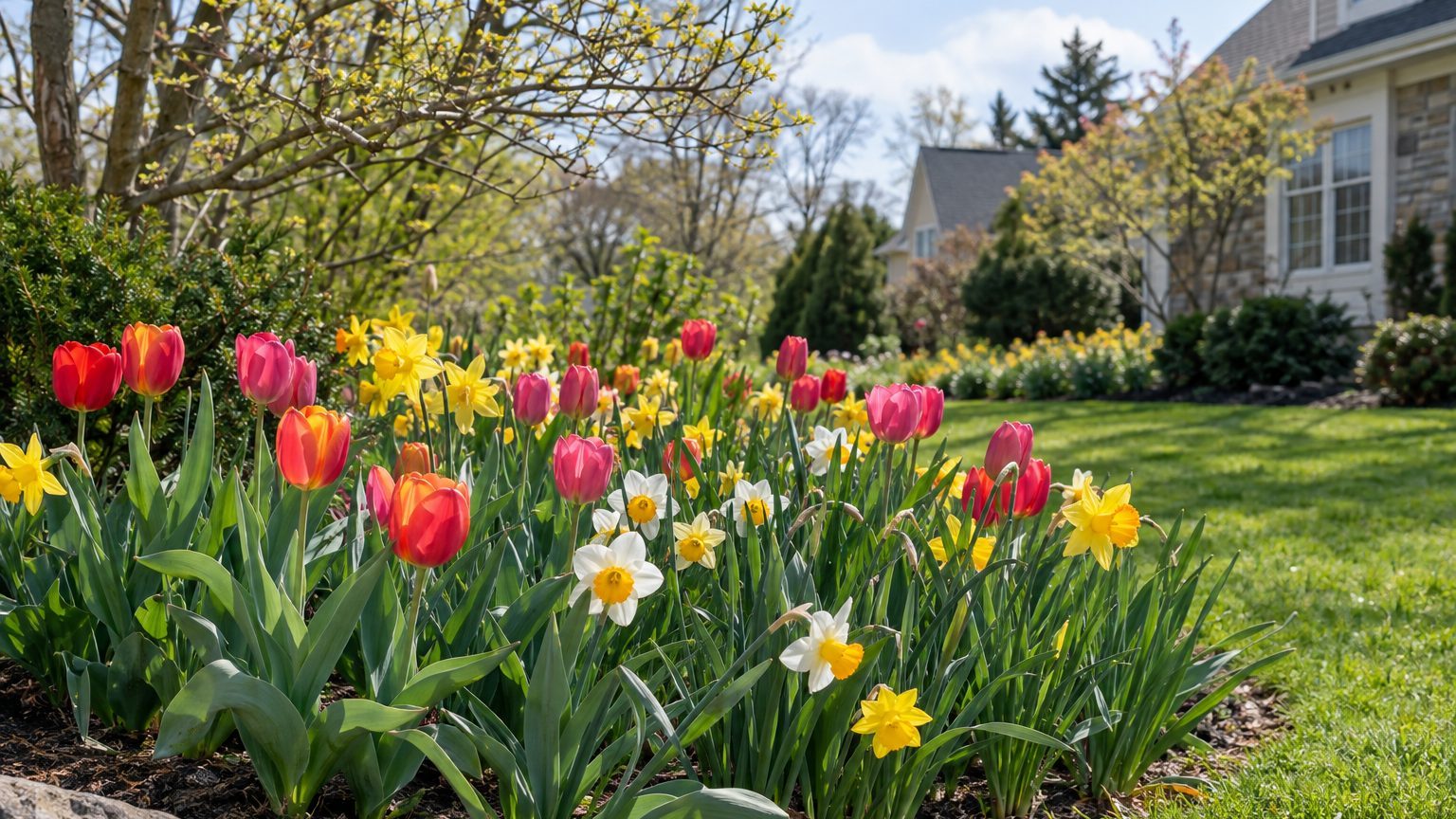
Snow still lingers when the first green spears push up through the cold soil, and soon the beds fill with color. In Nova Scotia, tulips and daffodils open in April and May, with the hardiest bulbs starting in March. Where you live in the province nudges that window earlier or later.
When Do Tulips and Daffodils Bloom in Nova Scotia?

Tulips and daffodils bloom in April and May in Nova Scotia, and the earliest hardy bulbs can open in March. Nova Scotia has no local bulb timing page of its own, so these months follow the nearest comparable climate. A local garden centre, garden society or provincial gardening group can confirm timing for your town.
| Bulb | When it blooms in Nova Scotia | What sets the timing |
|---|---|---|
| Snowdrops and winter aconites | From March | First warming of the soil after winter |
| Tulips and daffodils | April and May | Spring warmth and the cold the bulbs received over winter |
| Later tulips and daffodils | Late April and May | Slower warming of the ground, so buds open later |
Crocus, hyacinths and alliums fill in around those windows, with alliums closing the season after the tulips. Bloom follows how fast spring warms, not a fixed date on the calendar. In Halifax the last spring frost falls on average on May 7, which means in one year out of two it arrives later, so open flowers can meet a cold night.
Nova Scotia — the year and the numbers
- State
- Nova Scotia
- Hardiness zones
- 6b
- Last spring frost
- May 7
- First fall frost
- October 18
- Annual rain
- 55 in
- Lawn zone
- cool-season
- Source
- Environment and Climate Change Canada — Canadian Climate Normals 1981-2010, station HALIFAX STANFIELD INT'L A · Halifax
How to Tell Your Bulbs Are About to Bloom
The bulbs announce themselves well before the first petal, and each stage tells you something useful.
- Green tips poking through the soil mean the bulb has woken up, so pull back any heavy mulch and let the shoots reach the light.
- Leaves that stand a few inches (several centimeters) tall and look sturdy and blue-green suggest the plant is on track and needs nothing from you.
- A bud rising from the center of the leaves tells you the flower is formed and only waiting for warmer days.
- A bud that begins to show color at the tip means bloom is close, and a cold snap now is worth watching for.
- Foliage that nibbled or snipped off at the top points to hungry animals, which matters most for tulips.
If shoots appear in a mild spell and then freeze back at the tips, the bulb is usually fine, because the flower bud sits low and protected.
What to Do After Tulips and Daffodils Bloom in Nova Scotia
Snap off the faded flowers and leave everything else alone. Tulips and daffodils make next year’s flower from the energy their leaves collect after bloom, so the leaves stay on the plant until they turn brown. Do not braid, tie or cut them while they are green, even when they look untidy.
Planting the bulbs among perennials that leaf out later helps, since the new growth hides the fading foliage. Once the leaves have yellowed and browned, they lift away with a gentle tug.
Expect the two bulbs to behave differently over the years. Tulips are often short-lived in the garden, while daffodils last longer and are the more reliable perennial bulb. Fosteriana tulips are a group that perennializes well, so they are worth a look if you want tulips to return. Daffodils also naturalize well in partly shady spots.
How Bloom Time Shifts Across Nova Scotia
Nova Scotia is a long, narrow province surrounded by ocean, and the water slows spring along the shore. Gardeners in the province’s northern and upland districts run behind the Halifax calendar, while sheltered ground can move a little ahead of it.
- Halifax and the Atlantic coast: The cold ocean holds spring back, so bloom here tends to arrive a little later than inland, and cold, foggy days can stretch the flowering.
- Annapolis Valley: Sheltered from the open coast, the valley warms more readily, and bulbs here tend to open earlier than along the shore.
- Cape Breton: Spring comes later on the island and in its higher ground, so expect tulips and daffodils to flower behind those in the south.
Your own garden counts as well. A south-facing wall, a spot against the house or a windy open lawn can shift bloom more than a few miles of distance.
Where to Get Bulb Advice in Nova Scotia
Canada has no county extension office, so local bulb advice comes from the province, from gardeners nearby and from the people who sell the bulbs.
- The Nova Scotia Department of Agriculture is the provincial starting point for growing guidance, and a visit before fall planting gives you time to ask questions.
- A local master gardener group or garden society can tell you how bloom runs in your own town, and spring meetings are a good moment to compare notes.
- A neighborhood garden centre can confirm which varieties suit your area, so ask there before you buy in fall.
Common Questions
When Should You Plant Tulips and Daffodils in Nova Scotia?
October is the month to aim for, so the roots form before the ground freezes. November and December also work if the soil is not frozen. Plant once the soil has cooled below about 16°C (60°F), early enough for roots and late enough that the bulbs do not sprout in fall.
Will Deer and Squirrels Eat Your Bulbs?
Voles, squirrels, rabbits and deer eat tulips and crocus, while daffodils are left alone. Planting daffodils around tulips can help protect the more tempting bulbs, and daffodils are even used as training plants to steer deer away from favorites.
Can You Still Plant a Bulb That Stayed in the Bag?
Yes. A bulb that is still in the bag is better planted late than stored over the winter, so plant as long as the ground can be dug.