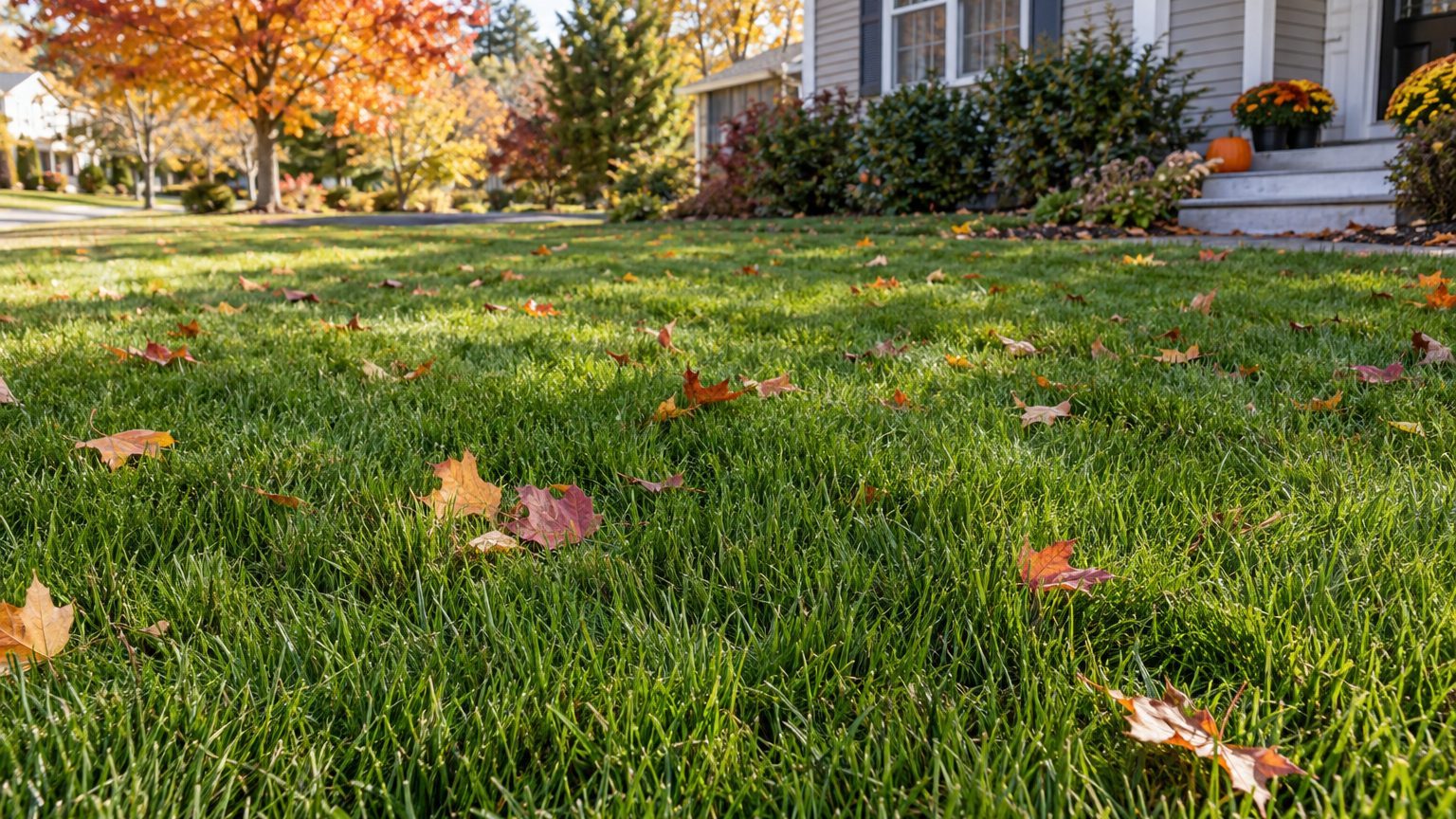
A lawn in New Brunswick spends a long stretch under snow, wakes slowly in a cool spring, and does its best work when summer fades into autumn. That rhythm sets the whole New Brunswick lawn care schedule. Feeding, seeding and aerating cluster in late summer and early fall, while spring is mostly for mowing and weed prevention.
What to Do Each Month in a New Brunswick Lawn
Cool-season grasses carry the province, so the work leans toward late summer. The months below are the ones that suit each task, with fallback timing noted where it applies.
| Month | In the lawn |
|---|---|
| January | Rest. The grass is dormant under snow and ice, so keep heavy foot traffic and piled shoveled snow off it where you can. |
| February | Rest. Nothing is growing, and nothing you spread will do any good on frozen ground. |
| March | Still dormant. As snow melts, stay off the soggy turf so you do not crush crowns and compact the soil. |
| April | The first light mow works in April once the grass has clearly started to grow. Cut high and skip any task that needs warm soil. |
| May | Put down crabgrass preventer now, before the weed seed sprouts. Mowing starts in earnest. If you missed fall, May also works for aeration, feeding and seeding, though young grass faces the last frosts. |
| June | Mow regularly and water during dry spells. |
| July | Peak heat. Water deeply when rain falls short, and mow without scalping the turf. |
| August | Dethatch if the thatch layer is thick, and start seeding thin patches. Keep watering and mowing. |
| September | The busiest month: aerate, feed, seed and dethatch while soil is warm and nights are cool. Mowing continues. |
| October | Keep mowing until growth stops. If you missed September, October still works for feeding, which helps roots store energy for winter. |
| November | Make the last cuts of the year. Seed laid on cold soil this month sits dormant and sprouts in spring. |
| December | Rest. The grass is dormant again, and a clean, leaf-free surface going into winter is all it needs. |
If you can only manage a few jobs, do the late-summer ones. In September, combine aerating, feeding and overseeding when a thin lawn needs those jobs.
New Brunswick — the year and the numbers
- State
- New Brunswick
- Hardiness zones
- 5a
- Last spring frost
- May 23
- First fall frost
- October 2
- Annual rain
- 47 in
- Lawn type
- cool-season
- Source
- Environment and Climate Change Canada — Canadian Climate Normals 1981-2010, station MONCTON · Moncton
When Does the Lawn Season Start and End in New Brunswick?
Grass wakes up when the soil warms, not when the calendar says spring. Cool-season grasses germinate and grow best when soil sits between 10 to 18 °C (50 to 65 °F), a band New Brunswick lawns reach in late spring and again in late summer and early fall.
Frost dates only tell you when a young seeding is at risk. In Moncton, the last spring frost falls on average around May 23, which means in one year out of two it comes later. Treat that as the middle of a window, not a safe date, and wait before tender seedlings go out in May.
In the fall, the first frost arrives on average around October 2 in Moncton, and half of years it comes later. That is why seed sown in August and September has time to root first. Northern and upland districts run behind Moncton, so shift your own timing accordingly.
How the Lawn Calendar Shifts Across New Brunswick
The province is not one climate, and a few places pull the timing earlier or later.
- Saint John River Valley: Around Fredericton, the soil warms sooner and holds summer heat longer, so spring mowing starts earlier and fall seeding has a generous runway.
- Bay of Fundy coast: Fog and cold water keep spring slow in Saint John and nearby, but summers stay mild and the lawn suffers less heat stress.
- Southeast and Northumberland Strait shore: Around Moncton and Shediac, the calendar matches the main schedule closely, with warmer summer soil than the Fundy side.
- Madawaska and Restigouche in the north: Edmundston and Campbellton wake later and cool earlier, so favor the early end of the late-summer seeding window.
Watch your own grass and soil, and let the nearest of these places guide how far you nudge each month.
Lawn Care Timing Mistakes to Avoid in New Brunswick
Seeding Too Late

Seed sown in October has little time to root before the ground freezes, and thin, shallow seedlings may heave or die over winter. Do the main seeding in August and September. If you miss it, seed on cold soil in November and let it sprout in spring.
Crabgrass Preventer After Sprouting
Preventer works by stopping seeds as they germinate, so applied once crabgrass is up, it does almost nothing. Spread it in May. Keep in mind it also blocks grass seed, so do not overseed the same spot that season.
Dethatching in Spring
Raking out thatch while the lawn is cold and still waking stresses grass that cannot recover quickly, and it invites weeds into bare soil. Wait for August or September, when growth is strong and any gaps fill in fast.
Where to Get Lawn Advice in New Brunswick
Canada has no county extension offices, so local advice comes from a few other places. Useful starting points include the provincial agriculture ministry, a local master gardener group, and a nearby garden centre.
- The federal department Agriculture and Agri-Food Canada offers general guidance, and the provincial ministry covers questions specific to New Brunswick.
- A local master gardener group can speak to your town’s soil and weather, so ask in early spring before the season gets busy.
- A garden centre can match seed blends and fertilizer to the month you are in, so visit in August before seeding.
Common Questions
How Can You Tell Dormant Grass from Dead Grass in Spring?
Check how firmly the grass is rooted and look at its base. Dormant grass pulls up hard when you tug it and shows a pale green or white base at the crown. Dead grass lifts easily with dry, brittle roots, and it stays brown long after the neighbors’ lawns have greened up.
Should You Bag Clippings in New Brunswick?
Usually not. Short clippings left on the lawn break down quickly and return nutrients to the soil. Bag them only when the grass is very long or wet and the clippings would lie in clumps.
Does Canadian Hardiness Zone 5a Matter for a Lawn?
Moncton sits in zone 5a in the Canadian system, which is not a USDA zone and does not convert to one. It matters more for shrubs and perennials than for grass. For turf, soil warmth and the grass type you grow decide the timing.