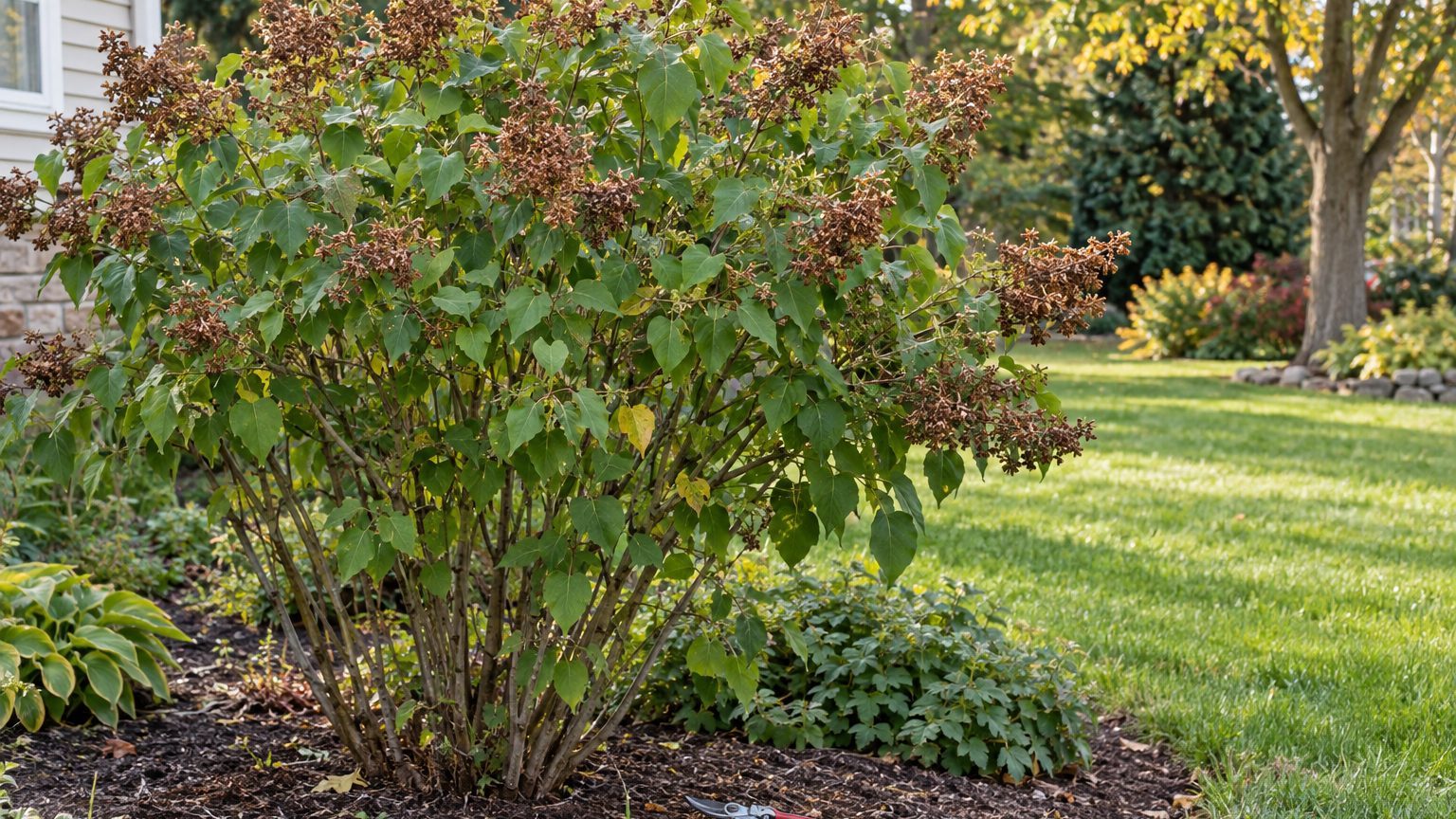
Lilac clusters turn brown and dry on the shrub soon after flowering, and that is the moment the pruning shears come out. In New Brunswick, the job belongs in late spring, right after the last flowers fade. Cut then and next year’s blooms stay on the plant.
When to Prune Lilacs in New Brunswick

Prune lilacs right after the flowers fade, which usually means May and into June. New Brunswick has no local lilac timing page, so these months follow the nearest comparable climate. Confirm local timing with a garden centre, a garden society or a provincial gardening group.
| Type of pruning | When in New Brunswick | Why |
|---|---|---|
| Routine upkeep: spent flowers, weak or crossing stems, suckers | May into June, right after the flowers fade | Next year’s flower buds form soon after bloom, so cutting later removes them |
| Hard renovation cut of an overgrown lilac | March into April, while the shrub is dormant | Lets an old, tall shrub renew itself, at the price of flowers for a few years |
Prune lilacs right after the flowers fade. The late-winter renovation cut is a last resort for shrubs that have grown leggy and bare at the base, because it gives up the next flowers.
Lilacs also need a real winter rest to mature their flower buds. In Moncton, the Canadian hardiness zone is 5a, a system that does not convert to a USDA zone, and lilacs are comfortable in that kind of cold.
The average last spring frost at Moncton falls on May 23, which means frost arrives later than that in one year out of two. That date marks frost risk for tender growth. It does not set the day to prune, which follows the flowers, not the frost.
New Brunswick — the year and the numbers
- State
- New Brunswick
- Hardiness zones
- 5a
- Last spring frost
- May 23
- First fall frost
- October 2
- Annual rain
- 47 in
- Lawn zone
- cool-season
- Source
- Environment and Climate Change Canada — Canadian Climate Normals 1981-2010, station MONCTON · Moncton
How to Tell When Your Lilacs Are Ready to Prune
Lilacs in a cold spring can bloom later than the calendar suggests, so the shrub itself is the better clock.
- Flower clusters that have turned brown and dry mean the show is over and the shrub is ready for the shears.
- Petals dropping and covering the ground below tell you the bloom has finished, and the clusters can come off.
- Next year’s buds are already forming on the new growth, which is why pruning has to follow the bloom closely.
- A shrub with a few flowers still open is not ready, so wait until the last clusters on it fade.
- Later flowering types can carry blooms into June, and their pruning moves back to match.
If the flowers on your shrub have faded, the window is open, and it narrows as summer goes on.
Should You Prune Lilacs in Fall or Winter in New Brunswick?
No. A lilac blooms on last year’s wood and sets next year’s flower buds in summer, so cutting in late summer, fall or winter removes the flowers you are waiting for. A shrub pruned in November can look neat and then bloom thinly or not at all.
The one exception is the hard renovation cut of an overgrown lilac, done while the plant is dormant in March or April. It sacrifices the next flowers on purpose, and the shrub will not flower for a few years afterward.
For a lilac that is simply getting big, use the post-bloom cut in May or June instead and keep the flowers coming.
How Lilac Pruning Time Shifts Across New Brunswick
New Brunswick runs from a sheltered river valley to a cool coast and a colder north, and the bloom, and with it the pruning, moves with that.
- Saint John River Valley: Spring tends to arrive earlier here, around Fredericton, so lilacs here fade sooner and pruning can start earlier in the May to June window.
- Bay of Fundy coast: Cool, foggy spring weather holds the bloom back, so wait for the flowers to fade and not for a date on the calendar.
- Northern New Brunswick, including Restigouche and the Edmundston highlands: Spring comes later, the frost date runs behind that of Moncton, and pruning shifts toward the later part of the window.
Everywhere in the province, the rule is the same: watch the flowers on your own shrub.
Where to Get Lilac Advice in New Brunswick
Agriculture and Agri-Food Canada offers general guidance, and the province’s agriculture ministry is the provincial contact.
- A local garden centre can tell you how lilacs are flowering in your area, so ask in spring before you cut.
- A garden society or master gardener group can show you local shrubs and confirm timing, and its spring meetings are a good moment to ask.
- Check the provincial agriculture ministry’s website for gardening guidance, then walk out to the shrub and look at the flowers before you prune.
Common Questions
Can You Prune Lilacs in June in New Brunswick?
Yes, June is still inside the window, especially for later flowering types that bloom into that month. Cut once the last clusters on your shrub have faded, and keep the job to the same light shaping.
Why Didn’t Your Lilac Bloom After Pruning?
Look for these signs together. If the shrub was cut in late summer, fall or winter, the flower buds went with the cuttings. If it was cut hard in March or April, it will not flower for a few years. Heavy shade is another cause, since lilacs want a sunny spot with good air circulation.
Do Lilacs Grow Well in New Brunswick?
They do well in cold winters, because the chill is what matures their flower buds. Hot, humid summers are what lilacs struggle with, so give them sun and open air around the shrub.