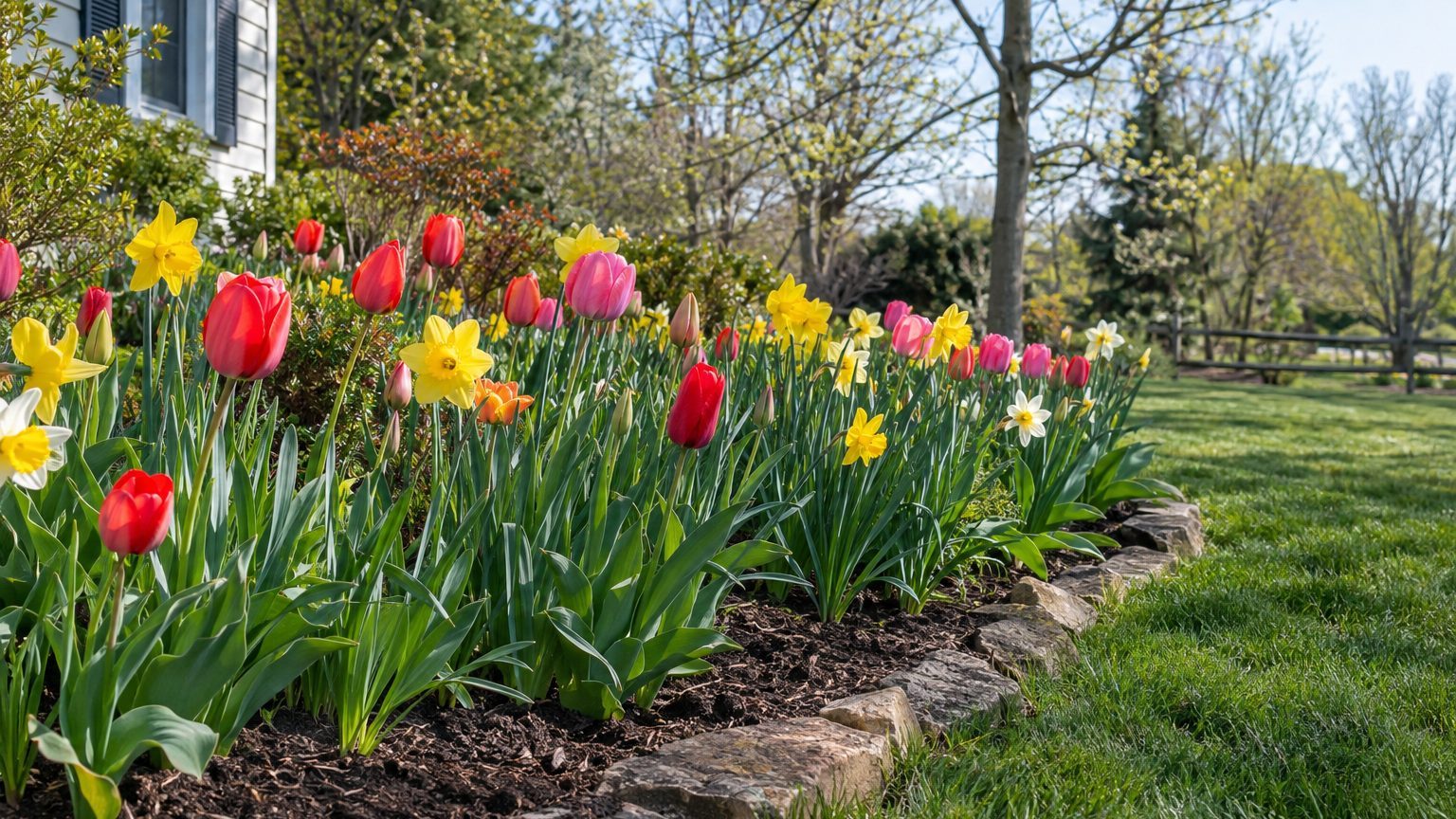
Green spears pushing up through cold mulch are the first sign that spring bulbs are awake, and they often show before winter has fully let go. The months for tulips and daffodils, and the care around them, depend on how spring warms up.
When Do Tulips and Daffodils Bloom in Iowa?

Tulips and daffodils bloom mostly from April through May, and some daffodils open as early as late February. The shoots usually break the ground in March or early April, so a mild late winter pulls everything forward.
| Bulb | When it blooms in Iowa | What sets the timing |
|---|---|---|
| Daffodils | Late February into May | Variety, and how soon spring warms after the shoots emerge |
| Tulips | April through May | Variety, and warm spells after emergence in March or early April |
| Alliums | Near the close of the spring bulb season | Spring warmth after a required chill period |
Crocus, hyacinths and the early, midseason and late tulip groups all follow the same pattern. Their flowers open as the weather warms, so a cold, slow spring shifts the whole parade later and a warm one hurries it. Spring bulbs bloom in a long succession, from snowdrops and winter aconites at the start of the season to alliums at the end. That spread is why a bed planted with several types can stay in flower for most of spring.
Iowa — the year and the numbers
- State
- Iowa
- USDA zones
- 4b-6a
- Last spring frost
- April 12 to April 24
- First fall frost
- October 14 to October 25
- Annual rain
- 37 in
- Lawn zone
- cool-season
- Source
- NOAA NCEI 1991-2020 Climate Normals, 32F freeze probabilities · Des Moines
How to Tell Your Bulbs Are About to Bloom
Bulbs announce themselves well ahead of the flowers, and a quick walk along the beds tells you where things stand.
- Pointed green tips breaking the soil in March or early April mean the bulb has finished its winter rest and is growing again.
- Leaves that stand up and widen mean the flower stalk is forming inside, so a late cold snap is worth watching for.
- A fat bud rising between the leaves means flowers are close, and daffodil buds usually show before tulip buds fatten.
- Buds that show a stripe of color through the green sheath mean the petals are only a few warm days from opening.
- Leaves that appear with no bud at all often point to a bulb that is too young, too crowded or hungry for sun, and they are worth noting for fall.
Frost on emerged leaves rarely hurts them, but a bud already in color is more tender, so cover it on a freezing night.
What to Do After Tulips and Daffodils Bloom in Iowa
Snip off the faded flowers and leave everything else. The leaves are what recharge the bulb for next year, so they stay on the plant until they turn brown. Do not braid, tie or cut them while they are green, however untidy the bed looks in the meantime.
Tulips are often short-lived in the garden, while daffodils last longer and are the more reliable perennial bulb. Here, larger bulbs such as tulips are sometimes treated as annuals and lifted in late spring to make room for other plants, which is an option if a bed has to look fresh all summer. Planting annuals or perennials in front of the fading leaves hides them without disturbing the bulbs.
Animals shape what returns, too. Voles, squirrels, rabbits and deer eat tulips and crocus, while daffodils are left alone. Where critters are a problem, daffodils are the safer bulb to count on year after year.
How Bloom Time Shifts Across Iowa
The state spans a wide range of winter cold, from USDA zone 4b to zone 6a, so the same bulb opens on different dates depending on where you garden.
- Northern Iowa: Winters run colder and spring warms later, so shoots and flowers arrive after those farther south.
- Central part of the state: Bloom falls in the middle of the state’s range, and the April through May window fits it well.
- Southern part of the state: Spring warms sooner, so daffodils and early tulips open ahead of the rest of the state.
A sunny south wall or a sheltered corner of the yard can pull a single clump ahead of the same bulb in an open bed.
Where to Get Bulb Advice in Iowa
Questions about a stubborn bed, a bulb that skipped a year or a variety for your soil are best handled by people who know local conditions.
- Iowa State University Extension publishes planting and care guides for spring bulbs, and a look in fall helps before you buy.
- Your county extension office can answer local questions on soil, pests and varieties, and a visit in late winter beats a rushed one in spring.
Common Questions
Can You Plant Tulips and Daffodils in Iowa After October?
Yes. September and October suit planting, once the soil has cooled down. Bulbs still in the bag in November or even December can go in if the ground is unfrozen, and a late-planted bulb beats one stored over winter.
Do Forced Daffodils Bloom Again Outdoors in Iowa?
Daffodils are an exception among forced bulbs, since they are more vigorous than tulips and most others. Once the indoor flowers fade, many forced daffodil cultivars can be planted outdoors and perform well. Forced tulips rarely return as well.
Do Tulips and Daffodils Need Winter Cold to Bloom?
Most spring-flowering bulbs need about 12 to 16 weeks of cold before they flower. Local winters supply that on their own, so chilling bulbs in the refrigerator is not needed here as it is where winters run too mild.