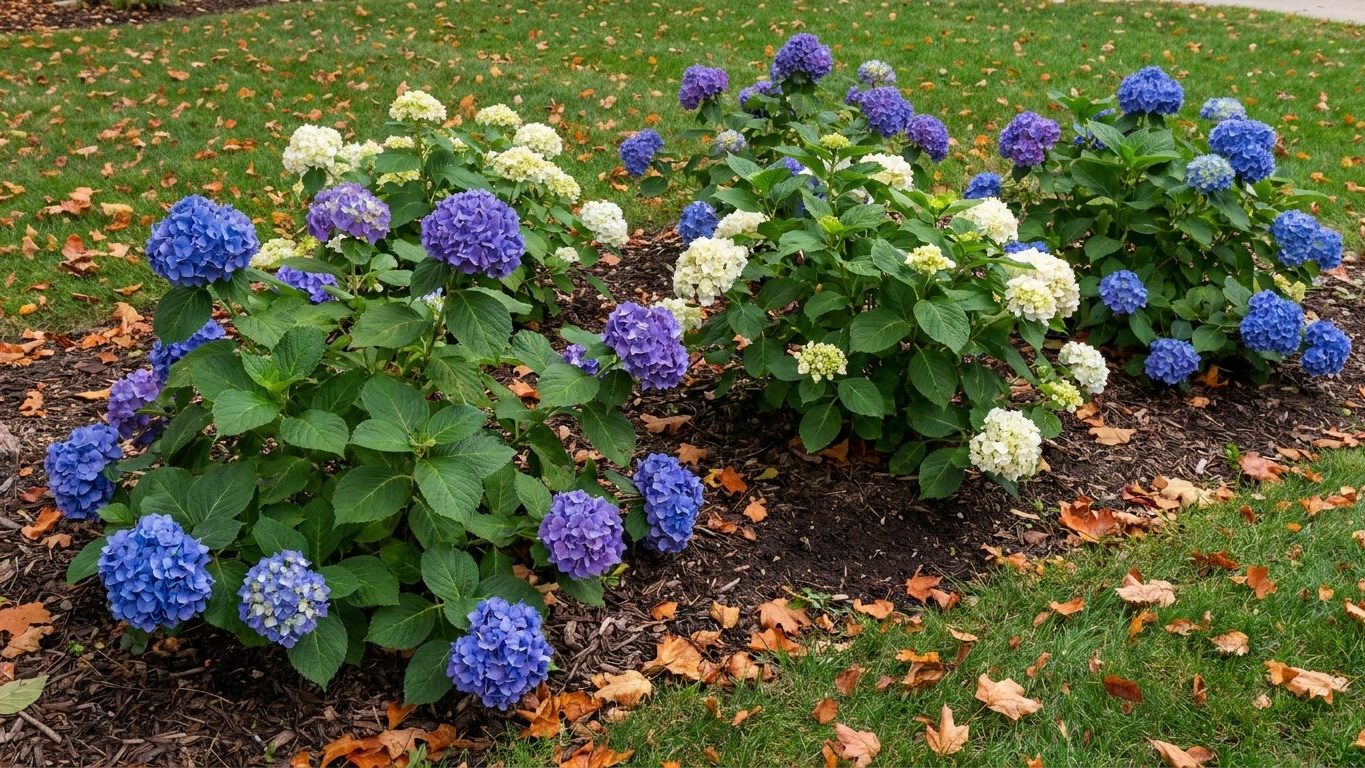
In the Twin Cities, the safest planting window for hydrangeas runs from April through May, with a second stretch in August and September once summer heat breaks. Wait until the last spring frost passes before planting, and stop by early September so new shrubs can root before the first fall frost in mid-October.
When to prune hydrangeas in Minnesota: The Short Answer
NOAA NCEI’s 1991-2020 Climate Normals put the Twin Cities’ last spring frost between April 17 and April 30, and that window sets the pace for everything on this list.
- January: The yard is dormant and there is nothing to plant or prune. Leave last season’s stems standing, they trap snow and buffer the crown against the cold.
- February: Still dormant here. Use the quiet weeks to plan which spot gets morning sun and afternoon shade, a pairing that suits most hydrangeas in this state.
- March: The first fertilizing window opens as buds start to swell. Skip pruning bigleaf types now, their flower buds already formed on last year’s wood.
- April: Planting opens, but only in the back half of the month once the last spring frost risk has largely passed. Hold containers indoors if a late freeze is forecast.
- May: This is the safest month to plant, and the second fertilizing round of the season lands here too. Root balls can go straight into prepared soil.
- June: Pruning bigleaf hydrangeas starts once the first flush of blooms fades. Cut spent stems just above a healthy bud pair, never lower.
- July: The pruning window for bigleaf types closes, and a third fertilizing round follows. Water deeply during hot stretches, since new plantings dry out fast.
- August: A second planting window opens as nights cool. Shrubs set into the ground now have roughly two months to root before the ground hardens.
- September: Planting continues, but the clock is running. New hydrangeas need about six weeks of root growth before the first fall frost, so aim for early in the month.
- October: The first fall frost arrives sometime between October 11 and October 23. Stop planting, and add a thick mulch layer once the ground starts to cool.
- November: The shrub is heading into dormancy. Mound mulch or leaves over the base of bigleaf varieties, since their buds sit above ground and take the brunt of winter.
- December: Nothing to plant or prune. Snow cover is the best insulation this state offers, so resist the urge to clear it off the beds.
Those two stretches, spring and late summer, do the real work. Everything else on this list is upkeep that keeps the plant ready for the next one.
Minnesota — the year and the numbers
- State
- Minnesota
- USDA zones
- 3a-5a
- Last spring frost
- April 17 to April 30
- First fall frost
- October 11 to October 23
- Annual rain
- 32 in
- Lawn zone
- cool-season
- Source
- NOAA NCEI 1991-2020 Climate Normals, 32F freeze probabilities · Minneapolis
How to Work Out the Dates for Your Own Yard
The Twin Cities numbers, from NOAA NCEI’s 1991-2020 Climate Normals, are a starting point, not a rule for every yard in this state.
- Find your own frost dates: Check a local record instead of assuming the Twin Cities range applies, since northern Minnesota runs two to three weeks tighter at both ends.
- Count back from the last spring frost: Subtract two to three weeks from the April 17 to April 30 window if you garden farther north, which pushes safe planting into mid-May instead of late April.
- Count forward from the first bloom flush: Bigleaf hydrangeas bloom on old wood, so prune within days of the flowers fading rather than waiting for a fixed date, staying inside the June and July window.
- Read your microclimate: A spot against a south-facing wall or near pavement runs warmer than an open lawn, often enough to plant a week or two earlier than the general range.
- Work backward from the first fall frost: The October 11 to October 23 window means new plantings need roots down by early September at the latest, or they head into winter without enough anchorage.
None of this replaces a look at your own yard. A thermometer left outside for a week tells you more about your particular corner than any statewide range.
Minnesota North to South: How the Dates Shift
The USDA Plant Hardiness Zone Map puts Minnesota anywhere from zone 3a to zone 5a, and that spread moves both frost windows in the same direction.
- The Arrowhead and the Iron Range (zone 3a): the coldest corner of the state pushes planting later into May and pulls the fall cutoff earlier into September.
- Central Minnesota and the Twin Cities (zone 4b to 5a): this is the reference range used throughout this guide, with the widest planting windows in the state.
- The southern border counties (zone 5a): closest to Iowa, this strip often clears its last frost earliest and holds off its first fall frost the longest.
For the frost dates tied to your own county, the state guide breaks the range down further.
Mistakes Minnesota Punishes
Pruning bigleaf on the wrong schedule
Bigleaf hydrangeas set next year’s flower buds on this year’s growth, so a fall or early spring cut removes blooms before they open. Keep pruning inside the June and July window, right after the flowers fade, and skip the fall cleanup instinct entirely.
Planting too close to the fall frost
A shrub planted in late September has barely a few weeks before the first fall frost lands between October 11 and October 23, not enough time to root in. Move fall planting earlier in September, or shift it to spring instead.
Skipping winter protection on exposed buds
In zone 3a and 4a, the coldest pockets on USDA’s Plant Hardiness Zone Map, bare bigleaf stems take the full brunt of winter and often die back to the ground, taking next year’s flowers with them. Mound mulch or leaves over the base before the ground freezes solid.
Minnesota Extension Offices and County Contacts
The frost and zone numbers here describe the Twin Cities and the state as a whole, not your block. A county extension office fills in the rest, from soil tests to variety trials to what’s blooming two streets over.
- Your state page: the frost dates and the pruning window where you live.
- Which ones hold up here: the varieties bred for zone 3a and 4a cold rather than borrowed from a warmer state.
- University of Minnesota Extension: soil testing, plant clinics, and county-by-county advice at extension.umn.edu.
Common questions
Can I plant hydrangeas in Minnesota in the fall?
Yes, within the August and September window, but keep it early enough that roots have about six weeks before the first fall frost arrives between October 11 and October 23.
Do hydrangeas need winter protection in Minnesota?
Bigleaf varieties in zone 3a to 4a benefit from mulch mounded over the base before the ground freezes, since their flower buds sit above ground and don’t survive an exposed winter.
When should I fertilize hydrangeas in Minnesota?
Three times works well here, in March as buds swell, in May at planting time, and again in July before the pruning window closes.