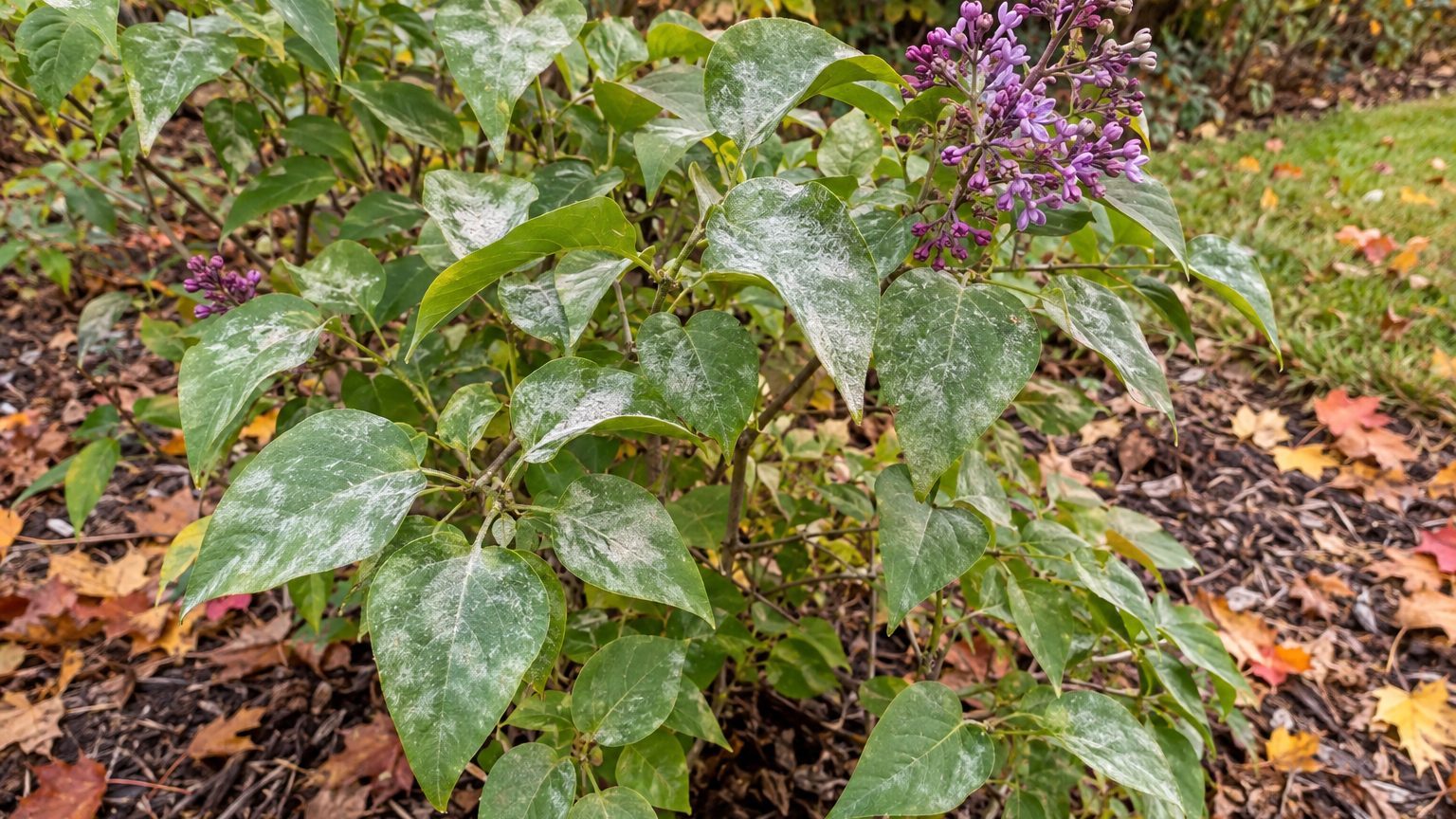
A white, dusty film on lilac leaves looks alarming, but it rarely harms the shrub. The fungus behind it is a common one on lilacs, and it shows up most often after the flowers are long gone. What you do about it depends on how early it appears and how much you mind the look.
Powdery Mildew: What You See

The disease announces itself as a dry coating, so look at the leaves first and the rest of the plant second.
- A dry, gray-white powder sits on the upper surface of the leaves, and it does not feel wet or slimy.
- It starts on the lower leaves, then climbs the plant until most of the foliage is covered by late summer or early fall in New Hampshire.
- The same grayish white blotches can spread to young stems, shoot tips and buds.
- The coating blocks the light leaves need for photosynthesis, which is why heavily covered leaves look dull.
- The leaves take on a white, mealy look in late summer, long after the spring bloom.
Even a badly coated lilac is more unsightly than sick, and the shrub comes back the next spring.
Powdery Mildew or Something Else?
Not every pale leaf is mildew. A few other problems leave a whitish look, and a quick check of texture and timing sorts them out.
Rubbing a finger across the leaf is the simplest test, since the mildew coating is dry and sits on the surface.
| Looks like | How to tell them apart |
|---|---|
| Rain or sprinkler residue | White film that washes away once rains become more regular, which often happens in a wet year. |
| Mildew on a neighboring plant | The fungus on lilac does not infect roses, so a mildewed rose beside a clean lilac is a separate case. |
A clean lilac next to a mildewed rose is not a sign the rose passed it along. Each plant carries its own version of the fungus.
What Causes Powdery Mildew, and Where It Is Worst
A fungus called Erysiphe syringae causes it. It thrives when dry periods are broken by several days of high humidity, which is the pattern described in Illinois, where the disease can be expected on most older lilacs during the summer.
Weather sets the timing. Warm days followed by cool, humid nights suit the fungus. In Indiana, it tends to arrive in late summer or early fall, especially when heavy night dew stays on the leaves into the morning.
Summers with little rainfall and a lot of fog or cloud cover tend to be worse, and shade makes things harder. Avoid planting lilacs where shade lasts through long stretches of the day. In Iowa and Washington the disease usually turns up late in the season, so the damage stays small.
How to Treat Powdery Mildew
Treatment is mostly cleanup and airflow, and a fungicide is an option only when you catch it early.
- Check the lower leaves first, so that you spot the earliest white patches before they climb the plant.
- Hand-pick and destroy infected leaves and shoots, so that fewer spores are left to spread.
- Open up the plant to improve air flow, since moving air reduces how severe the disease gets.
- If you choose a fungicide, apply it as soon as mildew is observed.
If the white film only appears late in the season, no management is typically recommended. The leaves have nearly finished making food for the year and will soon drop.
How to Prevent Powdery Mildew Coming Back
Prevention starts with where the lilac stands and which type you choose, and a few seasonal habits keep the odds in your favor.
- Plant new lilacs in full sun with good drainage and room around them, since ample air circulation helps control the disease.
- When choosing a shrub, pick a resistant cultivar, because many newer varieties are more resistant to infection.
- In summer, keep an eye on the lower leaves, because that is where the first white spots show.
- Remove infected leaves and shoots as soon as you see them.
Prevention is the main line of defense for lilacs, so these habits matter more than any spray.
Where This Comes From
The details here come from university extension and government plant health pages, with local timing noted for the states that published it. Your state extension service can tell you what applies in your yard and which treatments are approved where you live.
Common Questions
Will Powdery Mildew Kill a Lilac?
No. It is more of a nuisance than a serious threat to the plant.
Can Powdery Mildew Spread from Lilacs to Roses?
The fungus that causes powdery mildew on lilac will not infect roses, though both plants can get their own mildew.
Why Does Lilac Mildew Look Worse Some Summers?
Dry spells with several days of high humidity favor the disease. Summers with little rainfall and heavy fog or cloud cover can make it worse. A wet year often washes the film away.