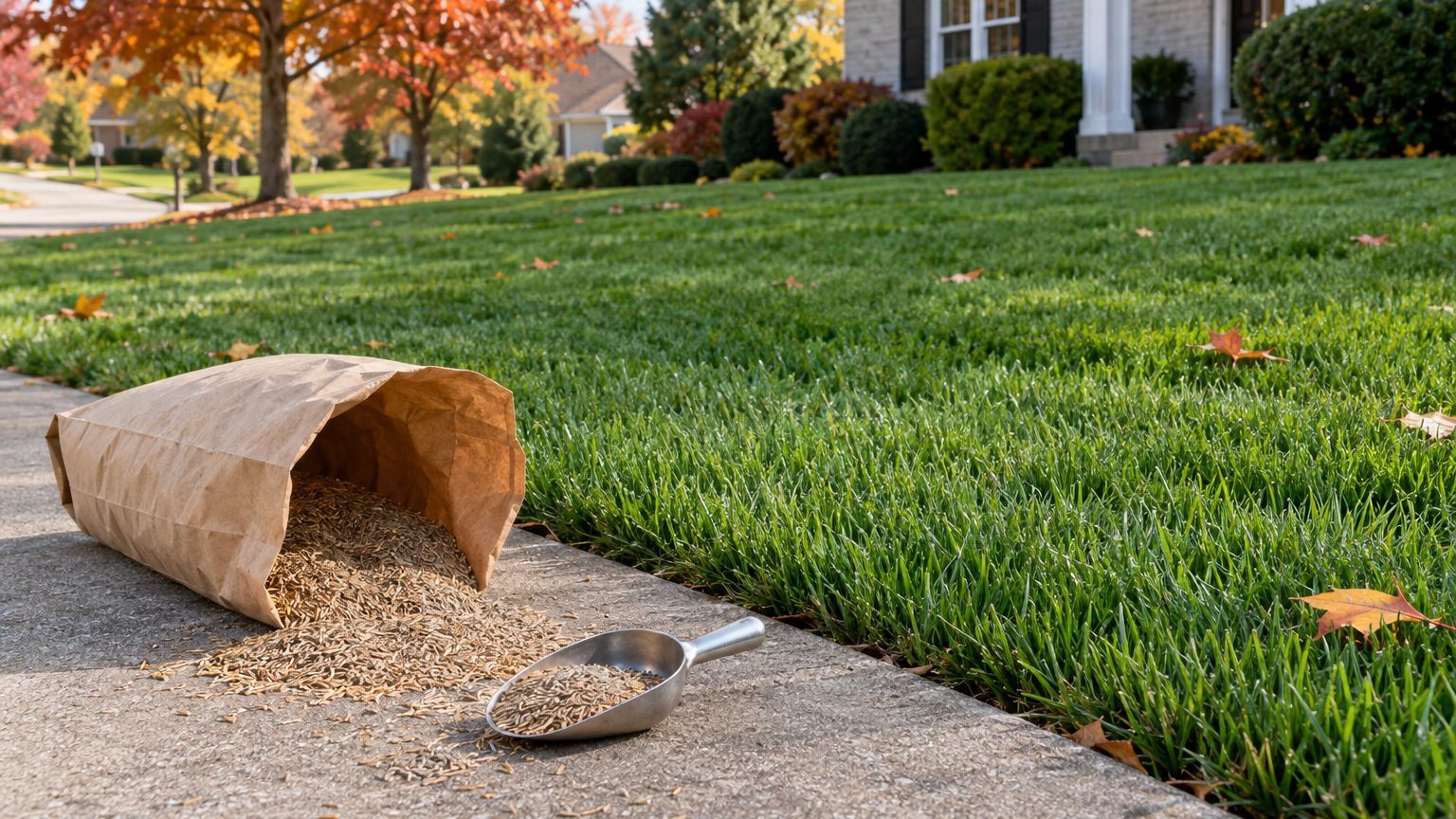
Kentucky lawns face humid summers and real winter cold, and few grasses handle both without complaint. Tall fescue suits many Kentucky yards, with Kentucky bluegrass fitting cooler, higher ground. Warm-season grasses can work in a sunny, open yard, but they trade summer toughness for a brown lawn in winter.
Which Grass Grows Best in Kentucky?
Cool-season grass does best here, because Kentucky sits in the transition zone, where summer heat stresses cool-season lawns and winter cold limits warm-season ones. Under the USDA hardiness system, the state spans zones 6a to 7a, so the coldest corners and the mildest ones do not treat the same grass alike. The species below suit different sites and seasons.
Tall Fescue
Tall fescue is the workhorse of Kentucky lawns. Its deep roots carry it through hot spells better than bluegrass, and it tolerates part shade and foot traffic. It stays green through much of the year and grows from seed.
Kentucky Bluegrass
Despite the name, bluegrass is a better fit for cooler, higher ground than for hot, low yards. It spreads by runners and knits into a dense, soft turf in full sun. In a dry July it slows down and wants regular watering to stay green.
Zoysiagrass
Zoysia makes a thick, tough warm-season lawn, but it is mostly planted as sod or plugs instead of seed. It fills in slowly and turns tan after fall frost, staying that way well into spring. It rewards patience and full sun.
Bermudagrass
Bermudagrass can be started from seed or sod and grows during the warm season, while cold winters can thin it. A hard winter can thin it, and it browns early in fall. Shade defeats it, so it belongs only in open, sunny yards.
Kentucky — the year and the numbers
- State
- Kentucky
- USDA zones
- 6a-7a
- Last spring frost
- March 24 to April 4
- First fall frost
- November 2 to November 12
- Annual rain
- 48 in
- Lawn type
- cool- and warm-season
- Source
- NOAA NCEI 1991-2020 Climate Normals, 32F freeze probabilities · Louisville
How to Choose Grass Seed for a Kentucky Yard
Start with how much sun the yard gets, then think about foot traffic, whether you can water through summer, and how often you want to mow. Those questions usually narrow the choices without much debate.
A shady yard under maples calls for tall fescue. A wide-open lawn in full sun gives you more choices, including the warm-season grasses.
| Grass | Season | Yard it suits | When to plant |
|---|---|---|---|
| Tall fescue | Cool | Sun to part shade, kids and pets | Seed in August, or September |
| Kentucky bluegrass | Cool | Full sun on cooler, higher ground, with water on hand | Seed in August, or September |
| Zoysiagrass | Warm | Full sun, heavy use, slow and steady mowing | Sod or plugs in May, June or July |
| Bermudagrass | Warm | Open sun only, tolerates drought and traffic | Seed in May, or June |
Tall fescue follows a cool-season schedule, while warm-season grasses do their main growing in summer. Choose bluegrass only when you are willing to water regularly.
Which Grasses Grow Where in Kentucky
Elevation and latitude shift the odds from one end of the state to the other, so the same seed bag does not perform equally everywhere.
- Louisville and the Ohio River: Tall fescue is the standard here, and warm-season grasses are an option in sunny yards. City yards run a little milder than rural land around them, so country lots outside town should expect cold to arrive sooner.
- The Bluegrass Region around Lexington: Rolling, cooler ground suits Kentucky bluegrass as well as tall fescue, and a blend of the two is a common sight.
- Eastern Kentucky hills: Higher, cooler ground favors tall fescue and bluegrass, and bermudagrass is a poor bet where winters bite hardest.
- Western Kentucky and the Paducah area: Longer, hotter summers make zoysia and bermudagrass more practical in full sun, though tall fescue remains an option.
Shade and slope matter as much as region, so judge your own yard before copying a neighbor elsewhere.
Grass Seed Mistakes to Avoid in Kentucky
Seeding at the Wrong Time
Spring seeding of tall fescue gives seedlings only a short run before summer heat hits them. Sow in August, or in September if August slips by, so the roots get established before cold arrives. In Louisville, the first fall frost typically falls between November 2 and November 12, and rural yards should expect it a little sooner. Warm-season seed goes in during May, or June.
Choosing Grass That Does Not Fit
Bermudagrass thins in a shady yard, and bluegrass in a hot, dry lowland struggles in July. Match the grass to the sun, soil and watering you really have, using the choices above, instead of picking whatever the bag shows on the front.
Burying Seed or Spreading Too Much
Grass seed is small and wants light and moisture to germinate. Cover it with no more than 0.25 inch of soil, and press it down so each seed touches the ground. Follow the rate printed on the bag, because heavy seeding crowds seedlings and invites disease, while thin seeding leaves gaps for weeds.
Where to Get Lawn Advice in Kentucky
Local specialists can read your soil and your site in ways a seed bag cannot. Local guidance is worth seeking before you buy.
- University of Kentucky Extension publishes turfgrass guidance for the state, and it is a good first read before you pick a seed.
- Your county extension office can test your soil and answer questions about local conditions, so visit it in summer, ahead of the late-summer seeding season.
Common Questions
Should You Aerate Before Overseeding Tall Fescue in Kentucky?
Yes, aeration helps. Opening the turf gives seed better contact with soil. August is the best month for core aeration, and September still works. Aerate and overseed in the same stretch of late summer.
When Should You Fertilize a Tall Fescue Lawn in Kentucky?
Early spring and fall suit tall fescue, with March, September and October as the best months. Skip summer feeding, since it pushes soft growth during heat. Warm-season lawns are fed in May, June and July instead.
Can You Put Down Crabgrass Preventer When You Plan to Seed?
Not at the same time. Many pre-emergence products can also block grass seed from sprouting, so check the label before combining them with seeding. March is the best month for preventer, so apply it in spring and wait until the late-summer seeding window to plant a lawn.