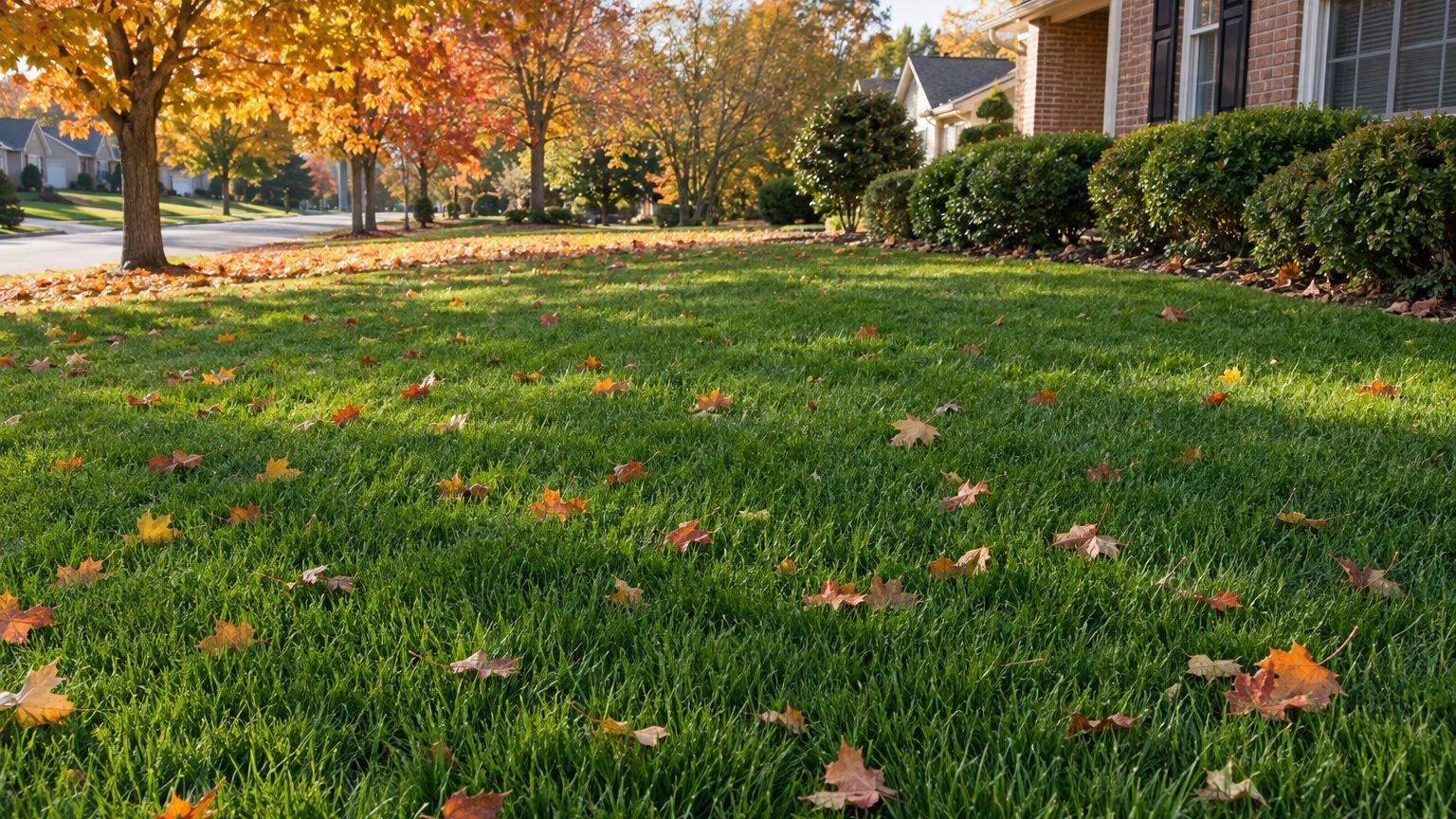
Kentucky lawns spend the cool months holding color in tall fescue and bluegrass, then drift into a long green stretch that rewards the right work at the right time. Seeding and aeration belong in late summer, crabgrass control in early spring, and mowing runs from spring well into November.
What to Do Each Month in a Kentucky Lawn

Most Kentucky yards are cool-season grass, mainly tall fescue and bluegrass. Bermuda and zoysia lawns follow a different rhythm, so their tasks are noted where they split off.
| Month | In the lawn |
|---|---|
| January | Rest. Growth is slow, so keep heavy foot traffic off frozen turf and let the lawn rest. |
| February | Still quiet. If the weather turns mild, an early crabgrass preventer application works now, though March is the better moment. |
| March | Apply crabgrass preventer before the soil warms and weed seed sprouts. Feed tall fescue and bluegrass in early spring, and start mowing as growth picks up. |
| April | Keep mowing. If you missed March, preventer and a light feeding still work this month. Warm-season lawns start mowing now and can be dethatched if needed. |
| May | Mow regularly. Preventer still works if you are late. Bermuda and zoysia are growing hard now, so seed, lay sod, dethatch and begin feeding them. |
| June | Water deeply as heat arrives. Warm-season lawns keep eating, and sod or seed still work for them if May slipped by. |
| July | Water through the heat and keep mowing. Do not feed tall fescue in summer, since it is stressed. Warm-season grasses can still be fed and sodded. |
| August | Core aerate, dethatch and seed tall fescue. Water the new seed so it never dries out while it sprouts. |
| September | Feed the lawn for fall root growth. If you missed August, aerating, dethatching and seeding still work now. |
| October | Feed the lawn this month if September passed you by, and keep mowing while the grass grows. |
| November | Make the last mowings of the year. Growth slows, so leaves should be raked or mulched so they do not smother the grass. |
| December | Rest. Growth is slow, and the job is simply to stay off frozen or soggy turf. |
Warm-season grasses go brown after the first hard frosts and wake late, so do not judge them by the green fescue next door.
Kentucky — the year and the numbers
- State
- Kentucky
- USDA zones
- 6a-7a
- Last spring frost
- March 24 to April 4
- First fall frost
- November 2 to November 12
- Annual rain
- 48 in
- Lawn type
- cool- and warm-season
- Source
- NOAA NCEI 1991-2020 Climate Normals, 32F freeze probabilities · Louisville
When Does the Lawn Season Start and End in Kentucky?
Grass wakes up when the soil warms, not when the last frost passes. Cool-season seed sprouts in soil at 50 to 65 °F, while bermuda and zoysia want 65 to 70 °F. That is why fescue greens first and warm-season lawns lag behind.
For this calendar, frost dates mainly help gauge the risk to young seedlings. In Louisville, the last spring freeze usually falls between March 24 and April 4, so tender new grass planted early can still get nipped. These Louisville figures are local: surrounding rural Jefferson County has a tighter frost window.
In Louisville, the first fall freeze usually arrives between November 2 and November 12. Seed sown in late summer has time to root well before then, which is the reason that timing works so well. Mowing carries on until growth stops, often into November.
How the Lawn Calendar Shifts Across Kentucky
Kentucky stretches from mountains to river bottoms and spans zones 6a to 7a on the USDA system, while local soil and weather shift lawn timing.
- Western Kentucky and the Jackson Purchase: Spring warms sooner, so crabgrass preventer and the first mowing can come toward the early side of their windows. Warm-season grasses do better here than farther east.
- Louisville and the Bluegrass: The Louisville frost dates are local reference figures; elsewhere in the Bluegrass, use the monthly calendar as a frame and check local conditions. Tall fescue and bluegrass are the usual choices.
- Eastern Kentucky mountains: Elevation brings cooler soil, so spring tasks come later and fall frost arrives sooner. Aim for the early part of the seeding window.
- Northern Kentucky along the Ohio River: Winters bite a little harder, so lean toward the later side of spring tasks and do not skip fall seeding.
Whatever your corner, let the soil and the grass guide you, and use the months here as the frame.
Lawn Care Timing Mistakes to Avoid in Kentucky
Feeding Fescue in Summer
Fertilizer in the heat pushes soft growth on stressed tall fescue and invites disease. Feed in early spring and again in fall, from September into October, when the grass can actually use it.
Seeding Too Late
Seed spread after September has less time to root before winter, and thin stands get crowded by weeds in spring. Aim for August, and treat September as the fallback when the calendar slips.
Applying Preventer After Weeds Sprout
Crabgrass preventer works only before germination. Put it down in March, and certainly by May. Once crabgrass is up, a pre-emergent will not control existing plants.
Where to Get Lawn Advice in Kentucky
The University of Kentucky’s Cooperative Extension Service publishes lawn guidance written for the state’s soils and grasses, and every county has a local office.
- The state extension site covers grass types, weed control and renovation, so check it before you choose seed in late summer.
- Your county extension office can advise on a soil test, which is worth doing before spring feeding.
- Staff there can also help identify odd patches or weeds, so bring a sample when problems show up.
Common Questions
Should You Dethatch a Kentucky Lawn in Spring?
For tall fescue and bluegrass, wait until August or September. Warm-season lawns such as bermuda and zoysia are dethatched in May or June, when they are growing strongly and recover quickly.
Can You Plant Bermuda or Zoysia in Kentucky?
Yes, and they handle summer heat well. They turn brown in winter and green up late, so many homeowners prefer fescue for year-round color.
When Does Mowing End in Kentucky?
Cool-season lawns are mowed through November. Warm-season lawns stop earlier, after October, as they head into dormancy.