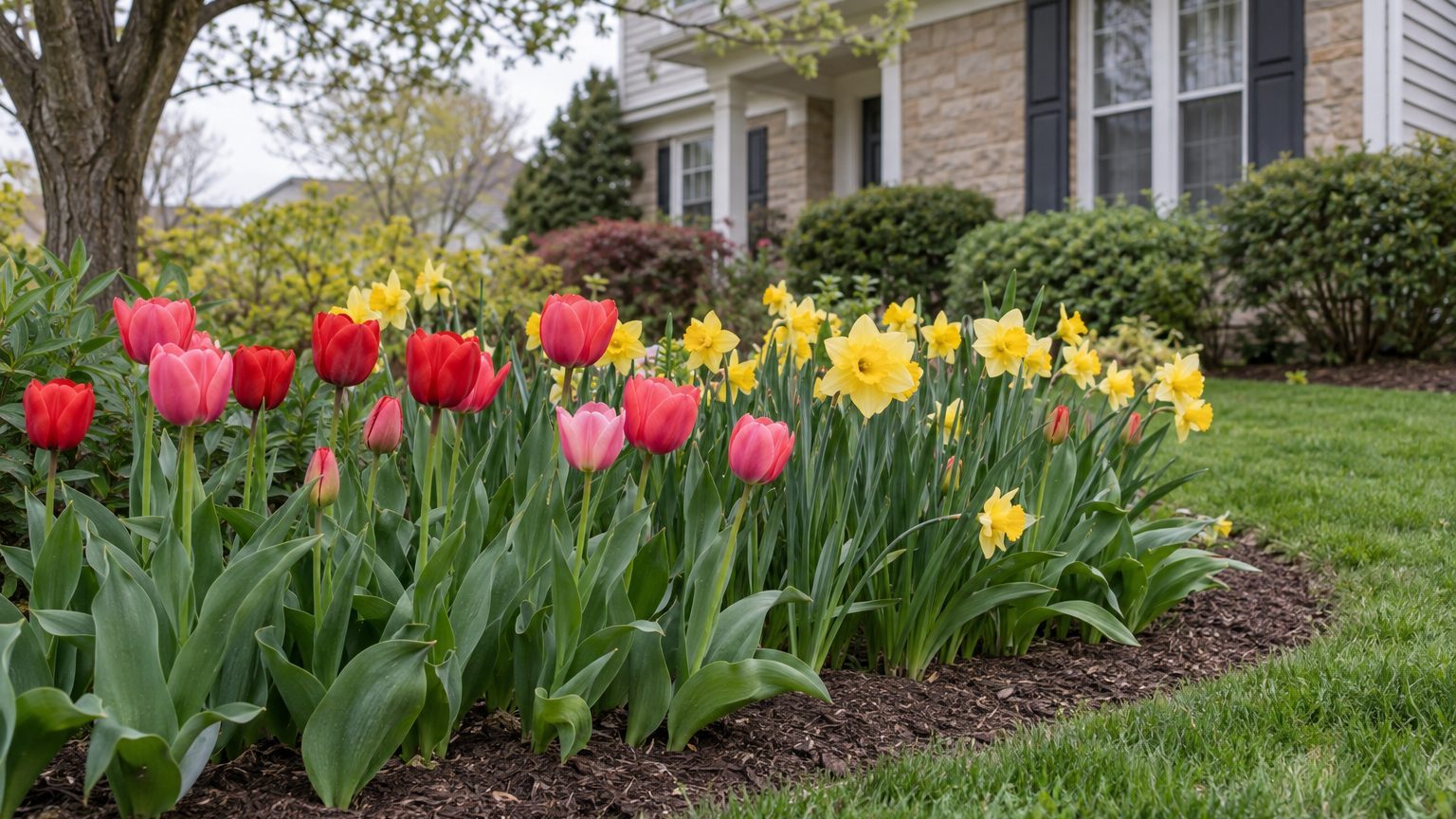
Daffodil leaves yellowing in May, and tulips thinning out after a few springs, tell Kentucky gardeners which bulbs are worth the digging. The bulbs that settle in best are daffodils, with alliums, hyacinths and a few smaller types close behind. Tulips are worth planting too, as long as you accept that they come and go.
Best Spring Bulbs to Grow in Kentucky

Daffodils, hyacinths, alliums, fritillaria and scilla suit Kentucky yards best, and tulips and crocus earn a place where animals leave them alone. Kentucky falls in USDA hardiness zones 6a to 7a, with Louisville as the reference city, and other parts of the state differ a little. Winter cold is what these bulbs want, so Kentucky’s winters are an asset rather than a hurdle.
Daffodils
Daffodils are hardy perennial bulbs that return year after year, and they never have to be dug. In Pennsylvania, they overwinter in USDA zones 3 through 8, a span that comfortably holds Kentucky’s winters.
They are also left alone by deer and rabbits, which makes them the reliable choice for naturalizing in scattered clumps across a lawn edge or slope.
Hyacinths
Hyacinths are one of the bulbs deer and squirrels tend to pass over, so they work close to the house, along walks and in beds that critters visit regularly.
Plant them in fall with the rest of the bulbs and let them settle in through winter, when the cold does its work on the buds.
Alliums
According to Iowa State University Extension, alliums, the ornamental onions, need the cold of winter to bloom, and animals leave them alone. They close out the bulb season, long after the early flowers have faded.
Tuck them between perennials, where the round flower heads rise above the foliage as spring turns toward summer.
Fritillaria and Scilla
Fritillaria and scilla belong to the group of bulbs that deer and squirrels dislike. They suit gardeners who want something less common than a tulip without more risk of losses to browsing.
Scatter them in drifts under shrubs or along a border, where they can stay put for years.
Tulips
Tulips are often short-lived in the garden, and voles, squirrels, rabbits and deer eat them. A tulip bed in Kentucky is a spring treat to replant, not a permanent fixture.
Plant them where you will see them from a window, and accept a refresh now and then.
Crocus
Crocus are edible to animals too, so expect some losses where voles and squirrels are active. They are small enough to tuck into a lawn edge or bed front, and a few survivors still make a cheerful show.
Kentucky — the year and the numbers
- State
- Kentucky
- USDA zones
- 6a-7a
- Last spring frost
- March 24 to April 4
- First fall frost
- November 2 to November 12
- Annual rain
- 48 in
- Lawn zone
- transition-season
- Source
- NOAA NCEI 1991-2020 Climate Normals, 32F freeze probabilities · Louisville
How to Choose Spring Bulbs for Your Kentucky Garden
The right bulb depends less on the catalog photo than on what visits your yard and how much upkeep you want. Match the bulb to that, and the planting takes care of itself.
| Your situation | What suits it in Kentucky | Why |
|---|---|---|
| Deer, rabbits or squirrels visit | Daffodils, hyacinths, alliums, fritillaria, scilla | Animals tend to leave these alone, while tulips and crocus get eaten |
| Little time for upkeep | Daffodils | They return year after year and never have to be dug |
| You want bulbs that last | Daffodils over tulips | Tulips are often short-lived, while daffodils are the more reliable perennial |
| Cold winters worry you | Daffodils | They are hardy perennial bulbs that overwinter reliably in cold ground |
| You worry about enough winter chill | Alliums | They need the cold of winter to bloom, and many bulbs need 12 to 16 weeks of cold |
| You want a long season of color | A mix of early bulbs, daffodils, tulips and alliums | Bulbs bloom in succession, from snowdrops and winter aconites at the start to alliums at the end |
Fritillaria and scilla fit nearly any of these rows when you want something less common. Whatever you plant, leave the foliage standing after bloom until it turns brown and remove only the faded flowers, because the leaves feed the bulb for next spring.
Which Spring Bulbs Suit Different Parts of Kentucky
Kentucky’s hardiness zones run from 6a to 7a, so the choice of bulb shifts a little from region to region, though the dependable ones work everywhere.
- Louisville and Jefferson County: city gardens run milder than the rural land around them, so tulips and hyacinths have an easier time in town. Out in the county, lean on daffodils and alliums.
- Eastern Kentucky mountains: higher ground and cold hollows lean toward the colder end of the range, which favors tough daffodils and alliums over tulip beds.
- Western Kentucky: winters here sit nearer the milder end of the range, so more tulips and hyacinths are worth trying, with a refresh planting now and then.
In every region, deer pressure matters more than the zone number when you pick between bulbs.
Spring Bulb Buying Mistakes to Avoid in Kentucky
Choosing Tulips for a Deer Yard
Voles, squirrels, rabbits and deer eat tulips and crocus, so a bed packed with them can disappear overnight. Tulips are also often short-lived even when untouched.
Buy daffodils, hyacinths or alliums for exposed spots, and keep tulips for beds close to the house.
Planting Before the Soil Cools
Bulbs go in once the soil has cooled below about 60°F. That timing lets roots form before the ground freezes, yet keeps bulbs from sprouting in the fall.
Buying early in the season is fine. Hold the bag in a cool, dry spot until the soil is ready, then plant.
Leaving Bulbs in the Bag
A bulb still in its bag is better planted late than stored over the winter. Plant as long as the ground can be dug, even if the garden already looks bare.
A bulb that is still in the bag is better planted late than stored over the winter: plant as long as the ground can be dug.
Where to Get Spring Bulb Advice in Kentucky
The University of Kentucky Cooperative Extension publishes bulb guidance written for Kentucky gardens, and your county office knows how local soils and critters behave.
- The state extension site has fact sheets on spring flowering bulbs, worth reading before you shop in late summer.
- Your county Extension office can answer questions about drainage and animal damage, so call in early fall before the bulbs go in.
Common Questions
When Should You Plant Spring Bulbs in Kentucky?
October is the best month, and the window runs from mid-September to late November depending on how fast the soil cools. September and November also work.
When Do Tulips and Daffodils Bloom in Kentucky?
Bloom runs from March through May, with a few flowers appearing as early as February.
Do Spring Bulbs Need to Be Chilled Before Planting?
Where winters are too mild, tulips and hyacinths are chilled in the refrigerator first. Bulbs planted in a Kentucky garden get their cold from the ground over winter, and alliums need that cold to bloom.