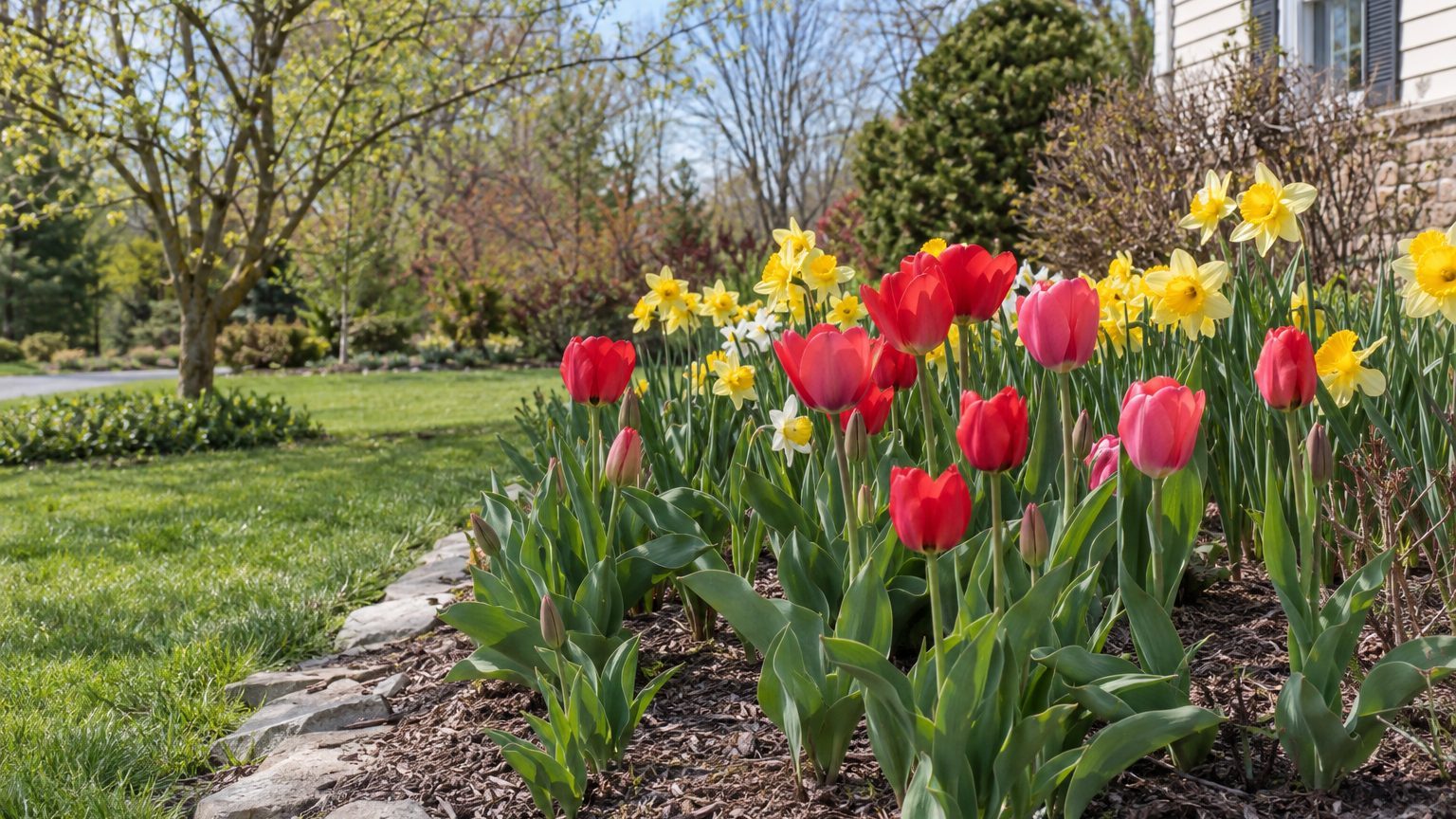
Daffodil leaves poking through cold ground and tulip buds fattening on their stems are the first real signs of spring in an Alabama yard. Both bloom as the weather warms in spring, and the exact week shifts from year to year and from Mobile Bay to the Tennessee Valley. What follows explains what sets the timing and what to do around it.
When Do Tulips and Daffodils Bloom in Alabama?

Tulips and daffodils bloom in spring in Alabama, and the flowers follow the warming of the weather rather than a fixed date. No single month fits every yard, so watch your own bulbs and your own soil. Bulbs planted in November or December have the winter to settle and set buds.
Planting in October or January also works. Alabama sits in USDA zones 7a to 9a, which is why winter cold varies so much from one yard to the next.
| Bulb | When it blooms in Alabama | What sets the timing |
|---|---|---|
| Daffodils | Spring, as the weather warms | Jonquil, tazetta, poeticus and species types grow reliably in the South and come back year after year |
| Tulips | Spring, as the weather warms | Need winter cold to flower and are often short-lived, so many yards treat them as one season of color |
| Hyacinths | Spring, as the weather warms | Need about 12 to 16 weeks of cold, so mild winters call for chilling the bulbs in the refrigerator before planting |
| Alliums | Late in the spring bulb season | Need the cold of winter to bloom |
Crocus belong to the same early parade as daffodils, though voles and squirrels often dig them up. Daffodils are the exception to that appetite, since animals leave them alone.
Alabama — the year and the numbers
- State
- Alabama
- USDA zones
- 7a-9a
- Last spring frost
- March 19 to April 3
- First fall frost
- November 2 to November 16
- Annual rain
- 54 in
- Lawn zone
- warm-season
- Source
- NOAA NCEI 1991-2020 Climate Normals, 32F freeze probabilities · Huntsville
How to Tell Your Bulbs Are About to Bloom
Your bulbs announce themselves in stages, long before the first petal opens, and each stage tells you something to do or to leave alone.
- Green tips pushing through the soil mean the bulb is alive and rooted, so you can stop worrying about whether the planting took.
- Leaves that unfold and widen show the bulb is gathering energy, which is the moment to keep mowers and edgers away from the bed.
- A fat bud rising from the center of the leaves means flowers are close, and a cold snap now calls for a light covering at most.
- A bud that starts to show color on the tip is hours or days from opening, which is a good moment to cut a few stems for a vase.
- Foliage with no bud at all, especially on tulips, usually points to a bulb that has worn out and will not flower again.
Wet soil and heavy shade slow every one of these stages, so a bed that lags behind the neighbor’s is often just cooler.
What to Do After Tulips and Daffodils Bloom in Alabama
Once the petals fade, snip off only the spent flowers. Leave the leaves exactly where they are until they turn brown, because they are feeding the bulb for next year. Skip any braiding, tying or folding of the foliage, since that shades the leaves and cuts the supply.
Tulips are often short-lived in the garden, and in Alabama they are commonly treated like annuals, dug out after they flower. Daffodils last longer and are the more reliable perennial bulb. Plan on replanting tulips in fall and letting daffodils spread on their own.
A tidy cover of daylilies or other perennials planted nearby can hide the yellowing leaves while they finish their work. Any bulb still unplanted goes into the ground as soon as the soil can be dug, and soil below about 60°F is the signal that fall planting can start.
How Bloom Time Shifts Across Alabama
Alabama stretches from mountain foothills to saltwater, and bulbs respond to that difference in the same direction every year.
- Gulf Coast: Mild winters bring flowers sooner than inland, and tulips and hyacinths need chilling in the refrigerator before planting. In coastal areas, bulbs are generally planted later in the season.
- Birmingham and central Alabama: Bloom lands between the coast and the northern hills, and the winter chill is usually enough for daffodils and most tulips.
- Tennessee Valley and the northeastern foothills: Colder winters and higher ground push bloom later than on the coast, and a late freeze can nip open flowers.
Your own yard can run ahead or behind its neighbors, so treat a south-facing wall as a head start and a shady low spot as a delay.
Where to Get Bulb Advice in Alabama
Local help starts with the state land-grant system and the county office, both of which know your soil and your winters better than any general chart.
- Alabama Extension publishes planting and care guidance for home gardeners, and the site is worth a visit before you order bulbs in fall.
- Your county extension office answers questions about your soil and local varieties, and early fall is a good time to call or stop by.
Common Questions
Can You Still Plant Bulbs in January in Alabama?
Yes. November and December are the usual planting months, while October and January also work. Refrigerated bulbs can go in even into early January. A bulb still in the bag is better planted late than stored.
Which Spring Bulbs Do Deer and Squirrels Leave Alone?
Daffodils. Voles, squirrels, rabbits and deer eat tulips and crocus, so a bed of daffodils is the safer choice where animals visit often.
Which Tulips Handle Warm Winters Best?
In Alabama, single late tulips are among the groups recommended for warm climates, with long, strong stems and cup-shaped blooms. A few species tulips come from warm regions and flower without a cold period, and they naturalize in the South.