Skip to content
  1. Jan
  2. Feb
  3. Mar
  4. Apr
  5. May
  6. Jun
  7. Jul
  8. Aug
  9. Sep
  10. Oct
  11. Nov
  12. Dec
State
Florida
USDA zones
8b-11b
Last spring frost
February 16 to March 7
First fall frost
November 26 to December 13
Annual rain
53 in
Lawn zone
warm-season
Source
NOAA NCEI 1991-2020 Climate Normals, 32F freeze probabilities · Jacksonville

The year in Florida, from the calendar

  1. JanPlant roses · Plant fruit trees · Prune fruit trees · Mow
  2. FebPlant hydrangeas · Feed roses · Prune roses · Prune fruit trees · Mow
  3. MarFeed hydrangeas · Plant hydrangeas · Feed roses · Mow
  4. AprFeed roses · Fertilize the lawn · Mow · Lay sod · Water
  5. MayFeed hydrangeas · Seed the lawn · Feed roses · Dethatch · Fertilize the lawn
  6. JunPrune bigleaf hydrangeas · Feed roses · Plant trees · Dethatch · Mow
  7. JulFeed hydrangeas · Prune bigleaf hydrangeas · Feed roses · Plant trees · Mow
  8. AugFeed roses · Mow · Lay sod · Water
  9. SepPlant hydrangeas · Feed roses · Mow · Plant trees · Lay sod
  10. OctPlant hydrangeas · Feed roses · Mow · Plant trees · Water
  11. NovFeed roses · Mow · Plant trees
  12. DecPlant roses · Plant fruit trees · Mow

From the state frost facts and extension calendars: UF/IFAS Extension Orange County — fertilizer restricted 6/1-9/30 (county ordinances) · Clemson HGIC factsheet — Hydrangea · Clemson Cooperative Extension, HGIC — Bermudagrass / Zoysiagrass / Centipedegrass / St. Augustinegrass maintenance calendars · UF/IFAS Gardening Solutions ; UF/IFAS Extension.

Best Spring Bulbs for Florida

Best Spring Bulbs for Florida

Bulb catalogs fill with tulips every fall, and the photos rarely come true in a Florida bed. Winters here are too mild for the cold rest most spring bulbs expect. A short list of bulbs takes the warmth in stride, and choosing from that list is what separates a bed that flowers from one that sulks.

Best Spring Bulbs to Grow in Florida

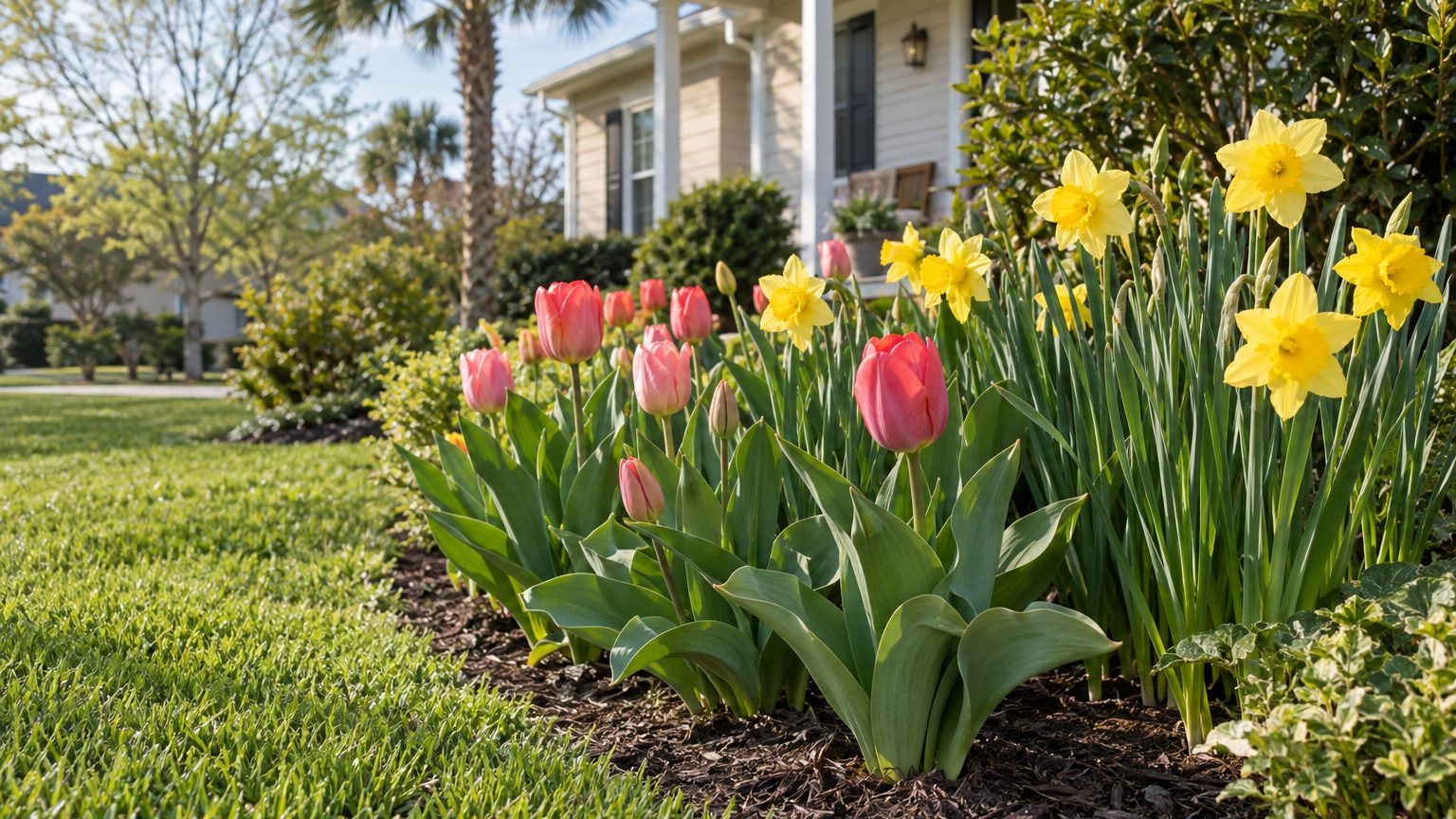
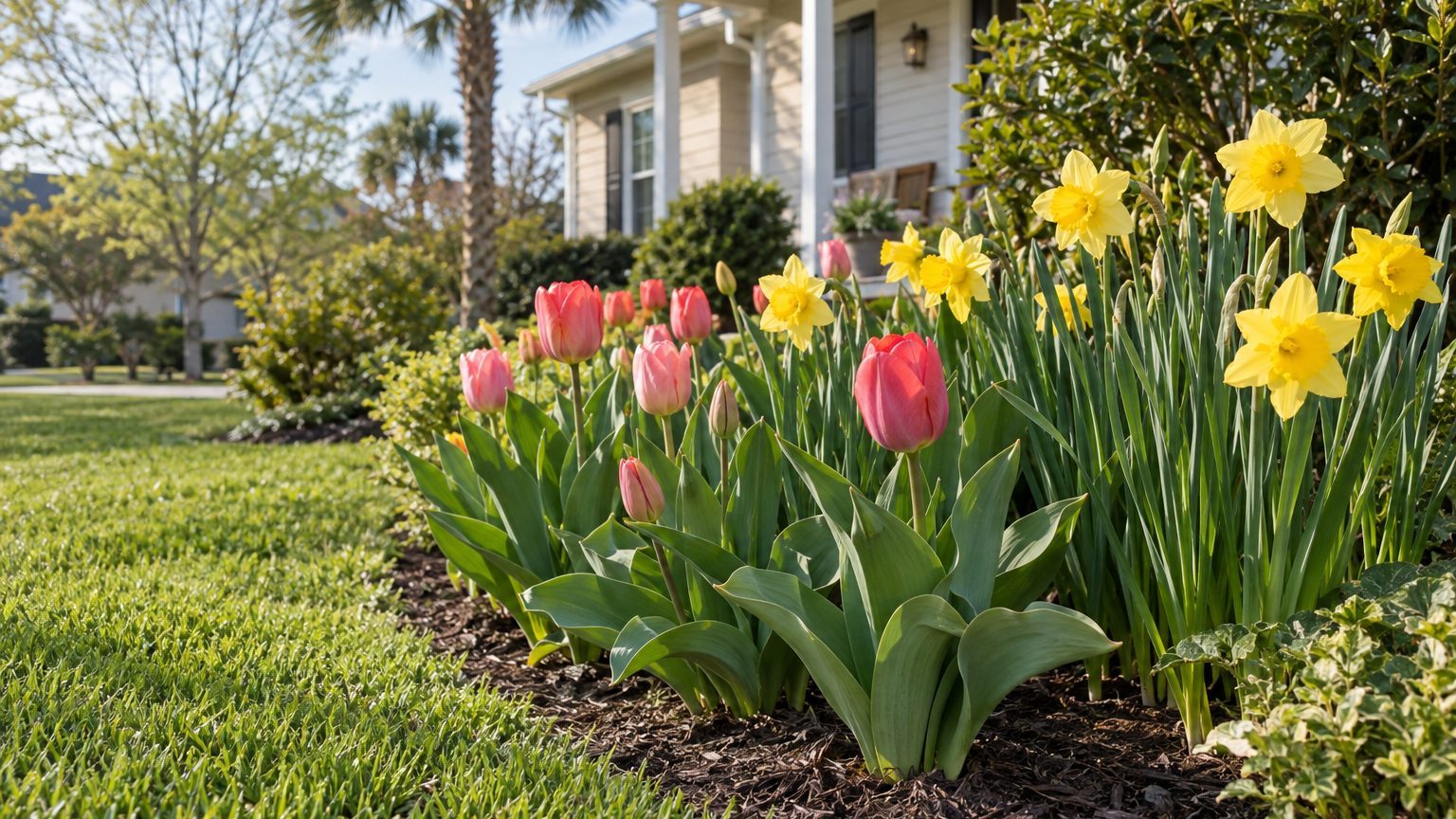
Healthy spring bulbs in bloom

Polyanthus narcissi (the paperwhite group), Chinese sacred lily, Pearl White lily, Grand Soleil d’Or and alliums are the bulbs that do well here, because none of them depends on a long winter chill. Tulips and the true daffodil are the ones to approach with low expectations. Plant when the soil has cooled below about 60°F.

Paperwhites

Paperwhites belong to the polyanthus narcissi, a group that does well in Florida. They are a sensible place to start with a new bulb bed. Plant them in fall once the soil has cooled and let the leaves die back on their own.

Chinese Sacred Lily

Chinese sacred lily is another polyanthus narcissus that does well in Florida gardens. It copes with mild winters because it was never built around a deep freeze. Give it the same fall planting and the same patience with the foliage afterward.

Grand Soleil d’Or

Grand Soleil d’Or is a cultivar of polyanthus narcissus, and it sits on the short list of bulbs that succeed here. Pearl White does too. These cultivars suit gardeners who want narcissus flowers without fighting the climate and do not need a refrigerator stop before planting.

Alliums

Alliums, the ornamental onions, need the cold of winter to bloom, like other spring bulbs. That makes them a sensible pick for central and south Florida beds where winter cold never arrives in any meaningful dose.

Tulips

Tulips need a cool dormancy, and Florida’s winters are too warm to give them the resting period they need. Where a gardener still wants them, chilling the bulbs in the refrigerator before planting is the workaround. Treat them as a short-lived display, not a permanent planting.

True Daffodils

Little success can be expected with the true daffodil in Florida, even though daffodils are the more reliable perennial bulb in colder states. The polyanthus narcissi above give you the same family of flowers with a far better record in this heat. Choose those instead.

How to Choose Spring Bulbs for Your Florida Garden

Start from the problem your yard actually has. In Florida that is rarely a lack of hardiness. It is warmth, humidity and the absence of cold, so the question is whether a bulb needs winter chill or can skip it.

Match the bulb to your growing situation, and the list of workable choices gets short quickly.

Your situation What suits it in Florida Why
Mild winters with little or no real cold Paperwhites, Chinese sacred lily, Grand Soleil d’Or These polyanthus narcissi do well here without needing a long winter chill
Little time or patience for prep Alliums They bloom without any chill period, so nothing has to go in the refrigerator first
You want tulips or hyacinths anyway Chilled tulips and hyacinths Most spring bulbs need about 12 to 16 weeks of cold, and winters this mild cannot supply it
Hot, humid summers Polyanthus narcissi The group that thrives in Florida is the group that tolerates warmth

Daffodils are not on the table because the true daffodil struggles here. Most spring bulbs bloom well only after a real cold spell, so consider chilling needs before color.

Which Spring Bulbs Suit Different Parts of Florida

Florida runs from USDA hardiness zone 8b in the north to 11b in the far south, and that spread changes how much cold a bulb ever sees.

  • North Florida, around Jacksonville: Frost does arrive here in many winters, although some falls pass without a freeze at all. The warm-climate bulbs still fit here, while tulips still depend on refrigerator chilling.
  • Central Florida, around Orlando: Frost is effectively absent, so the growing calendar turns upside down. The main season runs through winter, and summer is the hard part for any bulb.
  • South Florida, around Miami: The same inverted calendar applies and is more pronounced. Polyanthus narcissi are the realistic choices, while alliums need the cold of winter to bloom, and anything needing real cold depends on the refrigerator.

Because the calendar flips below north Florida, never copy planting dates written for colder states into a Miami or Orlando bed.

Spring Bulb Buying Mistakes to Avoid in Florida

Planting Tulips Straight from the Bag

Unchilled tulip bulbs planted in a Florida bed rarely flower well, because the ground never cools enough to do the job. Bulbs require chilling of about 60 days at 40°F for a fair bloom. Put tulips and hyacinths in the refrigerator first, then plant.

Expecting True Daffodils to Thrive

True daffodils are sold everywhere in fall, but little success can be expected with them in Florida. The money spent on a bag of them goes further if it buys polyanthus narcissi instead. Those do well here and can remain in the bed.

Cutting Leaves While Green

Tidying a bed too early costs next year’s flowers, since the leaves are still feeding the bulb. Remove only the faded flowers and leave the foliage until it turns brown. A bulb you have not planted yet is better in the ground soon than stored through the winter.

Where to Get Spring Bulb Advice in Florida

Local bulb guidance can help you confirm a variety before you buy. UF/IFAS Extension also runs an office in every county.

  • The county extension office can tell you which bulbs have worked locally, so call before fall planting.
  • Master gardener volunteers can answer questions about chilling and soil before you place a bulb order.

Common Questions

Which Spring Bulbs Do Squirrels and Rabbits Leave Alone?

Voles, squirrels, rabbits and deer eat tulips and crocus, while daffodils are left alone. Alliums are a reasonable next choice for a yard with visiting wildlife, though your county office can confirm how they fare locally.

What If Bulbs Are Still in the Bag?

Plant them as soon as you can, because a bulb planted late does better than one stored through winter. If the ground can be dug, there is no reason to keep the bulbs in the bag.

Do Tulips Come Back Every Year in Florida?

Tulips are often short-lived even in colder gardens, and Florida’s mild winters make that worse. Treat them as a short-lived display. Polyanthus narcissi, being suited to the climate, are the better pick for a bed meant to last.
When Do Tulips and Daffodils Bloom in Florida?

When Do Tulips and Daffodils Bloom in Florida?

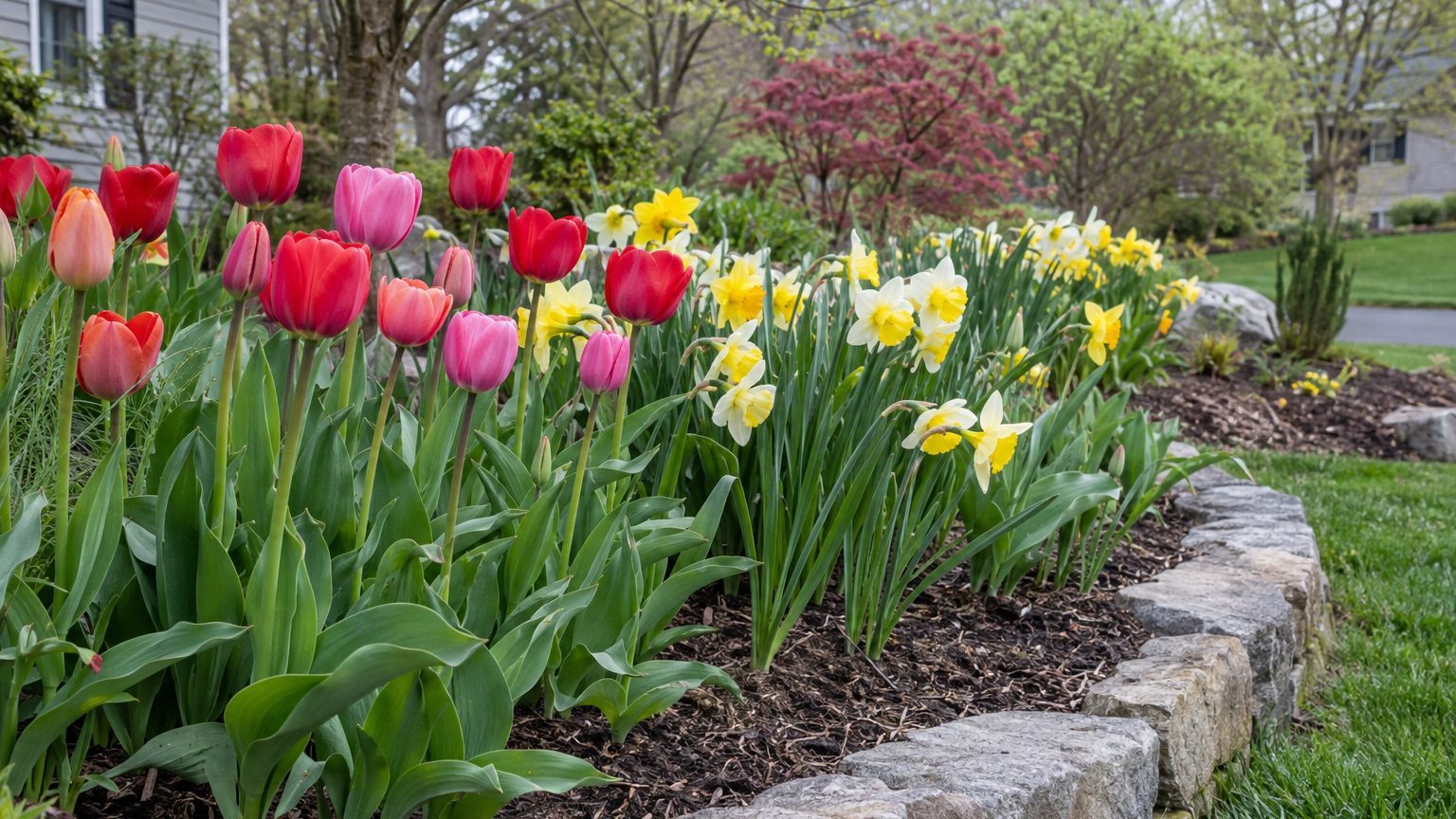
Green daffodil spears pushing through mulch and tulip buds opening on a cool morning are scenes most northern yards share. Florida plays by different rules. Tulips and daffodils behave differently here, and the reason is how much winter cold your bulbs actually get.

When Do Tulips and Daffodils Bloom in Florida?

When Do Tulips and Daffodils Bloom in Florida?

Bloom follows the warming of spring, and no single month fits the whole state. What decides the show is whether a bulb got the cold rest it needs, which Florida winters rarely supply to tulips and true daffodils.

Bulb When it blooms in Florida What sets the timing
True daffodils Follows spring warming, with little success expected Winters too mild to give the cold they want
Polyanthus narcissus (paper white, Grand soleil d’or) Follows spring warming, and these do well Better suited to mild winters
Tulips Follows spring warming, once chilled Refrigerator chilling before planting
Hyacinths Follows spring warming, once chilled Refrigerator chilling before planting
Alliums Follows spring warming Needs winter cold to bloom

Crocus, early tulips and late tulips have no separate Florida timing worth promising, since they depend on the same missing cold. Of the group, alliums and the polyanthus narcissi are the ones that suit a Florida yard without a workaround.

How to Tell Your Bulbs Are About to Bloom

Because bloom follows the weather and not a fixed date, the bulbs themselves are a better clock than any calendar.

  • Green tips breaking the soil mean roots are working and the bulb has settled in, so keep the bed lightly moist and leave the mulch alone.
  • A leaf rosette that keeps widening says the bulb is gathering energy, so protect it from foraging animals and from being stepped on.
  • A thick stalk rising from the center of the leaves means a flower is on the way, which is your cue to clear nearby weeds so the stem stays upright.
  • A swollen bud still wrapped in green tells you color is close, and a cool spell will hold it back while warm days hurry it along.
  • A bud showing color at the tip is close to opening, so enjoy the flowers where they stand.
  • Leaves with no flower stalk usually mean a bulb that never got enough cold, which is common with tulips and hyacinths planted straight from the bag.

A bulb that sends up only leaves may not have received enough winter cold.

What to Do After Tulips and Daffodils Bloom in Florida

Snip off the faded flowers and leave everything else. The leaves feed the bulb for next year, so they stay in place until they turn yellow and then brown. Do not braid, knot or tie them, which cuts down the surface that gathers sunlight.

Expect tulips and daffodils to behave differently after bloom. Tulips are often short-lived in the garden, and Florida winters are too warm for the rest they need. Daffodils last longer and are the more reliable perennial bulb, though polyanthus types suit Florida better than the true daffodil.

Once the leaves have browned, they pull away easily and the bed can be tidied. Treat tulips as a seasonal color you replace, and keep your long-term bulb space for the kinds that return.

How Bloom Time Shifts Across Florida

Florida is long enough that winter cold changes a lot from the top of the state to the bottom, and the USDA hardiness zone system reflects that with a range of 8b to 11b.

  • Jacksonville and north Florida: Freezes still happen here, and the last one falls between February 16 and March 7 at Jacksonville. North Florida gets more outdoor cold than central and south Florida, though tulips still do not get the cold rest they need.
  • Orlando and central Florida: Frost is effectively absent, so bulbs that need a cold rest almost never get one outdoors. Refrigerator chilling is the reliable route, and bloom comes with spring warmth.
  • Miami and south Florida: Winters are warm, so tulips and hyacinths need refrigerator chilling, and according to Iowa State University Extension, alliums need the cold of winter to bloom.

Do not use the Jacksonville frost window for Orlando or Miami, because it does not apply there.

Where to Get Bulb Advice in Florida

Local growing conditions vary enough that advice written for your county beats general rules. University of Florida/IFAS Extension publishes bulb guidance for the state and offers local help.

  • The extension website carries bulb lists written for Florida yards, so look there before you buy anything new.
  • Your county office can tell you how cold your area really gets, so ask before you plant a bulb that needs a chill.
  • Call or visit before planting season, when staff can point you to bulbs that suit your soil and climate.

Common Questions

When Should You Plant Spring Bulbs in Florida?

Plant once the soil has cooled below about 60°F. That leaves roots time to form without pushing the bulbs into sprouting too early.

Will Animals Eat Your Tulips and Daffodils?

Voles, squirrels, rabbits and deer eat tulips and crocus. Daffodils are left alone, so animal damage is less of a worry.

Do You Need to Chill Bulbs Before Planting in Florida?

Most spring-flowering bulbs need about 12 to 16 weeks of cold to flower. Where winters are too mild to give it, tulips and hyacinths are chilled in the refrigerator before planting, and alliums need the cold of winter to bloom.

When to Plant Tulips and Daffodils in Florida

When to Plant Tulips and Daffodils in Florida

Paperwhites blooming by a front door in the cool months are a familiar Florida sight, while a bed of tulips is a much harder thing to pull off. Winters here are mild enough that spring bulbs behave differently than they do up north. Planting time, chilling and bulb choice all shift, and they shift again from Jacksonville down to Miami.

When to Plant Tulips and Daffodils in Florida

When to Plant Tulips and Daffodils in Florida

Plant spring bulbs in fall, once the soil has cooled below about 60°F, which gives roots time to form without tempting the bulbs to sprout early. A bulb’s year in a Florida yard runs roughly like this:

  • In early fall, buy bulbs while the selection is good and keep them somewhere cool and dry until you are ready to plant.
  • Through fall, chill tulips and hyacinths in the refrigerator, because Florida winters are too mild to give them the cold they need.
  • Once the soil has cooled below about 60°F, plant the bulbs, with paperwhite types and alliums going straight into the ground.
  • Right after planting, spread a layer of mulch to hold moisture and keep the soil from swinging in temperature.
  • In late winter and early spring, the first shoots push up, and the leaves should stay in place after the flowers fade.

Cold arrives at different times across the state. In Jacksonville, in north Florida, the first fall frost falls between November 26 and December 13, and USDA hardiness zones in Florida run from 8b to 11b. Central and south Florida are effectively frost-free, so frost dates do not guide planting there.

Which Spring Bulbs Do Best in Florida?

Bulbs that need no deep winter chill do best. Tulips struggle, because Florida winters are just too warm to give them the resting period they need. Paperwhite-type narcissi and alliums are the dependable choices.

True daffodils are a letdown here, since little success can be expected with them. The polyanthus narcissi are the better substitute.

Bulb type How it does in Florida Why
Tulips Struggle Winters are too warm for the cool dormancy they need
Hyacinths Need help Chilled in the refrigerator before planting where winters are mild
Polyanthus narcissi (paperwhite, Chinese sacred lily, Pearl White, Grand soleil d’or) Do well They flower without a chill period
True daffodils Little success They want more winter cold than Florida offers
Alliums Reliable choice They need the cold of winter to bloom

Crocus belongs in the same cautious group as tulips, and voles, squirrels, rabbits and deer eat both. Daffodils are left alone, which is one more reason to plant narcissi types where critters visit.

When to Plant, Chill and Care for Spring Bulbs in Florida

Each job here follows a sign in the yard or the bulb rather than a date on the calendar. The first is soil temperature, the second is the refrigerator, and the third is the color of the leaves.

Task Best timing in Florida Why then
Plant In fall, once the soil has cooled below about 60°F Roots form first, and the bulbs do not sprout too early
Chill (tulips and hyacinths) In the refrigerator before planting Most spring bulbs need 12 to 16 weeks of cold to flower, and Florida winters fall short
Leave the foliage After bloom, while the leaves are still green The leaves feed the bulb for next year

Cut off only the faded flowers and let the leaves yellow and brown on their own. Paperwhite types skip the refrigerator step, and according to Iowa State University Extension, alliums need the cold of winter to bloom.

How Bulb Planting Time Changes Across Florida

Florida stretches across very different winters, and the bulb plan changes with them.

  • North Florida (Jacksonville): Winter frost is real here, though three of thirty falls saw no freeze at all. This is the part of the state where the soil cools soonest, so bulbs can go in earlier than farther south.
  • Central Florida (Orlando): Winters are effectively frost-free. Planting follows a cool snap in the soil, and tulips and hyacinths depend entirely on refrigerator chilling.
  • South Florida (Miami): Frost is not part of the picture, and the growing calendar inverts. The main season runs through winter and summer is the hard part, so bulbs are planted later, when the soil finally cools.

Wherever you garden in the state, wait for the soil to cool before planting rather than relying on the calendar.

Where to Get Bulb Advice in Florida

Local help is useful when a bulb fails or a bed needs testing. Bulb choices that work in one county can fall flat in the next.

  • UF/IFAS Extension publishes bulb guides for Florida, and its pages are worth a read before buying.
  • Your county extension office can test your soil and diagnose a failing bulb, so bring a sample or photos along.
  • Go to the county office before planting if you are unsure about drainage, since a quick test can save a whole bed of bulbs.

Common Questions

How Long Should You Chill Tulip Bulbs in Florida?

In Florida, bulbs need about 60 days at 40°F or 120 days at 50°F. Keep them in the refrigerator, away from ripening fruit, and plant them as soon as the chill period ends.

Will Tulips Come Back the Following Year in Florida?

Not reliably. Tulips are often short-lived in the garden even in cold climates, and in Florida they usually bloom once. Paperwhite types are the better choice for returning color.

What If You Still Have Unplanted Bulbs After the Planting Window?

A bulb still in the bag is better planted late than stored over the winter. Plant it as soon as the soil is cool enough to dig, and water it in.

Best Grass Seed for Florida

Best Grass Seed for Florida

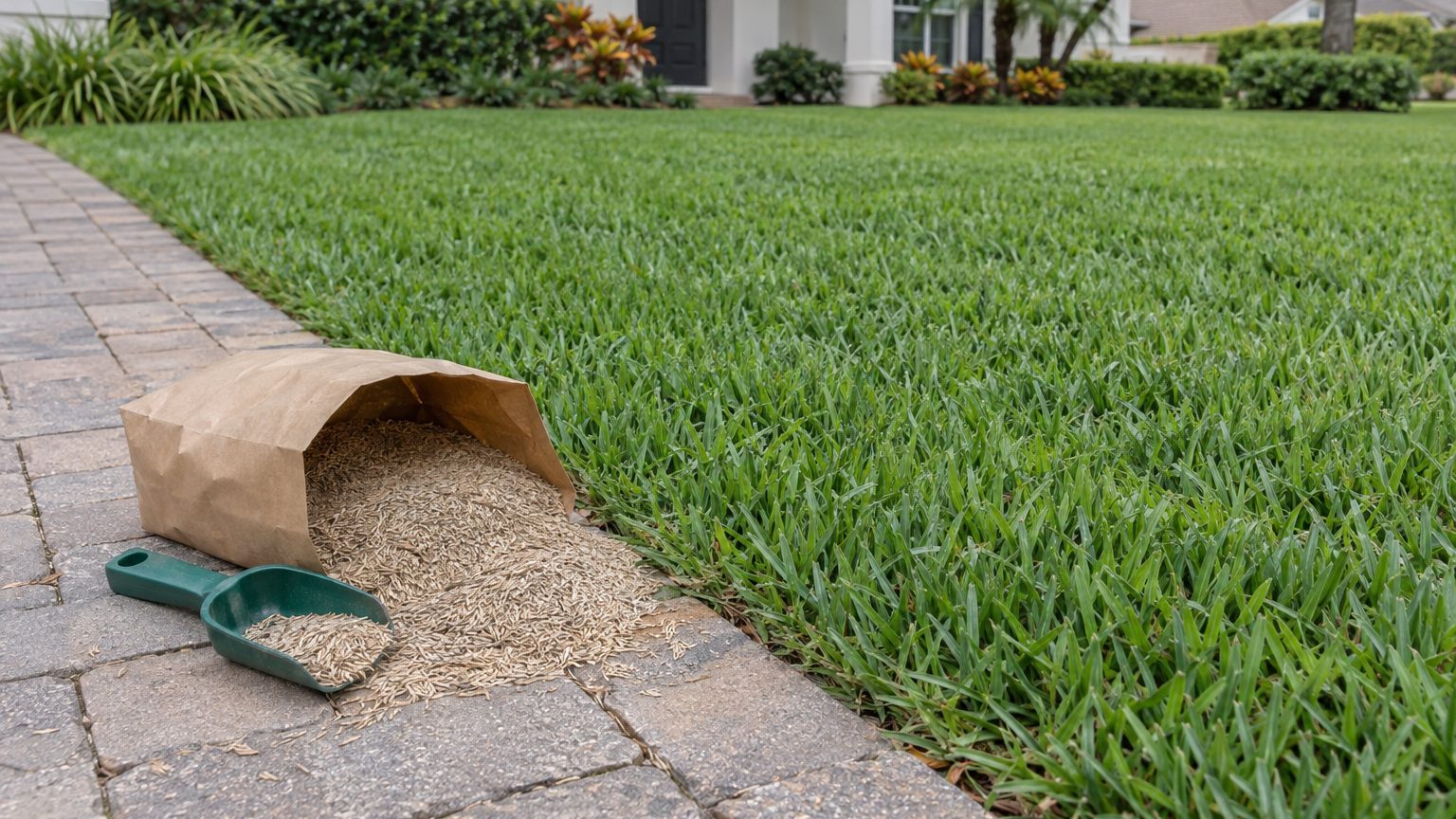
A Florida lawn with thin spots after a long, wet summer makes a bag of seed tempting. Warm-season grasses are the ones that hold up here, and only a few of them are sold as seed: bahiagrass, centipedegrass and bermudagrass. St. Augustinegrass, a familiar Florida lawn grass, comes as sod or plugs.

Which Grass Grows Best in Florida?

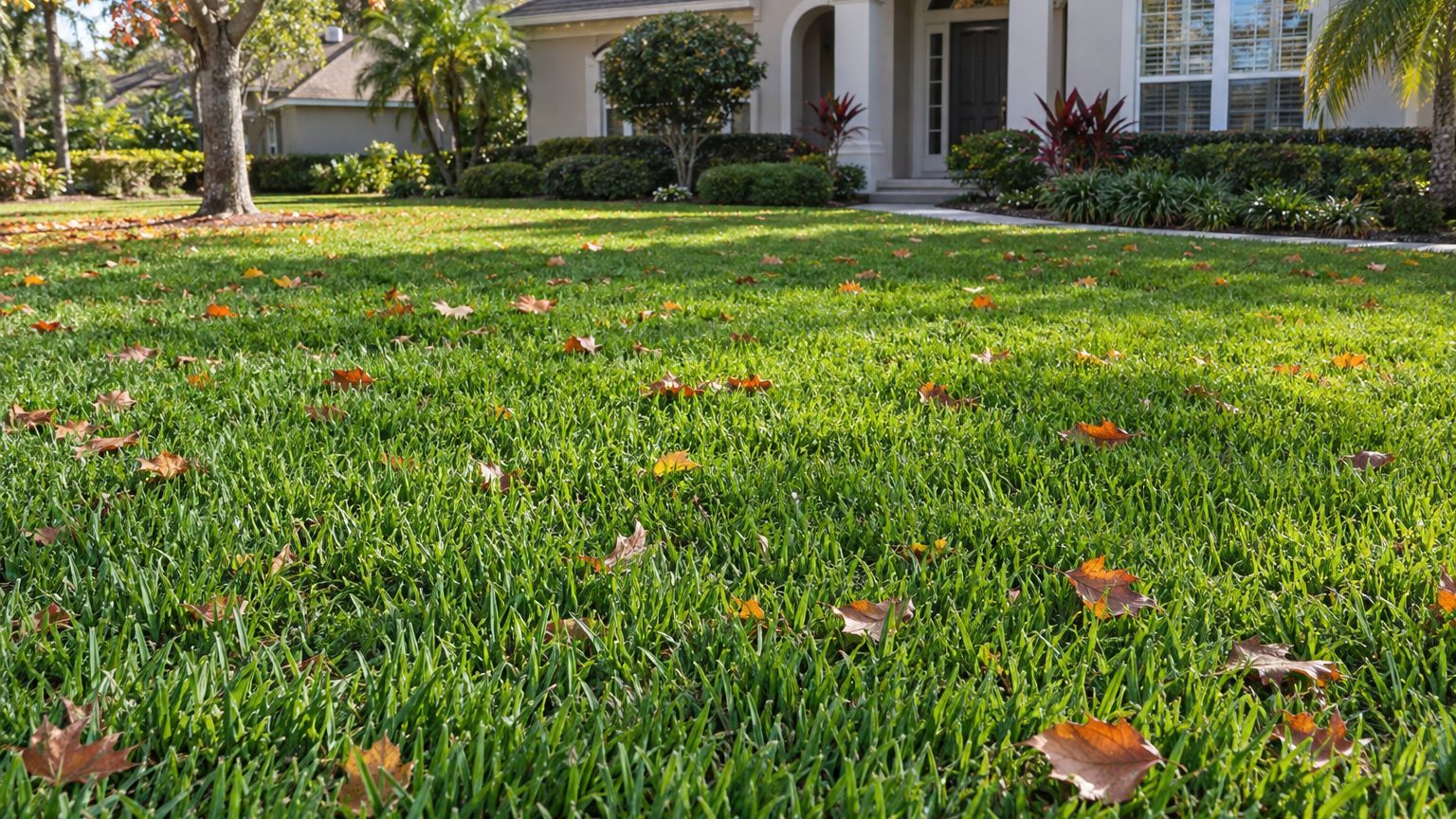
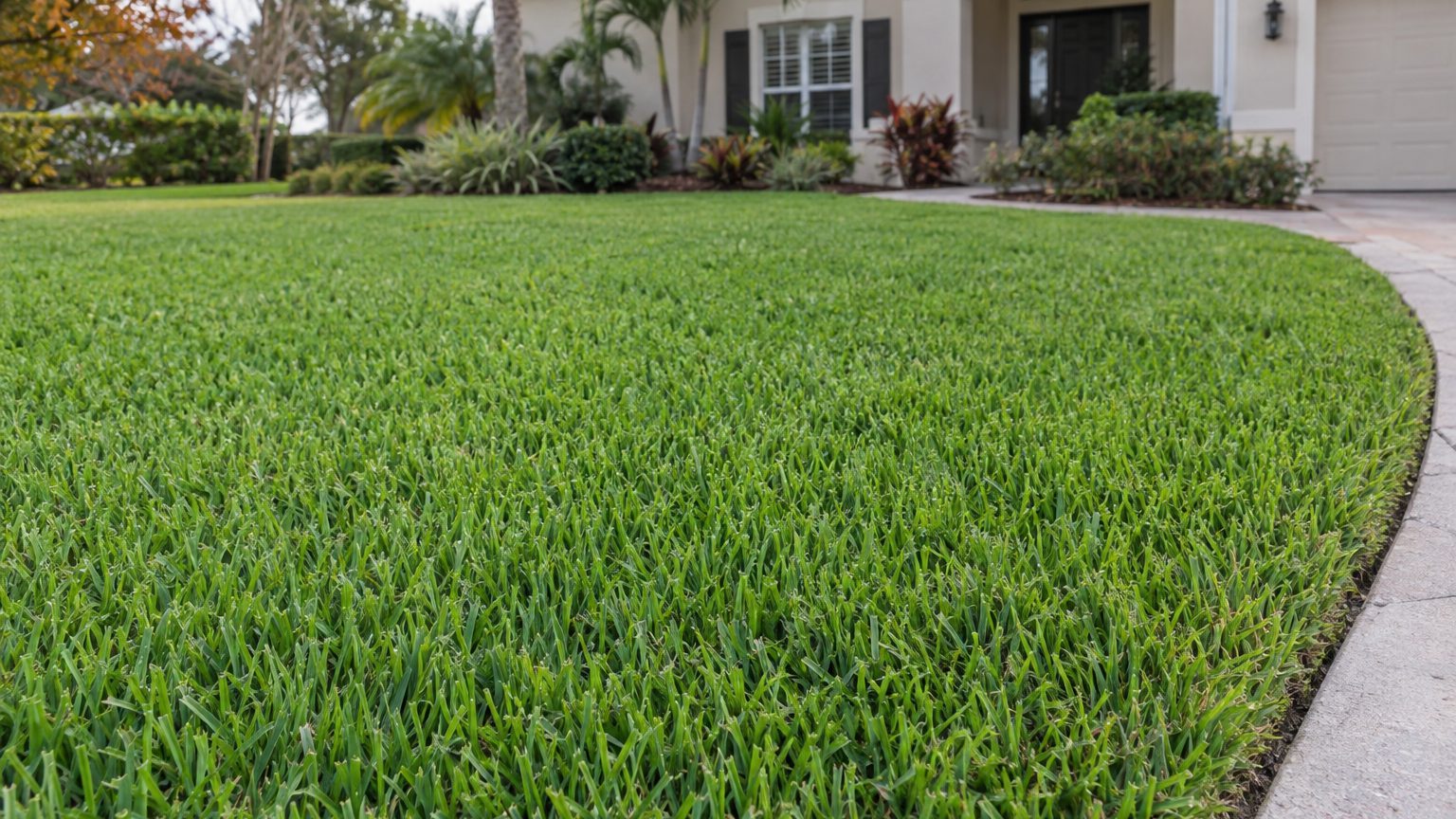
Lawn in Florida

Warm-season grasses suit Florida because winters are mild across the state, and central and south Florida are effectively frost-free. Cool-season grasses give out in the summer heat and humidity. Florida spans USDA hardiness zones 8b to 11b, so the choice shifts a little between the Panhandle and the Keys. These lawn grasses are recommended for the state, and each comes with different maintenance needs.

St. Augustinegrass

This grass is common in Florida neighborhoods. It spreads by runners, tolerates some shade, and handles heat and humidity well. You cannot buy it as seed, so plan on sod or plugs.

Bahiagrass

Bahiagrass grows from seed and copes with sandy, poor soil and dry spells. The texture is coarser and the look is less refined, but it asks little of you. It suits large, sunny yards where easy care matters more than a manicured finish.

Centipedegrass

Centipedegrass is a slow, low-growing lawn grass that grows from seed and prefers acidic soil. It can fit a lower-input lawn-care routine. Heavy foot traffic wears it down, so it fits yards that are looked at more than played on.

Bermudagrass

Bermudagrass takes full sun and heavy use, and it recovers quickly from wear. It also grows from seed. Shade is its weak point, and it asks for regular mowing and feeding to look its best.

Zoysiagrass

Zoysiagrass forms a dense, fine-textured carpet once established. It grows slowly, so a damaged patch takes a while to fill in. It does well in sun and light shade but is not a quick fix for bare ground.

Seashore Paspalum

Seashore paspalum was made for salty conditions, which makes it a natural for yards near the coast. Its upkeep can be demanding. Away from salt, the other grasses are simpler.

How to Choose Grass Seed for a Florida Yard

Start with the light. A yard that gets full sun most of the day opens up every option, while a shaded yard narrows the field fast. Then think about how much you want to mow, water and maintain.

Foot traffic matters too. A play area needs a grass that bounces back, and a front lawn that is only looked at can use a slower, gentler one.

Grass Planted from Fits a yard that
St. Augustinegrass Sod or plugs Has some shade and can be watered regularly
Bahiagrass Seed Is sunny, sandy and mowed or watered little
Centipedegrass Seed Is sunny, sees light traffic and gets mowed less often
Bermudagrass Seed Gets full sun, heavy play and regular mowing

Zoysiagrass suits a sunny to lightly shaded yard when you can wait for a dense lawn to fill in. Seashore paspalum is the pick for salty coastal lots. For a very shady yard, a different groundcover is often more realistic than any turfgrass.

Which Grasses Grow Where in Florida

Florida is long enough that the far north and the far south behave like different climates, and the coast adds its own twist.

  • The Panhandle and Jacksonville area: Winters bring real freezes, so lawns here turn brown and go dormant for a spell. Bermudagrass, centipedegrass and zoysiagrass all work, and sod goes down mainly from April to September.
  • Orlando and central Florida: Frost is rare, so grass stays greener longer and grows nearly year round. Summer heat and local fertilizer restrictions are the hard part, and St. Augustinegrass and bahiagrass are common choices.
  • Miami and South Florida: The yard is effectively frost-free, and sod can go down all year. Heat and heavy rain shape the lawn more than cold does.
  • The beaches and barrier islands: Salt spray and sandy soil rule out many grasses, and seashore paspalum earns its place here.

Check which of these describes your lot before you shop, because a grass that thrives in Pensacola can struggle on a Keys shoreline.

Grass Seed Mistakes to Avoid in Florida

Buying St. Augustine Seed

A bag labeled as St. Augustinegrass seed should raise a flag, because the grass is not sold that way. If you want it, order sod or plugs. If you want to seed, choose bahiagrass, centipedegrass or bermudagrass.

Seeding Outside the Window

Seed needs warm soil and steady moisture to take. In Florida, May is the month to seed, and April or June also work. Keep in mind that many Florida counties and cities, including Orange, Pinellas, Manatee, Sarasota and Lee, ban nitrogen and phosphorus fertilizer from June 1 to September 30, so check your county before planning a feeding.

Burying or Skimping the Seed

Cover seed with no more than 0.25 inch of soil, then press it down to improve seed-to-soil contact. Deeper than that and the sprouts struggle to reach daylight. Follow the rate printed on the bag for your species. Sowing thin leaves gaps for weeds, and sowing heavy makes seedlings compete.

Where to Get Lawn Advice in Florida

Soil, salt, shade and county rules all vary, so local advice saves guesswork. Florida’s extension network exists for exactly these questions and is built around each county.

  • The University of Florida IFAS Extension site offers lawn guides for each grass, so read up before you buy anything.
  • Your county extension office can tell you which fertilizer rules apply where you live, so call before you feed in late spring.
  • Ask your county office whether it offers soil testing, especially when you are choosing between grasses or preparing to plant.

Common Questions

When Can You Lay Sod in Florida?

Sod and plugs go down while the grass is actively growing. That means April to September in north and central Florida, with March and October as a fallback, and all year in the South.

Is July Too Late to Seed a Florida Lawn?

For seed, yes. May is the main month to seed, while April or June can still work. If July finds you with bare ground, sod is the better route because it can go down all summer.

When Should You First Feed a New Florida Lawn?

Wait until the grass greens up in spring, which in Florida means April or May. If you miss that, October still works. Watering through the warm months is just as important, and April to October is the period when a new lawn needs it most.

Lawn Problems and Solutions in Florida

Lawn Problems and Solutions in Florida

Brown circles in August, yellow blades after a wet spell, a thin patch where the mower scalped the grass: Florida lawns show trouble in every season. Heat, humidity, sandy soil and familiar pests often drive these problems, and the symptoms become easier to recognize once you know what to check.

Lawn Pests and Diseases in Florida

Weeds in Thin Spring Turf

As grass greens up in spring, weeds fill any gap left by a tired winter lawn. In Jacksonville, the last spring freeze usually falls between February 16 and March 7, and weeds often jump ahead of the turf as soon as the cold ends.

A thick, evenly mowed lawn shades the soil and helps keep weed seedlings from taking hold. Pull small clumps by hand, and fix the thin areas before the weeds claim them.

Chinch Bug Patches

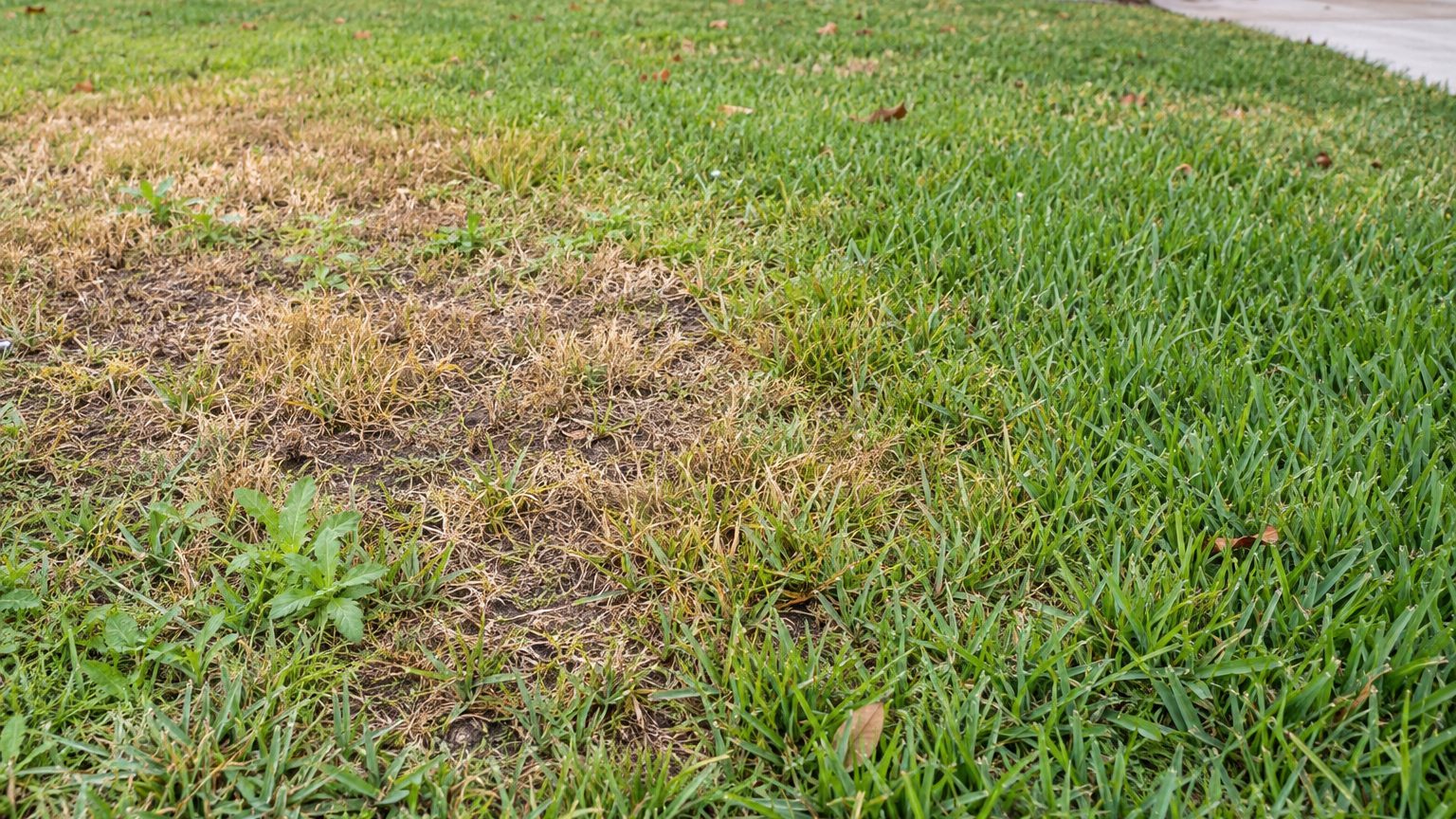
Yellow, then straw-colored patches that spread outward in full sun point to chinch bugs, especially in St. Augustine grass. The damage looks like drought, but watering does not bring the grass back.

Part the blades at the edge of a patch, where green meets brown, and look near the soil for tiny dark insects. Catching them early keeps a small patch from becoming a large one.

Large Patch in Cool, Wet Weather

Round or irregular patches that turn yellow, then brown, appear when weather turns cool and damp, mostly in fall and spring. The blades pull away easily at the base, which separates this from drought.

Water in the morning so the lawn dries during the day, and skip heavy nitrogen when the grass is slowing down.

Sod Webworm Chewing

Ragged, chewed blades and small ragged brown spots that grow over time suggest caterpillars feeding at night. Birds pecking at the lawn in the morning can be another clue.

Look for green droppings and small moths flitting over the grass at dusk. Healthy, regularly mowed turf recovers from light feeding on its own.

Thatch Buildup

A spongy feel underfoot and water that runs off instead of soaking in point to thatch. A layer up to 1/2 inch is healthy, but anything thicker deserves dethatching or core aeration.

In Florida, May and June are the months for dethatching, and April also works, because the grass is growing fast enough to recover.

How to Tell Which Lawn Problem You Have

Start with the shape of the damage, then confirm it with another clue. A patch that looks the same at a glance can come from insects, fungus or a mowing mistake, so inspect the grass before choosing a treatment.

Tug on the blades, check the sun, and note the season before you reach for any treatment.

What you see Where and when Likely cause
Yellow to straw patches that spread Full sun, hot weather Chinch bugs
Round patches, blades pull off at the base Cool, damp weather, fall or spring Large patch
Chewed, ragged blades, birds pecking Evenings and mornings, warm months Sod webworms
Spongy turf, water runs off Anywhere, worse in older lawns Thatch
Thin turf with weeds filling in Spring, after a weak winter Weeds in thin spots

Patches that match none of these, especially in shade or along a sprinkler line, often come from uneven water or a dull mower blade.

Where Lawn Problems Are Worst in Florida

Florida’s heat and humidity are everywhere, but the details shift from the Panhandle to the Keys.

  • North Florida and the Panhandle: Winter freezes still happen here, so grass goes dormant and weeds move in during spring. Cool, damp spells in fall and spring invite large patch.
  • Central Florida, including Orlando: Frost is rare, so the growing calendar flips and summer is the stressful stretch. Chinch bugs and summer fertilizer rules deserve attention here.
  • South Florida, including Miami: The grass grows nearly all year, so pest pressure can continue through winter. Heavy summer rain and sandy soil make fungus and nutrient loss common.

Coastal lawns also deal with salt spray and sandy ground that drains fast, so they dry out sooner between rains.

Lawn Care Mistakes That Invite Problems in Florida

Mowing Too Short

Cutting low scalps the grass, stresses the roots and lets weeds sneak in. Mowing is a year-round job here, so the habit matters in every month.

Raise the mower deck and cut often enough that you never remove much blade at once.

Watering in the Evening

Wet grass overnight is an open invitation to fungus like large patch. Watering matters most from April through October, when the grass is growing hardest.

Water early in the morning, deeply and less often, so the blades dry out in the sun.

Feeding in the Summer Rainy Season

Many Florida counties and cities, including Orange, Pinellas, Manatee, Sarasota and Lee, ban nitrogen and phosphorus fertilizer from June 1 to September 30, so check your county before you buy a bag.

Plan the first feeding for April or May, when the grass greens up, and use October as a fallback if you miss spring.

Where to Get Lawn Advice in Florida

Local help is easy to reach, and it knows your soil, your grass and your county’s rules.

  • The UF/IFAS Extension offers guides on Florida grasses, pests and fertilizer rules, and can help when a patch appears.
  • Your county extension office can help identify a pest from a sample and explain local fertilizer ordinances, so bring a piece of turf with roots when you visit.

Common Questions

Why Does My St. Augustine Lawn Turn Yellow in Summer Even When I Water?

Yellowing that spreads outward in full sun, with insects near the soil at the edge, points to chinch bugs rather than thirst. Water alone will not fix it.

Can You Seed a Lawn in Florida?

Yes, for bahia, centipede and bermuda, with May as the main window and April or June also working. St. Augustine is sold as sod or plugs only.

When Is the Right Time to Lay Sod in Florida?

Sod and plugs go down while the grass is growing, from April through September in North and Central Florida. In South Florida, laying sod works all year.

Florida Lawn Care Schedule, Month by Month

Florida Lawn Care Schedule, Month by Month

A Florida lawn rarely goes fully quiet, and the mowing never really stops. What changes is the pace: spring greening brings the first feeding, summer brings rain and restrictions, and winter slows the grass without ending the work.

What to Do Each Month in a Florida Lawn

Florida Lawn Care Schedule, Month by Month

Mowing continues year-round, so it appears below only in the months when the routine changes. The other jobs cluster between spring and early fall, when the grass is growing fast enough to recover from them.

Month In the lawn
January Mow only as often as growth demands. Cool weather slows the grass, so skip feeding and heavy work.
February Keep mowing at a steady height. Wait for warmth before any fertilizer, since the grass is still waking up.
March Mowing picks up as the grass greens. You can also lay sod now, as long as roots can grow into the warming soil.
April Feed for the first time as the grass greens up, and start watering. Sod is a good choice now. Dethatching and seeding can work too.
May May keeps lawn care busy. Feed, dethatch, lay sod and seed bahia, centipede or bermuda, all while growth is strong. Water regularly.
June Dethatch early, lay sod and water. Seeding can work too.
July Sod still roots well in the heat if you keep it watered.
August Mow, water and watch for stress in the heat. Sod can still go down.
September Keep laying sod and watering this month.
October This month also works for a fall feeding and for laying sod. Keep watering while the grass is still growing.
November Rest from feeding and watering. Mow as growth slows.
December Rest. The grass slows or goes semi-dormant in the north, so mow only when needed.

Seeding applies only to seeded grasses. St. Augustine is sold as sod or plugs, so for that lawn the planting months are sod months.

When Does the Lawn Season Start and End in Florida?

Growth follows soil warmth and grass type, not the calendar. Seed wants soil at 65 to 70 °F and rising, which is why seeding waits until spring is well along. In north Florida the grass greens up in spring and slows in late fall. Frost matters there mainly for young seedlings and fresh sod.

In Jacksonville, the last freeze of spring usually falls between February 16 and March 7. That is the window when a new planting could still get nipped, so hold off on tender work until it passes. The first freeze of fall tends to arrive between November 26 and December 13, and some years bring none at all.

Central and south Florida work differently. Frost is rare, so the calendar inverts: the grass grows through winter, and summer heat and rain are the hard part. Do not apply the Jacksonville dates to Orlando or Miami. Sod and plugs go down April to September in north and central Florida, and all year in the south.

How the Lawn Calendar Shifts Across Florida

A statewide date means little from the Panhandle to the Keys, so the direction of the shift matters more than the day.

  • Jacksonville and the Panhandle: Winters have real freezes, and grass goes dormant and browns. Spring work starts later, and young plantings need protection until the last freeze passes.
  • Orlando and Central Florida: Frost is occasional and brief. Grass slows in winter but rarely stops, so the season stretches longer than in the north.
  • Miami and South Florida: Effectively frost-free, so the grass grows all year. Sod can go down in any month, and summer stress is the main concern.

Coastal lawns tend to stay milder than inland ones, which can shave a little off the cold-weather slowdown.

Lawn Care Timing Mistakes to Avoid in Florida

Fertilizing Through the Summer Ban

Fertilizing Through the Summer Ban — Florida Lawn Care Schedule, Month by Month

Many Florida counties and cities, including Orange, Pinellas, Manatee, Sarasota and Lee, ban nitrogen and phosphorus fertilizer from June 1 to September 30. Feeding in that stretch risks a fine and sends nutrients into waterways. Do the main feeding in April and May, and check your county before an October top-up.

Seeding Too Late

Seed in May if you can, with April and June as backups. Later, summer rains and heat wash seed out or stress young seedlings before roots hold. Remember that St. Augustine is not grown from seed at all.

Dethatching While Growth Is Slow

Pulling thatch in winter leaves the grass too weak to fill in gaps. Dethatch in May or June, when the lawn is growing hard and recovers fast; April also works if you miss that window.

Where to Get Lawn Advice in Florida

Florida rules and grass choices vary by county, so local advice saves guesswork. UF/IFAS Extension can connect you with local lawn advice.

  • Your county extension office can confirm whether a fertilizer ban applies to your address, so call before the first spring feeding.
  • Ask the same office which grass suits your soil and shade, ideally before you buy sod in April or May.

Common Questions

Can You Mow a Florida Lawn in Winter?

Yes. Mowing is on the calendar every month, though in the cool months growth slows and a cut is needed less often.

Is St. Augustine Grass Grown from Seed?

No. It is sold as sod or plugs only, so plan to lay it in the sod months rather than seed it.

Should You Water in Winter?

Watering belongs to April through October. Outside those months the grass is slowing and needs little help beyond normal rain.

Florida Lawn Care: What to Do and When

Florida Lawn Care: What to Do and When

Warm-season grass follows different rhythms across Florida: northern lawns green up in spring, while central and southern lawns can grow through winter and face their hardest stretch in summer. Lawns in Florida follow soil warmth far more than the calendar, and the state is long enough that a lawn in the Panhandle and one in Miami keep different rhythms.

Frost Dates and Growing Season in Florida

Jacksonville is the reference point for the freeze dates below, while Florida as a whole spans USDA hardiness zones 8b to 11b. In Jacksonville, the last spring freeze falls between February 16 and March 7, which matters for young plugs and sod laid early.

  • In Jacksonville, lawns can go dormant and turn tan in winter, and the first fall freeze arrives between November 26 and December 13, so avoid installing sod or plugs once the lawn is dormant.
  • In early spring in Jacksonville, the last freeze risk fades between February 16 and March 7, but the grass stays brown until the soil warms, so wait for real green before feeding.
  • In April and May, the lawn greens up and grows fast, and this is the window for the first feeding, plus seeding in May for the grasses that come from seed.
  • From June through September, heat and summer rain push growth hardest, so mowing, watering and sod installation carry the work.
  • In October, growth begins to slow as nights cool, and feeding or scheduled watering wraps up before dormancy.

Central and south Florida are effectively frost-free, so the calendar flips there: winter is the easy growing season and summer is the hard part. Do not apply the north Florida freeze dates to Orlando or Miami.

Cool-Season or Warm-Season Grass in Florida?

Warm-season grass is the answer. Cool-season types like tall fescue and bluegrass struggle in Florida summer heat and humidity, and they have no use for mild winters. The grasses that persist here love heat, tolerate sandy soil and handle summer rain.

Most Florida lawns come from six warm-season grasses. Some are sold as seed, but St. Augustinegrass is only available as sod or plugs, never as seed.

Grass Season How it does in Florida
St. Augustinegrass Warm Widely planted, sold as sod or plugs only
Bahiagrass Warm Tough and low-input, can be seeded
Bermudagrass Warm Grows fast in full sun, can be seeded
Centipedegrass Warm Slower growing, can be seeded
Zoysiagrass Warm Forms a dense turf, planted from sod or plugs
Seashore paspalum Warm A fit for coastal and salty conditions

Which one suits your yard depends on sun, soil and how much mowing you want to do. The Florida grass seed guide goes deeper on choosing one.

When to Seed, Fertilize and Aerate a Lawn in Florida

Planting happens in the warm months, when roots form quickly. Aerate compacted soil while the turf is actively growing so it can recover. Seeding is limited to bahia, centipede and bermuda, since St. Augustine goes in as sod or plugs.

Many Florida counties and cities, including Orange, Pinellas, Manatee, Sarasota and Lee, ban nitrogen and phosphorus fertilizer from June 1 to September 30, so check your county before feeding in summer.

Task Recommended timing in Florida Why then
Seeding May, or April and June Warm soil gets bahia, centipede and bermuda growing quickly
Laying sod April through September, or March and October Sod and plugs root while the grass is actively growing
Fertilizing April and May, or October First feeding comes when the grass greens up in spring
Dethatching May and June, or April The lawn recovers fast once it is growing hard
Watering April through October Growth is active and rain can be uneven

Mowing runs all twelve months, though it slows in winter. In North and Central Florida, sod goes down from April to September, while in the South it can go down all year.

Lawn Problems to Watch for in Florida

Tan Grass After Winter Cold

A tan, crispy lawn in winter is usually dormancy in north Florida, where freezes still arrive. Tan blades together with cold nights point to dormancy, not death. Hold off on feeding and watering heavily until spring growth returns and the lawn greens up again.

Thin Grass in Summer Heat

Thinning turf that stays patchy through the hot, wet months often shows up where mowing is too low or the soil stays soggy. Humidity and heat stress the grass at the same time. Raise the mower height, water at the right moments and avoid adding fertilizer where county rules prohibit it.

Dry Patches in Sandy Soil

On sandy soil, dry, bluish, curling blades between rains point toward drought stress, though persistent patches may need a closer diagnosis. Water deeply when the grass shows these signs, especially from April through October, instead of sprinkling lightly.

How Lawn Care Dates Change Across Florida

Florida stretches far enough that the season changes with your latitude and distance from the coast.

  • The Panhandle and Jacksonville: Winter freezes still happen, so lawns go dormant and spring work waits for warm soil.
  • Orlando and Central Florida: Frost is rare, so growth starts earlier and the cool months are easier for the lawn than summer.
  • Miami and the Keys: The lawn can grow nearly year-round, so the main stress comes from summer heat and rain.

Coastal yards also deal with salt, which favors tougher grasses like seashore paspalum.

Where to Get Lawn Advice in Florida

UF/IFAS Extension serves every county in Florida with lawn guidance suited to local soil and rules.

  • Your county extension office can explain local fertilizer restrictions before you plan any summer feeding.
  • Bring a sample of damaged turf to the office to get a diagnosis when patches appear.
  • Contact them in spring, before the first feeding, to confirm what your lawn needs.

Common Questions

Can You Plant St. Augustinegrass from Seed in Florida?

No. St. Augustinegrass is sold only as sod or plugs, so seeding is for other warm-season grasses like bahia, centipede and bermuda.

Is the Lawn Dormant All Winter in Florida?

It depends on where you live. North Florida lawns turn tan during freezes, while central and south Florida lawns stay green or slow only slightly.

Can You Fertilize a Florida Lawn in Summer?

Often not. Check your county rule before applying fertilizer in summer.

When to Prune Hydrangeas in Florida

When to Prune Hydrangeas in Florida

Plant hydrangeas in Florida during February, March, September, or October, the months this state’s calendar marks for planting, with Jacksonville anchoring the frost-driven part of that window since its last spring frost falls between February 16 and March 7. Prune bigleaf types in June or July, right after bloom. South of the frost line, the whole pattern flips, and this guide sorts out both.

When to prune hydrangeas in Florida: The Short Answer

Jacksonville anchors the frost-dated half of this calendar, and NOAA NCEI 1991-2020 Climate Normals puts its last spring frost between February 16 and March 7, with the first fall frost landing November 26 to December 13. Plant hydrangeas in February, March, September, or October under this state’s calendar, and prune bigleaf types in June or July, once the blooms fade.

  • January: North Florida sits deep in dormancy, well ahead of the last frost window. Central and south growers are mid-season and should keep feeding lightly.
  • February: The planting window opens statewide. Near Jacksonville, hold off until the last frost window closes in early March if soil still feels cold.
  • March: Planting and the year’s first fertilizing round both fall here. This is usually the last month with real frost risk near Jacksonville.
  • April: New transplants settle into warming soil. Check for winter dieback and cut blackened stems back to live wood.
  • May: The second fertilizing round lands now. Watch rainfall since spring showers can taper off before summer heat sets in.
  • June: Prune bigleaf hydrangeas right after the spring flush fades, since next year’s buds form on this year’s new wood.
  • July: Pruning and the third fertilizing round overlap. Finish cuts early so new growth hardens before fall arrives.
  • August: Peak heat stresses shallow roots statewide. Water deeply in the morning and mulch to keep root zones cool.
  • September: The fall planting window opens as the heat breaks. New roots get a full season to establish before winter.
  • October: Planting continues into cooler weather. This is the last easy month to get shrubs in before frost risk returns further north.
  • November: The first fall frost window begins late in the month near Jacksonville. Central and south Florida keep growing straight through it.
  • December: North Florida shrubs go dormant once frost arrives. South of that line, hydrangeas often keep their leaves and stay active.

The frost-driven pattern defines north Florida. Below the Ocala line, hydrangeas often stay in leaf year-round, and the riskiest month flips from January to August, so treat this as a starting point rather than a fixed script.

How to Work Out the Dates for Your Own Yard

Frost windows set the anchor, and everything else here counts backward or forward from that anchor in weeks, not fixed dates.

  1. Find your local last frost date: Jacksonville’s window runs February 16 to March 7 under NOAA NCEI 1991-2020 Climate Normals, so gardeners near that station should count from the later end of the range.
  2. Check your hardiness zone: Florida spans 8b to 11b under the USDA Plant Hardiness Zone Map, and a shrub rated for 8b in a catalog will winter fine even in the state’s coldest pocket.
  3. Match the zone to your ZIP code: a yard near Pensacola sits closer to 8b while one near Naples sits near 11b, and that gap decides whether frost matters at all.
  4. Push planting later if you’re inland: inland cold snaps often linger past the coastal date, so add a week or two to the February start if frost still shows up on local forecasts.
  5. Pull pruning earlier if you’re south of Ocala: bigleaf types finish blooming sooner in warmer zones, so June pruning can slide into late May without harming next year’s buds.

None of this replaces a look at your own thermometer. Two yards ten miles apart can differ by a full zone once elevation or distance from water gets involved.

Florida North to South: How the Dates Shift

Zone alone doesn’t decide the date. Elevation, distance from the coast, and how far south you sit inside Florida all push these frost windows in different directions.

  • The Panhandle and North Florida (Jacksonville, Tallahassee, Pensacola): frost is real here, and the calendar, anchored to Jacksonville, applies most directly to this stretch.
  • Central Florida (Orlando, Tampa, Ocala): freezes turn rare, and the growing season leans toward winter rather than the frost-driven pattern further north.
  • South Florida (Miami, Naples, Fort Lauderdale): frost essentially disappears, and the calendar flips, with summer heat replacing winter cold as the season to plan around.

The state guide breaks down exactly where that inversion starts and what it means for planting and pruning dates in each region.

Mistakes Florida Punishes

No flowers the following spring

Bigleaf hydrangeas set next year’s buds on this year’s wood soon after they bloom, so cutting them back in September or October removes flowers before they form. Keep pruning inside the June to July window and skip fall cleanup on this species entirely.

Planting in peak summer heat

New roots planted in July or August fight heat and humidity at once, and many never establish before stress sets in. Wait for the state’s fall window in September or October, when the ground cools and rainfall steadies.

Treating the whole state alike

A calendar built around Jacksonville’s frost dates doesn’t hold once you cross into central or south Florida, where frost barely registers and summer becomes the tough season instead. Check the by-state guide for the region that actually matches your yard.

Florida Extension Offices and County Contacts

The state’s frost windows and hardiness range only go so far, and a county office fills in the rest, from soil quirks to local pest pressure. The University of Florida IFAS Extension network covers every county with an office and a horticulture agent.

  • Your state page: the frost dates and the pruning window where you live.
  • Which ones hold up here: the varieties worth planting in this climate.
  • What goes wrong here: the pests and problems specific to Florida yards.

Call your county office before you plant if your yard sits in a frost pocket the state map doesn’t show.

Common questions

Can I plant hydrangeas in Florida during summer?

July and August heat stresses new roots before they can establish. Wait for the September or October window instead.

Why won’t my hydrangea bloom in central Florida?

Bigleaf types set buds on old wood shortly after flowering, so a late prune, a hard cutback, or an off-schedule trim in the wrong month can remove next year’s flowers before they ever form.

Does frost hurt an established hydrangea in North Florida?

Established roots usually survive a frost near Jacksonville’s typical window without lasting harm. Stems can blacken and die back, but new growth from the base returns once spring warms the soil again.

Hydrangeas That Grow Well in Florida

Hydrangeas That Grow Well in Florida

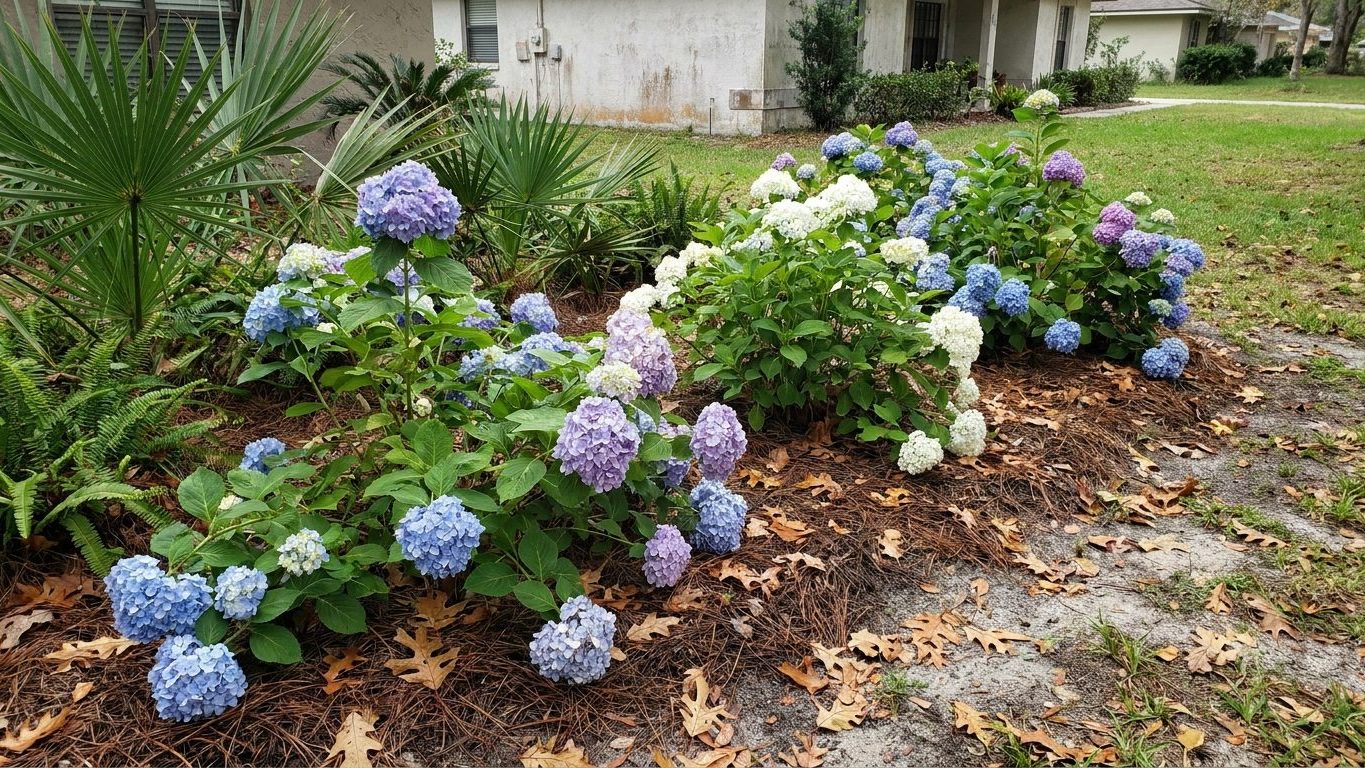
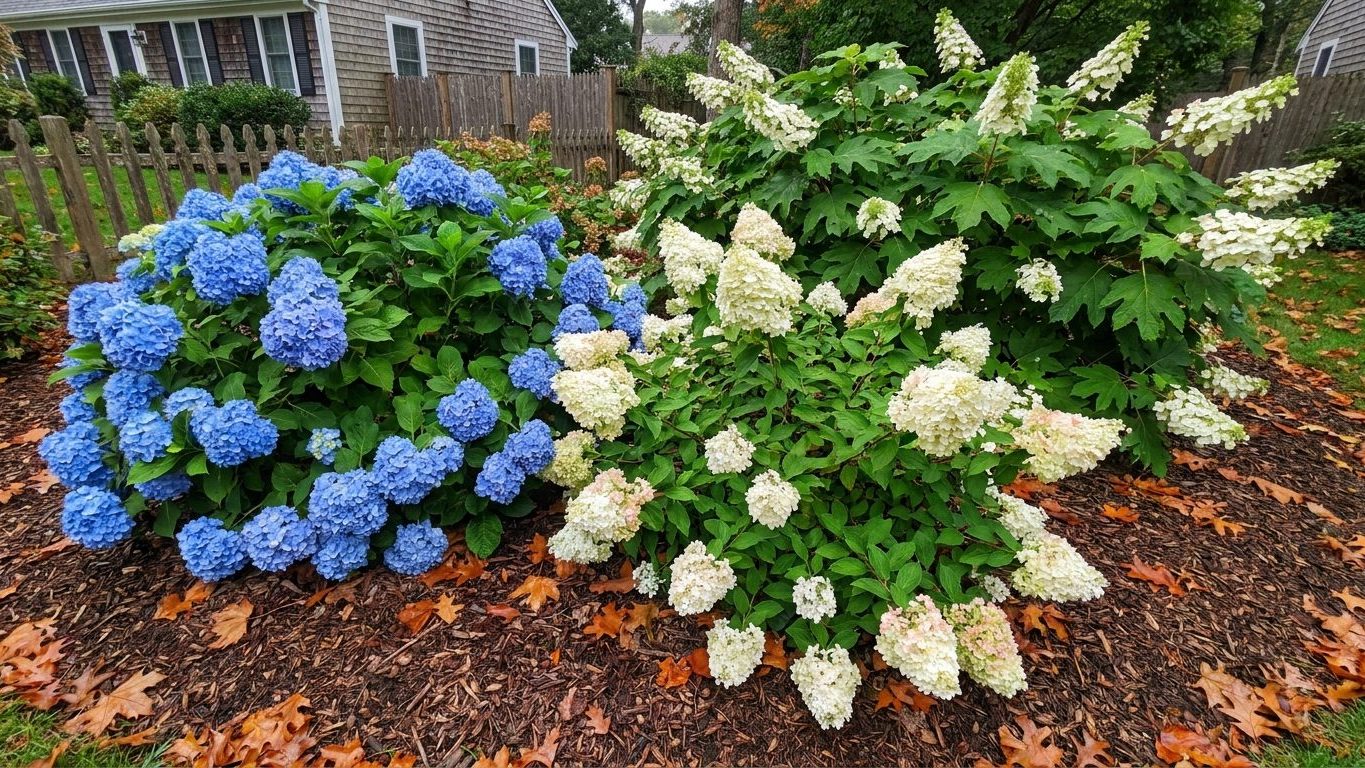
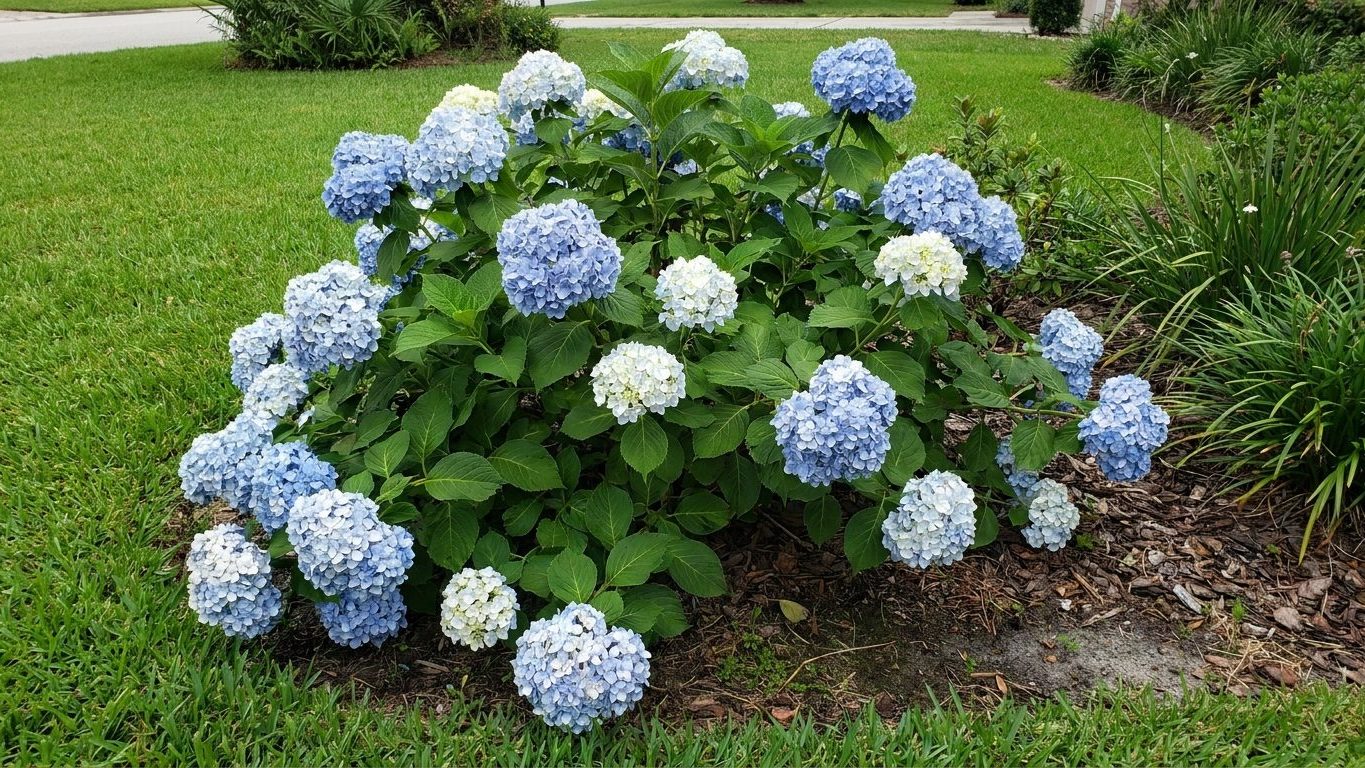
Panicle and oakleaf hydrangeas hold up best across Florida, tolerating full sun and long summers with little fuss. Bigleaf hydrangea, the blue or pink pom-pom type most people picture, works too, but only with afternoon shade, steady water, and a spot outside the state’s harder freeze pockets.

Hydrangeas that grow well in Florida: The Short Answer

The USDA Plant Hardiness Zone Map puts the whole state at 8b-11b, a spread that runs from cool nights near Jacksonville, the reference city for this state’s climate data, down to frost-free Miami. Jacksonville’s last spring frost falls February 16 to March 7, and its first fall frost lands November 26 to December 13.

That swing decides which hydrangea species can handle both ends of the state, since a plant that shrugs off a Panhandle freeze can still scorch in a Miami August, and the reverse holds too.

Panicle hydrangea (Hydrangea paniculata)

Panicle hydrangea (Hydrangea paniculata) — Hydrangeas That Grow Well in Florida

This is the safest choice statewide because it blooms on new wood, so a late freeze near Jacksonville cannot wipe out the coming season’s flowers. It also shrugs off long, humid summers that stress other types, and it tolerates full sun even where oakleaf and bigleaf need afternoon shade to survive.

Oakleaf hydrangea (Hydrangea quercifolia)

Oakleaf hydrangea (Hydrangea quercifolia) — Hydrangeas That Grow Well in Florida

Native to the Southeast, this species already grows wild in parts of north Florida, so it arrived pre-adapted to the region’s heat and humidity. Its thick, textured leaves handle a few hours of direct sun without scorching, and it delivers fall color that few other hydrangeas offer this far south.

Smooth hydrangea (Hydrangea arborescens)

Smooth hydrangea (Hydrangea arborescens) — Hydrangeas That Grow Well in Florida

‘Annabelle’ and its relatives handle Florida’s rebound freezes reasonably well because, like paniculata, they flower on new wood each year. They prefer more shade and moisture than panicle types, though, and gardeners in the southern half of the state often see smaller blooms once midsummer heat peaks.

Reblooming bigleaf hydrangea (‘Endless Summer’ types)

Reblooming bigleaf hydrangea ('Endless Summer' types) — Hydrangeas That Grow Well in Florida

These cultivars flower on both old and new wood, which buys some insurance against a Jacksonville-area freeze that damages buds before they open. They still need afternoon shade and steady moisture from the spring planting window through summer, or their leaves wilt by early afternoon most days.

Bigleaf hydrangea (Hydrangea macrophylla)

Bigleaf hydrangea (Hydrangea macrophylla) — Hydrangeas That Grow Well in Florida

The classic blue or pink pom-pom shrub blooms mostly on old wood, so a hard freeze during Jacksonville’s frost window can strip an entire season’s flowers before they open. It also fades fastest in full Florida sun, which makes it a plant for morning light and afternoon shade only.

Mountain hydrangea (Hydrangea serrata)

Mountain hydrangea (Hydrangea serrata) — Hydrangeas That Grow Well in Florida

This is the riskiest pick south of the Panhandle, since it is bred for cooler summers than most of Florida delivers. Prolonged heat tends to stall growth and bloom production even with shade and irrigation, and it rarely rewards the extra care it demands here.

Whichever of these six you choose, match it to the microclimate on your own lot, since afternoon shade or a coastal breeze can move a variety from the risky end of this list to the safe end.

How to Work Out the Dates for Your Own Yard

Work out your own planting and pruning dates by counting backward from Jacksonville’s frost window instead of a fixed date, since NOAA NCEI 1991-2020 Climate Normals puts the last spring frost there between February 16 and March 7.

The same math works whether you are counting toward spring planting or backward from the first fall frost, since both edges of the growing season chase the same set of dates.

  1. Start counting from the last frost date: with the window at February 16 to March 7, treat early February plantings as needing frost cloth on standby.
  2. Match planting to the state’s plant months: this state’s calendar lists February, March, September, and October as the times to plant, which gives new roots weeks to establish before summer heat or a winter cold snap arrives.
  3. Hold bigleaf pruning to early summer: prune only in June or July, after spring bloom finishes and before next year’s buds start forming on old wood.
  4. Feed on the three scheduled months: fertilize in March, May, and July only, and skip any fall feeding that would push soft new growth toward the November 26 to December 13 frost window, since that growth freezes first.
  5. Check whether your pick blooms on new wood: panicle and smooth hydrangeas recover from a late frost near the February window and still flower through summer without stalling.
  6. Watch bigleaf for the opposite risk: because its buds form on old wood the year before, a freeze inside that same window can erase a season’s flowers even though the shrub survives.

Once you know which window applies to your address, the arithmetic is simple: count back from the frost date, not forward from a nursery tag, and you stop pruning off flowers before they even show up.

A gardener near the coast might push the plant date slightly later, since a marine breeze delays the ground’s last cold snap, but the order of the six steps above still holds.

Florida North to South: How the Dates Shift

Florida’s frost math changes fast between the Panhandle and the Keys, and that shift decides which hydrangea species even make sense in a given yard. Latitude is not the only variable, since coastal breezes and inland heat pockets nudge these dates too, even within a single county.

  • The Panhandle and North Florida (Jacksonville, Tallahassee, Gainesville): frost still arrives most winters, so panicle, oakleaf, and smooth hydrangeas that bloom on new wood recover faster than bigleaf types that lose next year’s buds to a hard freeze.
  • Central Florida (Orlando, Tampa, the Lakeland ridge): freezes turn rare and shallow here, so summer heat becomes the bigger threat and afternoon shade matters more than any frost cloth.
  • South Florida and the coasts (Miami, the Keys, the barrier islands): the growing calendar effectively inverts, with cooler months carrying the main bloom and summer heat and humidity doing the damage cold does further north.

Whichever part of the state you garden in, check your own region’s frost history and hardiness zone before you plant a hydrangea suited to a different part of the state, since a Panhandle recommendation and a Miami one rarely match.

Mistakes Florida Punishes

Three habits imported from cooler states get punished fastest in a Florida yard, and each one has a simple fix.

Planting bigleaf hydrangea in full afternoon sun

Florida’s summer sun scorches bigleaf leaves fast, even with regular watering, because the plant evolved for cooler, shadier native ranges than this state offers. Give it morning sun and afternoon shade instead, ideally on the east or north side of the house, and check the planting window before you dig.

Pruning after July

Cutting back bigleaf hydrangea past the June to July window removes the very buds it already set for next year, since those buds form on old wood months in advance. Prune only inside that window, and save any later trimming for panicle or smooth types instead.

Feeding on a fall schedule

Fertilizing outside the state’s scheduled months pushes tender new growth right into the November 26 to December 13 frost window, and that soft growth is what freezes first. Stick to the March, May, and July feedings, and let the plant harden off before fall arrives.

Florida Extension Offices and County Contacts

The state-level hardiness zone and frost window here are a starting point, not a final answer. Your county extension office adjusts for local soil, salt spray, and microclimate that no statewide number can capture.

  • Your state page: the Jacksonville frost dates and the June to July pruning window in one place.
  • Which ones hold up here: the six varieties above, ranked from safest to riskiest for Florida yards.
  • UF/IFAS Solutions for Your Life: find your county’s extension office for soil tests and salt-tolerant variety advice.

Call before you plant if you’re within a few miles of the coast, since salt spray changes which hydrangea survives faster than frost does.

Common questions

Can hydrangeas survive Florida summers without heavy shade?

Panicle and oakleaf types manage in full sun statewide, but bigleaf hydrangea needs afternoon shade south of the Jacksonville reference zone, or its leaves wilt by midafternoon most summer days.

Do hydrangeas need winter protection in Florida?

North Florida sees an actual frost window, November 26 to December 13 into February 16 to March 7, so a young shrub benefits from mulch and frost cloth during those weeks. Central and south Florida rarely need it.

Which hydrangea blooms the most reliably in a Florida yard?

Panicle hydrangea blooms on new wood every year regardless of what winter does, which makes it the most consistent bloomer from the Panhandle to the coast.

Hydrangea Pests and Diseases in Florida

Hydrangea Pests and Diseases in Florida

Florida hydrangeas face a shorter list of true threats than northern gardens, but humidity turns small problems into big ones fast. In Jacksonville, the reference city for the state’s climate data, the main risks are fungal, not insect, and they track the rainy season more than the calendar. Here is what actually shows up, in the order it shows up, and what stops it before it spreads.

Hydrangea pests and diseases Florida: The Short Answer

Most hydrangea trouble in Florida comes from heat and moisture, not from any single insect. In Jacksonville, the state’s reference station, the USDA Plant Hardiness Zone Map puts north Florida at 8b while the rest of the state runs warmer, up to 11b.

That extra warmth keeps fungal spores active for more months than a northern garden ever sees. Humidity, not cold, is what breaks a Florida hydrangea.

Aphids on new spring growth

Clusters of small green or black insects crowd tender stem tips as the plant leafs out, curling leaves and leaving a sticky residue behind. A strong water spray knocks most off, and insecticidal soap handles the rest. Check new growth weekly once you’re past the last spring frost window described on the Florida hydrangea calendar.

Powdery mildew on shaded leaves

A gray-white film settles over leaves that stay damp under thick canopy or crowded siding, and it spreads fastest during warm, wet stretches. Thin the surrounding shrubs for airflow, water at the base instead of overhead, and remove the worst leaves. It rarely kills the plant but it cuts bloom size.

Cercospora leaf spot in the rainy season

Round purple-brown spots appear on lower leaves first, then work upward as summer rains keep foliage wet for hours at a stretch. Pull off spotted leaves as soon as you see them and avoid watering in the evening. Left alone it can defoliate a shrub by late summer.

Spider mites during dry heat spells

Spider mites during dry heat spells — Hydrangea Pests and Diseases in Florida

Fine webbing and a dusty, stippled look on leaves shows up when a hot, dry week follows a wet one, favoring mites over fungus for once. A hard hose-down every few days breaks their life cycle better than most sprays. This often overlaps the state’s March, May, or July fertilizing months.

Scale insects on older wood

Scale insects on older wood — Hydrangea Pests and Diseases in Florida

Small brown bumps cling to woody stems by late summer, hard to notice until stems look dusty or sooty mold grows on their sticky excretion. Scrape off light infestations by hand or treat with horticultural oil in cooler weather. Heavy infestations weaken the whole shrub over a season.

Botrytis blight after a cool, damp spell

Botrytis blight after a cool, damp spell — Hydrangea Pests and Diseases in Florida

Brown, mushy patches show up on flower clusters and soft new growth after a stretch of cool, wet weather, usually as temperatures start to drop. Cut out affected blooms and improve air movement around the base. It fades on its own once drier weather returns.

Root rot in poorly drained soil

Wilting leaves on a plant still getting watered on schedule usually mean roots sitting in soggy soil, common in Florida’s flat, poorly drained yards. Raise the bed or work in coarse material before replanting, covered on the Florida hydrangea varieties page. Rot rarely reverses once it sets in.

How to Work Out the Dates for Your Own Yard

Matching a symptom to the right cause takes a few minutes of comparison, not a lab test.

  1. Check the calendar first: NOAA NCEI puts Jacksonville’s last spring frost between February 16 and March 7, so a spring symptom before that window is more likely cold stress than disease.
  2. Look at the leaf pattern: spots that start low and climb point to a fungus splashing up from wet soil, not an insect working down from the tips.
  3. Feel the residue: a sticky film means aphids or scale, a dry powder means mildew, and neither shows up the same way.
  4. Note the weather of the past week: a hot dry spell favors mites, a cool damp one favors botrytis, and a long wet stretch favors leaf spot.
  5. Check the planting zone: the USDA system lists 8b through 11b for the state, and a plant pushed a full zone warmer than its label struggles more with every problem.
  6. Compare against the pruning window: damage that shows up outside June or July, the state’s bigleaf pruning months, is unlikely to be pruning shock and worth a second look.

Five minutes with this list usually narrows six possible problems down to one or two, which is enough to know what to cut, spray, or simply wait out.

Florida North to South: How the Dates Shift

Frost dates and pest pressure both shift hard across a state this long, and north Florida behaves nothing like the rest of it.

  • North Florida (Jacksonville, Tallahassee, Gainesville): the only part of the state that sees a real frost window, so cold stress and fungal disease both track the same fall-to-spring calendar.
  • Central Florida (Orlando, Tampa, Ocala): frost is rare enough that the growing calendar flips, with the main season running through winter and summer heat becoming the harder stretch to manage.
  • South Florida (Miami, Naples, the Keys): effectively frost-free year round, where fungal pressure from constant humidity replaces cold as the shrub’s biggest threat, all season long.

Whichever part of the state you’re in, the Florida hydrangea guide lines up the frost and pruning windows for your exact spot.

Mistakes Florida Punishes

Watering overhead in the evening

Wetting leaves right before nightfall keeps them damp for hours, exactly what powdery mildew and leaf spot need to take hold in Florida’s humidity. Switch to a soaker hose at the base, ideally in the morning, and most fungal pressure drops within a couple of weeks.

Planting a zone too warm for the label

A tag written for cooler climates often can’t handle the extra heat once it’s a full zone warmer, and stressed plants draw pests faster than healthy ones. The state’s 8b to 11b range means a shrub that thrives in Jacksonville may struggle in Miami. Check the Florida hydrangea varieties page before buying.

Skipping the summer prune window

Cutting bigleaf hydrangeas outside June or July, the state’s set pruning months, removes next year’s flower buds and leaves fresh wounds open during the wettest part of the year. Wait for that window and disease pressure on the cuts drops with it.

Florida Extension Offices and County Contacts

The state-level numbers here are a starting point, and the county office fills in what’s different about your yard.

For a problem specific to your county, the UF/IFAS Extension network at sfyl.ifas.ufl.edu connects to a local office that can look at a leaf in person.

Common questions

Do I need to spray hydrangeas in Florida on a schedule?

No, most Florida problems trace back to watering habits and airflow rather than a pest calendar, so fixing those first usually cuts spraying down to occasional spot treatment.

Are Florida hydrangea diseases worse in south Florida than north Florida?

Fungal pressure runs higher in south Florida because the growing season never breaks for winter, while north Florida gets a cold stretch that slows spores down for a few months.

Can a hydrangea recover from root rot?

Rarely, once roots have gone soft and brown the shrub is usually done, which is why raised beds and good drainage matter more than any treatment after the fact.

The almanac, state by state. Every date on this site comes from a state’s own frost facts and its extension service’s calendar — and says where it comes from.