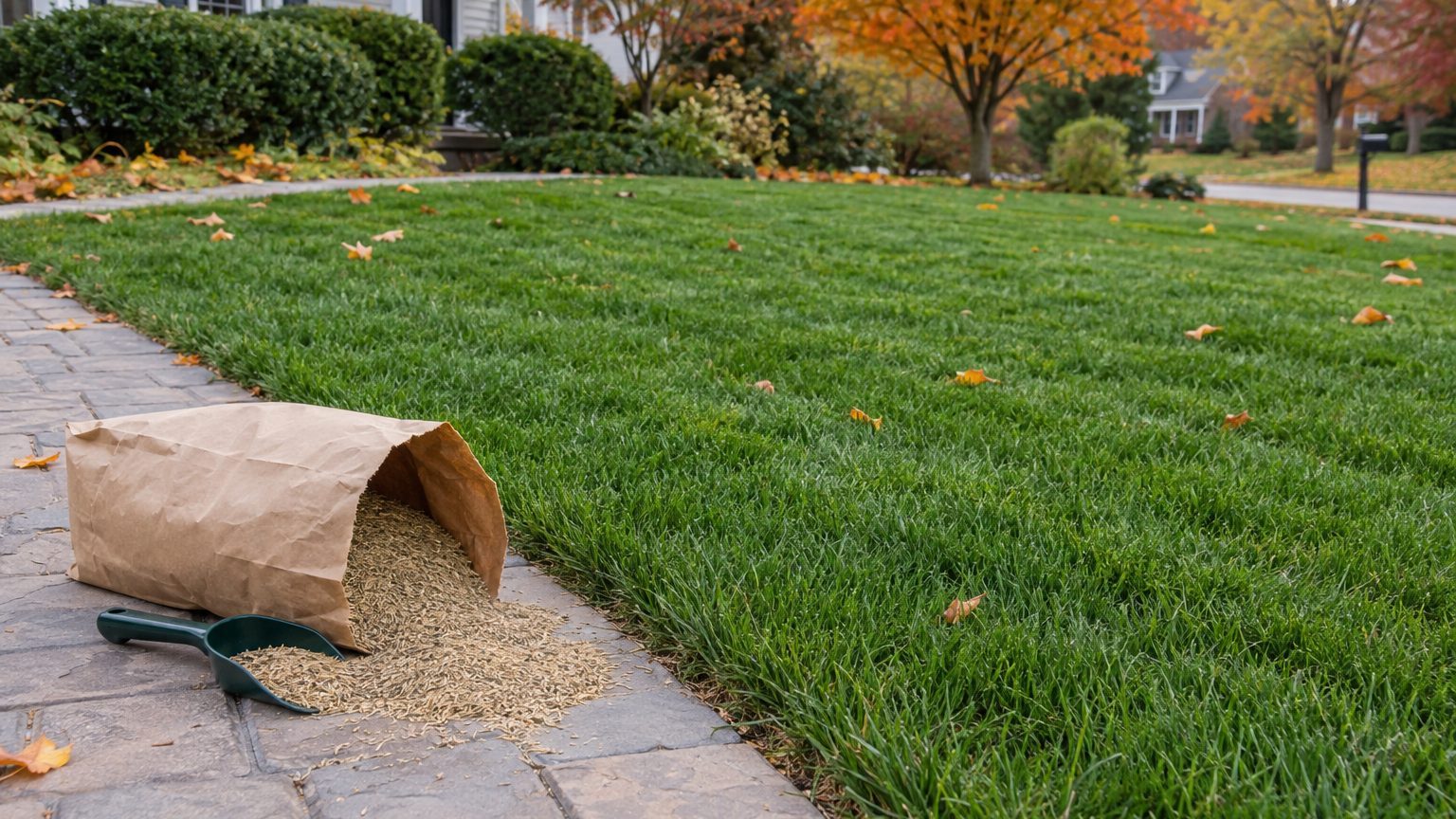
A thin, patchy lawn in late summer can be a sign that the grass is poorly matched to Delaware’s hot, humid summers and cold winters. Cool-season grasses suit the state, and tall fescue, Kentucky bluegrass, fine fescues and perennial ryegrass all earn a place. Which one fits depends on your sun, your traffic and how much you want to water.
Which Grass Grows Best in Delaware?
Cool-season grasses grow best here. They grow strongly in spring and fall, slow down in the July and August heat, and generally tolerate Delaware winters. Warm-season turf is a poor fit for most of the state. Among the cool-season grasses, they differ in how well they handle summer.
Tall Fescue
Tall fescue is a dependable choice for many Delaware yards. Its deep roots help it ride out dry spells, and it handles summer heat better than bluegrass or ryegrass.
It grows in clumps, so it looks coarser than bluegrass. It suits sunny lawns, play areas and anyone who wants a lawn that forgives a skipped watering.
Kentucky Bluegrass
Kentucky bluegrass gives the dense, carpet-like look many people want from a front lawn. It spreads by underground stems, so small bare spots slowly fill in on their own.
The trade-off is summer. It tends to go dormant and brown in a hot, dry stretch unless you water, and it needs full sun to look its best here.
Fine Fescues
Creeping red, chewings and hard fescue make up this group. They are the grasses to reach for under mature trees, because they cope with shade and poor, dry soil far better than bluegrass does.
They have a fine, soft texture and need little fertilizer. Heavy foot traffic wears them down, so they are better for a quiet yard than a ball field.
Perennial Ryegrass

Perennial ryegrass sprouts quickly, which makes it useful for fast cover on bare soil and for holding a slope while slower grasses catch up. It also wears well under foot traffic.
Used alone, perennial ryegrass is less reliable than tall fescue through Delaware’s summer heat. It works best as a partner in a mix.
Delaware — the year and the numbers
- State
- Delaware
- USDA zones
- 7a-8a
- Last spring frost
- April 3 to April 14
- First fall frost
- October 26 to November 7
- Annual rain
- 45 in
- Lawn type
- cool-season
- Source
- NOAA NCEI 1991-2020 Climate Normals, 32F freeze probabilities · Wilmington
How to Choose Grass Seed for a Delaware Yard
Start with the light. Count the hours of direct sun your lawn gets, then think about who walks on it and whether a hose or sprinkler is within easy reach. Those answers narrow the field quickly.
Mowing habits matter too. Bluegrass rewards a lawn you tend closely, while fescues are content with a looser routine.
| Your yard | Grass to sow | Why |
|---|---|---|
| Full sun, kids and pets | Tall fescue | Tough, deep roots, handles wear and heat |
| Full sun, regular watering, tidy look | Kentucky bluegrass | Dense turf that fills in its own gaps |
| Shade under trees | Fine fescues | Tolerates low light and dry soil |
| No irrigation, little mowing | Fine fescues or tall fescue | Low demands once established |
| Bare slope or quick cover | Perennial ryegrass in a mix | Sprouts fast and holds soil |
Many yards are part sun and part shade, and a mix handles that better than a single grass. Look at the label for the species names and pick a blend that matches the dominant condition in your yard. Seed for shade will still struggle where the ground never sees the sun.
Which Grasses Grow Where in Delaware
Delaware is a small state, but the lawn conditions shift as you travel from the Pennsylvania line down to the Atlantic beaches.
- New Castle County, including Wilmington and Newark: This part of the state is cooler than southern Delaware, with firmer, clay-leaning soil in many neighborhoods. Kentucky bluegrass and tall fescue both do well, and fine fescues fill the shady spots under older trees.
- Kent County, around Dover: Summer conditions and soils vary across the county. Tall fescue is the dependable base, with bluegrass where you can irrigate.
- Sussex County and the beaches near Rehoboth and Bethany: Winters are milder, and the sandy soil dries out faster. Tall fescue handles the dryness well, and bluegrass needs steady watering to stay green.
Frost timing differs between Wilmington and inland or rural yards, so check with your own county before you set a seeding date.
Grass Seed Mistakes to Avoid in Delaware
Choosing the Wrong Grass for the Site
Bluegrass seed spread under a big oak or maple will gradually thin out and sulk. Match the species primarily to the light and treat appearance as a lesser concern.
The same goes for sandy ground in southern Delaware, where a thirsty grass will brown at the first dry spell. Choose tall fescue there, or commit to watering.
Seeding at the Wrong Time
Seed sown in August or September has warm soil to sprout in and a long stretch of mild weather to root. That timing also lets seedlings get established before frost, which in Wilmington typically arrives October 26 to November 7. If you miss the fall window, April and May also work.
Summer seeding is the one to avoid. Tender seedlings dry out and burn in the heat, and weeds move in fast.
Burying or Skimping on the Seed
Seed needs good contact with soil. Cover it with no more than 0.25 inch of soil or straw, then press it down with a roller or the back of a rake so it touches the ground firmly.
Follow the rate printed on the bag for your species. Heavy sowing crowds seedlings and invites disease, while thin sowing leaves gaps for weeds. A small spreader gives more even coverage than throwing by hand.
Where to Get Lawn Advice in Delaware
Local help can settle questions about your soil, your shade and the grass already growing in your yard. Local resources are worth knowing before you buy seed.
- The University of Delaware Cooperative Extension offers lawn guidance written for Delaware conditions, which helps when you are comparing seed types or planning a renovation.
- Your county extension office, in New Castle, Kent or Sussex, can talk through soil testing and local problems, so call before you seed.
Common Questions
Can You Mix Grass Seed Types in a Delaware Lawn?
Yes. Blends of tall fescue with bluegrass, or fine fescues with ryegrass, cope with patchy sun and shade better than a single species. Check that the label lists the species and not just a generic name.
Should You Overseed a Thin Lawn or Start Over?
If grass still covers a fair share of the yard, core aerate in August or September and overseed into it. If weeds have taken over most of the ground, clearing and reseeding gives a cleaner result.
When Should You Fertilize a Newly Seeded Lawn?
A September fertilizer application suits a lawn seeded in fall, and May suits one seeded in spring. Use a product made for new grass and follow the label rate so you do not burn young seedlings.