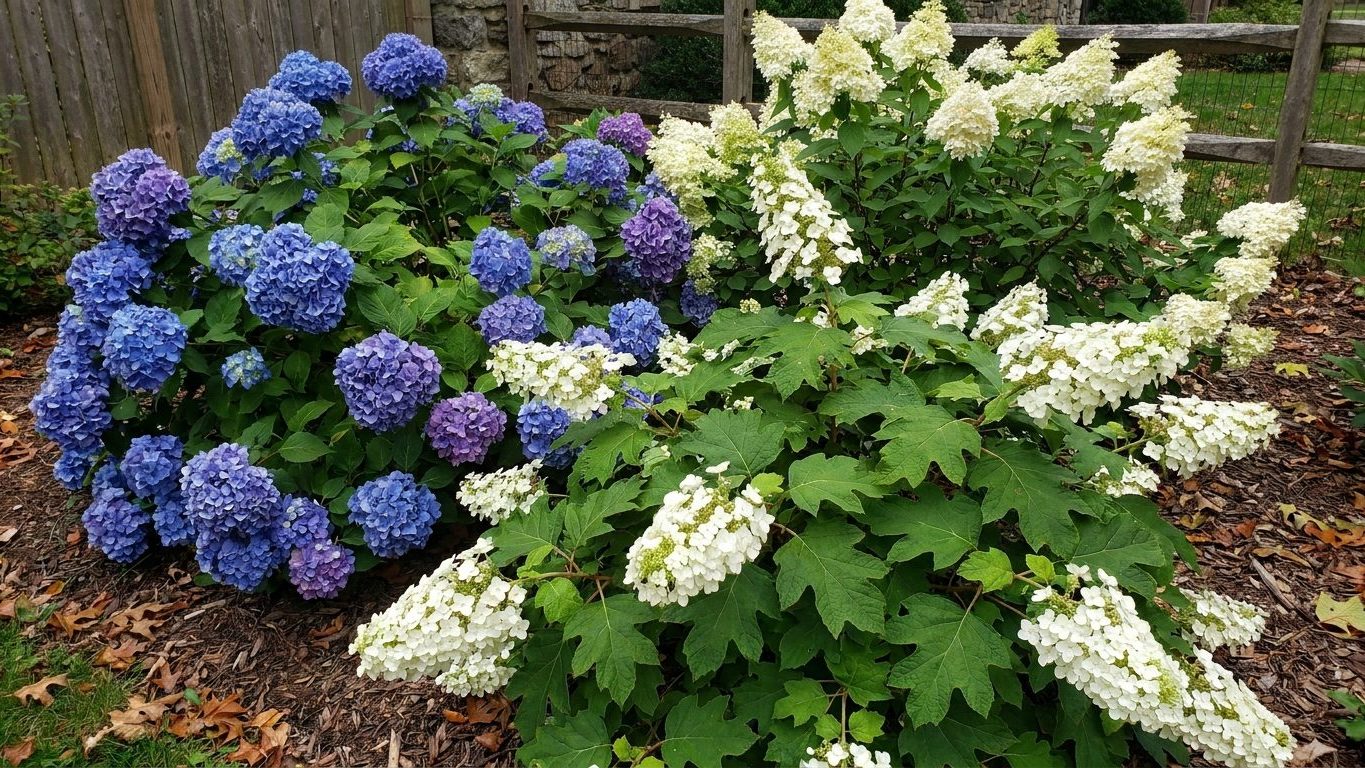
Panicle and smooth hydrangeas grow reliably almost anywhere in Delaware, from Wilmington’s clay soil to the sandy loam near Rehoboth Beach. Bigleaf and mountain hydrangeas can thrive too, but they gamble on a mild spring, since a late freeze can wipe out the flower buds they set the previous fall. Which one earns a spot in your yard depends less on the species name and more on how your particular county handles frost.
Hydrangeas that grow well in Delaware: The Short Answer
USDA Plant Hardiness Zone Map puts Wilmington at zone 7a, while the sandy pocket around Lewes and Rehoboth Beach edges into 8a, and that spread across the state decides which hydrangea blooms on schedule and which one skips a year. The safest bets tolerate the whole range without flinching, the riskiest ones need the mild end of it to set a full head of blooms.
Panicle hydrangea

Hydrangea paniculata blooms on new wood, so a late frost never touches the flower buds, it simply resprouts and blooms anyway. It handles both Wilmington’s heavier soil and the sandier ground further south, and it tolerates more direct sun than most other types here.
Smooth hydrangea

Hydrangea arborescens, the native behind cultivars like ‘Annabelle’, is built for the mid-Atlantic woodland edge and shrugs off Delaware winters without protection. It also blooms on new wood, so a hard freeze in April costs you nothing but a slightly later bloom, never a lost season.
Oakleaf hydrangea

Hydrangea quercifolia is native to the Southeast and settles into Delaware’s zone range without much complaint, tolerating both the clay around New Castle County and drier soil further inland. Its flower buds form in late summer rather than deep winter, which keeps it mostly clear of the state’s spring frost swings.
Bigleaf hydrangea

Hydrangea macrophylla is the mophead most people picture, and it grows here, but it sets its flower buds on old wood the previous fall, leaving them exposed through winter. A frost that lingers into the second week of April can blank out a whole season of color on an otherwise healthy shrub.
Mountain hydrangea

Hydrangea serrata behaves like a smaller, slightly tougher cousin of bigleaf, with buds that tolerate a bit more cold before failing. It still blooms mostly on old wood, so a shrub planted in a low, frost-pocket corner of a Kent County yard carries a similar risk, just with a wider margin.
Climbing hydrangea

Hydrangea anomala subsp. petiolaris survives Delaware winters without trouble once established, but establishment is the catch, it can sit for two or three seasons before putting out real growth or flowers. In a state where gardeners want quicker results, that slow start makes it the riskiest name on this list, not because of cold, but because of patience.
Delaware — the year and the numbers
- State
- Delaware
- USDA zones
- 7a-8a
- Last spring frost
- April 3 to April 14
- First fall frost
- October 26 to November 7
- Annual rain
- 45 in
- Lawn zone
- cool-season
- Source
- NOAA NCEI 1991-2020 Climate Normals, 32F freeze probabilities · Wilmington
How to Work Out the Dates for Your Own Yard
The zone map gets you in the right neighborhood, but the real answer to whether a hydrangea blooms next spring sits in your own county’s frost dates.
- Find your last spring frost window: NOAA NCEI 1991-2020 Climate Normals puts Wilmington’s window between April 3 and April 14, and yards away from that airport station often run a week or two later, so treat the date as an early estimate.
- Push that window back for old-wood bloomers: a bigleaf or mountain hydrangea already has swollen buds by early April, so if your actual last frost lands anywhere in that window, or later, expect some bud damage most years.
- Check your first fall frost too: the same station puts it between October 26 and November 7, which sets the outer edge of the plant window and tells you when new growth needs to have hardened off already.
- Match the shrub to the timing you found: a panicle or smooth hydrangea sets buds on new wood after that spring frost risk has already passed, so it never has to gamble on the date at all.
- Confirm with a second source: your own yard’s frost record, or a neighbor’s garden journal, usually beats the airport number for accuracy where you actually garden.
Run those steps on two names and the difference is obvious. Panicle hydrangea clears every step because its buds form after the last frost risk has passed, while bigleaf carries its buds through the entire window and loses the gamble in any year the frost lingers past the first week of April.
Delaware North to South: How the Dates Shift
Delaware is a small state, but its three counties see different enough conditions to shift how much you can trust an old-wood hydrangea.
- New Castle County (Wilmington and the Piedmont edge): the coolest part of the state, with heavier clay soil that holds cold longer into spring, so old-wood bloomers here carry the most risk of the three regions.
- Kent County (Dover and the central flatlands): milder than the north but still inland enough to sit in frost pockets on calm, clear nights, especially in low-lying yards near creeks and ditches.
- Sussex County (Lewes, Rehoboth Beach, and the coastal south): the mildest ground in the state, warmed by the bay and the ocean, which nudges the safe window earlier and gives bigleaf and mountain hydrangeas their best odds of a full bloom.
None of that changes what the shrub is, only how forgiving the calendar is where you garden, so weigh your own county against the state’s frost and pruning windows before you commit to an old-wood type.
Mistakes Delaware Punishes
Pruning bigleaf outside its window
Bigleaf sets next year’s buds soon after this year’s bloom fades, so cutting it back outside the June and July window removes flowers before they even form. Stick to that window, and if unsure, wait until this year’s bloom finishes before reaching for shears.
Fertilizing too late into fall
Feeding a hydrangea in late summer pushes soft new growth right as the first fall frost approaches between October 26 and November 7, and that tender growth freezes before it hardens off. Keep to the March, May, and July feeding stops and let the plant slow down on its own.
Ignoring the last frost window
Planting a bigleaf or mountain hydrangea in a low corner of the yard before the last spring frost window has cleared leaves swollen buds exposed to a freeze a panicle hydrangea would never notice. Check the planting months, and give old-wood types the warmest, most sheltered spot you have.
Delaware Extension Offices and County Contacts
The state’s zone range is a starting point, not a soil test, and University of Delaware Cooperative Extension covers the rest, from disease diagnosis to a hydrangea that simply refuses to bloom.
- Your county extension office: reach University of Delaware Cooperative Extension for a soil test and a local recommendation before you plant.
- The Delaware hydrangea calendar: month by month fertilizing, planting, and pruning dates for this state.
- What goes wrong with Delaware hydrangeas: the pests and problems this climate actually produces, and how to fix them.
Common questions
Do hydrangeas need full sun in Delaware?
Most types do better with morning sun and afternoon shade here, especially bigleaf and mountain hydrangeas, since Delaware’s summer humidity plus full afternoon sun scorches leaf edges fast. Panicle hydrangea tolerates more direct sun than the rest.
Can I grow bigleaf hydrangea in Delaware at all?
Yes, but expect an off year whenever the last spring frost lingers into the second week of April, since the flower buds are already exposed by then. Planting it against a south or east-facing wall softens that risk.
When is the best time to plant a new hydrangea in Delaware?
Stick to April, May, August, or September, which gives roots time to settle before summer heat or winter cold arrives. Avoid planting at the peak of summer if you can’t keep up with watering.