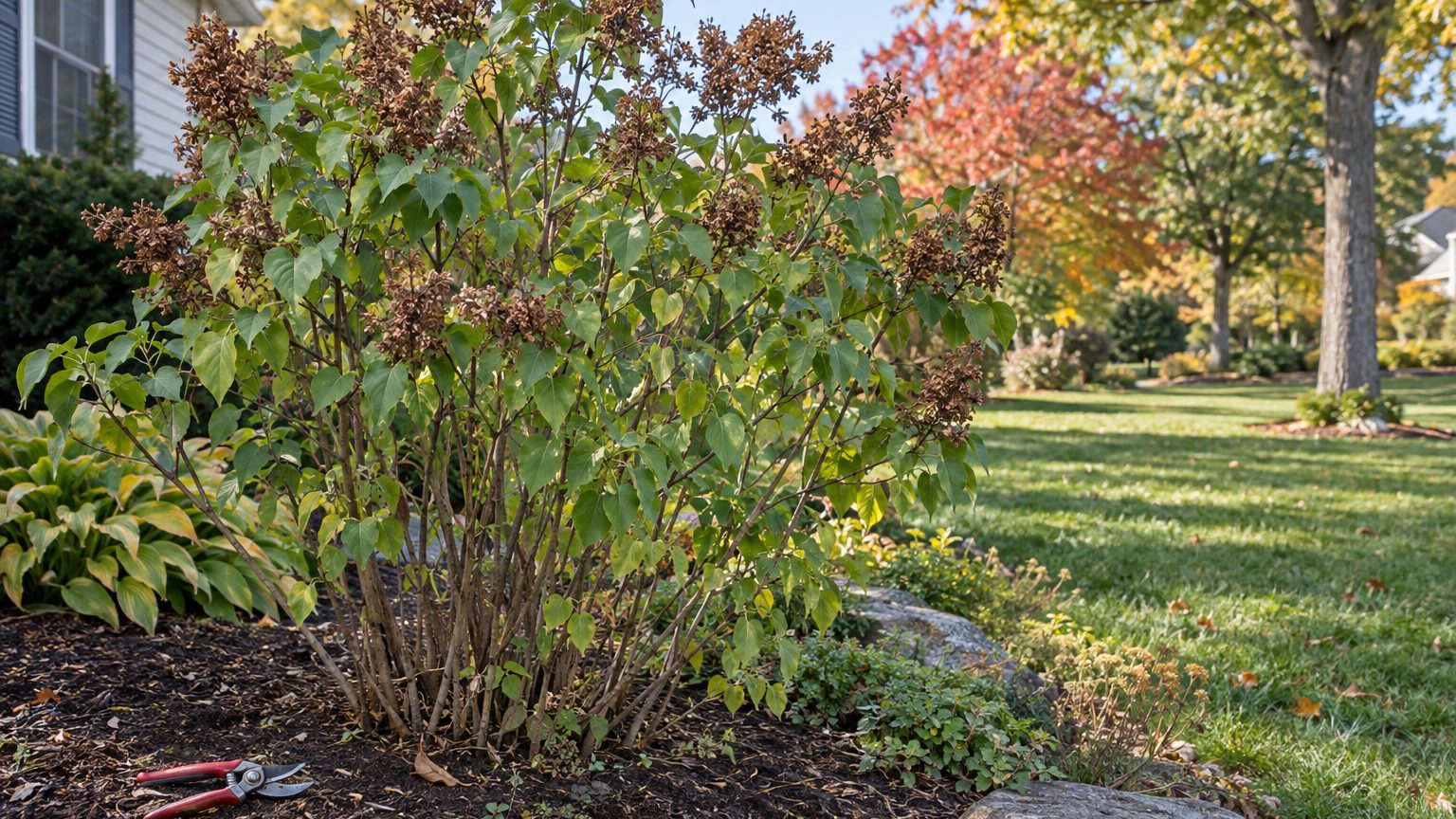
Brown, spent flower clusters hanging on a lilac in late spring are the cue to pick up the pruners. In Connecticut, that moment arrives as the flowers fade, and waiting much longer costs you next year’s flowers. The timing depends on what the shrub is doing, not on the calendar alone.
When to Prune Lilacs in Connecticut

Prune lilacs in Connecticut right after the flowers fade, usually in May and into June. Flowers open from late April into early May, and the shrub starts forming next spring’s buds soon after, so the window is short and tied to bloom.
| Type of pruning | When in Connecticut | Why |
|---|---|---|
| Routine upkeep: spent blooms, crossing or weak stems, shaping | May, June, right after the flowers fade | Next year’s buds form soon after bloom, so cutting now removes nothing you will miss |
| Hard renovation of an overgrown lilac | March, April, while the shrub is still dormant | The plant is cut back hard in late winter, at the price of the next flowers |
Routine pruning is useful when the shrub needs shaping or has weak or crossing stems. A hard cut can reset a shrub that has grown tall, leggy and bare at the base, and an overgrown lilac cut this way will not flower for a few years afterward. For lilacs, make the main pruning cut right after the flowers fade.
Connecticut — the year and the numbers
- State
- Connecticut
- USDA zones
- 6a-7b
- Last spring frost
- April 2 to April 12
- First fall frost
- October 28 to November 10
- Annual rain
- 44 in
- Lawn zone
- cool-season
- Source
- NOAA NCEI 1991-2020 Climate Normals, 32F freeze probabilities · Bridgeport
How to Tell When Your Lilacs Are Ready to Prune
Watch the shrub itself, because the signs line up with the timing more reliably than a date on the calendar.
- The flower clusters have turned brown and dull, which tells you bloom is over and pruning can begin.
- Petals are dropping and the panicles look tired, so deadheading now keeps the plant from spending energy on seed.
- Small new shoots are pushing out below the old flower heads, a sign the shrub is already starting next year’s growth.
- Because next spring’s flower buds begin forming soon after bloom, waiting until late summer means cutting them off.
- The leaves are fully open and the shrub looks settled, which makes it easy to see which stems are dead, crossing or crowded.
Once those signs show, work soon, because delaying moves you closer to cutting buds that are already set.
Should You Prune Lilacs in Fall or Winter in Connecticut?
No. A lilac blooms on last year’s wood and sets its flower buds in summer, so cutting in late summer, fall or winter removes the flowers you are waiting for. A shrub pruned then can look tidy and bloom thinly or not at all the following spring.
Hard renovation is the exception. Late winter, in March or early April, is the time to cut an overgrown lilac back hard while it is dormant. Expect no flowers the first spring, and for a few years after, as the plant rebuilds its framework.
If a branch is broken by snow or ice in winter, removing the damaged branch is fine. Save the shaping for after bloom.
How Lilac Pruning Time Shifts Across Connecticut
Connecticut spans a range of hardiness zones, and lilacs follow the local season, so the signs on your own shrub matter more than any fixed date.
- Along the Long Island Sound shoreline: Spring warms sooner, so lilacs here tend to flower and finish earlier than inland, and pruning can start sooner too.
- Northwest Hills: Winters are colder and spring comes later, so bloom and the pruning window run behind the coast. Cold winters suit lilacs well, since the chill helps their buds mature.
- Connecticut River Valley: Conditions fall between the coast and the hills, so follow the fading blooms on your own shrub.
Wherever you live, start pruning when your own flowers finish, not when a neighbor’s do.
Where to Get Lilac Advice in Connecticut
For questions about a shrub that will not bloom or has outgrown its spot, local help is close at hand. UConn Extension publishes seasonal garden guidance, and its Home and Garden Education Center answers plant questions from residents.
- The site has lilac and seasonal pruning articles, and it is worth reading before bloom begins.
- Your county extension office can help with a specific shrub or a pest problem, so call or bring a sample when something looks wrong.
Common Questions
Why Didn’t My Lilac Bloom This Year?
Pruning at the wrong time is a frequent cause, since late summer, fall or winter cuts remove the buds. Shade matters too, because lilacs want a sunny site with good air circulation. A shrub that was cut back hard in a previous late winter will also skip flowers for a few years.
Can You Cut a Lilac Back to the Ground?
Yes, an overgrown lilac can be cut back hard in March or April while dormant. The shrub regrows from the base, but flowers will be missing for a few years.
Do Lilacs Like Connecticut Summers?
Lilacs do best in cold-winter climates and struggle in hot, humid summers, but Connecticut’s winters give them the chill their buds need. Good air circulation helps the leaves stay healthy through humid weather.